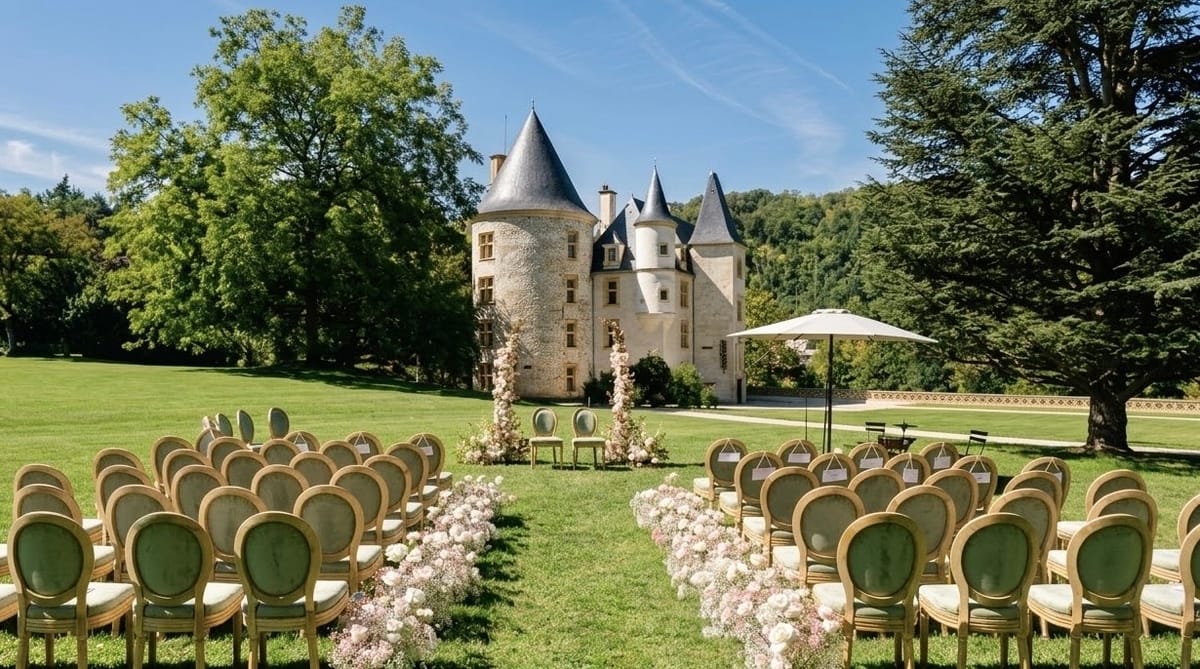
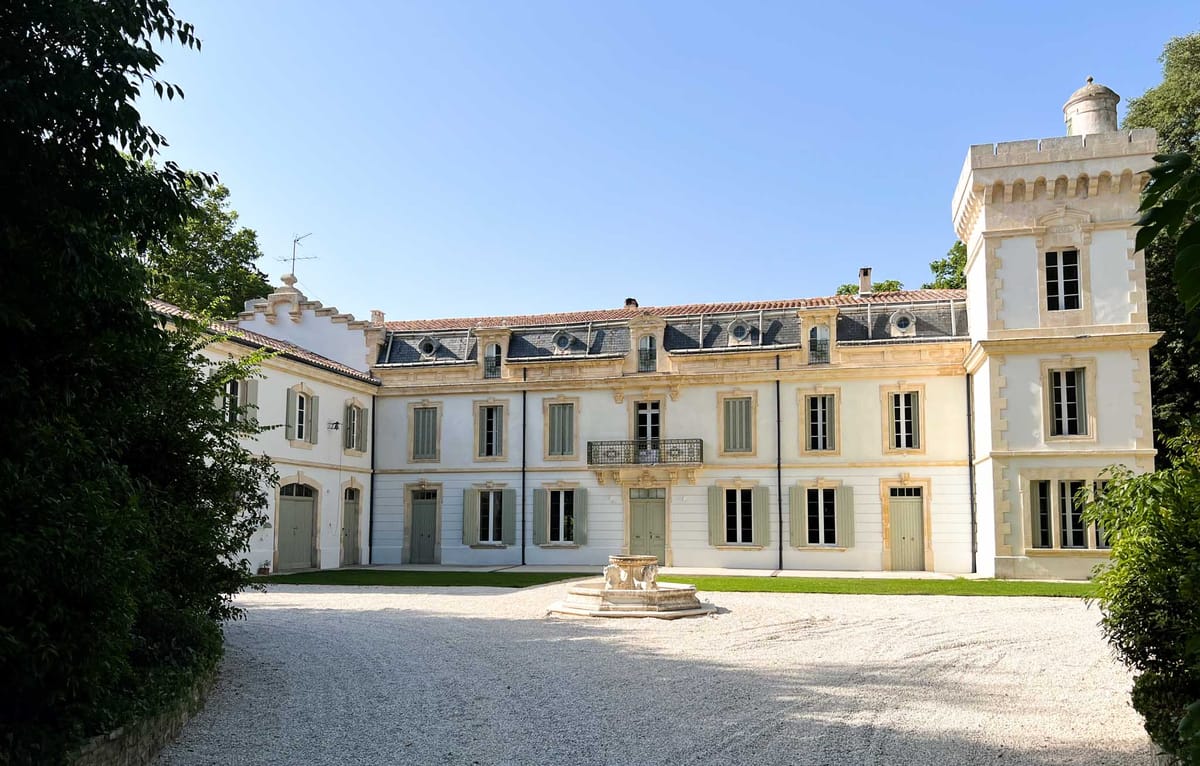
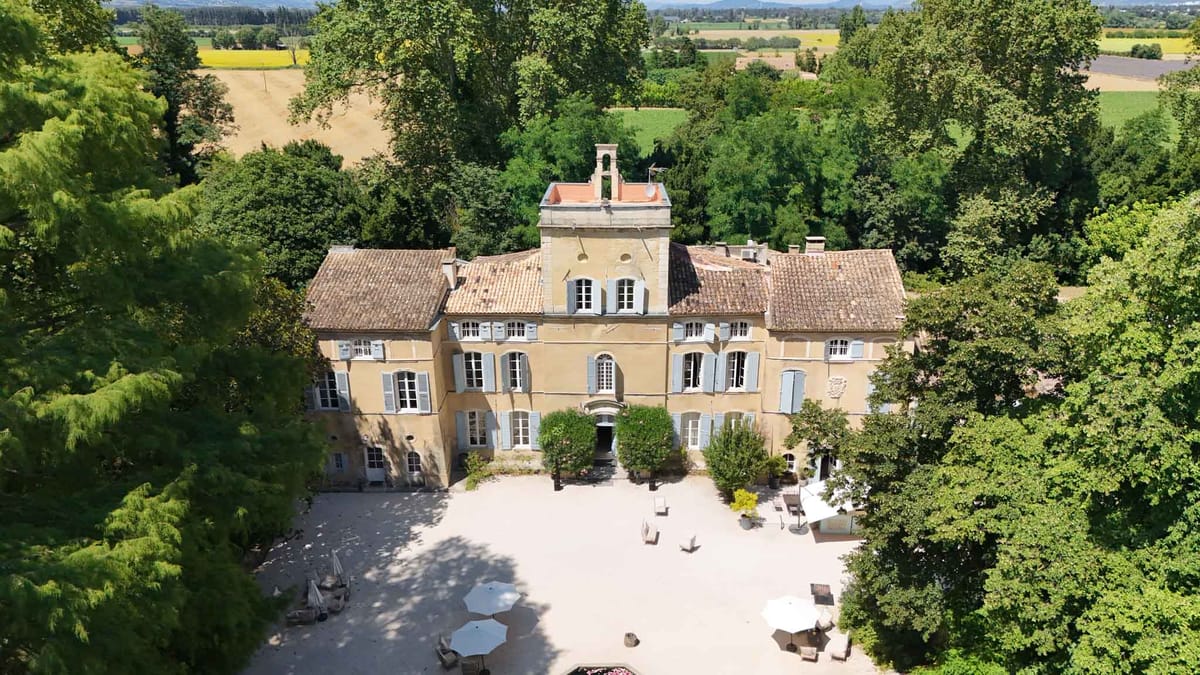
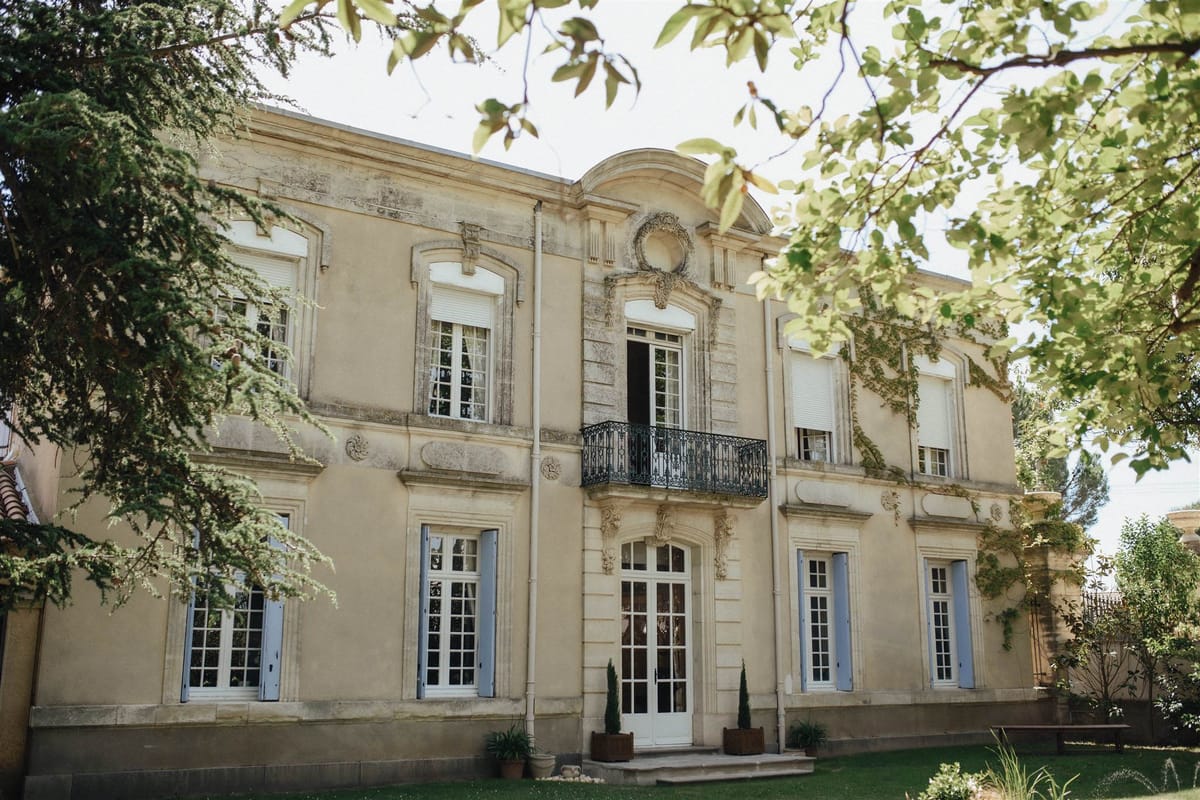
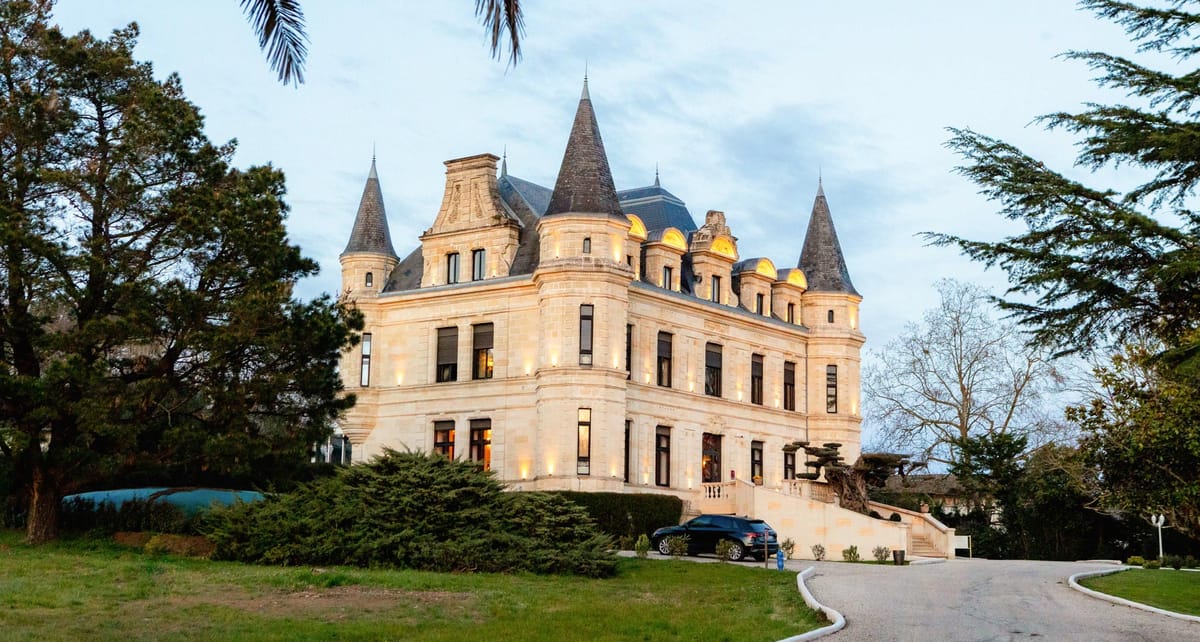
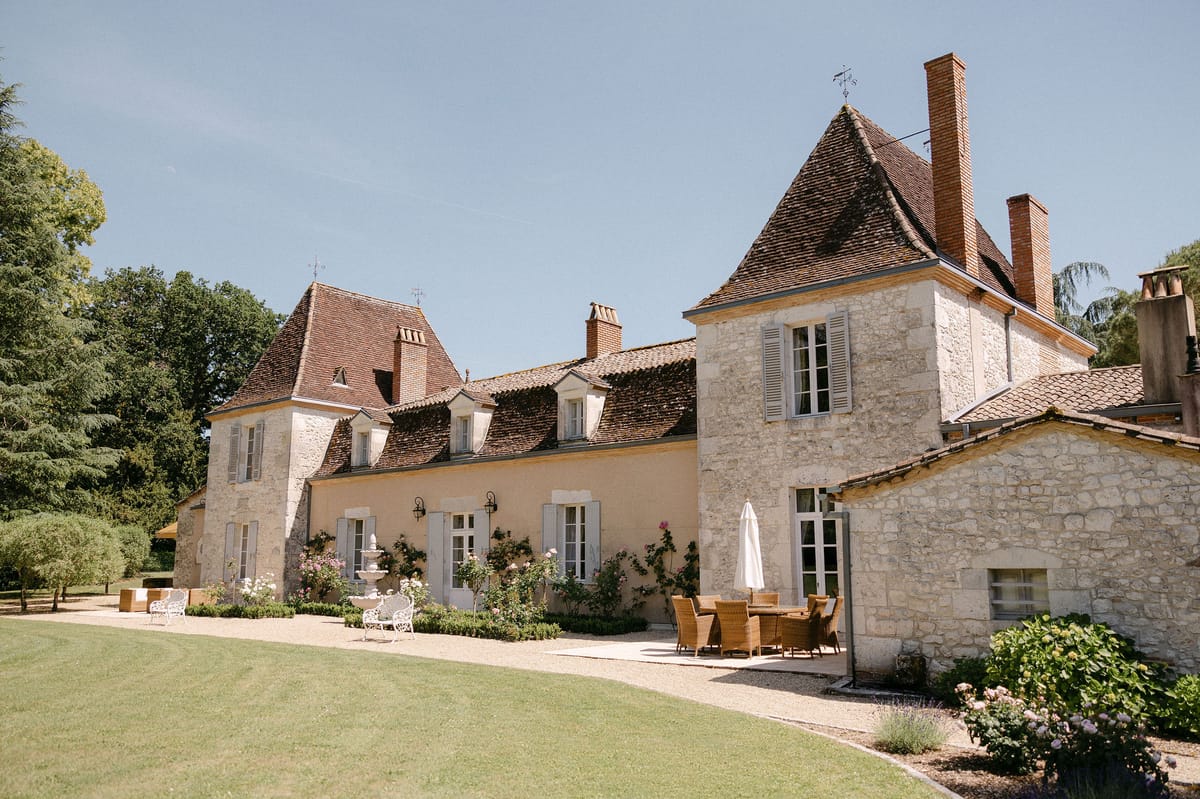
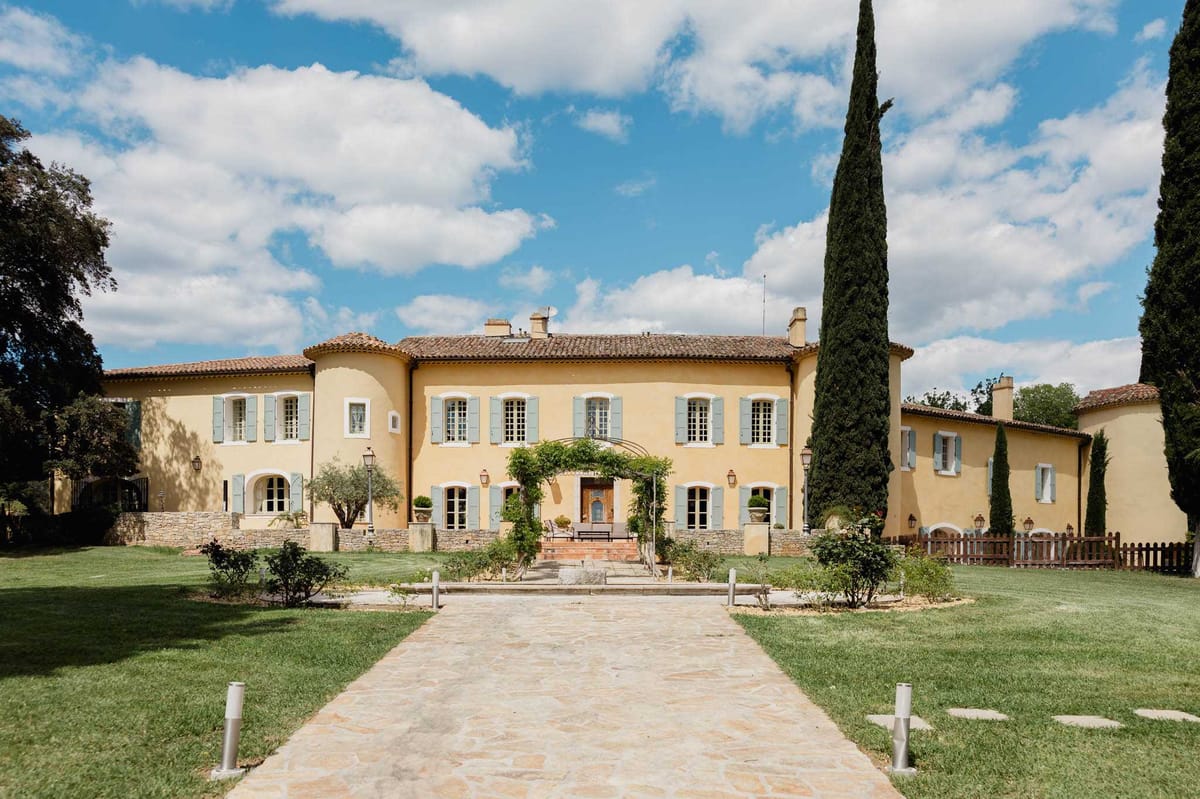
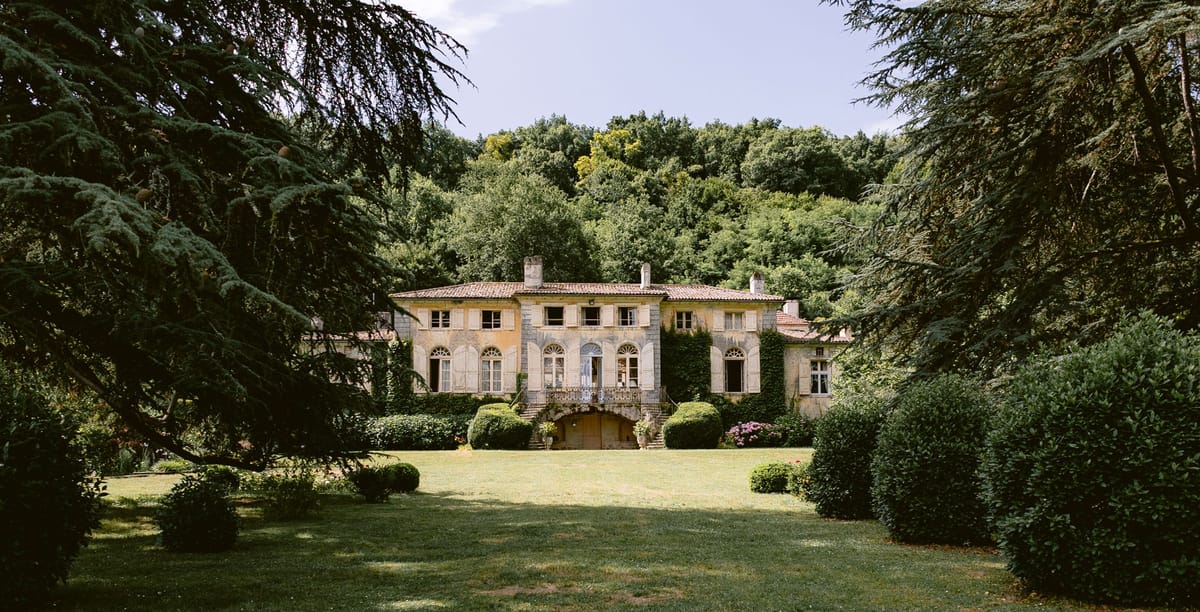
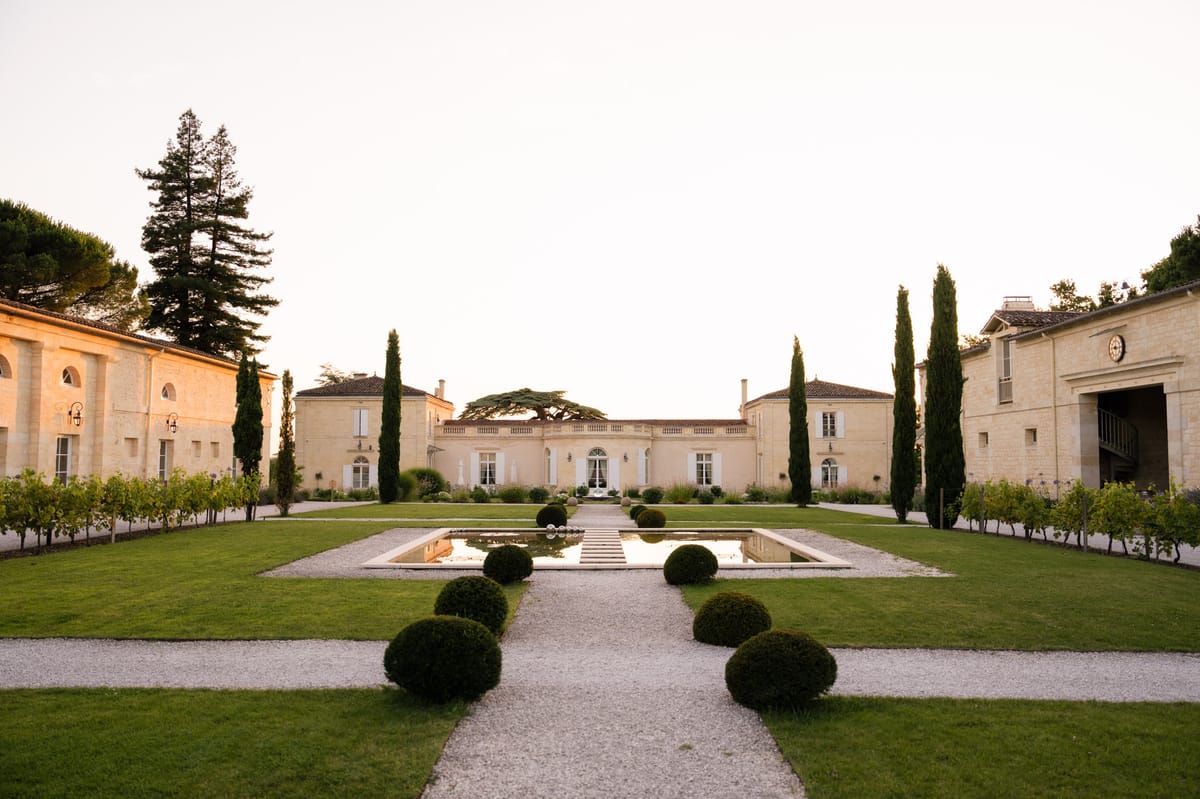
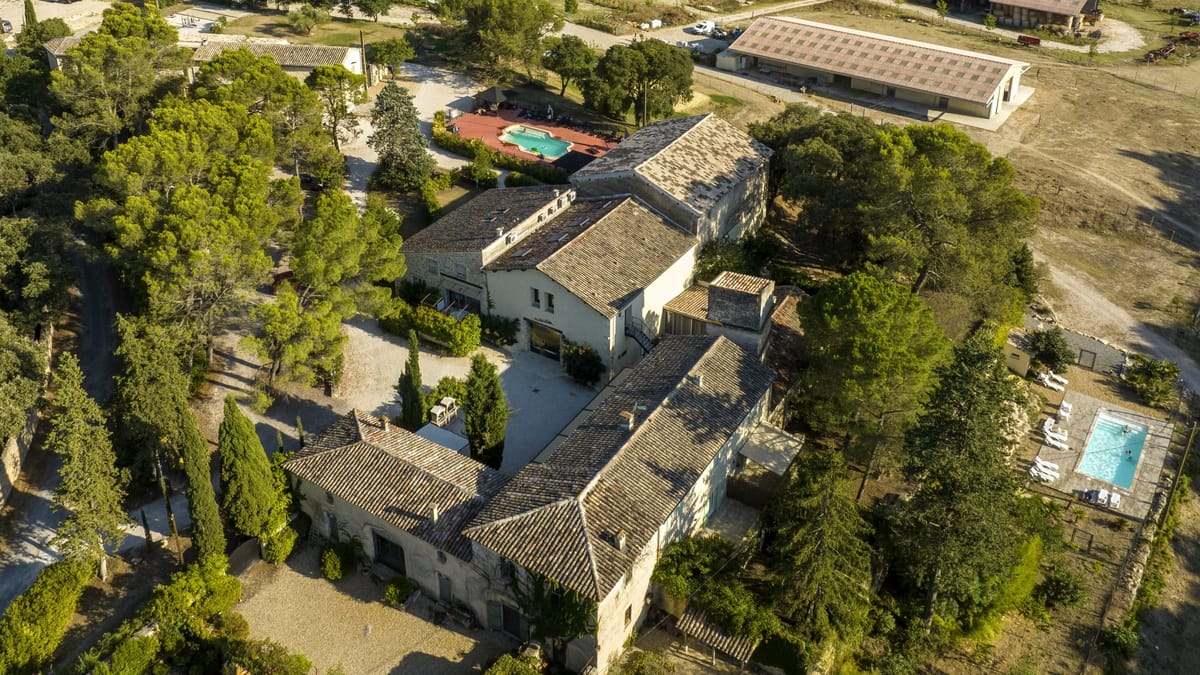
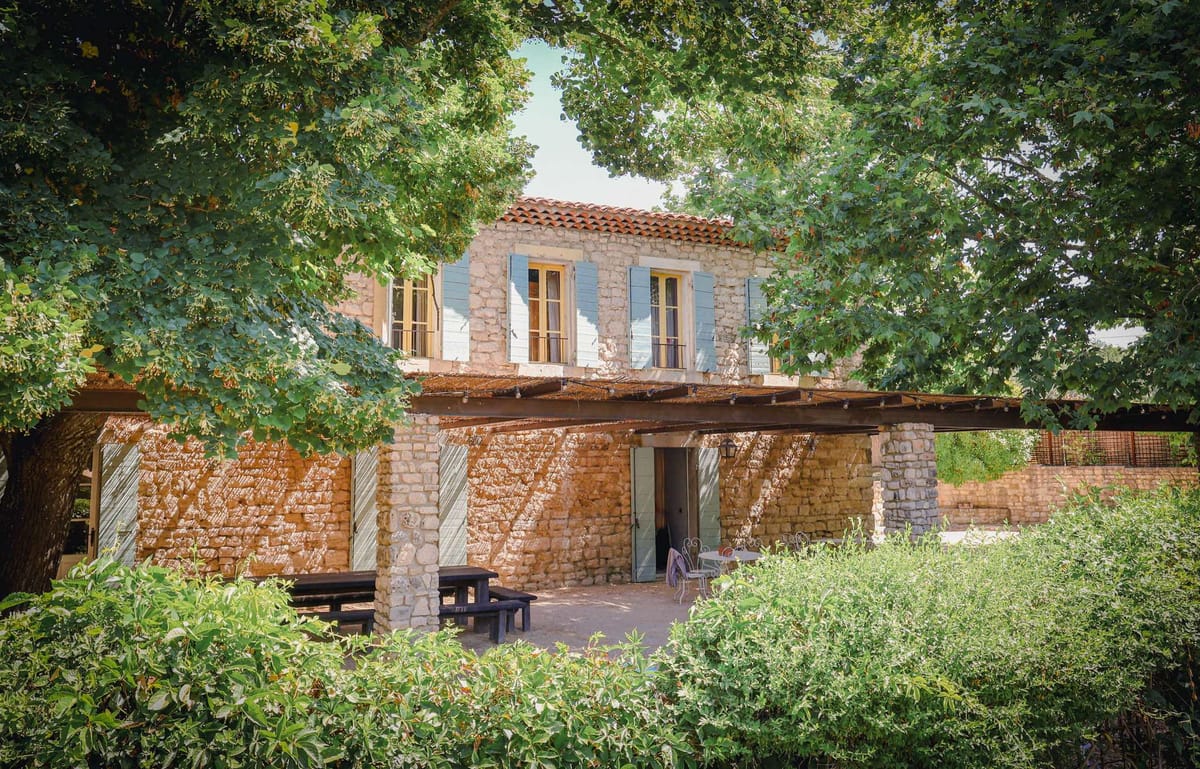
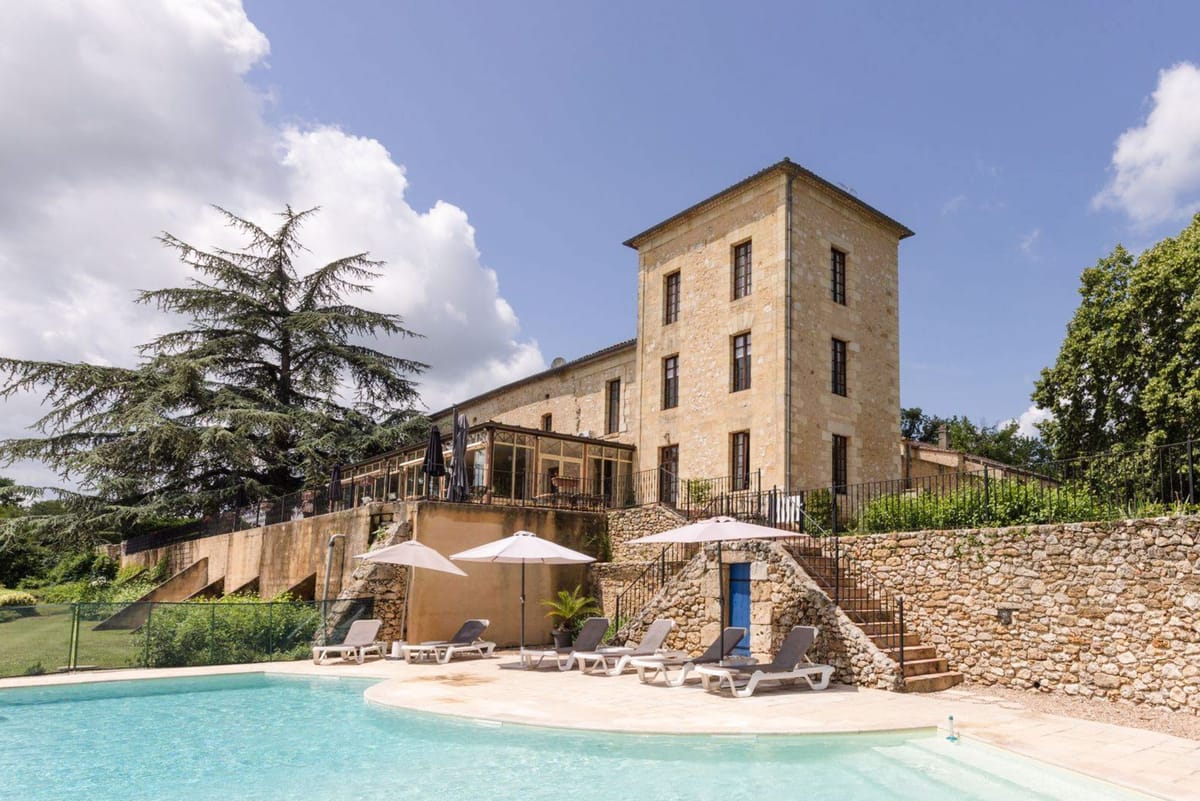
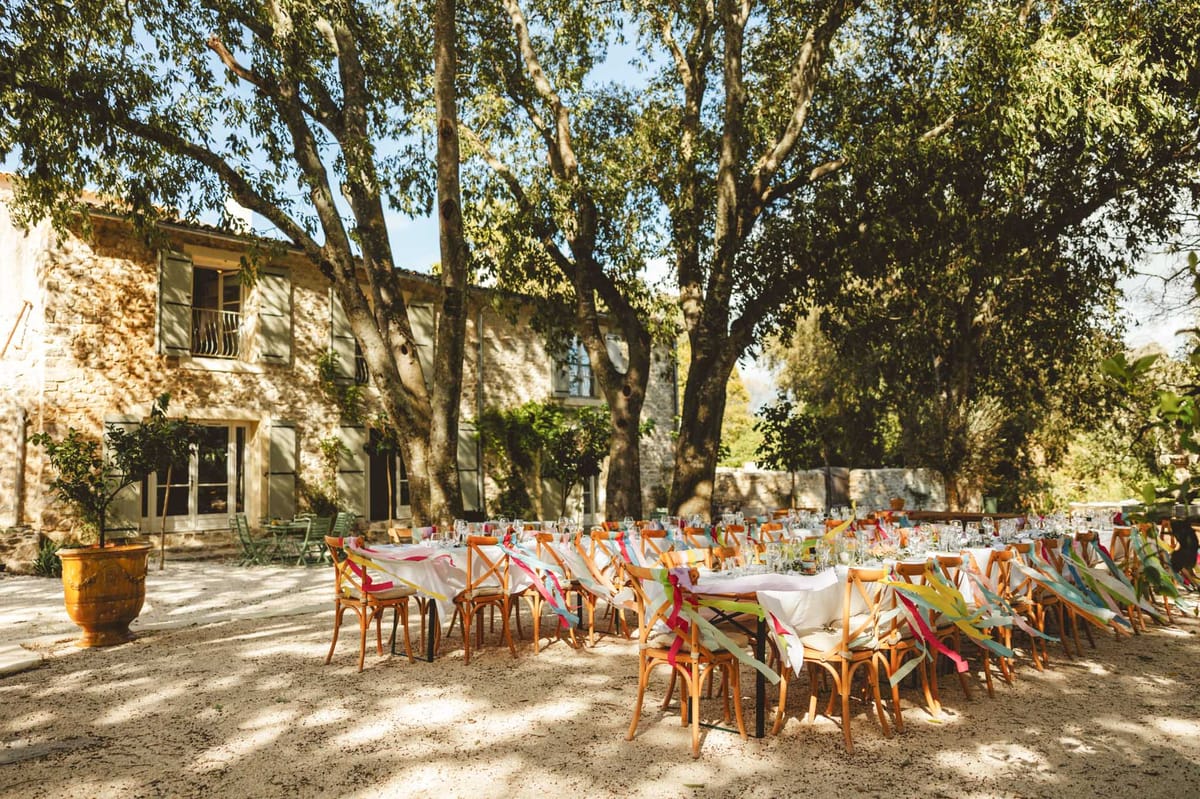
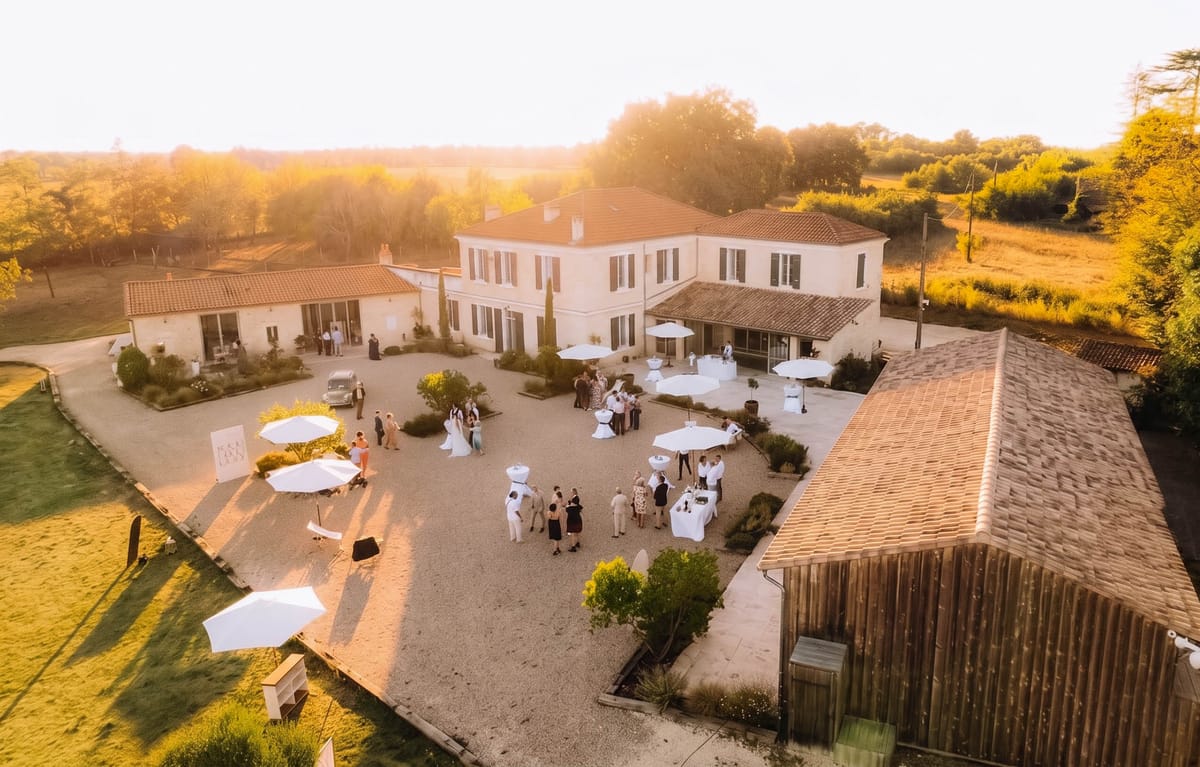
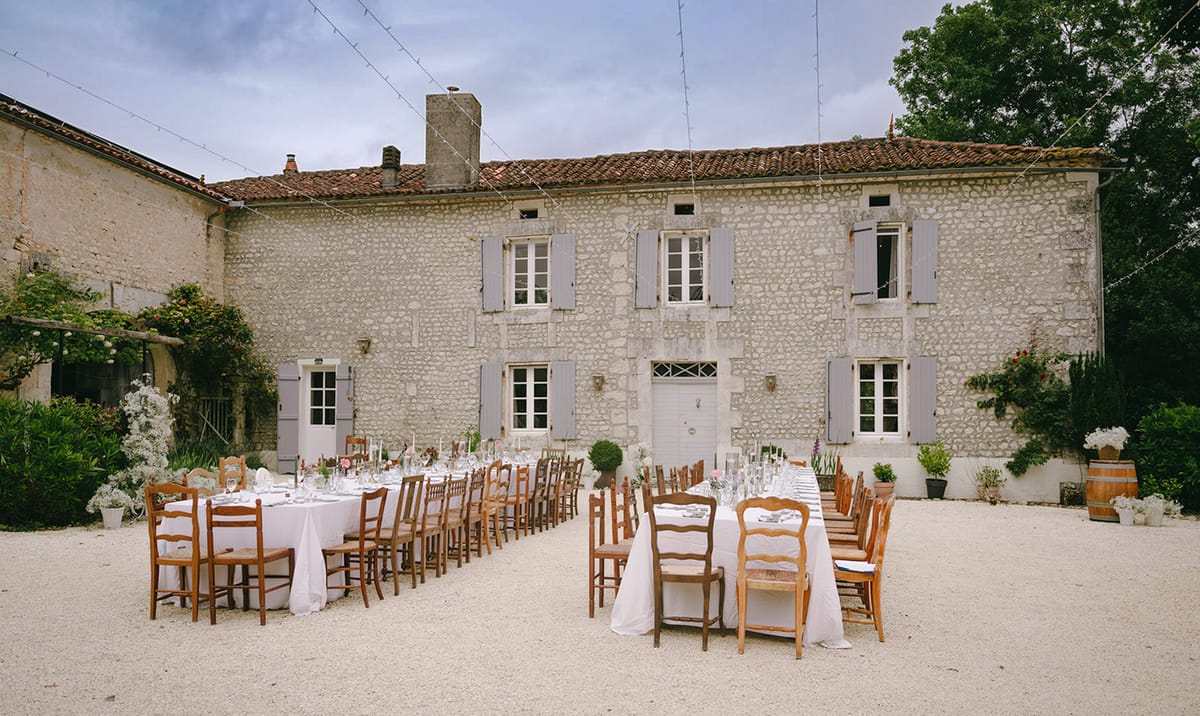
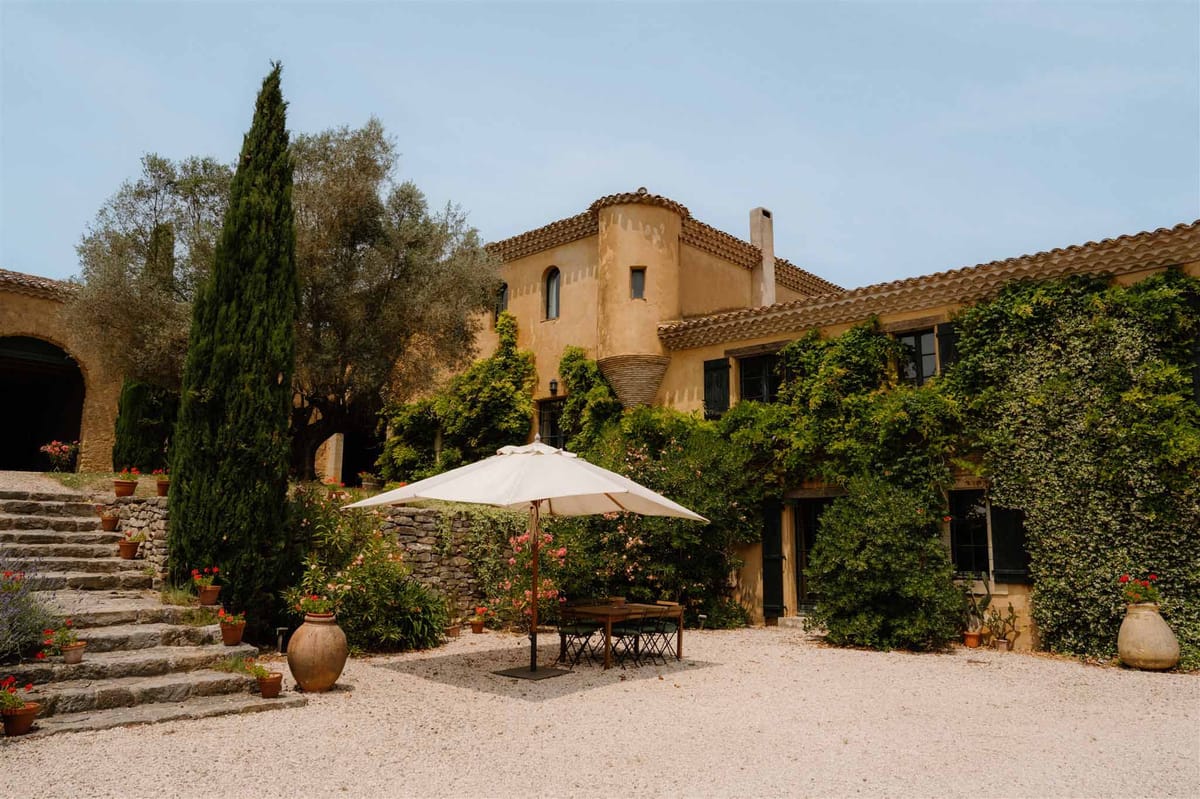
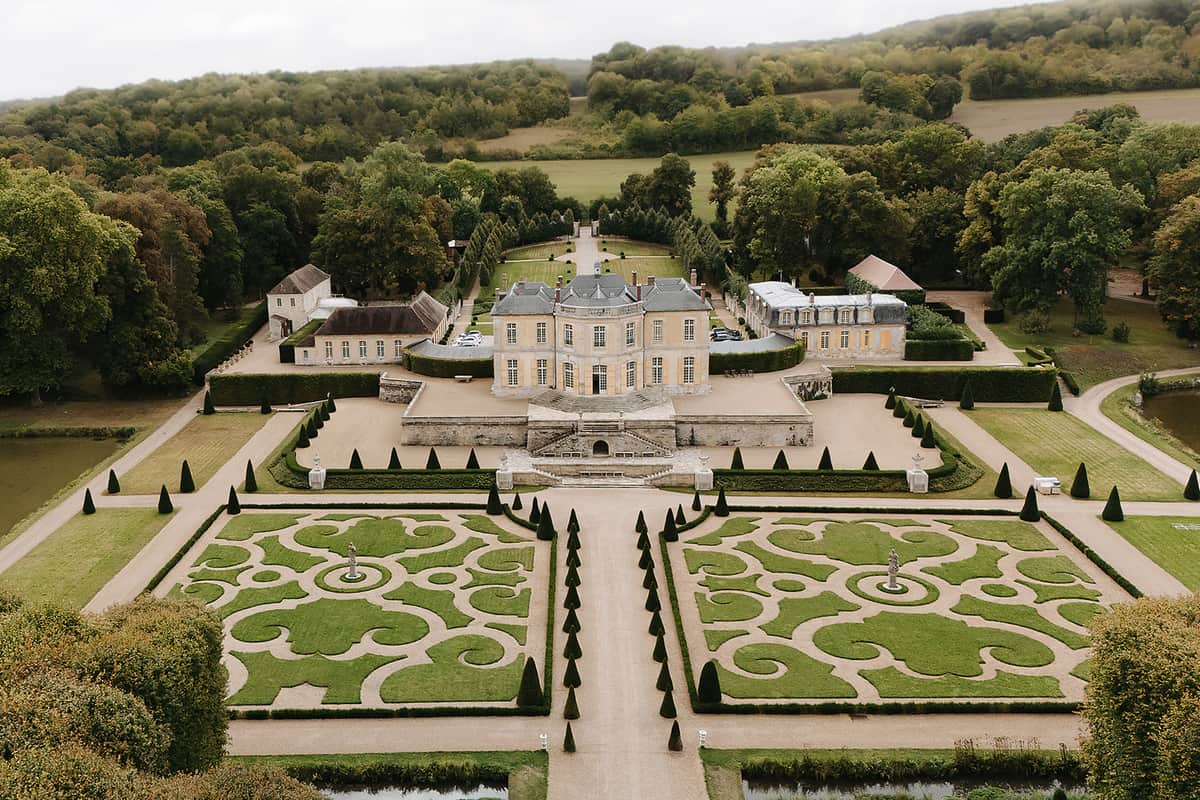
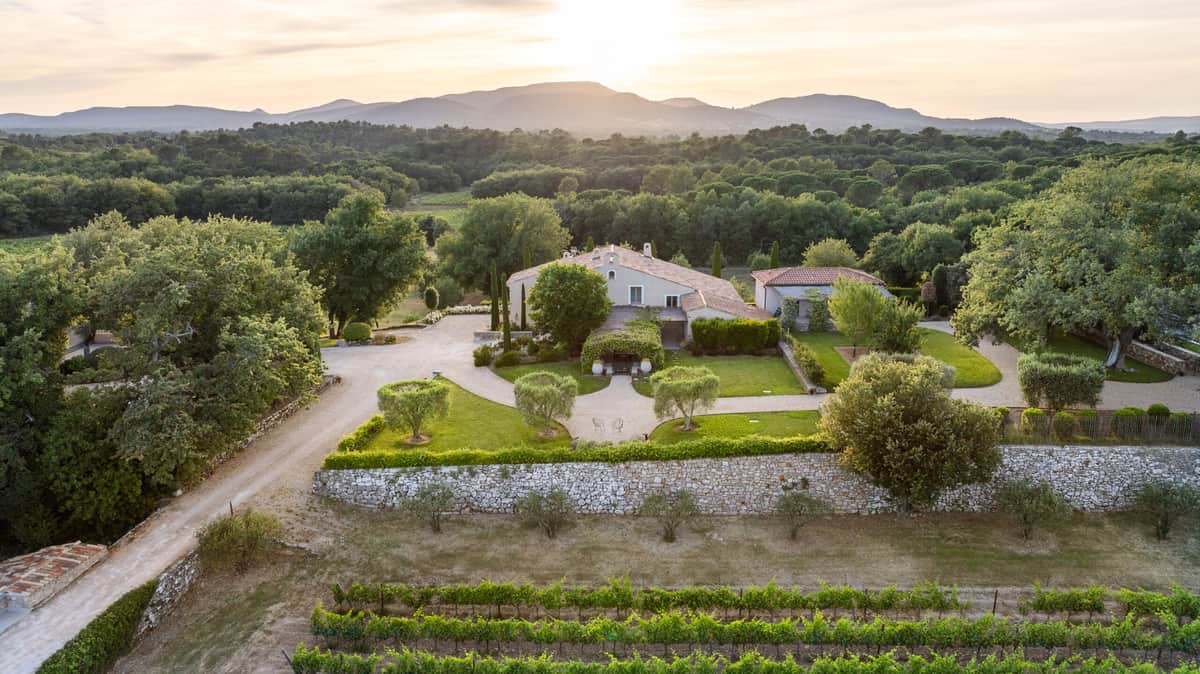
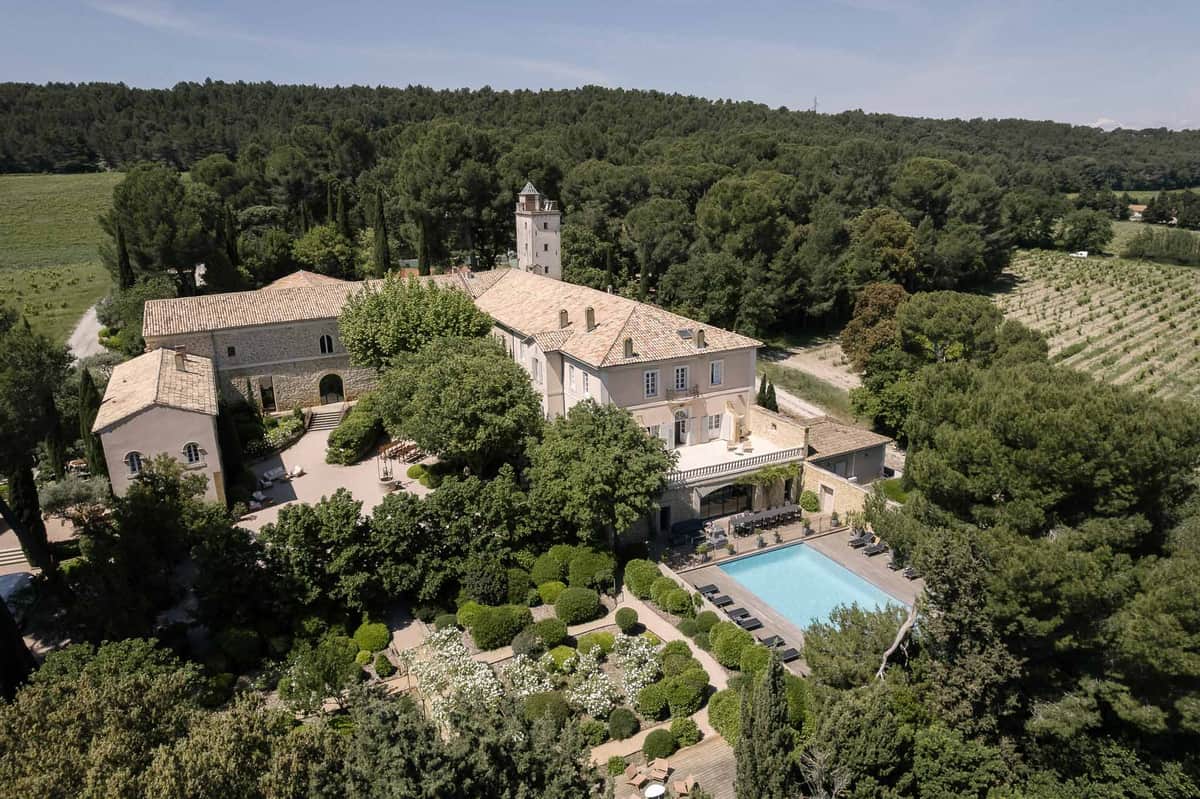
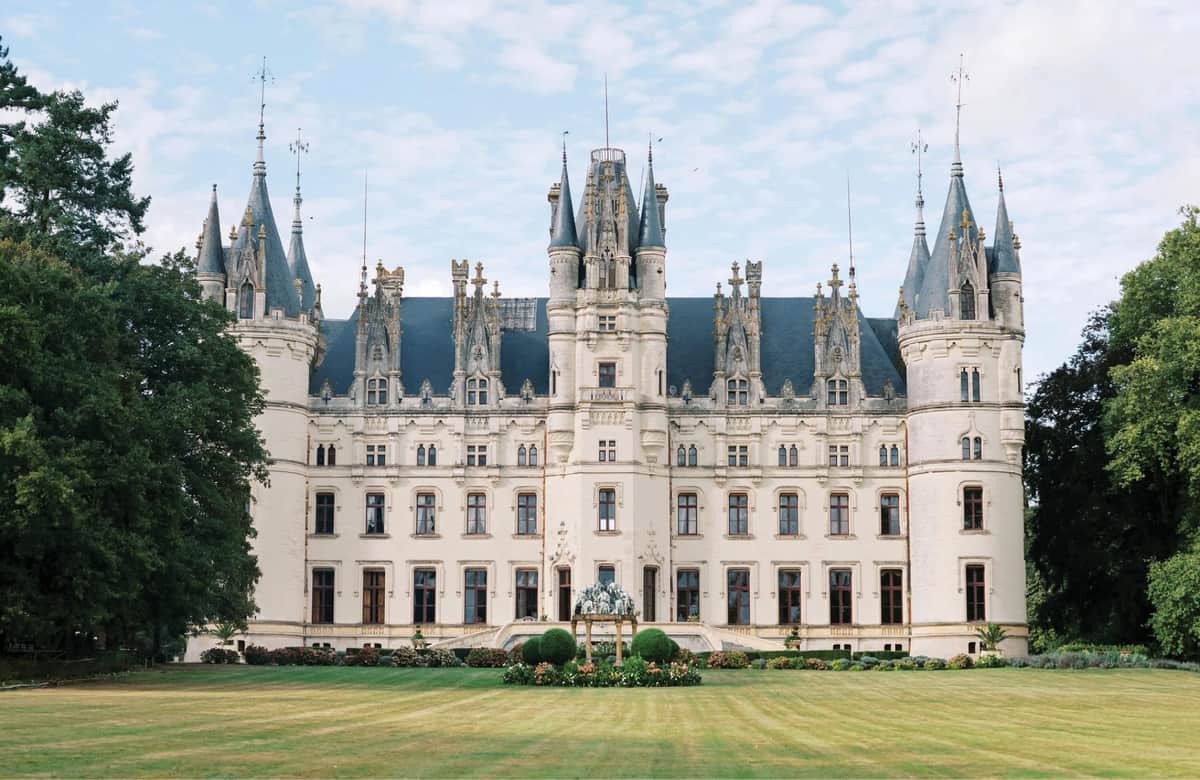
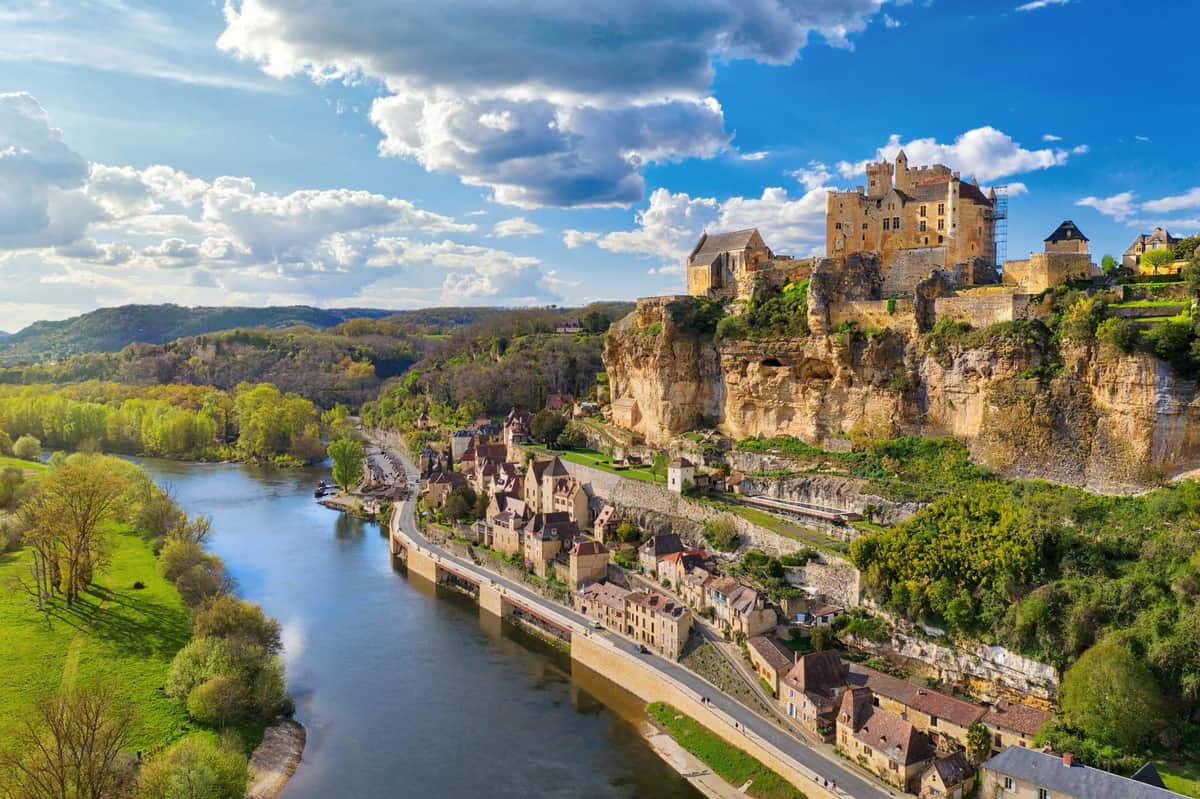
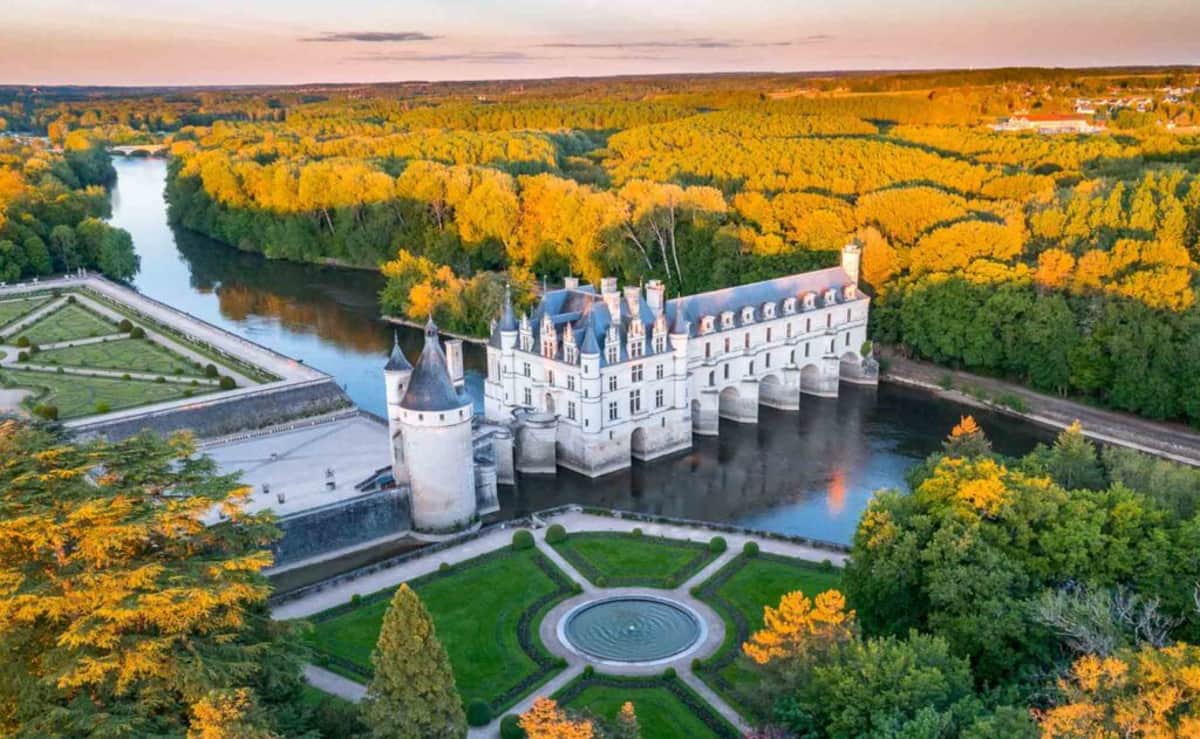
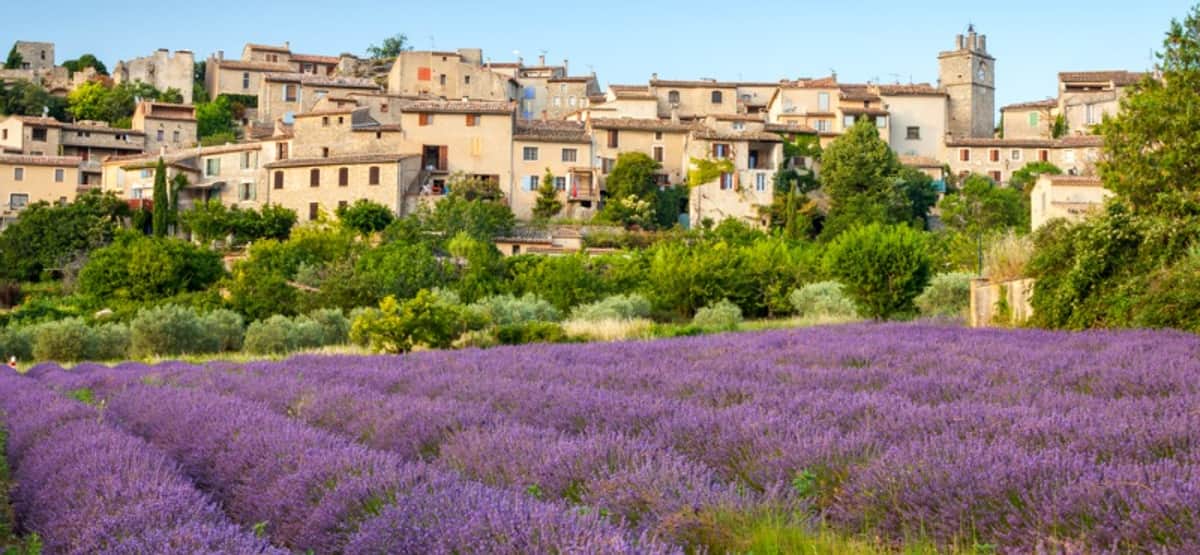
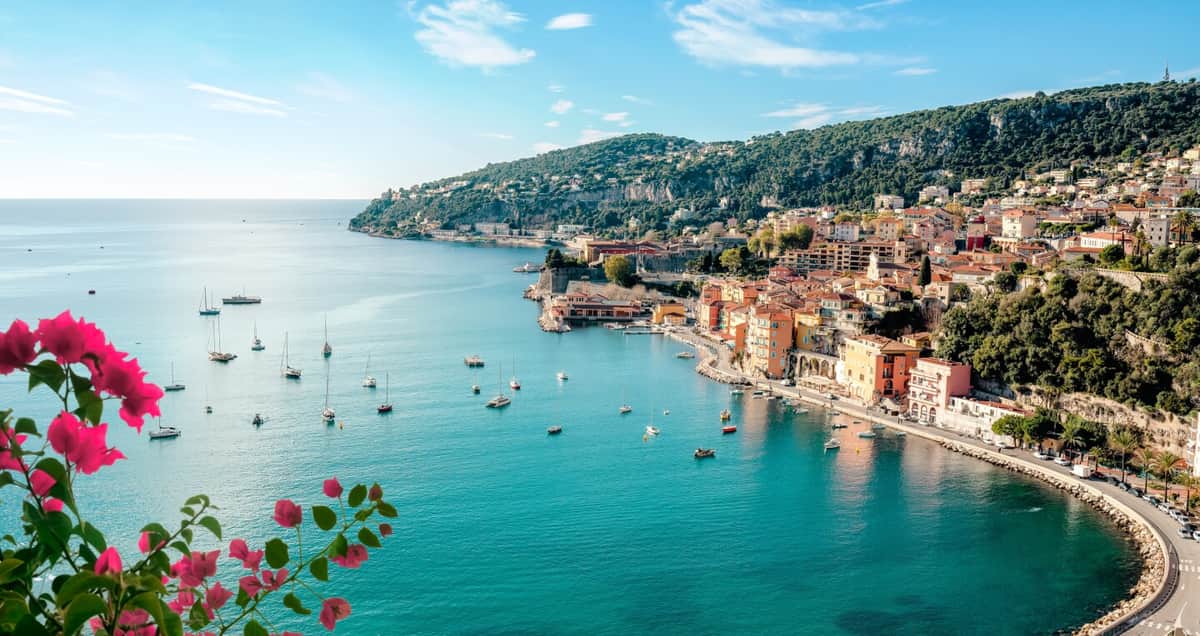
A wedding in the south of France means marrying in warm-climate wine and lavender country, where a private estate and its grounds become yours for the celebration. The south spans three regions — Nouvelle-Aquitaine in the southwest, Occitanie across the centre, and Provence-Alpes-Côte d'Azur in the southeast — and what unites them is a Mediterranean climate that makes outdoor ceremonies reliable from late spring through mid-autumn, a density of working vineyard estates and historic châteaux open to weddings, and regional airports that make the region a workable destination for guests flying in. Most estates hire on a whole-estate basis across a long weekend, so the ceremony, the dinner, and the overnight stay all happen in one place. The region you choose frames the atmosphere, the table, and the travel more than any single estate does.
Editor's Tip
Ask each venue at first enquiry whether the headline guest figure represents seated dinner capacity, ceremony capacity, or cocktail standing; these can differ by 2x to 4x at the same venue. Match your guest count to the format you actually need (seated dinner vs cocktail reception), not the headline number quoted on a website.
In brief
The south of France spans three regions — Nouvelle-Aquitaine, Occitanie, and Provence-Alpes-Côte d'Azur — where wine estates, lavender country, and the Mediterranean coast give couples a warm-climate destination wedding. Most estates sit on working vineyard land and hire on a whole-estate basis across a long weekend. Civil marriage happens at the local mairie; the estate hosts the symbolic ceremony, the dinner, and the overnight stay.
Key facts at a glance
Three southern regions. The south spans Nouvelle-Aquitaine, Occitanie, and Provence-Alpes-Côte d'Azur — Bordeaux wine country, Cathar hills and Mediterranean coast, and lavender-and-vineyard Provence.
Warm-climate outdoor weddings. A Mediterranean climate makes outdoor ceremonies and dinners reliable from May through October, with midsummer the hottest stretch to plan shade around.
Whole-estate, multi-day hire. Most estates hire on a whole-estate basis across a long weekend, with the ceremony, the dinner, and the overnight stay all on site.
Wine country throughout. Most estates sit on or beside working vineyards, from Bordeaux and Saint-Émilion to Minervois and Côtes de Provence; estate wine is part of the day, not an add-on.
Regional airport access. Regional airports — Bordeaux Mérignac, Toulouse-Blagnac, Montpellier Mediterranée, Marseille Provence, Nice Côte d'Azur — plus the Paris TGV open the region to international guests.
Best booking window. Book a year or more ahead for the May-to-October peak; shoulder months bring lower pricing and better supplier availability, and vineyard estates fill first for the September harvest season.
Compare the venues
Venue Side-by-Side Comparison
Pricing is indicative and may vary by season, guest count, and package. Please confirm directly with the venue.
€5,450PricingFrom €5,450Peak season (June-September) exclusive chateau hire for 2 days with 1 night's accommodation for up to 26 guests•3-Day / 2-Night Stay — €13,85012 rooms accommodation · Exclusive use of chateau•4-Day / 3-Night Stay — €15,95012 rooms accommodation · Exclusive use of chateau•4-Day / 3-Night Stay (Peak) — €19,10012 rooms accommodation · Exclusive use of chateau
€19,119PricingFrom €19,119 · All-inclusivePeak season (June to September) 3-night wedding weekend with the whole estate, in-house chef and planner, plus on-site guest accommodation, which is part of the minimum package but priced separately.
€14,000PricingFrom €14,000 · Hire + packagesPeak season (June-September) exclusive 200-hectare estate hire with accommodation for 28 guests, 2-night minimum
€8,000PricingFrom €8,000 · All-inclusivePeak season (June-September) exclusive venue dry hire for up to 120 guests, 2-night minimum•Venue Dry Hire — €8,000•All-Inclusive Wedding Package — €30,000
€18,000PricingFrom €18,000Peak season (June-September) exclusive castle hire with accommodation for up to 49 guests, 2-night minimum•Weekday Stay (1 night, 33 guests) — €15,100Exclusive use · Accommodation for 33•Weekend Stay (3 nights, 49 guests) — €36,200Exclusive use · Accommodation for 49 guests · 3 nights
€29,900PricingFrom €29,900 · Hire + packagesFrom €29,900 for the Essentielle format, a 3-day / 3-night multi-day wedding experience with exclusive use of the estate, on-site accommodation for up to 101 guests, access to Le Chai d'Eden and most of the outdoor ceremony and reception spaces, swimming pools, leisure activities, and personalised support from booking through to the end of the stay. This is a complete multi-day destination-wedding experience rather than a simple venue-hire fee.•Essentielle — €29,9003 days and 3 nights of exclusive use of the estate · On-site accommodation for up to 101 guests · Le Chai d'Eden reception hall plus most outdoor ceremony and reception spaces (Garden Féérie is a premium option) · +3 more•Signature — €56,5007 days and 7 nights · The same included services as the Essentielle format, over a longer stay•Absolue — €69,00010 days and 9 nights · The same included services as the Essentielle format, over the longest stay
€17,400PricingFrom €17,400 · Hire + packagesStarting at €17,400 for the smallest wedding (up to 30 guests): €4,800 wedding package plus €12,600 for the 3-night chateau package (11-bedroom chateau estate, breakfast included). Additional nights at a discount rate of €2,800. Wedding package is tiered by guest count: €4,800 (up to 30), €6,200 (31 to 60), €7,600 (61 to 90), €9,000 (91 to 120 max). Optional add-on accommodation: Relais du Château annex (€1,400/night, 2-night min), Ostal Cassinia and Le Casteras cottages (€800/night each, booked separately).•Wedding Package - Up to 30 guests — €4,800Wedding manager assistance from booking through wedding day · Vendor recommendation and coordination · Exclusive use of reception spaces (indoor and outdoor) · +5 more•Wedding Package - 31 to 60 guests — €6,200Wedding manager assistance from booking through wedding day · Vendor recommendation and coordination · Exclusive use of reception spaces (indoor and outdoor) · +5 more•Wedding Package - 61 to 90 guests — €7,600Wedding manager assistance from booking through wedding day · Vendor recommendation and coordination · Exclusive use of reception spaces (indoor and outdoor) · +5 moreSee full pricing →
€10,355PricingFrom €10,355 · Hire + packagesPeak season (June to September) multi-day venue hire with in-house catering, 2-night minimum stay•2-Night Wedding Package — €10,355Multi-day exclusive use (2 nights) · Catering on all days with seasonal and local products · Night before meal for all guests staying on site · +2 more•3-Night Wedding Package — €11,355Multi-day exclusive use (3 nights) · Catering on all days with seasonal and local products · Night before meal for all guests staying on site · +2 more
Chateau de Paon sits at the edge of the Camargue Natural Regional Park between Arles and Nimes, planting it firmly in the deep south in landscape and cultural context. The two-hectare private parkland, with its French garden, rose garden, orchard, and tree-lined alley, delivers the Provencal outdoor character that draws couples to the south, while Van Gogh's Arles, the Pont du Gard, and Les Baux de Provence within easy reach give guests the cultural richness that defines a southern destination wedding. Candlelit courtyard dinners under the open southern sky are a signature experience of the estate.
Thirteen bedrooms sleep 26 guests on site with no curfew and the freedom to bring your own wine without corkage, practical advantages for couples who want to showcase the region's remarkable value appellations at the wedding table. Nimes Garons Airport is 20 minutes away, and the Eurostar reaches Avignon, making the property accessible from London without a flight.
Why We Love It
A 16th-century Provencal estate on the Camargue's edge, where courtyard dinners unfold between Arles and Nimes.
Max Guests
120
Sleeps
26
Chapel
No
From €5,450PricingFrom €5,450•3-Day / 2-Night Stay — €13,85012 rooms accommodation · Exclusive use of chateau•4-Day / 3-Night Stay — €15,95012 rooms accommodation · Exclusive use of chateau•4-Day / 3-Night Stay (Peak) — €19,10012 rooms accommodation · Exclusive use of chateau/ venue hire
Chateau des Barrenques sits where four southern territories converge, the Vaucluse, Drome Provencale, Ardeche, and Gard along the Rhone wine route, giving it a geographical position that is genuinely at the crossroads of the south. The six-hectare park's over 52 tree species, including Giant Redwoods, Bald Cypresses, and 60 plane trees forming a cathedral alley, are the product of centuries of cultivation in a Mediterranean climate where trees grow with an authority that northern estates never achieve. Aromatic Provencal plants, lavender, thyme, rosemary, olive, scent the air throughout the grounds, and a river running through the property reinforces the sensory richness of the southern landscape.
Fourteen bedrooms sleep 42 guests on site, and the Magnanerie provides an air-conditioned reception space for dancing until 4am. Orange's Roman theatre is 30 minutes away and the Pont du Gard 45 minutes. Bollene-la-Croisiere station is seven minutes from the estate.
Why We Love It
A cathedral alley of 60 plane trees and 52 tree species in a six-hectare park where four southern territories converge.
Max Guests
221
Sleeps
42
Chapel
No
From €10,000PricingFrom €10,000Peak season (June-September) exclusive venue hire for up to 200 guests, 2-night minimum stay/ venue hire
Chateau du Puits es Pratx sits in the Minervois wine region of the Languedoc, one of the sunniest corners of the south of France, where the estate's own vineyards produce wine in a landscape of aromatic garrigue, ancient stone, and Mediterranean light. The typical wedding flow here is entirely southern in character: a ceremony among the vines or in the organic gardens, a candlelit banquet in the inner courtyard beneath stars that appear with unusual clarity at this altitude and distance from coastal light pollution, and dancing until 2am in the wine barn with its bar built inside the original wine press. This is the south as it tastes and feels, not as it appears on Instagram.
The estate accommodates 30 to 120 guests with 51 sleeping on site, and in-house gastronomic catering draws on local and seasonal Languedoc produce. Narbonne is 15 minutes away, Carcassonne Airport 40 minutes, and the Mediterranean coast is 35 minutes by car, making day trips simple for guests staying over the long weekend.
Why We Love It
A working Minervois vineyard where couples dine under the stars in a courtyard and dance in the wine barn.
Max Guests
120
Sleeps
51
Chapel
No
From €19,119PricingFrom €19,119 · All-inclusivePeak season (June to September) 3-night wedding weekend with the whole estate, in-house chef and planner, plus on-site guest accommodation, which is part of the minimum package but priced separately./ venue hire
Chateau Camiac brings the Bordeaux wine region's rolling vineyards and golden countryside directly into a wedding weekend, positioned in the Entre-Deux-Mers appellation 30 kilometres from the city and surrounded by the landscape that has made southwest France one of the world's most celebrated wine destinations. The 1834 chateau's 2024 renovation has produced a contemporary destination hotel with in-house bistronomic dining through Le Jardin des Mirabelles, meaning the regional cuisine and estate vineyard views are woven into every meal, from the welcome dinner to the farewell brunch. A palm-lined avenue, estate lake, and fountain give the grounds a polished southern grandeur.
Twenty rooms sleep 49 guests, and ceremonies can be held poolside or in the vineyard landscape. Bordeaux Saint-Jean station is 25 minutes by car and the airport 45 minutes, placing guests within easy reach of Saint-Emilion, La Cite du Vin, and the Bassin d'Arcachon for excursions that are inseparable from a southern wedding weekend.
Why We Love It
A freshly renovated 1834 Bordeaux chateau with in-house bistronomic dining and vineyard views across Entre-Deux-Mers.
Max Guests
200
Sleeps
49
Chapel
No
From €10,800PricingFrom €10,800•Estate Hire — €14,800/ venue hire
Chateau Lacanaud gives couples the Dordogne in its most complete form: an elevated estate above the wooded valleys and river gorges of a region that concentrates more chateaux, medieval villages, and prehistoric heritage per square kilometre than almost anywhere in the south. The infinity pool takes full advantage of the elevated position, giving guests views over oak forests and limestone cliffs that define the Dordogne's distinctive southern character. Truffle markets, Bergerac wines, and the medieval villages of Issigeac and La Roque Gageac give the wedding weekend genuine southern depth.
Full exclusivity with on-site accommodation means the estate becomes a private retreat. Ceremony options include the lakeside, the pool terrace, and woodland clearings. Bergerac Airport is 25 minutes away, with Bordeaux reachable in 90 minutes, excellent access for international guests flying into southwest France.
Why We Love It
Open Dordogne wine-region views from an elevated estate surrounded by medieval villages and Bergerac vineyards.
Max Guests
100
Sleeps
23
Chapel
No
From €12,000PricingFrom €12,000 · Hire + packagesPeak season (June-September) exclusive chateau hire with accommodation for up to 23 guests, 20-acre estate/ venue hire
Chateau les Crostes is a 200-hectare wine estate near Lorgues in the Var, producing the rose wines that have made Provence one of the world's most recognised wine regions, and serving them at the wedding table from the vineyard visible through the dining room windows. The Provencal hills, olive groves, and lily-covered lake carry the visual language of the south in every season, and the estate's location puts the Gorges du Verdon and Cote d'Azur beaches within day-trip distance, two experiences that define why couples choose the south of France for their wedding. The no-curfew policy and intimate 28-guest capacity create a house-party atmosphere rooted entirely in the southern landscape.
Twelve bedrooms with full exclusivity and external caterer flexibility mean the estate operates as a private Provencal retreat. The tennis court, petanque terrain, hot tub, and games room give guests the kind of leisure options that make a southern wedding weekend that lingers beyond the ceremony itself.
Why We Love It
A 200-hectare working rose wine estate in the Var, where couples serve their own Provencal vintage at dinner.
Max Guests
150
Sleeps
28
Chapel
No
From €14,000PricingFrom €14,000 · Hire + packagesPeak season (June-September) exclusive 200-hectare estate hire with accommodation for 28 guests, 2-night minimum/ venue hire
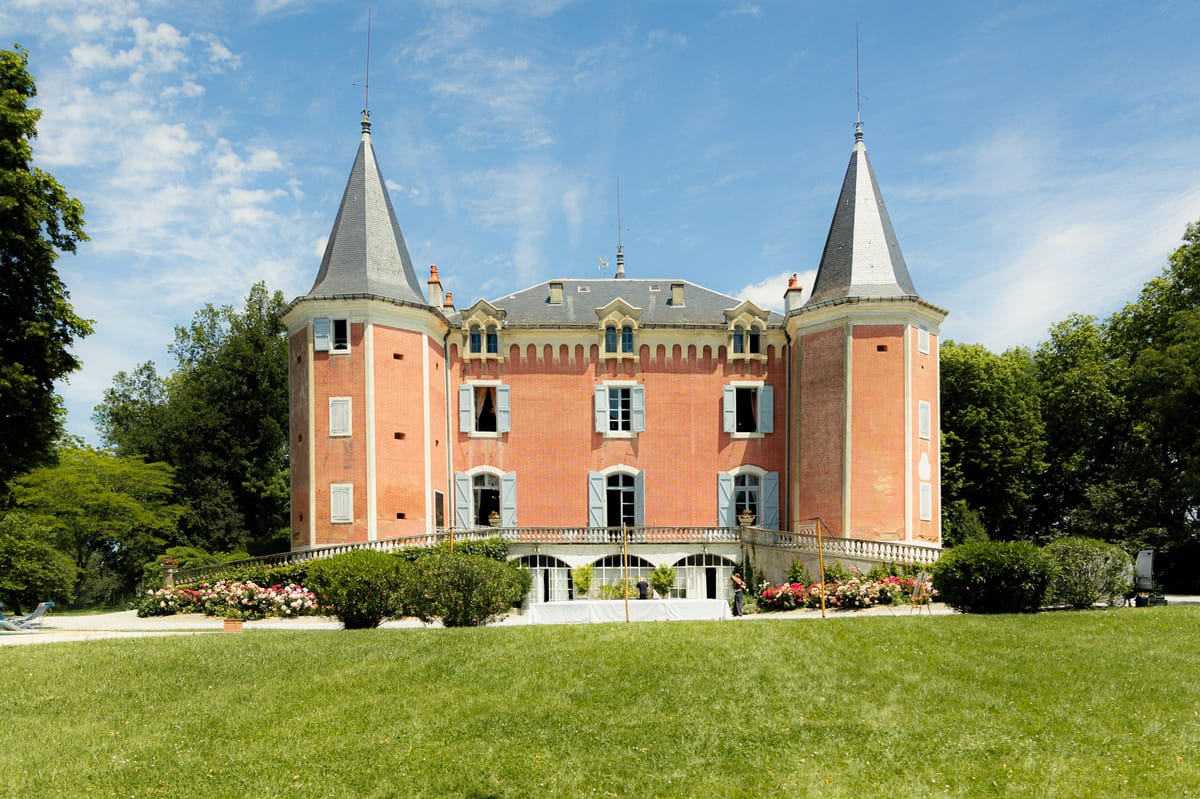
Chateau de Garrevaques gives couples a wedding in the Lauragais, the corridor between Toulouse and the Mediterranean that carries the agricultural soul of southwest France through its rolling hills, sunflower fields, and quiet bastide villages. The coral-pink facade with blue shutters, the 550-year-old oak listed as a Remarkable Tree of France, and the six-hectare park with rose gardens lit by French lampadaires are all expressions of a southern French estate whose identity is entirely shaped by its Occitanie setting. Owner Caroline Combes-Pouzet's My French Way of Life service draws on 20 years of theatre experience to create celebrations that reflect the storytelling quality of this historically rich corner of the south.
Twenty bedrooms sleep 15 guests on-site, and the property accommodates up to 120 seated (260 cocktail-standing). Toulouse-Blagnac Airport is 45 minutes away with shuttle service available, positioning the estate within straightforward reach for international guests arriving into southwest France.
Why We Love It
Eighteen generations of family stewardship, a 550-year-old listed oak, and a Historic Monument red salon in the Lauragais.
Max Guests
120
Sleeps
15
Chapel
No
From €8,000PricingFrom €8,000 · All-inclusive•Venue Dry Hire — €8,000•All-Inclusive Wedding Package — €30,000/ venue hire
Domaine Le Castelet sits in the Tarn at 300 metres altitude, where the estate's natural elevation keeps it cooler than the lowland Provence venues during the south's hot summer months, a genuine practical advantage for couples planning July or August celebrations. The 60-hectare estate of forest and meadow, the farmhouse courtyard with string lights beneath oak trees, and the arboricultural park with irregularly shaped trees provide a wilder, more unpredictable version of the southern landscape than the manicured chateaux of the Var or Bouches-du-Rhone. This is the Tarn's own version of the south: less polished, more genuinely rooted in its terrain.
Seventeen bedrooms sleep 48 guests, and the property welcomes external caterers while offering homemade welcome dinners and brunches. Castres-Mazamet Airport is 15 minutes away, and Toulouse-Blagnac is reachable in 75 minutes, two airports that serve the south's interior efficiently for international arrivals.
Why We Love It
Sixty hectares of Tarn forest and meadow at altitude, offering natural coolness and complete seclusion in the southern countryside.
Max Guests
120
Sleeps
48
Chapel
No
From €8,073PricingFrom €8,073Peak season (June-September) exclusive venue hire for up to 120 guests, 3-night minimum/ venue hire
Aix-en-Provence (35 minutes by TGV station), Bouches-du-Rhone
Domaine de Lamanon sits in one of Provence's most coveted corridors, between the Luberon and the Alpilles, in the landscape that has defined southern France for painters, writers, and travellers for centuries. The 16th-century canal system originally funded by Nostradamus threads through the 20-hectare estate, earning it the nickname the Venice of Provence, while plane trees planted before the French Revolution shade a vast esplanade that provides one of the most authentically southern outdoor reception settings in Provence. Lavender avenues, cypress alleys, and the abundant limestone of the Alpilles give the estate its unmistakably Provencal character.
The estate sleeps 15 guests across seven bedrooms and offers full exclusivity with external caterers welcome. Aix-en-Provence TGV and Avignon TGV are both 35 minutes away, and Marseille Marignane Airport is a similar drive, placing the property at the heart of Provence's transport network.
Why We Love It
Canal-threaded Provencal grounds beneath pre-Revolution plane trees, set directly between the Alpilles and the Luberon.
Max Guests
120
Sleeps
15
Chapel
No
From €19,900PricingFrom €19,900Peak season (June-September) exclusive estate hire with accommodation for 15 guests, 2-night minimum/ venue hire
Chateau La Tour Vaucros is positioned in the heart of Provence near Avignon, where lavender, olive groves, and pink laurels surround six 17th-century stone buildings that carry the agricultural and cultural history of the Comtat Venaissin, the papal territory that shaped this corner of the south for five centuries. Twelve distinct celebration spaces, from a spacious reception hall to vine-draped terraces and a courtyard shaded by a centuries-old plane tree, give couples a flexibility in designing their day that reflects the south's layered outdoor character. The surrounding appellations of Chateauneuf-du-Pape and Cotes du Rhone put some of France's most celebrated wines within minutes of the estate.
Twenty-three bedrooms sleep 49 guests across the six buildings, and the estate accommodates up to 250 with no curfew. Avignon TGV is 25 minutes away, connecting to Paris in under three hours, and Avignon Airport is 15 minutes by car, fast transport for a southern destination wedding.
Why We Love It
Twelve distinct celebration spaces across six Provencal stone buildings, within minutes of Avignon and Chateauneuf-du-Pape.
Max Guests
250
Sleeps
49
Chapel
No
From €18,000PricingFrom €18,000•Weekday Stay (1 night, 33 guests) — €15,100Exclusive use · Accommodation for 33•Weekend Stay (3 nights, 49 guests) — €36,200Exclusive use · Accommodation for 49 guests · 3 nights/ venue hire
Bordeaux (50km / approximately 1 hour by car), Gironde
Domaine Perrotin sits in Nouvelle-Aquitaine wine country in Saint Pey-de-Castets, 50km (about 1 hour) from Bordeaux, where 400-year-old Lebanese cedars and rose-filled courtyards frame a vineyard estate shaped by centuries of southwestern French cultivation. The Galerie Cédrus reception hall, with its 180 square metres, high ceilings, and exposed beams opening onto the grand courtyard, captures the agricultural warmth and unhurried character that the southwest does best. The estate's eco-responsible approach connects the celebration to the land in a way that purely decorative venues cannot replicate, a quality that resonates strongly with couples choosing southern France for its authenticity rather than its prestige.
Up to 120 seated and 300 guests overall (cocktail capacity), with 33 guests sleeping on-site for multi-day celebrations. The Bordeaux TGV connection via Paris takes 2h05, giving international guests straightforward access to a genuinely southern property without the coastal premium of the Var or Riviera.
Why We Love It
A 400-year-old Lebanese cedar grove framing a working Bordeaux-region vineyard estate, with on-site eco-responsible accommodation for the wedding party.
Max Guests
250
Sleeps
33
Chapel
No
From €18,900PricingFrom €18,900 · Hire + packagesPeak season (June-September) exclusive estate hire with accommodation for up to 33 guests/ venue hire
Chateau Gassies occupies 14 hectares on the heights of Latresne overlooking Bordeaux and the Garonne River, one of the most celebrated wine landscapes in the south of France, combining genuine country-estate atmosphere with five-minute access to the city. Built between 1770 and 1775, the property's original stone walls, wooden beams, and crystal chandeliers sit within a formal parkland of century-old oaks and a central garden with pond that expresses the southern French tradition of designed landscape at its most authoritative. The Green Key certification reflects an environmental consciousness that is increasingly important to couples choosing the south responsibly.
The Charles X reception room and oak grove host celebrations for up to 150 guests, with parties running until 4am. Bordeaux-Merignac Airport is 20 to 25 minutes away, and Bordeaux Saint-Jean station is a 10-minute drive, making this one of the most accessible southern wine-country venues for international guests arriving from across Europe.
Why We Love It
Open views over Bordeaux and the Garonne from a Green Key certified 18th-century estate, five minutes from the city.
Domaine de Christin sits at Sommières, between Nîmes and Montpellier in the Gard, roughly 30 minutes by car from either. Nîmes TGV is about 30 minutes away and puts Paris within 3 hours by direct train, while Montpellier Airport is 30 to 40 minutes out. Guests flying in reach a working wine estate without a long transfer at the end of the journey.
Why We Love It
A Languedoc wine estate 30 minutes from both Nîmes and Montpellier, with Paris 3 hours away by direct TGV.
Max Guests
400
Sleeps
101
Chapel
No
From €29,900PricingFrom €29,900 · Hire + packages•Essentielle — €29,9003 days and 3 nights of exclusive use of the estate · On-site accommodation for up to 101 guests · Le Chai d'Eden reception hall plus most outdoor ceremony and reception spaces (Garden Féérie is a premium option) · +3 more•Signature — €56,5007 days and 7 nights · The same included services as the Essentielle format, over a longer stay•Absolue — €69,00010 days and 9 nights · The same included services as the Essentielle format, over the longest stay/ venue hire
A restored Renaissance castle set on 40 hectares of woodland in the Garonne River valley, hired whole for weddings of up to 120 guests. The privatisation includes 11 bedrooms across the chateau, gatehouse and farmhouse, sleeping 24 adults on site. The Relais du Château, with 7 suites, and the renovated Artist House, with 2 bedrooms, are both within walking distance and rented separately. Together they bring total capacity to 42 adults plus children, and further guests can stay in B&Bs and small hotels nearby.
Set in Occitanie, Toulouse, this château hosts up to 120 guests. It offers full sole-use weekend hire, 40 hectares of grounds and a swimming pool.
Why We Love It
A Renaissance castle on 40 hectares of woodland in the Garonne valley, private and quiet.
Max Guests
120
Sleeps
42
Chapel
No
From €17,400PricingFrom €17,400 · Hire + packages•Wedding Package - Up to 30 guests — €4,800Wedding manager assistance from booking through wedding day · Vendor recommendation and coordination · Exclusive use of reception spaces (indoor and outdoor) · +5 more•Wedding Package - 31 to 60 guests — €6,200Wedding manager assistance from booking through wedding day · Vendor recommendation and coordination · Exclusive use of reception spaces (indoor and outdoor) · +5 more•Wedding Package - 61 to 90 guests — €7,600Wedding manager assistance from booking through wedding day · Vendor recommendation and coordination · Exclusive use of reception spaces (indoor and outdoor) · +5 moreSee full pricing →/ venue hire
Aix-en-Provence (20 minutes by car), Bouches-du-Rhône
Prieure Notre Dame de Conil carries 12th-century Cistercian history into the heart of Provence, 20 minutes from Aix-en-Provence in a setting of Romanesque stone vaults, arched windows, and four hectares of olive trees and rolling southern hills. The weight of Provencal history in this building, founded by monks who shaped this landscape, gives ceremonies in the restored medieval chapel a depth of meaning that the south's newer event venues cannot approach. The courtyard, pergola, and gardens absorb the warm Provencal light from every angle across the day, from a morning ceremony to a late summer evening reception.
Seven bedrooms sleep 18 guests on site, and the priory accommodates up to 120 for ceremonies and receptions. Aix-en-Provence TGV is 25 minutes away with Marseille Provence Airport 40 minutes away, and Lourmarin, one of the Luberon's most celebrated villages, is just 22 minutes for a guest excursion into the Provence interior.
Why We Love It
A 12th-century Cistercian priory with a Romanesque stone chapel for ceremonies, just 20 minutes from Aix-en-Provence.
Max Guests
150
Sleeps
18
Chapel
Yes
From €8,500PricingFrom €8,500 · Price on requestPeak season (June-September) exclusive venue hire for up to 150 guests, accommodation for 18/ venue hire
Chateau de Sanse places couples in the Gironde's golden wine country, 20 minutes from Saint-Emilion, where the estate's 16th-century blond pale stone chateau is built from the same material as the region's most celebrated village. The in-house chef prepares bistronomic cuisine using local and seasonal Gironde ingredients, so Bordeaux's produce, from river fish to the region's celebrated duck and mushroom dishes, is woven into every meal from the welcome dinner to the farewell brunch. A cypress-lined approach, open terrace, and heated pool complete the Bordeaux countryside character.
The all-inclusive multi-day format includes a welcome dinner, the wedding celebration, and a day-after pool-party barbecue, the kind of relaxed, extended southern rhythm that turns a wedding into a genuine destination holiday. Sixteen rooms sleep 32 guests. Bergerac Airport is 35 minutes away, with Bordeaux 50 minutes by car.
Why We Love It
A golden stone chateau-hotel with in-house chef and pool-party brunch, 20 minutes from Saint-Emilion's vineyards.
Max Guests
120
Sleeps
32
Chapel
No
From €10,355PricingFrom €10,355 · Hire + packages•2-Night Wedding Package — €10,355Multi-day exclusive use (2 nights) · Catering on all days with seasonal and local products · Night before meal for all guests staying on site · +2 more•3-Night Wedding Package — €11,355Multi-day exclusive use (3 nights) · Catering on all days with seasonal and local products · Night before meal for all guests staying on site · +2 more/ venue hire
La Deveze occupies a singular position in the south: an estate in the countryside of the Gard that feels worlds apart from the polished chateaux of coastal Provence, a landscape of vineyard, forest, and open meadow. The 49-hectare estate's 18th-century stone buildings, courtyard with water fountain, and wooden viewing platform with open valley views deliver an experience of sun, space, and rural quiet that the Gard and Herault's interior offers at its best. Guests can visit the Pont du Gard, Camargue, and Aigues-Mortes between celebrations.
The estate sleeps 30 across the main house and four cottages, with an on-site chef drawing on local southern produce and a heated pool terrace for daytime gathering. Full exclusivity for up to 61 guests gives the entire 120-acre landscape to the wedding party. Montpellier Airport is roughly 90 minutes away.
Why We Love It
Forty-nine hectares of vineyard, forest, and meadow in the Gard, offering total privacy in the quiet southern interior.
Max Guests
120
Sleeps
30
Chapel
No
From €11,500PricingFrom €11,500 · Hire + packagesPeak season (June-September) exclusive estate rental for up to 120 guests/ venue hire
Domaine Rose Blanche captures the open, sun-drenched quality that defines the south of France at its most welcoming: a stone house with exposed beams, a 500-square-metre south-facing open terrace with uninterrupted views over Bordeaux countryside, and tipi lodgings that give the estate an outdoor-living identity rooted in the southwest's relaxed approach to hospitality. The terrace's scale, large enough for over 200 guests in the southern open air, and the glowing golden light of sunset across the vineyard landscape are the defining reasons to choose this venue. This is the Bordeaux region's version of a southern estate: accessible, generous, and shaped by the land around it.
The property sleeps 38 guests on-site, with Bordeaux station just 10 minutes away and the airport 20 minutes. Air conditioning in the main spaces and private parking handle the logistics of a larger southern celebration without any loss of countryside character.
Why We Love It
A 500-square-metre open terrace and tipi lodgings near Bordeaux, blending open-air scale with distinctive southern warmth.
Max Guests
90
Sleeps
38
Chapel
No
From €11,900PricingFrom €11,900 · All-inclusivePeak season (June-September) exclusive estate rental for up to 90 guests, 2-night minimum stay/ venue hire
Manoir de Beaulieu sits in the Charente countryside, 37km from Angoulême in Nouvelle-Aquitaine, where Cognac-country rolling hills and the southwest's generous summer light shape the wedding weekend setting. The 18th-century manor house and outbuildings have been restored as an exclusive-use estate offering a no-curfew, pet-friendly, exclusively-hired weekend for up to 70 guests. The property's character draws on the Charente's quiet pastoral style: vineyards, walnut trees, and the river-valley landscape that has made this department one of southwest France's underrated wedding destinations.
Five bedrooms accommodate the wedding party on-site (sleeping 12), with broader guest accommodation in nearby Angoulême or Cognac village hotels. Bordeaux Mérignac Airport sits within 90 minutes by road; the Angoulême TGV station is 37km from the estate, with direct Paris connections in approximately 2 hours. Starting pricing reflects the southwest's accessible position: full-property hire with the manor and grounds for the weekend at an accessible entry-tier price for an exclusive-use southwest estate.
Why We Love It
An exclusive-use 18th-century manor in the Charente, accommodating up to 70 guests with 5 bedrooms and full pet-friendly weekend hire, 37km from Angoulême TGV station.
Max Guests
70
Sleeps
12
Chapel
No
From €8,000PricingFrom €8,000 · All-inclusivePeak season (June-September). All-inclusive wedding package for up to 70 guests./ venue hire
Domaine de la Vene places couples at the edge of Cathar country, on a 630-acre estate near Carcassonne where vineyards, olive groves, forests, and Mediterranean hills create the kind of wild, preserved southern landscape that the Aude region has maintained for centuries. The proximity to the Canal du Midi, the UNESCO-listed citadel of Carcassonne, and the Cathar castles of Cathar country gives wedding guests a cultural programme as rich as anything else in the south. The scent of Mediterranean herbs, the silver-green of the olive canopy, and the quality of the southern light distinguish this estate from anything north of the Massif Central.
Eleven bedrooms sleeping 22 guests with full exclusivity give the celebration an intimate, private-retreat quality. A sunset hike on Montahut Est hill and access to Mediterranean beaches at Narbonne Plage less than an hour away are two things no northern venue could offer. Carcassonne Airport is 15 to 20 minutes from the estate.
Why We Love It
A 630-acre Corbieres estate near Carcassonne, where wild Mediterranean hills meet Cathar heritage and coastal proximity.
Max Guests
80
Sleeps
22
Chapel
No
From €14,000PricingFrom €14,000Peak season (June-September). Exclusive venue hire for up to 80 guests./ venue hire
The south is geographically wide, and the region you pick shapes the day more than the individual estate does.
Nouvelle-Aquitaine is the southwest — the Bordeaux wine country, the Dordogne river valley, and the Saint-Émilion appellation. The estates here lean toward wine-country immersion, formal château heritage, and serious southwestern gastronomy, and it is the most travel-accessible corner for European guests, with Bordeaux Mérignac airport and a TGV that reaches Paris in a little over two hours. See our Bordeaux château guide.
Occitanie runs across the centre, from the Pyrenees foothills to the Mediterranean, carrying Cathar hilltop villages, Minervois and Pic Saint-Loup vineyards, and a strong Gascony table. Formats lean toward all-inclusive, multi-day weekends on working estates, and the pricing is the gentlest in the south.
Provence-Alpes-Côte d'Azur is the southeast — lavender plateaus, the Côtes de Provence and Côtes du Rhône appellations, and the Mediterranean coast. This is the south most international couples picture first, and that fame carries a premium. See our Provence château guide and, for the Var coast and Alpes-Maritimes, our French Riviera shortlist.
Scale matters as much as region. Match the estate to your guest count rather than paying for grandeur you will not fill, and remember that garden-ceremony capacity often runs well above seated-dinner capacity at the same estate. For a wider view, see our French countryside shortlist and our flagship France château guide.
Local knowledge
Planning Tips for This Region
Match your wine to your region
Many southern estates sit within active wine appellations, from Minervois to Entre-Deux-Mers and the Côtes de Provence. Ask whether the estate's own wine is available for your reception; serving local bottles ties your guests to the terroir and often reduces corkage.
Plan around the southern summer heat
July and August run hottest across the south, regularly above 35 degrees, with the Mistral adding dust to open-air setups in Provence. Late May, June, and September give you warm evenings and long golden light without wilting guests, and because top photographers and planners book out fastest in midsummer, the shoulder months buy you both comfort and availability.
Book the multi-day format for the full experience
Southern estates frequently hire on a two- or three-night exclusive-use basis, with a welcome dinner, a pool brunch, and a farewell meal around the wedding day itself. That rhythm lets guests explore local markets, vineyards, and villages, and turns the wedding into a genuine destination weekend.
What does 'south of France' include for wedding venues?+
For an English-speaking destination-wedding audience, the south of France usually means three administrative regions: Nouvelle-Aquitaine (Bordeaux, Dordogne, Saint-Émilion), Occitanie (Tarn, Aude, Hérault, Pays Cathare), and Provence-Alpes-Côte d'Azur (Var, Vaucluse, Bouches-du-Rhône). Together they cover the Mediterranean coast, the southern wine country, and the inland landscapes from Bordeaux through to the Var.
How much do south of France wedding venues cost?+
Venue hire is only the first line of the budget, and it climbs roughly with geography: the inland southwest and the Occitanie countryside are the most accessible, the Bordeaux region and the Var sit in the middle, and Provence carries the premium. Dry-hire versus all-inclusive and peak versus shoulder season move the figure as much as the address. Full-weekend production — catering, accommodation, florals, and music — typically runs several times the hire fee, with catering the largest cost after the estate itself.
How large a wedding can southern estates hold?+
The largest vineyard châteaux in the south seat several hundred guests for dinner and handle even larger cocktail receptions, while intimate mas farmhouses suit gatherings of a few dozen. Celebration capacity and sleeping capacity are rarely the same number, so confirm both — the seated-dinner figure and the on-site bed count — at first enquiry.
Can we hold a small or intimate wedding in the south of France?+
Yes. Several southern estates are built for house-party weekends and elopements, seating a few dozen guests and accommodating the wedding party on site. They suit couples whose brief is a deeply personal weekend rather than a large-scale celebration, and they often carry the most accessible pricing in the region.
How does French Wedding Style verify these venues?+
We work directly with the estates in this guide, so their pricing, capacity, catering rules, and accommodation details reflect operational data shared with us rather than aggregation from third-party listings sites. Where an estate has instead been vetted editorially — visited or independently verified — the details are confirmed rather than scraped, and we treat any figure as indicative until confirmed at enquiry.
Do south of France wedding venues produce their own wine?+
Many do. Southern estates sit on or beside working vineyard land across the region's appellations — Bordeaux and Saint-Émilion in the southwest, Minervois and Pic Saint-Loup in the Languedoc, Côtes de Provence and Côtes du Rhône in the southeast. Where the estate makes its own wine, serving it at the table is part of the celebration rather than an add-on, and it often reduces corkage. Ask each estate whether its wines are available for your reception.
How does catering work at south of France wedding venues?+
Three models are common. External-free catering lets you bring any caterer, for the most flexibility and often the lowest cost. Recommended-list catering asks you to choose from a vetted list, and is the default at many Provence estates. In-house catering, typical of all-inclusive multi-day formats, delivers the highest consistency for the least flexibility. Confirm which model applies at first enquiry, because it shapes both your budget and your menu.
Which airport should international guests fly into for the south of France?+
Bordeaux Mérignac for Nouvelle-Aquitaine (usually within an hour of the southwestern estates); Toulouse-Blagnac for the Tarn and Gascony side of Occitanie; Marseille Provence for the Bouches-du-Rhône and western Vaucluse; Nice Côte d'Azur for the Var and eastern Provence; Montpellier Mediterranée and Carcassonne for the coastal Languedoc and Cathar country. Paris plus the TGV is the fallback: Bordeaux in a little over two hours, Avignon in under three, Aix-en-Provence around three, Toulouse in roughly four.
When is the best season for a south of France wedding?+
Peak season runs May through October. May and early June bring moderate temperatures, long daylight, and the lowest summer-rain risk. July and August run hottest, with Mistral winds in Provence, so shaded courtyards and air-conditioned indoor backup matter. September carries the wine-harvest atmosphere at vineyard estates, with cooler air and lower humidity. October stays warm without the heat and often at lower pricing, while April and November shoulder seasons run cooler with higher rain risk.
Can we hold our civil ceremony at a south of France venue?+
Civil marriage in France must take place at a town hall (mairie); no private estate or hotel is licensed to perform a legal French civil ceremony. The estate hosts the symbolic, blessing, or religious ceremony only. International couples typically complete the legal marriage in their home country and hold a symbolic ceremony at the French estate, or complete a French civil ceremony at the local mairie in the morning and follow it with the symbolic ceremony on the estate.
Are there religious ceremony options at south of France venues?+
The estate hosts the symbolic, blessing, or religious ceremony; the legal civil marriage happens at the mairie. Some southern estates have a chapel or former priory on the grounds that offers a consecrated or characterful ceremony space; most others hold religious and symbolic ceremonies in a dedicated garden setting or a repurposed reception hall, with a priest, vicar, rabbi, or interfaith celebrant officiating. Ask each estate whether its ceremony space is consecrated and which celebrants work locally.
Can guests stay on-site at south of France wedding venues?+
On-site accommodation is the southern norm: most estates sleep the wedding party, and larger estates sleep a good share of the guest list. Smaller properties house the couple and close family on site, with the rest of the guests in nearby village hotels. Celebration capacity and bed count are separate numbers, so plan the sleeping arrangement and any shuttles early rather than late.
Ready to shortlist your south of France wedding venue?
Tell us your dates, guest count, and which southern French region you're shortlisting (Nouvelle-Aquitaine, Occitanie, or Provence-Alpes-Côte d'Azur) and we'll send a tailored response within two working days.