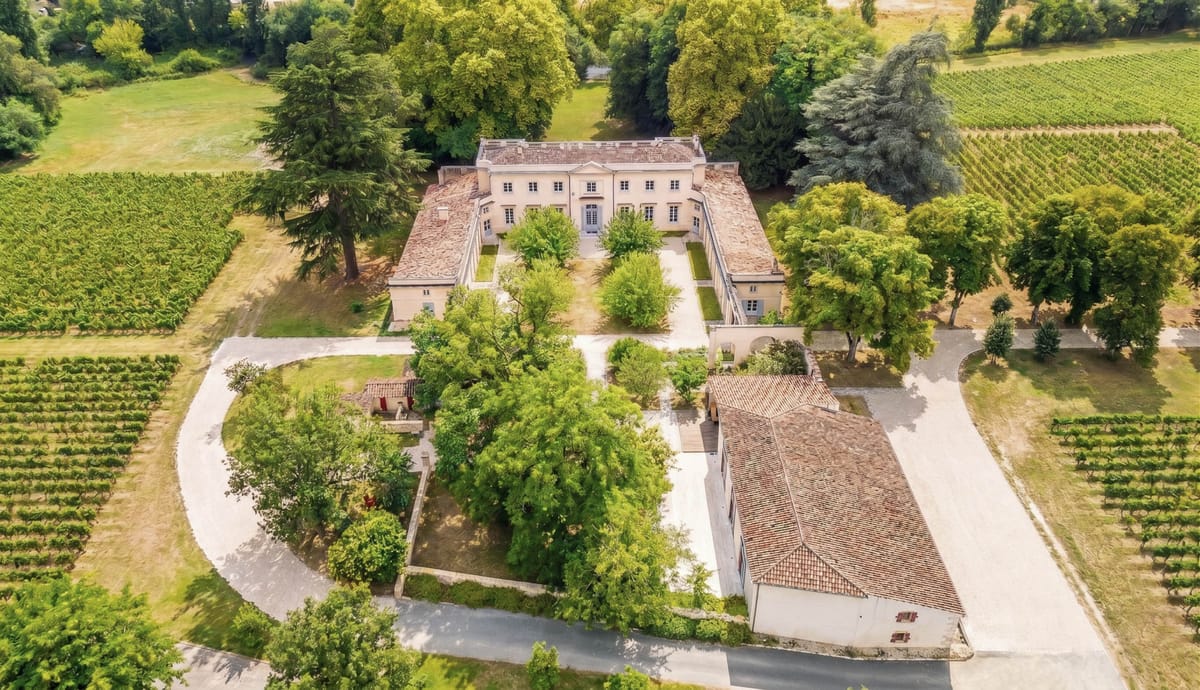
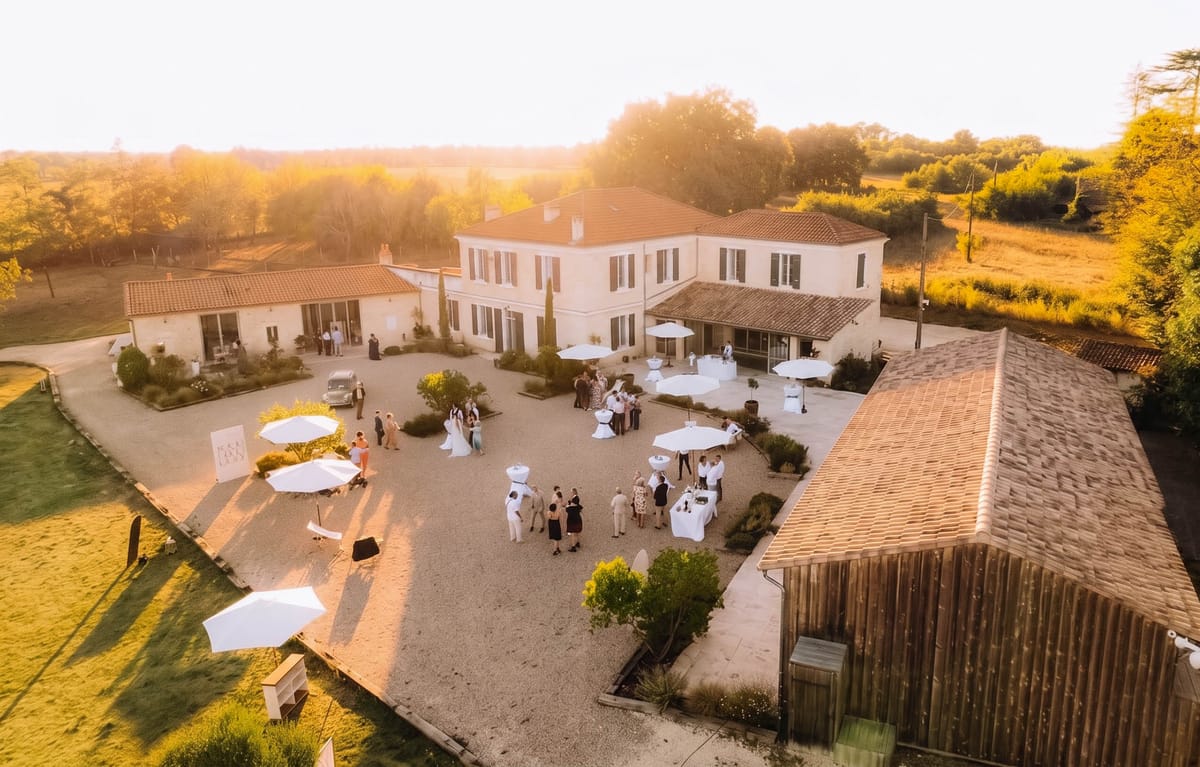
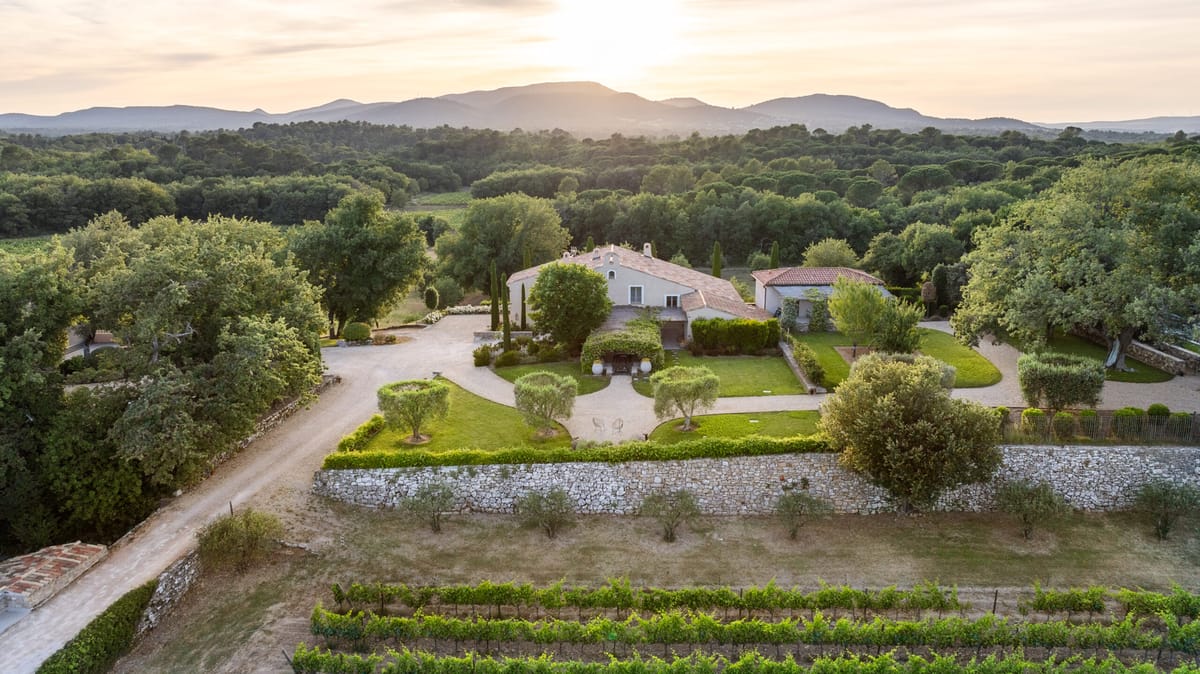
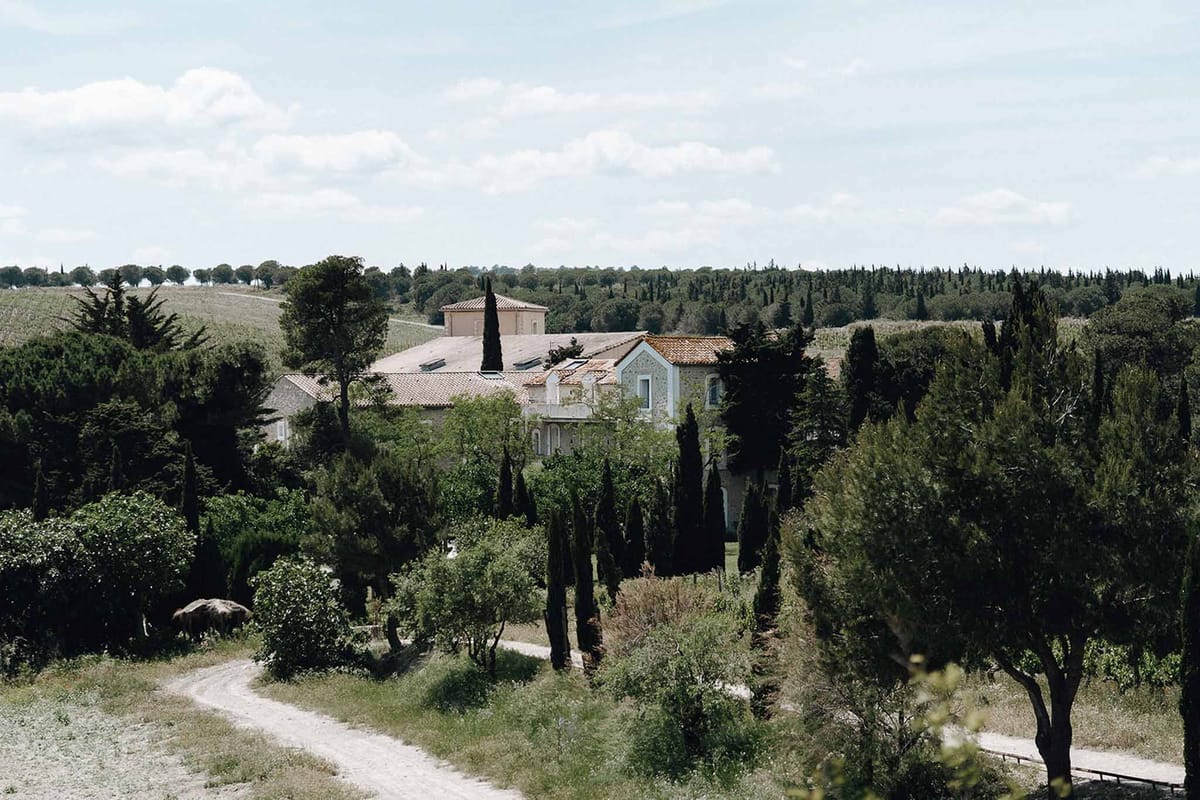
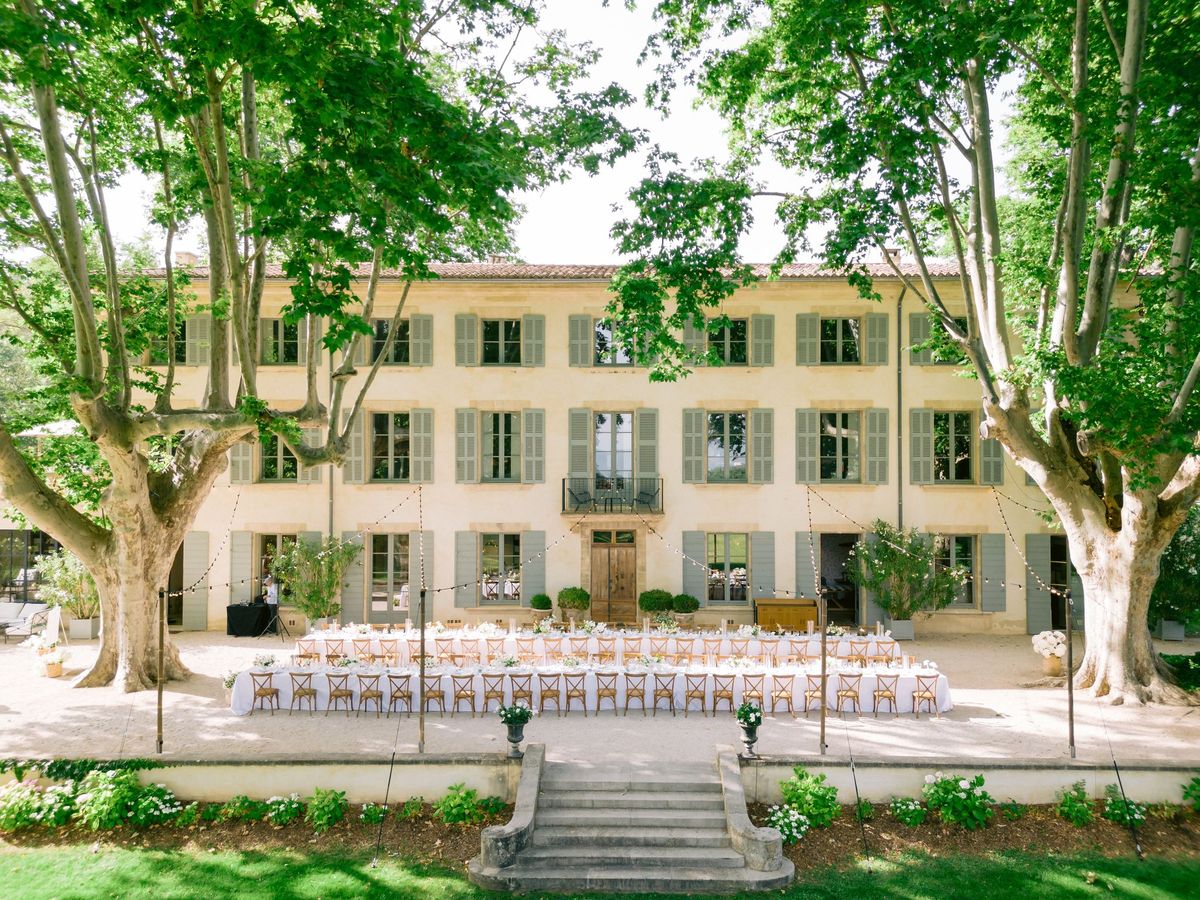
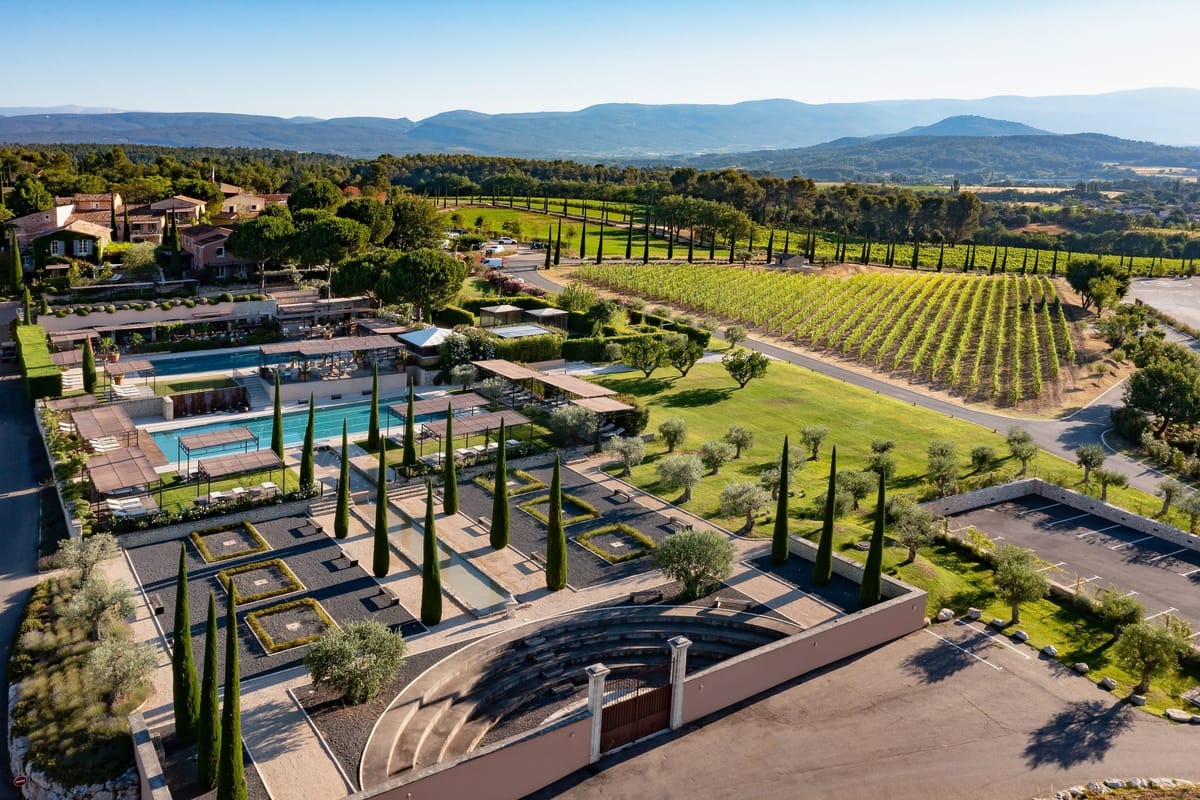
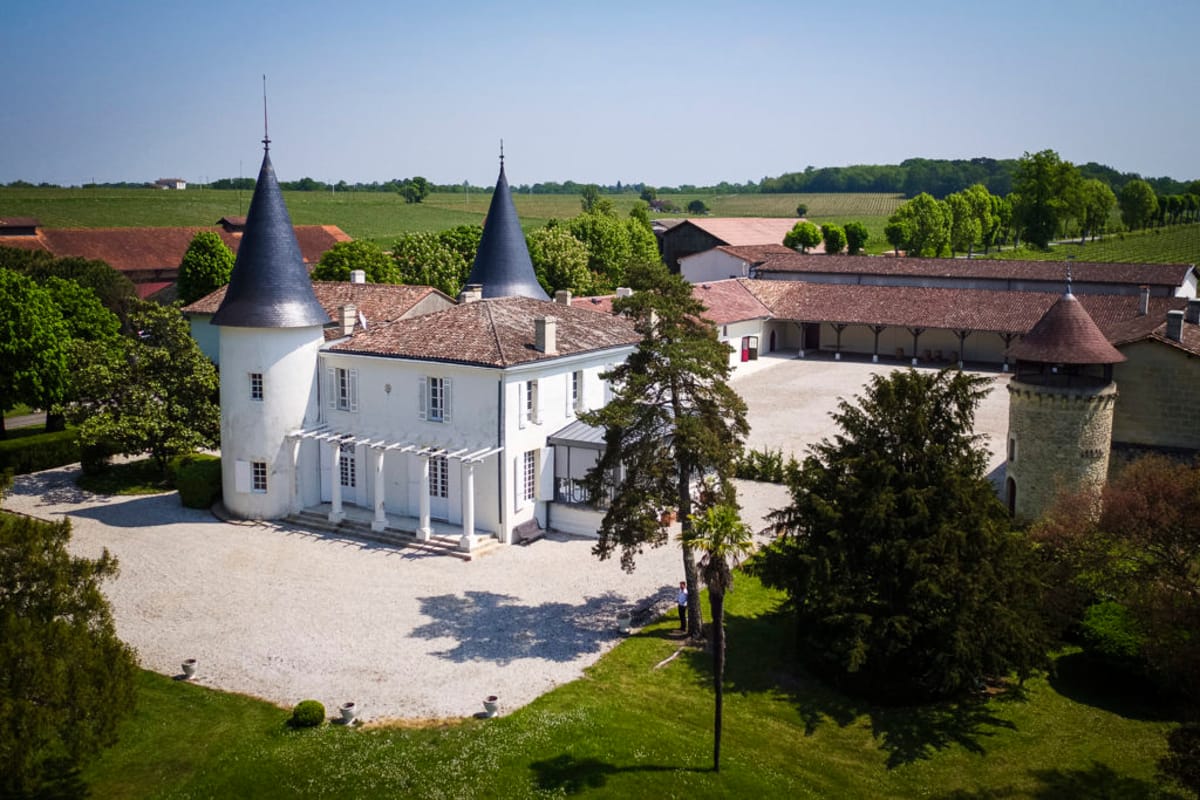
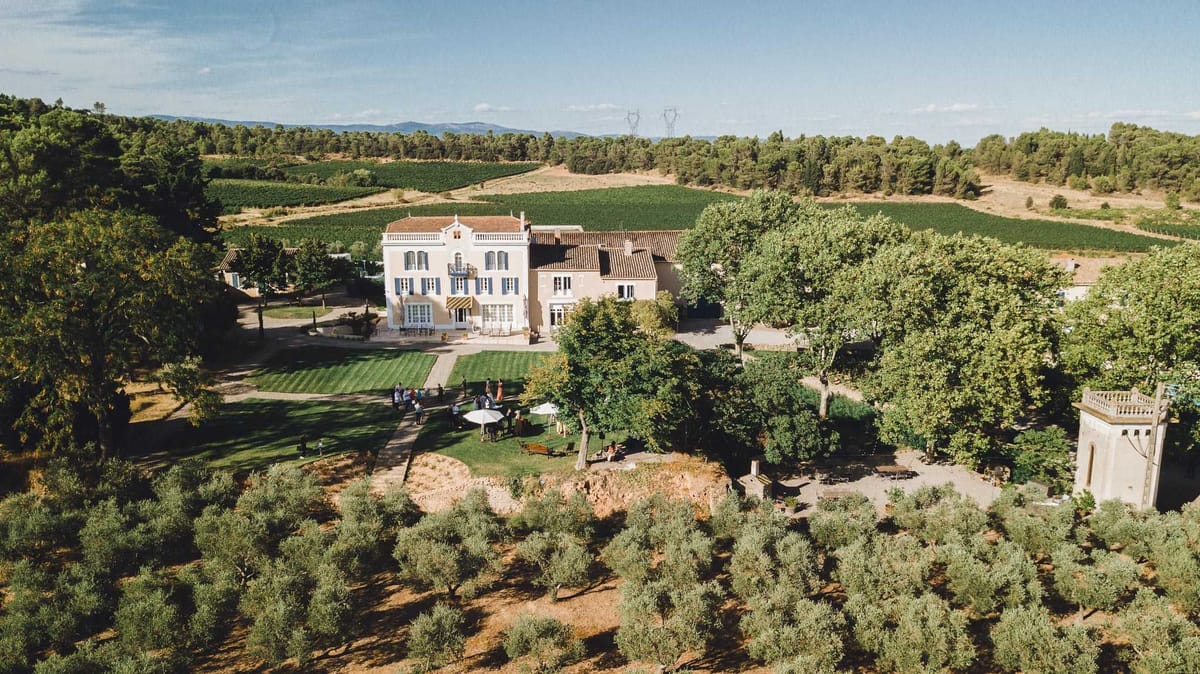
A vineyard wedding in France means marrying on a working wine estate, where rows of vines, a cellar, and the rhythm of the harvest become the backdrop to the celebration. What sets a vineyard apart from a château or a domaine is the wine itself: the estate grows and makes its own, so the setting is productive land rather than purely ornamental grounds, and the day is shaped around the cellar, the tasting, and the vines as much as the house. Couples drawn to a vineyard want that sense of place and provenance, a ceremony among the rows, dinner with the estate's own bottles on the table, and a relaxed, rooted atmosphere in place of grand formality. Wine estates are usually hired on a whole-estate basis, so the property hosts one wedding at a time, and many sit in France's named wine regions, from Bordeaux and Provence to the Loire, Languedoc, and Champagne.
Editor's Tip
A wine estate is a working farm first, so the ground between the rows is earth and gravel rather than lawn, and the prettiest spot for photographs is often the least practical for heels or a wheelchair. Walk the site with the estate before you settle on a ceremony spot, and plan footwear, paths, and access for working land rather than a manicured garden, especially if you are marrying close to harvest, when crews and machinery may be moving through the vines.
In brief
A French vineyard wedding is usually a whole-estate celebration on a working wine domaine: the couple hires the estate and its grounds exclusively, and holds the ceremony among the vines, dinner in or beside the cellar, and overnight stays on site. The estate's own wine is typically part of the day. Couples marrying from abroad hold a symbolic ceremony at the vineyard and complete the legally binding civil marriage in their home country. The cost depends mostly on the estate's size, the season, and whether catering and wine are taken in-house or brought in.
Key facts at a glance
Whole-estate hire. Most wine estates are hired whole-estate: the vines, cellar, and grounds are yours alone for the wedding, often across a long weekend, with no shared or overlapping events.
Guest capacity. Barrel rooms, cellars, terraces, and the vines themselves suit everything from intimate gatherings to large celebrations of several hundred guests.
On-site accommodation. Most sleep the wedding party on site in estate bedrooms or converted winemaker's cottages, with nearby hotels and gîtes for larger guest lists.
Wine and the working estate. The estate grows and makes its own wine, so tastings, cellar tours, and the estate's own bottles on the table are part of the celebration; many also have a pool, olive groves, or a chapel.
What it costs. Hire varies with the estate's size, the season, and whether it is taken dry-hire or all-inclusive; the estate's own wine is often included or served without corkage, and catering is usually the largest cost after the venue.
€14,000PricingFrom €14,000 · Hire + packagesPeak season (June-September) exclusive 200-hectare estate hire with accommodation for 28 guests, 2-night minimum
€10,355PricingFrom €10,355 · Hire + packagesPeak season (June to September) multi-day venue hire with in-house catering, 2-night minimum stay•2-Night Wedding Package — €10,355Multi-day exclusive use (2 nights) · Catering on all days with seasonal and local products · Night before meal for all guests staying on site · +2 more•3-Night Wedding Package — €12,355Multi-day exclusive use (3 nights) · Catering on all days with seasonal and local products · Night before meal for all guests staying on site · +2 more
€19,119PricingFrom €19,119 · All-inclusivePeak season (June to September) 3-night wedding weekend with the whole estate, in-house chef and planner, plus on-site guest accommodation, which is part of the minimum package but priced separately.
€9,800PricingFrom €9,800Whole-estate hire is priced in two parts: the venue (reception halls and outdoor spaces, 4 days) plus the on-site accommodation (3 nights), which is mandatory. Combined, a wedding starts at 9,800 EUR in low season (January to March, November and December) and reaches 15,800 EUR in high season (May to October). April sits in between at 11,900 EUR. A bespoke quote for a full package (catering, decoration, flowers, music, and more) is available on request.
€14,500PricingFrom €14,5002028 weekday package from €14,500 (Tuesday 3.30pm to Thursday noon); 2028 weekend package €17,500 (Friday 3.30pm to Sunday 4pm). Both include exclusive use of the estate and all 20 bedrooms. 2027: €14,800, plus tourist tax and a €300 cleaning fee. The new 300 m² Orangery, seating 200, is the reception space from April 2027.•2027 package — €14,800•2028 weekday package (Tuesday to Thursday) — €14,500•2028 weekend package (Friday to Sunday) — €17,500
€18,900PricingFrom €18,900 · Hire + packages2027 off-season exclusive estate hire with accommodation for up to 33 guests. 2027 high season from €19,900. 2028 from €20,900 for 2 nights and 3 days. Weekday weddings (Tuesday to Thursday) are charged at off-season rates.•2 night / 3 day wedding package 2027 — €18,900Exclusive use of the entire 7-hectare estate for multi-days · On-site accommodation for up to 29 guests (33 with extra beds) · Parking for up to 80 cars · +5 more•3 night / 4 day wedding package 2027 — €22,400Exclusive use of the entire 7-hectare estate for multi-days · On-site accommodation for up to 29 guests (33 with extra beds) · Parking for up to 80 cars · +5 more
€29,900PricingFrom €29,900 · Hire + packagesFrom €29,900 for the Essentielle format, a 3-day / 3-night multi-day wedding experience with exclusive use of the estate, on-site accommodation for up to 101 guests, access to Le Chai d'Eden and most of the outdoor ceremony and reception spaces, swimming pools, leisure activities, and personalised support from booking through to the end of the stay. This is a complete multi-day destination-wedding experience rather than a simple venue-hire fee.•Essentielle — €29,9003 days and 3 nights of exclusive use of the estate · On-site accommodation for up to 101 guests · Le Chai d'Eden reception hall plus most outdoor ceremony and reception spaces (Garden Féérie is a premium option) · +3 more•Signature — €56,5007 days and 7 nights · The same included services as the Essentielle format, over a longer stay•Absolue — €69,00010 days and 9 nights · The same included services as the Essentielle format, over the longest stay
€9,000PricingFrom €9,000From EUR 9,000 for a one-night weeknight privatisation (Tuesday to Wednesday) with on-site accommodation. The full Friday-to-Monday weekend, also including accommodation, is EUR 16,400.
€35,000PricingFrom €35,000 · All-inclusiveFull privatisation of the domain per day, including room-nights for all guests and breakfast, for a 2-night minimum stay. Available weekdays and weekends.
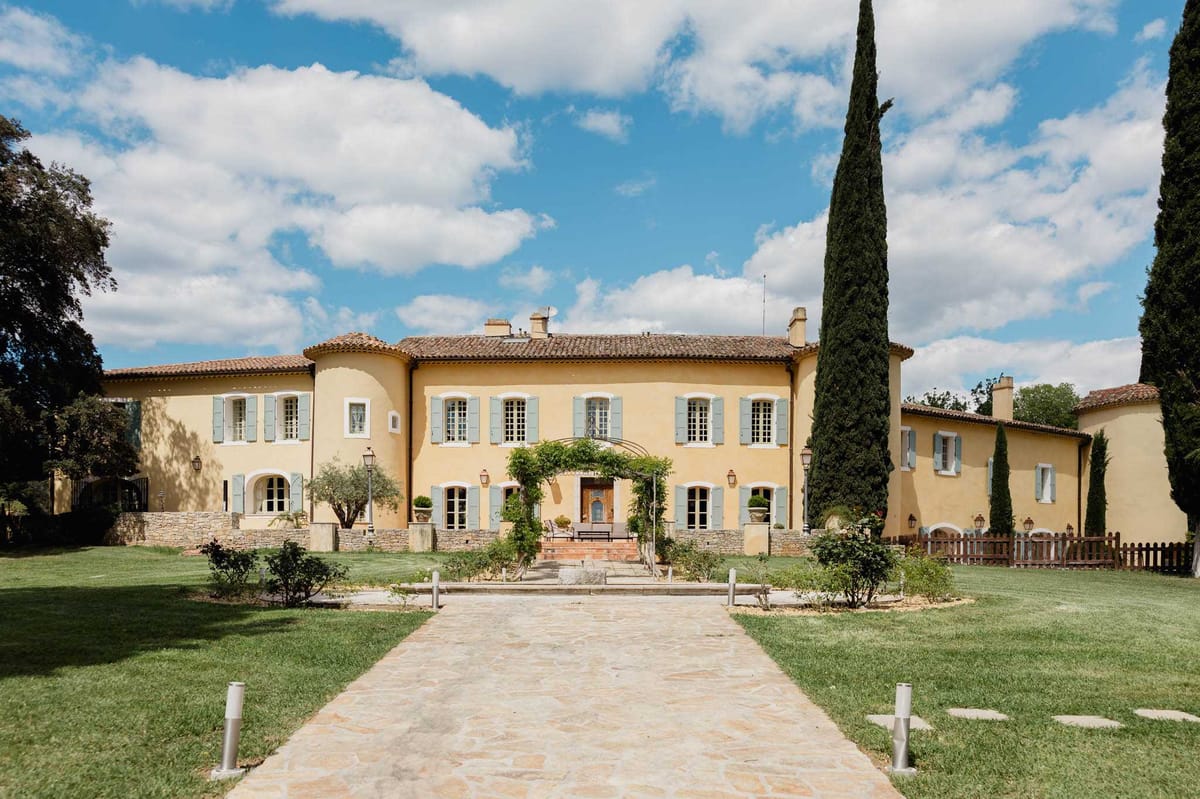
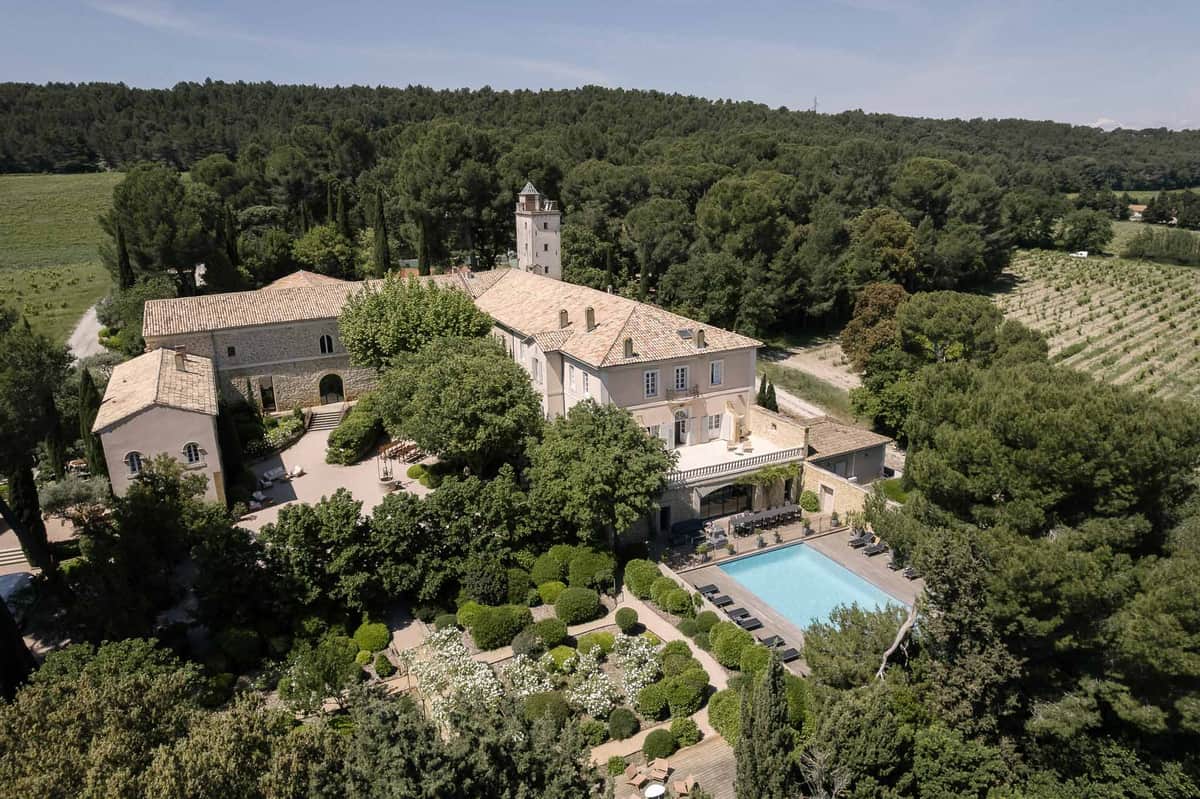
Château les Crostes is a 200-hectare wine estate near Lorgues in the Var, owned by Prince Félix and Princesse Claire de Luxembourg, producing rosé wines in one of Provence's most celebrated terroirs. The property underwent major renovations in 2022, and the result is a venue where working vineyard, olive groves, forests, and a lily-covered lake surround 12 rooms and suites sleeping 28 guests. This is an intimate estate, the maximum capacity means your wedding party has sole use of the entire 200 hectares, from the formal gardens and twin terraces to the library, grand piano, and greenhouse tucked among the grounds.
The estate operates on a dry-hire basis with full vendor freedom, and couples benefit from preferential rates on the domaine's own wines with no corkage fee on outside bottles. Seasonal pricing starts at €14,000 for two nights in the peak season, rising through May, summer, and September tiers. A no-curfew policy, spa with sauna, tennis court, pétanque, and gym give guests a full Provençal retreat between celebrations. The Gorges du Verdon and Côte d'Azur beaches sit within day-trip distance, adding excursion options for a longer wedding week.
Why We Love It
A 200-hectare working rosé estate owned by Luxembourg royalty, where 28 guests have exclusive use of vineyards, olive groves, and a lily-covered lake.
Max Guests
150
Sleeps
28
Chapel
No
From €14,000PricingFrom €14,000 · Hire + packagesPeak season (June-September) exclusive 200-hectare estate hire with accommodation for 28 guests, 2-night minimum/ venue hire
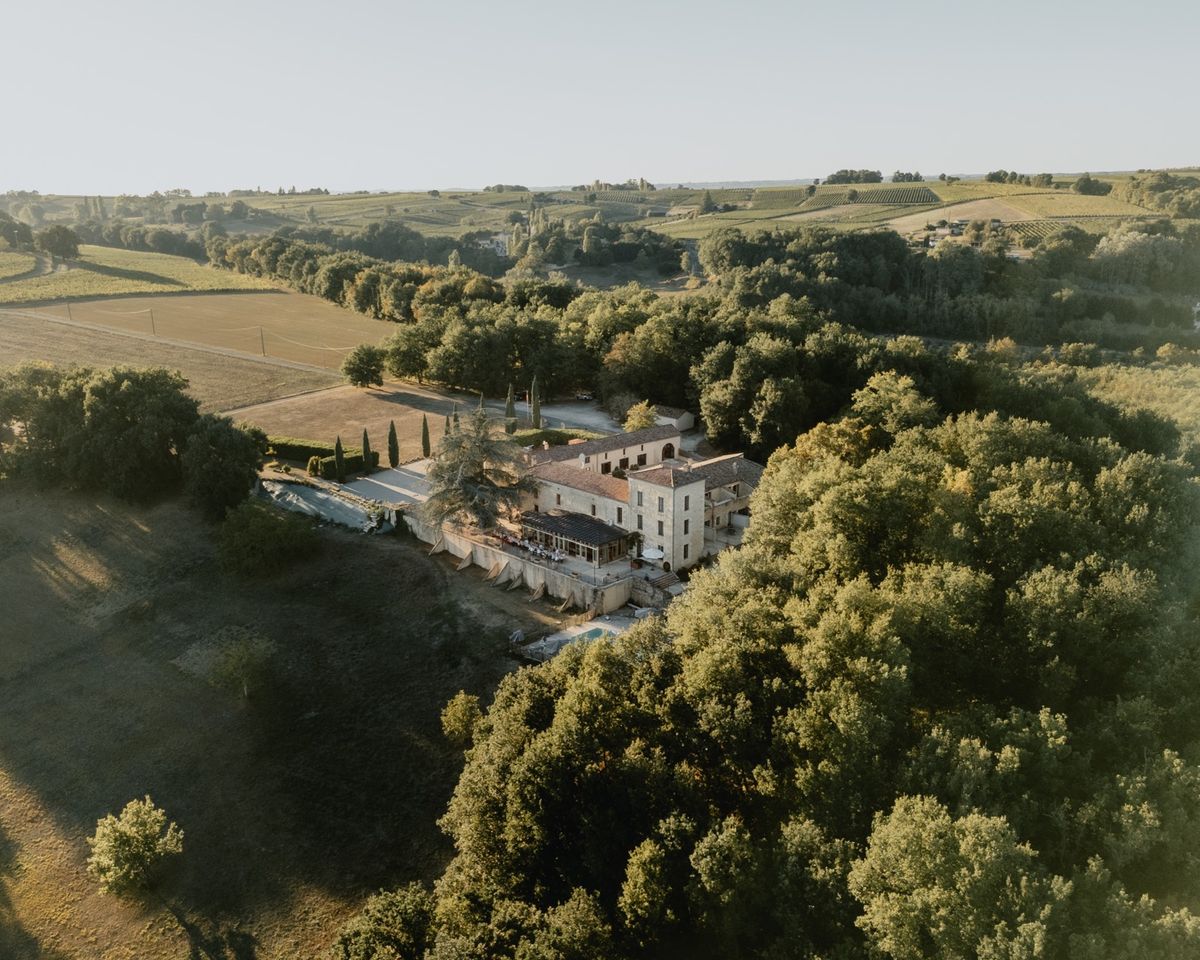
Château de Sanse is a 16th-century golden stone property in the Gironde, 20 minutes from Saint-Émilion in our broader Bordeaux selection, where cypress-lined pathways frame the approach to an estate that doubles as a three-star boutique hotel. The warm blond stone architecture is characteristic of this part of Bordeaux wine country, and the landscaped gardens, open terrace, and internal courtyard give couples multiple settings for a celebration of up to 100 guests. Ceremonies take place among the cypress trees or in the garden, with the countryside rolling away in every direction. The bistronomic restaurant on site uses seasonal, locally sourced Gironde ingredients, tying the wedding menu directly to the terroir.
Sixteen ensuite bedrooms sleep 32 guests, and the all-inclusive three-night packages start at €10,000, covering in-house chef catering on every day, a welcome dinner the night before, and a pool party BBQ the day after. The heated pool, fishing lake, and pétanque court fill the gaps between formal events, while cooking workshops offer a hands-on activity that connects the wedding weekend to the region's food traditions. A helipad adds an arrival option for those inclined, and the property is wheelchair accessible with two adapted rooms.
Why We Love It
Three-night all-inclusive packages with in-house chef, pool party, and cooking workshops in Saint-Emilion wine country from €10,000.
Max Guests
120
Sleeps
32
Chapel
No
From €10,355PricingFrom €10,355 · Hire + packages•2-Night Wedding Package — €10,355Multi-day exclusive use (2 nights) · Catering on all days with seasonal and local products · Night before meal for all guests staying on site · +2 more•3-Night Wedding Package — €12,355Multi-day exclusive use (3 nights) · Catering on all days with seasonal and local products · Night before meal for all guests staying on site · +2 more/ venue hire
Château du Puits es Pratx sits in the heart of the Minervois wine region in Occitanie, surrounded by its own vineyard just five minutes from the Canal du Midi and 35 minutes from Mediterranean beaches. The property's reception hall occupies a former wine cellar, fully restored and air-conditioned, where the bar is built inside the original wine press, a detail that grounds the celebration in the estate's winemaking heritage. Ceremonies take place under an arch in the vineyard itself, with formal gardens of fragrant rose bushes, century-old trees, and fountains providing cocktail settings among the vines.
The all-inclusive model is the distinguishing feature here: packages from €19,119, including the on-site guest accommodation, cover an in-house wedding planner, on-site coordinator, chef, tables, chairs, decorations, tableware, and a heated pool, spreading celebrations across three nights. The candlelit inner courtyard hosts the wedding banquet under the stars, and a jacuzzi and spa treatments give guests space to unwind. Up to 51 guests sleep on-site with additional accommodation in nearby Ginestas village. The property featured on Channel 4's Escape to the Château DIY and welcomes all ceremony types, including Catholic and Protestant services at the local village church.
Why We Love It
An all-inclusive Minervois vineyard château where the bar sits inside the original wine press and banquets unfold under courtyard stars.
Max Guests
120
Sleeps
51
Chapel
No
From €19,119PricingFrom €19,119 · All-inclusivePeak season (June to September) 3-night wedding weekend with the whole estate, in-house chef and planner, plus on-site guest accommodation, which is part of the minimum package but priced separately./ venue hire
Villefranche-sur-Saône (about 30 minutes by car), Rhone
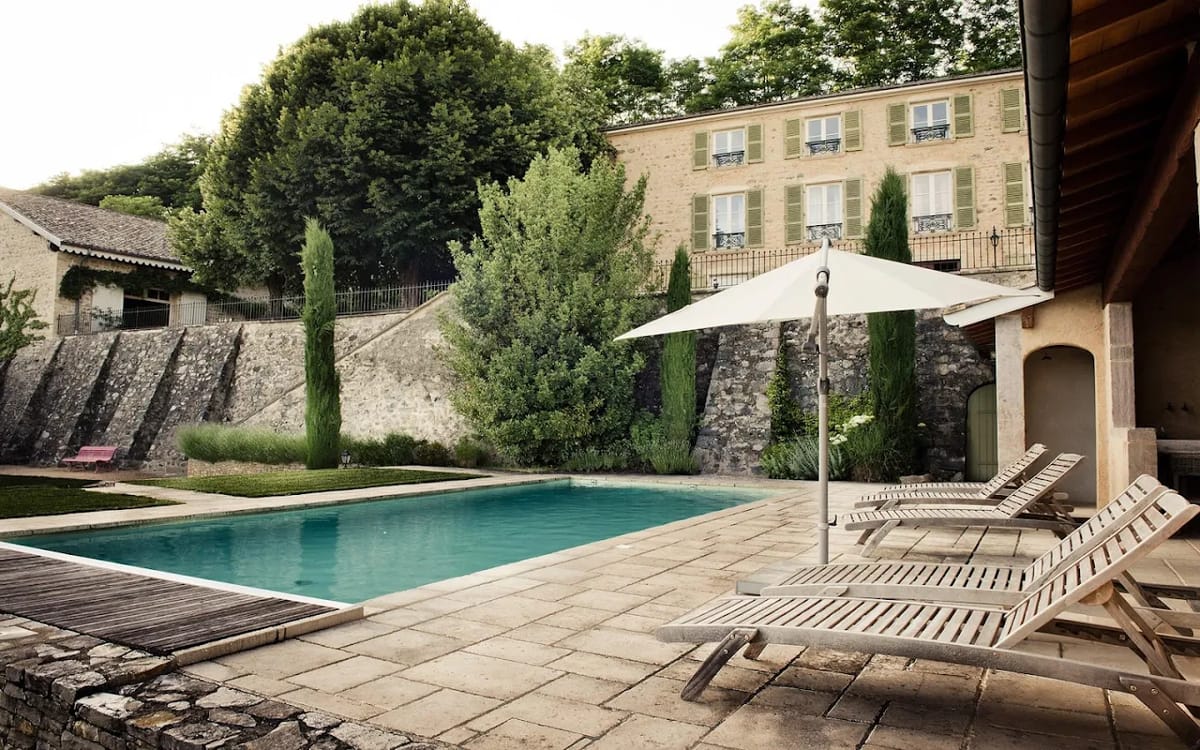
Domaine de Vavril sits in the heart of the Beaujolais, about 30 minutes from Villefranche-sur-Saône, with a wide view over the valley and the vines. Fifteen bedrooms sleep 41 guests on site, and the estate is given over to one wedding at a time for up to 150 guests.
A swimming pool and a recommended-supplier catering list support a relaxed country celebration in the Rhône wine country. Starting from €9,800.
Why We Love It
A Beaujolais wine estate with valley views, fifteen bedrooms, and a pool, given over to one wedding at a time.
Max Guests
150
Sleeps
41
Chapel
No
From €9,800PricingFrom €9,800Whole-estate hire is priced in two parts: the venue (reception halls and outdoor spaces, 4 days) plus the on-site accommodation (3 nights), which is mandatory. Combined, a wedding starts at 9,800 EUR in low season (January to March, November and December) and reaches 15,800 EUR in high season (May to October). April sits in between at 11,900 EUR. A bespoke quote for a full package (catering, decoration, flowers, music, and more) is available on request./ venue hire
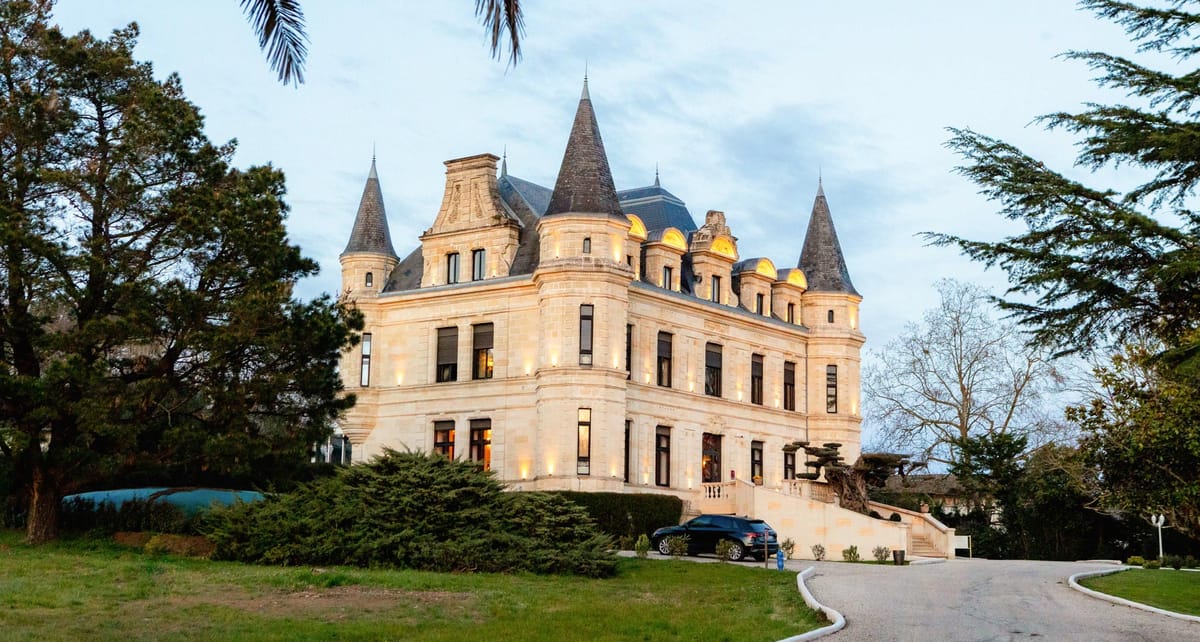
Château Camiac is an 1834 property in Bordeaux's Entre-Deux-Mers region that completed an extensive two-year renovation in 2024, emerging as a contemporary wedding venue with freshly appointed interiors. The estate sits among the rolling vineyards and golden fields between the Garonne and Dordogne rivers, 30 kilometres from Bordeaux. A 290-square-metre silhouette tent marquee with parquet floor, integrated lighting, and side curtains serves as the primary reception space, seating up to 200 guests for dinner and dancing in all weather conditions. The wrought iron ceremony arch positions vows against the vineyard and lakeside landscape.
Twenty rooms across the main château and annex sleep 49 guests, with an elevator in the main building and individually styled interiors using high-quality materials throughout. Le Jardin des Mirabelles, the on-site restaurant, provides bistronomic catering focused on regional flavours. On-site wine tastings tie the celebration back to the vineyard, and a dedicated project manager carries the planning for couples coordinating a multi-day Bordeaux wedding from abroad.
Why We Love It
A newly renovated 1834 château with a 290-square-metre marquee, on-site restaurant, and vineyard views in Entre-Deux-Mers.
Max Guests
200
Sleeps
49
Chapel
No
From €14,500PricingFrom €14,500•2027 package — €14,800•2028 weekday package (Tuesday to Thursday) — €14,500•2028 weekend package (Friday to Sunday) — €17,500/ venue hire
Bordeaux (50km / approximately 1 hour by car), Gironde
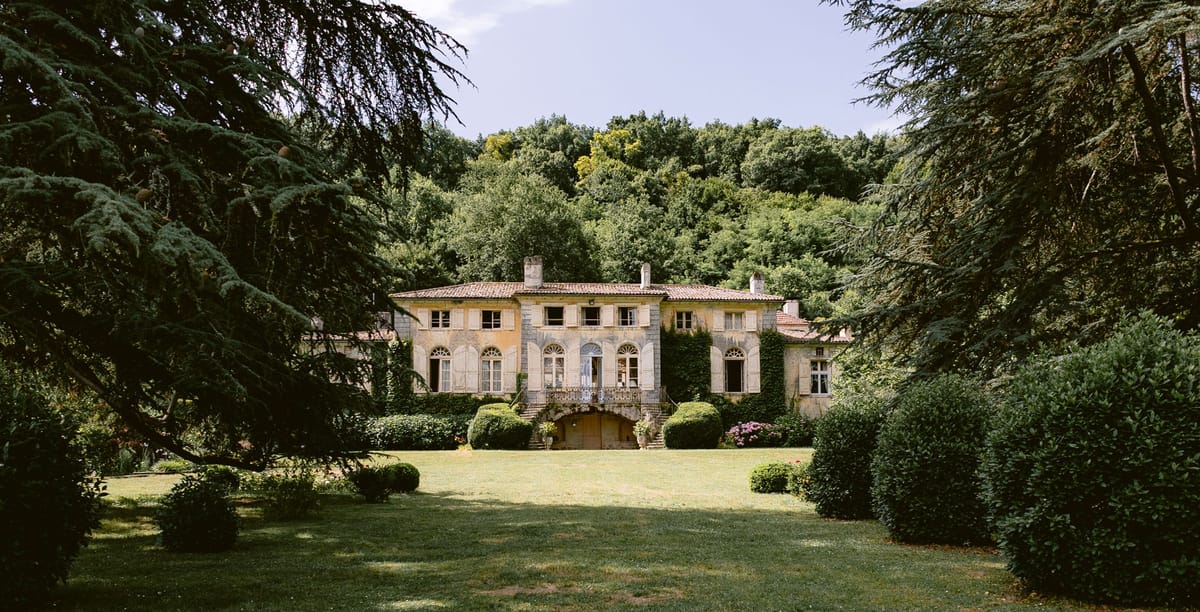
Domaine Perrotin is a vineyard estate in the Gironde distinguished by its extraordinary trees: 400-year-old Lebanese cedars tower over the courtyard, forming a living canopy that has been growing since the early 1600s. The Galerie Cédrus reception hall takes its name from these cedars, offering 140 square metres of open space beneath soaring ceilings and exposed beams. Rose-filled gardens, a secluded pool, and views over the surrounding vines create a sequence of settings that carry couples and guests from ceremony through cocktails to dinner without ever leaving the vineyard landscape.
With 33 guests accommodated on-site, Domaine Perrotin suits couples planning a multi-day vineyard gathering where the entire party stays together beneath the same ancient trees. The estate's eco-friendly approach to land management and organic vineyard practices reflect a growing priority among international couples. Positioned 50 minutes from Bordeaux and within the broader Gironde wine country, the property offers vineyard authenticity without the premium pricing of the most established appellations, while keeping the destination-wedding infrastructure, airports, rail connections, and local suppliers, within practical reach.
Why We Love It
Four-century-old Lebanese cedars shade a courtyard estate where the Galerie Cédrus reception hall seats guests beneath original beams.
Max Guests
200
Sleeps
33
Chapel
No
From €18,900PricingFrom €18,900 · Hire + packages•2 night / 3 day wedding package 2027 — €18,900Exclusive use of the entire 7-hectare estate for multi-days · On-site accommodation for up to 29 guests (33 with extra beds) · Parking for up to 80 cars · +5 more•3 night / 4 day wedding package 2027 — €22,400Exclusive use of the entire 7-hectare estate for multi-days · On-site accommodation for up to 29 guests (33 with extra beds) · Parking for up to 80 cars · +5 more/ venue hire
Domaine de Christin is a private wine estate of 60 hectares in the Languedoc, a few minutes from Sommières. Its reception hall, Le Chai d'Eden, is air-conditioned, soundproofed and seats 200 for dinner. Outdoors the estate opens from a courtyard for 160 to a garden holding 400 for cocktails. Couples take the property for 3 days and 3 nights, with 101 sleeping on site.
Why We Love It
A 60-hectare private wine estate in the Languedoc, taken for 3 days at a time, seating 200 indoors and 400 outside.
Max Guests
400
Sleeps
101
Chapel
No
From €29,900PricingFrom €29,900 · Hire + packages•Essentielle — €29,9003 days and 3 nights of exclusive use of the estate · On-site accommodation for up to 101 guests · Le Chai d'Eden reception hall plus most outdoor ceremony and reception spaces (Garden Féérie is a premium option) · +3 more•Signature — €56,5007 days and 7 nights · The same included services as the Essentielle format, over a longer stay•Absolue — €69,00010 days and 9 nights · The same included services as the Essentielle format, over the longest stay/ venue hire
Château de l'Hospital runs an organic AOC Graves vineyard on a four-hectare walled estate 24 km south of Bordeaux, in the gravel-soil terroir that defines the appellation. The 18th-century Monument Historique was built by Victor Louis, the architect behind Bordeaux's Grand-Théâtre, and brought back to working order between 2012 and 2017 with a focus on sustainability and a light hand on the original architecture. The estate's vineyard sits adjacent to the château, and tastings and blending workshops can be arranged for guests across the wedding weekend.
Couples book the entire estate, with the 140-square-metre Orangery Hall seating 120 for dinner, indoor music until 4 AM, and four ground-floor lounges providing quieter settings between events. Accommodation sleeps 49 across four buildings: four suites in the main château, four family rooms in the south wing overlooking the vines, a self-contained north-wing apartment, and a dormitory above the Orangery. The walled park, working vineyard, and Sunday brunch in the gardens give a Bordeaux-region vineyard wedding its full weekend rhythm.
Why We Love It
An organic AOC Graves vineyard around an 18th-century Victor Louis château, with tastings, blending workshops, and the whole estate privatised for the weekend.
Max Guests
120
Sleeps
49
Chapel
No
From €9,000PricingFrom €9,000From EUR 9,000 for a one-night weeknight privatisation (Tuesday to Wednesday) with on-site accommodation. The full Friday-to-Monday weekend, also including accommodation, is EUR 16,400./ venue hire
Domaine de la Rose Blanche is an 18th-century wine estate in the Gironde, ten minutes from Bordeaux, restored for weekend-long exclusive hire. The property pairs its own two hectares of vines with a swimming pool and 38 beds on site, so the wedding party stays together across the celebration.
Free-choice catering lets couples bring their own suppliers, and the Bordeaux vineyards and city sit within easy reach for the wider weekend. Starting from €8,900.
Why We Love It
An 18th-century Bordeaux wine estate with its own vines, a pool, and 38 beds on site for a weekend-long private celebration.
Max Guests
90
Sleeps
38
Chapel
No
From €11,900PricingFrom €11,900 · All-inclusivePeak season (June-September) exclusive estate rental for up to 90 guests, 2-night minimum stay/ venue hire
Domaine de Blacailloux is a 500-hectare organic wine estate in the Var, around 45 minutes from Aix-en-Provence, where three renovated bastides and twenty suites sit among wide vineyard views. The scale of the estate gives a celebration of up to 200 guests room and seclusion across the Provençal landscape.
Two reception areas, a swimming pool, and full exclusive use anchor a warm-season celebration among the organic vines. Starting from €18,690.
Why We Love It
A 500-hectare organic Provençal wine estate with three bastides, twenty suites, and wide vineyard views.
Max Guests
290
Sleeps
40
Chapel
No
From €18,690PricingFrom €18,690Peak season (June-September) exclusive venue hire for up to 290 guests, 2-night minimum stay/ venue hire
Château l'Hospitalet is a five-star wine resort spanning 1,000 hectares near Narbonne on the Mediterranean coast. A working wine estate with a private beach, a Michelin Green Star restaurant, and a spa, it pairs a coastal vineyard setting with full resort facilities.
The resort runs all-inclusive celebrations for up to 300 guests, with 41 rooms and suites on site for the couple and their guests. Its coastal Languedoc position brings beach, vineyard, and sea into one estate for the weekend. Starting from €15,000.
Why We Love It
A five-star Mediterranean wine resort near Narbonne with a private beach, Michelin Green Star dining, and 41 rooms across 1,000 hectares.
Max Guests
300
Sleeps
82
Chapel
No
From €15,000PricingFrom €15,000 · All-inclusivePeak season (June-September) all-inclusive wedding package for up to 300 guests, minimum 2 nights/ venue hire
Domaine de Fontenille is a 17th-century Provençalbastide in the Luberon, 30 minutes from Aix-en-Provence, set within 35 hectares of its own vineyards and gardens. The estate runs as a five-star hotel with a chef-led kitchen, and exclusive use gives the wedding party the bastide, the grounds, and the vines for the celebration.
Twenty-five bedrooms sleep 50 guests on site, with a swimming pool and in-house catering for up to 130 guests. The Luberon's villages and wine country frame the wider weekend. Starting from €35,000.
Why We Love It
A 17th-century Luberon bastide with 35 hectares of its own vineyards and gardens, a chef-led kitchen, and exclusive use for up to 130.
Max Guests
130
Sleeps
50
Chapel
No
From €35,000PricingFrom €35,000 · All-inclusiveFull privatisation of the domain per day, including room-nights for all guests and breakfast, for a 2-night minimum stay. Available weekdays and weekends./ venue hire
Hôtel La Coquillade is a five-star Relais & Châteaux estate in Gargas, at the heart of the Luberon Regional Natural Park, where an 11th-century hamlet has been restored into a five-star resort surrounded by vineyards, olive groves, and lavender fields. The estate produces its own wine at Domaine de la Coquillade, and guests sleep in 69 rooms, including newly launched Luberon Suites decorated with antiques from Isle-sur-la-Sorgue, each fitted with a personal wine fridge stocked with the estate's vintages. The open-air amphitheatre, framed by cypress trees and classical sculptures, seats 150 for ceremonies with views stretching across the vines to Mont Ventoux.
The property operates with the full infrastructure of a five-star hotel: an award-winning vinotherapy spa, three restaurants, two bars, and a soundproof Art Chapel that allows dancing with no curfew restriction. Wedding celebrations start from €20,000, and couples have complete vendor freedom alongside on-site planning support. The Sunset Lounge seats 80 for dinner overlooking the estate's vineyards, while indoor salons with open views from the Luberon to Mont Ventoux provide year-round alternatives. Avignon TGV sits 50 minutes away, putting Paris within a half-day journey for arriving guests.
Why We Love It
A restored 11th-century hamlet producing its own wine, with a vinotherapy spa and soundproof Art Chapel, five-star Luberon at its most complete.
Max Guests
150
Sleeps
138
Chapel
No
From €15,000PricingFrom €15,000 · Hire + packagesPeak season (June-September) exclusive venue hire at this 5-star Luberon estate for up to 150 guests/ venue hire
Château de Seguin is an 18th-century property set within a 173-hectare wine estate in the Gironde, just 20 minutes from Bordeaux, placing it squarely in one of the world's most celebrated wine-producing landscapes. The château's classical proportions and pale stone façade rise above the surrounding vines, giving couples a ceremony and portrait backdrop where architecture and vineyard merge into a single composition. With capacity for up to 300 guests, this is a vineyard venue built for larger celebrations where the scale of the estate matches the scale of the guest list. The grounds carry the quiet prestige of Bordeaux wine country without any need for added decoration; the vines themselves set the tone.
Turnkey wedding services are available, which simplifies planning considerably for couples coordinating from abroad. Accommodation on site hosts 33 overnight guests, so you will want to arrange additional lodging nearby for bigger parties. Catering comes through a recommended list, letting you choose providers who can pair courses with local Bordeaux wines from the surrounding appellation.
Why We Love It
An 18th-century château framed by 173 hectares of Bordeaux vines gives large celebrations a sense of place no ballroom can match.
Max Guests
300
Sleeps
33
Chapel
No
From €8,625PricingFrom €8,625 · Hire + packagesPeak season (June-September) exclusive venue hire for up to 300 guests/ venue hire
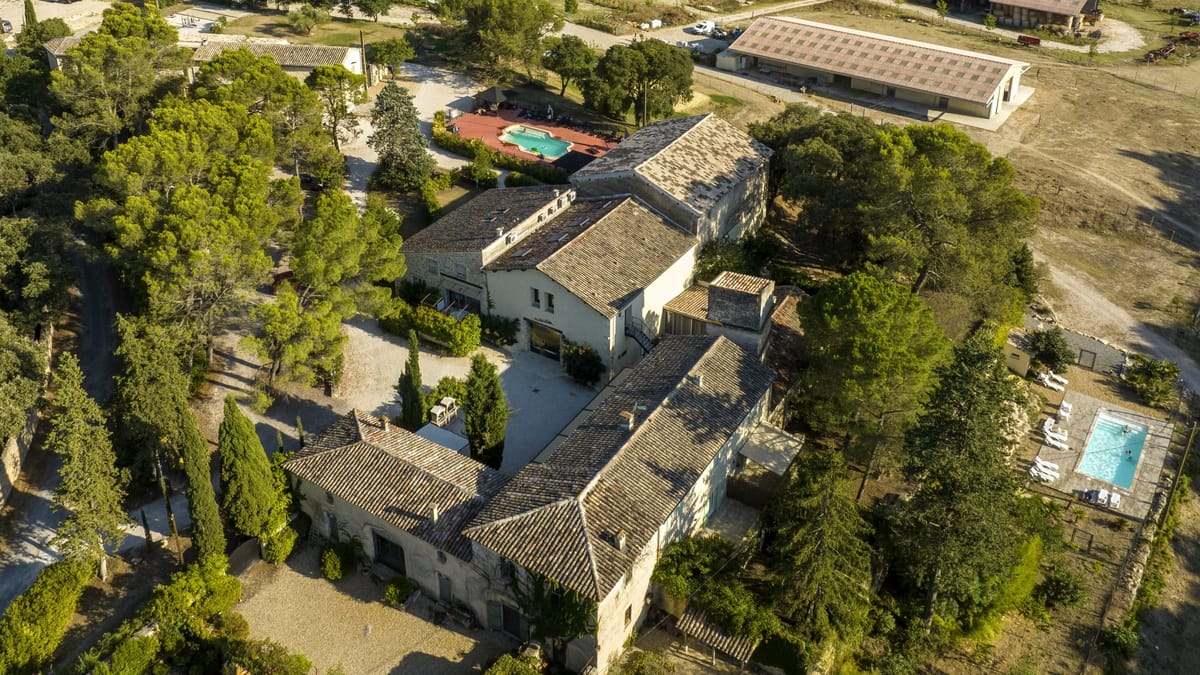
Chateau Canet sits on 150 hectares of vine-covered land in the Aude, just 15 kilometres from Carcassonne, where the vineyard is joined by olive groves and pine forests that give the property a distinctly southern French character. The scale of the estate means your celebration of up to 80 guests feels private and unhurried, with the surrounding vines visible from nearly every gathering point on the property. This is a vineyard venue where the landscape is layered, not a single monoculture but a patchwork of Mediterranean agriculture that shifts the mood as you move through the grounds. The rustic textures of the estate, stone walls, working land, sun-warmed earth, anchor the day in the kind of authenticity that only a real vineyard can deliver.
On-site cottages sleep up to 45 guests, which means more than half your party can wake up on the estate among the vines the morning after. Catering is arranged through a recommended list, giving you flexibility to work with local providers who know the regional produce. The property is pet-friendly and eco-conscious, and a pool on site gives guests a place to unwind during a longer vineyard weekend.
Why We Love It
The mix of vines, olive groves, and pine forests creates a layered vineyard landscape you rarely find on a single estate.
Max Guests
80
Sleeps
39
Chapel
No
From €18,000PricingFrom €18,000 · Hire + packagesPeak season (June-September) elopement venue for up to 80 guests/ venue hire
Wine estates are not all the same, and the region shapes the day as much as the architecture does.
In Bordeaux and Saint-Émilion, the wine châteaux pair a grand château silhouette with working vineyards, for a formal celebration rooted in one of the world's best-known wine regions.
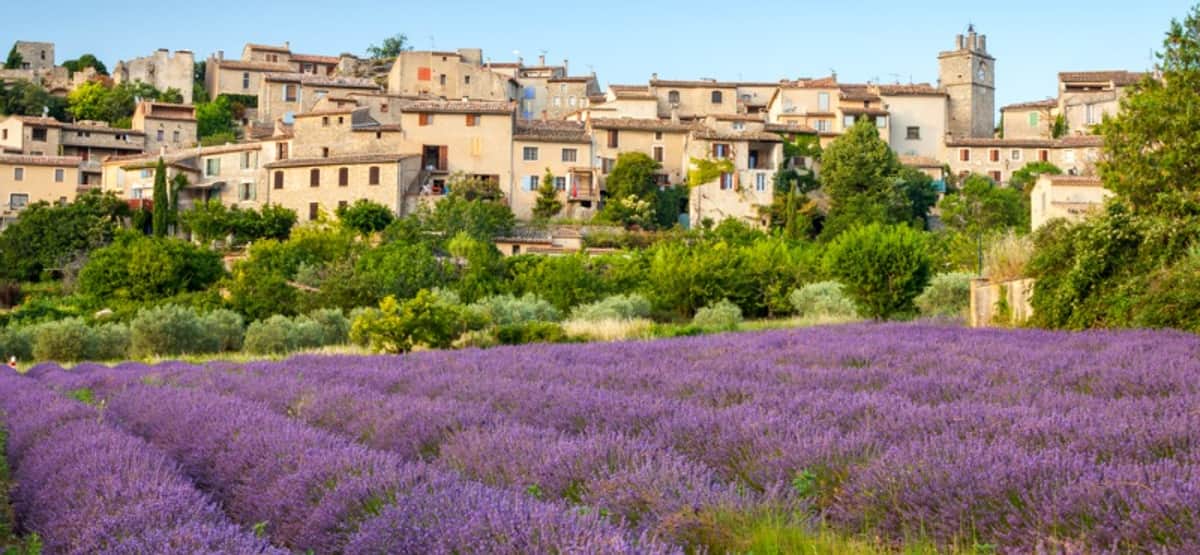
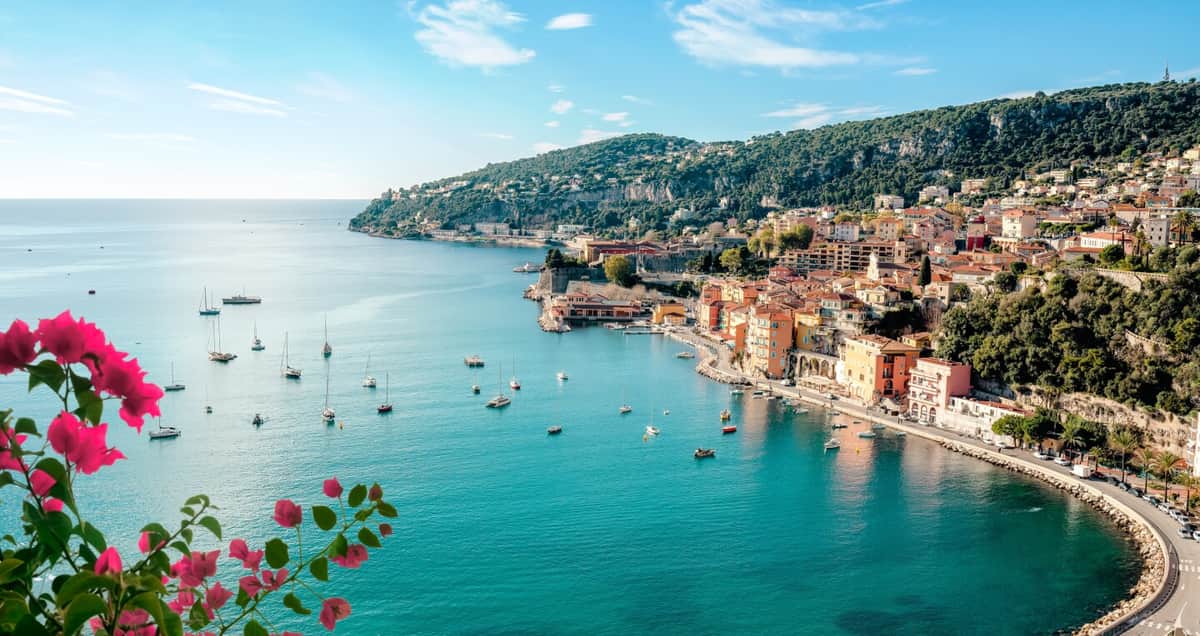
Across Provence and Languedoc, the southern domaines bring rosé, olive groves, a pool, and outdoor ceremony space among the vines, suited to a warm-season celebration with golden light.
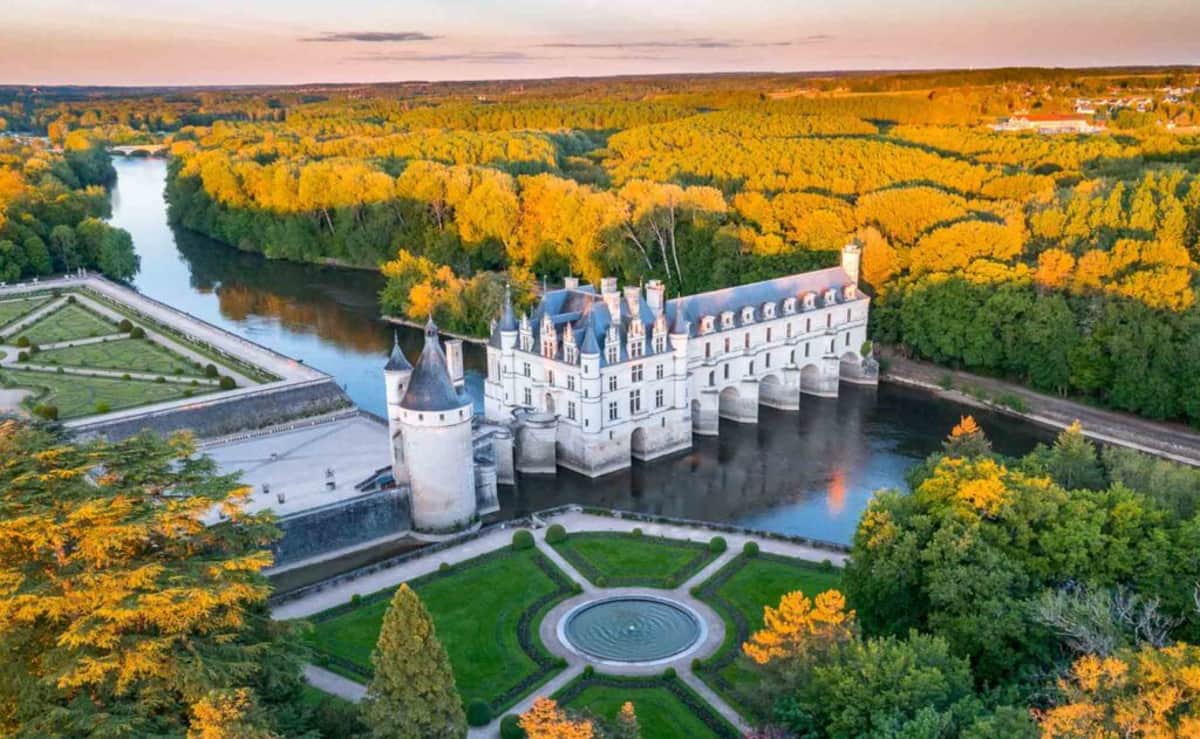
In the Loire, the river-valley estates sit among both vines and châteaux, blending wine country with the classic château look.
In Champagne, the sparkling-wine houses open their cellars and chalk caves for a distinctive celebration within easy reach of Paris.
As with any estate, match the property to your guest count rather than the prestige of the label; the best fit is usually the estate whose cellar and grounds seat everyone comfortably.
Expert advice
Expert Tips for This Style
Ask exactly what the estate's wine policy includes
On a wine estate the bottles on your tables are part of the experience, but the terms vary more than couples expect. Some estates include a set amount of their own wine in the hire, some waive corkage so you can serve their range at cost, and others restrict you to their list entirely. Confirm what is included, what corkage applies to any outside wine or spirits, and whether tastings and cellar tours for your guests are part of the package, before you weigh estates against each other on price.
Can foreign couples legally marry at a French vineyard?+
No. French law recognises only a civil marriage at a town hall (mairie), and its 30-day local residency rule is impractical for couples travelling in. Almost everyone completes the legal civil marriage at home and holds a symbolic ceremony among the vines instead. Our guide to getting married legally in France has the full steps.
Is the estate's own wine included, or is there a corkage charge?+
It varies by estate. Some include a set amount of their own wine in the hire fee, some let you serve their range with little or no corkage, and some require you to buy exclusively from their cellar. Outside wine, Champagne, and spirits are where corkage usually applies. Always confirm the wine terms in writing, because they shape the real cost of a vineyard wedding as much as the hire fee does.
What drives the cost of a vineyard wedding?+
The biggest levers are whether you hire the estate dry (venue only) or all-inclusive, and the catering model: in-house, a recommended-supplier list, or an external caterer billed per head. The estate's wine policy and corkage terms also matter. Catering is the largest line after the venue itself, and season and mid-week versus weekend dates move the figure too.
How many guests can a vineyard hold, and where do they sleep?+
Celebration capacity and sleeping capacity are not the same number. An estate that seats a large dinner may sleep far fewer on site, so couples commonly house the overflow at nearby hotels and run shuttles. On a rural wine estate, plan the bed count and guest transport early rather than as an afterthought.
When is the best time of year for a vineyard wedding, and can we marry during harvest?+
May to September is peak for weather and demand. Harvest, usually September into October, makes for striking photographs, but the estate is busy bringing in and pressing the grapes, so dates and access can be limited then. Shoulder months and mid-week dates bring lower pricing, better availability, and easier access to in-demand suppliers.
Can we bring our own caterer and suppliers to a vineyard wedding?+
It depends on the estate's model. Some wine estates run all-inclusive, with an in-house chef and a fixed supplier list; others hire on a dry-hire basis and let you bring your own caterer and build your own team. Free-choice catering gives you the most creative control but more to coordinate, while an all-inclusive estate trades flexibility for a lighter planning load. Confirm the catering model and any vendor restrictions in writing before you commit, because it shapes both the budget and how much of the planning falls to you.
What happens if it rains at a vineyard wedding?+
A working estate is mostly outdoor space, so a wet-weather plan matters more than at an indoor venue. Most wine estates can move the ceremony and dinner into a barrel room, a cellar, an orangery, or a covered terrace, and many keep a marquee or a permanent reception structure for exactly this. Ask to see the indoor or covered fallback for your full guest count before you book, rather than assuming the lawn or the vines will always be usable.
How far in advance should we book a vineyard wedding in France?+
For a peak-season Saturday, twelve to eighteen months ahead is normal, and the most sought-after estates book further out still. Whole-estate hire means each property takes one wedding at a time, so popular dates disappear quickly. If your dates are flexible, a shoulder-season or mid-week wedding opens up availability and usually costs less, while giving you a better choice of photographers and other in-demand suppliers.