Skip to content
Château de Vallery | Wedding Venues in Burgundy
Curated Guide

Wedding Venues in Burgundy

A curated shortlist of wedding venues in burgundy, each reviewed by our team.

Discover Château de Vallery
French Wedding Style
French Wedding Style Editorial
Updated May 2026

A Burgundy wedding places couples within one of France's most historically dense wine regions, where Cistercian abbeys, Renaissance châteaux, and 17th-century stone barns sit alongside the appellations of Romanée-Conti, Chablis, and the Côte de Nuits. The region's wedding estates are almost always hired whole-property, so you have the house and grounds to yourselves, and most pair the celebration with the wine, food, and architectural heritage that define Burgundy.

Editor's Tip

Burgundy's estates fall into four working styles, and the choice shapes the day as much as the headcount does. Working wine estates put the wedding inside an active producer. Monastic settings let Cistercian heritage frame the celebration. Renaissance and aristocratic châteaux bring formal grounds and historic interiors. Stone-barn-and-orangery estates pair 17th-century agricultural architecture with modern reception scale. Match the style to your photography, your guest profile, and your wine-region preference: the Yonne for Chablis-adjacent, the Côte d'Or for Romanée-Conti-adjacent, and the Champagne border for cross-region access.

Burgundy is geographically and culturally heterogeneous, so the sub-region matters as much as the estate. Northern Burgundy in the Yonne sits about 90 minutes from Paris by car or 70 minutes by direct TER train, suiting weddings where guests fly into Paris CDG. The Côte d'Or around Beaune is the wine-tourism heart of the region, closer to Lyon and Geneva airports and reachable from Paris in about 90 minutes by TGV.

The Saône-et-Loire south leans toward Lyon, while the Nivernais west and the Dijon area each carry their own character. A few estates sit right on the Champagne and Île-de-France borders, within an easy hop of Paris.

For broader French wedding venue browsing, start at the full venue directory; for adjacent shortlists, see the flagship France chateau guide, Burgundy chateau-only sister hub, countryside wedding venues across France, Côte d'Azur wedding venues, south of France wedding venues, exclusive-use estates, and destination wedding venues.

In brief

A Burgundy wedding venue sets the celebration within one of France's most historically dense wine regions, where Cistercian abbeys, Renaissance châteaux, working wine estates, and converted 17th-century stone barns host whole-property weddings. The region spreads across four distinct sub-regions, from the Paris-facing Yonne Valley in the north to the Beaune-area Côte d'Or and the Lyon-facing Saône-et-Loire in the south, so the setting, the travel, and the wine country shift with the cluster you choose.

Key facts at a glance

  1. Whole-property hire. Burgundy estates are almost always hired whole-property, so the house and grounds are yours alone for the wedding, usually across a multi-day weekend.
  2. A wide capacity range. From intimate abbey refectories to large orangeries and converted barns, the region suits everything from tight family gatherings to celebrations of several hundred guests.
  3. Four wine sub-regions. The Yonne Valley, the Beaune-area Côte d'Or, the Saône-et-Loire south, and the Nivernais each carry their own setting, travel, and wine country, plus Champagne and Île-de-France border options.
  4. On-site accommodation. Most estates sleep at least the wedding party on site, across château suites, gîtes, and cottages, and some add glamping tents for a larger overnight party.
  5. What it costs. Hire varies with the estate, the sub-region, the season, and whether you take it dry or all-inclusive; with external caterers widely allowed, the catering model is a major lever on the final figure.
  6. Travel access. Paris CDG serves the northern Yonne and Île-de-France clusters; Lyon-Saint-Exupéry serves the Côte d'Or and Saône-et-Loire, with TGV links from Le Creusot, Beaune, Chalon-sur-Saône, Joigny, and Dijon.
  7. Editorially reviewed. Every estate in this guide is curated and reviewed by the FWS team for the quality of its setting, service, and Burgundy heritage.

Archetype guide

StyleSub-regionsSetting and characterBest suited to
Working wine estate Côte d'Or, South BurgundyEstate-grown wines, vineyards, and often a private chapelCouples who want viticulture at the heart of the weekend
Cistercian abbey Saône-et-Loire, Côte d'OrMedieval cloisters, vaulted refectories, and monastic calmIntimate, heritage-led celebrations
Renaissance and aristocratic château Île-de-France border, Dijon areaFormal grounds, historic interiors, and ceremonial grandeurCouples wanting a grand, dressed setting near Paris
Stone-barn and orangery estate Nivernais, Yonne ValleyConverted 17th-century barns and glazed orangeries opening onto parklandLarger, flexible weekends blending rustic and modern

Compare the venues

Venue Side-by-Side Comparison

Pricing is indicative and may vary by season, guest count, and package. Please confirm directly with the venue.

Scroll →

VenuePrice FromRatingMax GuestsSleeps up to
Château d'Arcelot €9,200 4.8 (33) 320 32
Château de Percey €15,000 4.7 (91) 400 65
Domaine de l'Abbaye de Maizières €17,000 4.8 (32) 350 80
Domaine de Reveillon €9,000 4.8 (71) 300 48
Chateau de Varennes €19,500 4.8 (76) 200 60
Château du Feÿ €18,000 4.8 (394) 1000 160
Château de Vallery €18,000 4.8 (640) 300 56
Abbaye de la Ferté €3,650 4.5 (379) 180 6
Chateau de Planchevienne €7,200 4.6 (183) 300 34
01
CHATEAU · CÔTE-D'OR · BOURGOGNE-FRANCHE-COMTÉ
4.8 (33 reviews)
Dijon (15 km (20 minutes)), Côte-d'Or

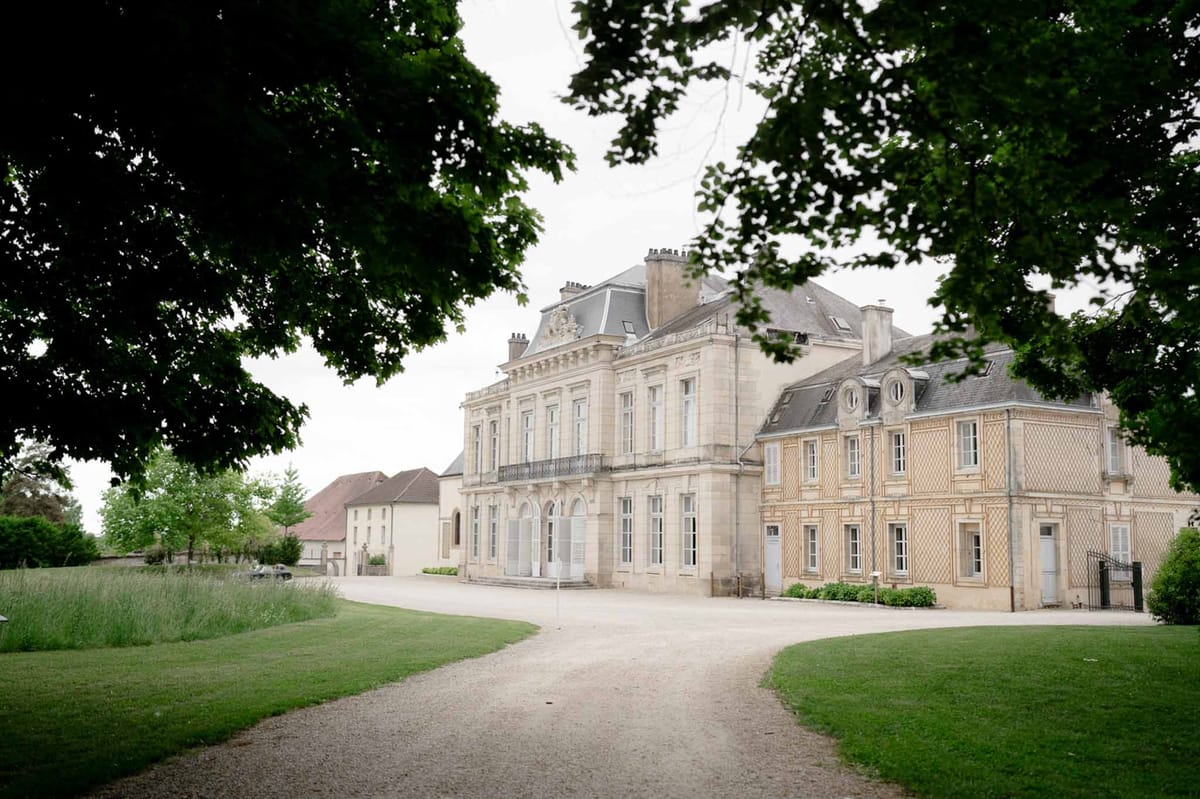
Château d'Arcelot sits 15 km (20 minutes) from Dijon with the 426 sqm Trianon reception hall as the architectural anchor: vaulted stone arches and a luminous glass roof seat 320 guests. Ceremonies on Sappho Island or within the landscaped parkland set against the formal grandeur of an aristocratic Burgundian estate. On-site lodging accommodates 32 guests, with private parking for 250 vehicles. No curfew. Venue hire from €9,200 includes the estate's grounds and parkland. Dijon connects to Paris in 1h35 by TGV.

Why We Love It

The Trianon's vaulted stone arches and glass roof seat 320 in a private-island ceremony setting at the Dijon-area gateway to Burgundy.

Max Guests
320
Sleeps
32
Chapel
No
From €9,200 / venue hire

02
CHATEAU · YONNE · BOURGOGNE-FRANCHE-COMTÉ
4.7 (91 reviews)
Yonne

Chateau de Percey combines a 17th-century chateau with a 560 sqm orangerie and 300 sqm terrace seating up to 400 guests for large-scale Burgundy celebrations. The property's landscaped labyrinth, wooded grounds, and candlelit salons create distinct atmospheres from formal grandeur to garden intimacy. Five on-site gîtes accommodate 60 guests with parking for 300 vehicles. The combination of 17th-century chateau interiors and a purpose-built orangerie gives flexibility across single-evening or multi-day celebrations. Yonne Valley with rail access to Paris from Joigny. Weekend hire from €15,000.

Why We Love It

A 560 sqm orangerie with 300 sqm terrace seats 400 alongside a 17th-century chateau and five gîtes for 60 overnight guests in the Yonne Valley.

Max Guests
400
Sleeps
65
Chapel
No
From €15,000 / venue hire

03
ABBEY · SAÔNE-ET-LOIRE · BOURGOGNE-FRANCHE-COMTÉ
4.8 (32 reviews)
Beaune (10 minutes by car), Saône-et-Loire

Domaine de l'Abbaye de Maizières traces its origins to a 12th-century Cistercian foundation in Saint-Loup-Géanges, 10 minutes from Beaune and the grands crus of Meursault, Pommard, and Puligny-Montrachet. The 750-hectare estate preserves the abbey's medieval cloistered walkways, vaulted ceilings, and stone walls alongside a modern 500 sqm Orangerie built in 2021 seating 300 guests. Vineyards, ponds, a canal, an orchard, and forest surround the property. 33 bedrooms accommodate 80 guests; spa, tennis courts, hot tub, and cooking workshops on-site. Estate hire from €17,000. Wine tasting from neighbouring village appellations.

Why We Love It

A 750-hectare former Cistercian abbey with intact medieval cloisters and a modern Orangerie 10 minutes from Beaune's leading vineyards.

Max Guests
350
Sleeps
80
Chapel
No
From €17,000 / venue hire

04
CHATEAU · NIÈVRE · BOURGOGNE-FRANCHE-COMTÉ
4.8 (71 reviews)
Paris (2 hours 15 minutes by car), Nièvre

Domaine de Reveillon pairs a 384 sqm glass-fronted orangery with an English-style park of century-old trees and a reflective pond, in the Puisaye 2h15 from Paris. The orangery, positioned between the chateau and pool, seats 350 guests with a dancefloor; its glass walls frame views of the Burgundian parkland. Gravel courtyards open onto the estate's grounds for cocktail hours and group photographs. On-site accommodation for 48 guests is spread across chateau suites and four private cottages. Estate hire from €9,000; combination of modern reception space with traditional Burgundian architecture.

Why We Love It

A glass-fronted orangery for 350 guests looks out onto an English-style park with century-old trees in the Puisaye.

Max Guests
300
Sleeps
48
Chapel
No
From €9,000 / venue hire

05
CHATEAU · SAÔNE-ET-LOIRE · BOURGOGNE-FRANCHE-COMTÉ
4.8 (76 reviews)
Beaune (15 minutes by car), Saône-et-Loire

Chateau de Varennes is a working wine estate in South Burgundy 15 minutes from Beaune and the famed vineyards of Romanée-Conti. The 400-year-old property sits within 100 acres of vineyards, lavender fields, and tree-lined avenues, with a private consecrated chapel and an Orangery seating 200. The estate produces its own wines for the wedding weekend, grounding the celebration in viticultural authenticity few venues can match. 27 bedrooms accommodate 60 guests. Shuttle from Seurre station 10 minutes away; Dole Airport 30 minutes; Lyon and Geneva 90 min and 2h. Estate hire from €19,500 with cooking workshops and river activities on the Doubs.

Why We Love It

A working wine estate 15 minutes from Beaune with its own chapel, lavender fields, and estate wines served at your wedding.

Max Guests
200
Sleeps
60
Chapel
Yes
From €19,500 / venue hire

06
CHATEAU · YONNE · BOURGOGNE-FRANCHE-COMTÉ
4.8 (394 reviews)
Paris (1h30 by car or 1h10 by direct train), Yonne

Chateau du Fey occupies a hilltop in the Yonne department overlooking the Yonne Valley from within 103 acres of private forest with 400-year-old oak trees. The historic route between Paris and the Côte d'Or wine estates passes through, shaping the property's identity as a gateway to Burgundy's viticultural heartland. The 450 sqm Orangerie sits in the walled vegetable garden with views across the valley. 28 bedrooms and 30 glamping tents sleep up to 160 guests across the estate. Joigny train station is 15 km away with direct TER from Paris in 70 minutes. Estate hire from €18,000.

Why We Love It

A hilltop estate overlooking the Yonne Valley with 103 acres of private forest and a direct train link to Paris in just over an hour.

Max Guests
1000
Sleeps
160
Chapel
No
From €18,000 / venue hire

07
CHATEAU · YONNE · BOURGOGNE-FRANCHE-COMTÉ
4.8 (640 reviews)
Paris (100 km / approximately 1 hour), Yonne

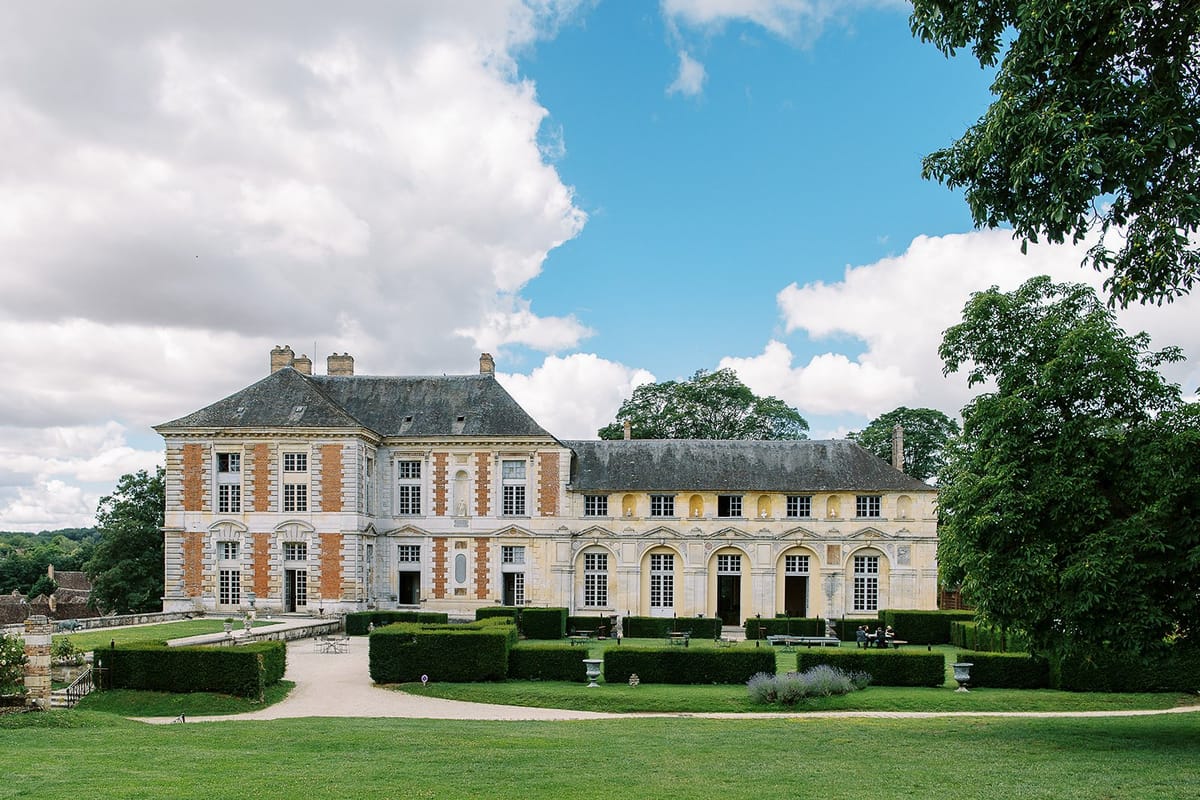
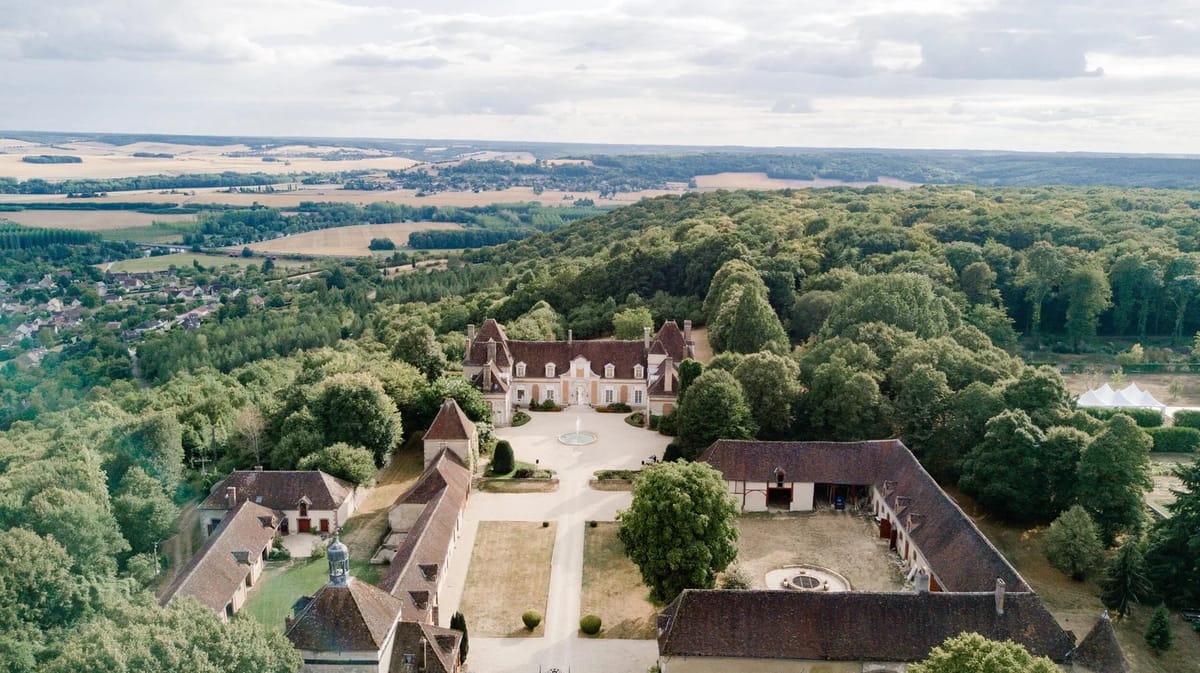
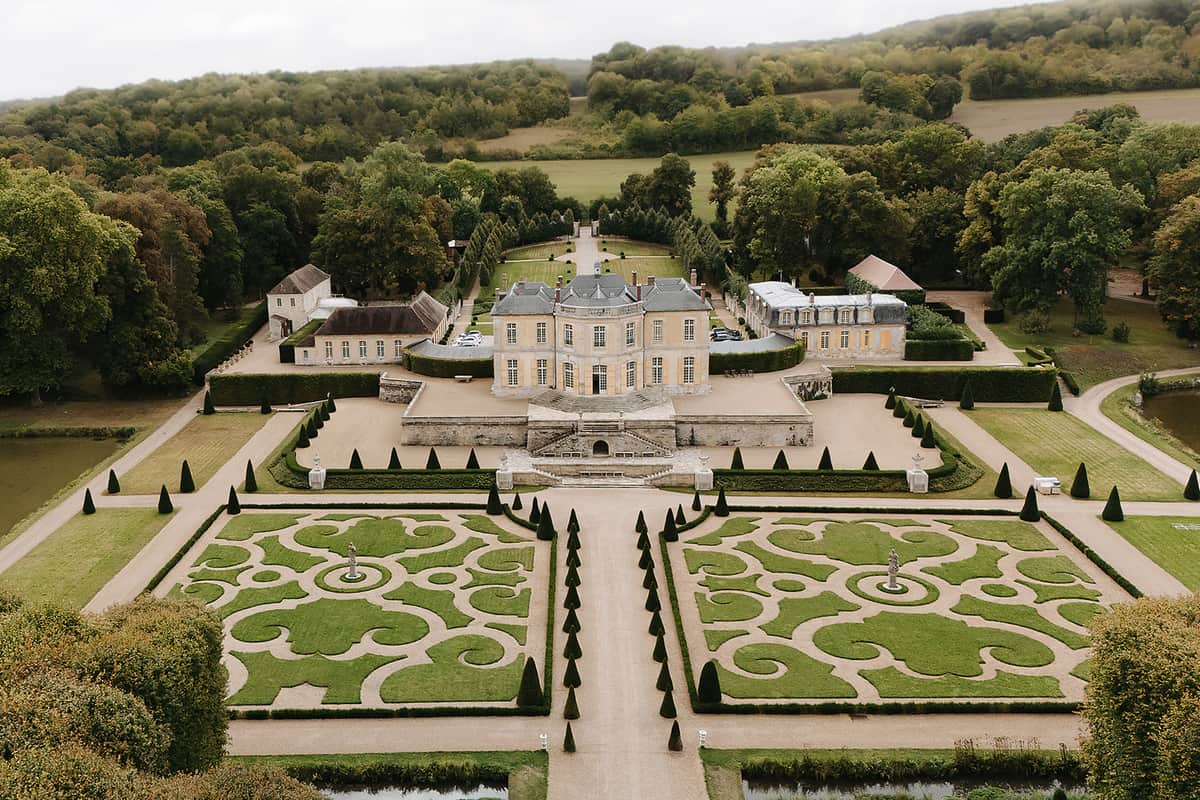
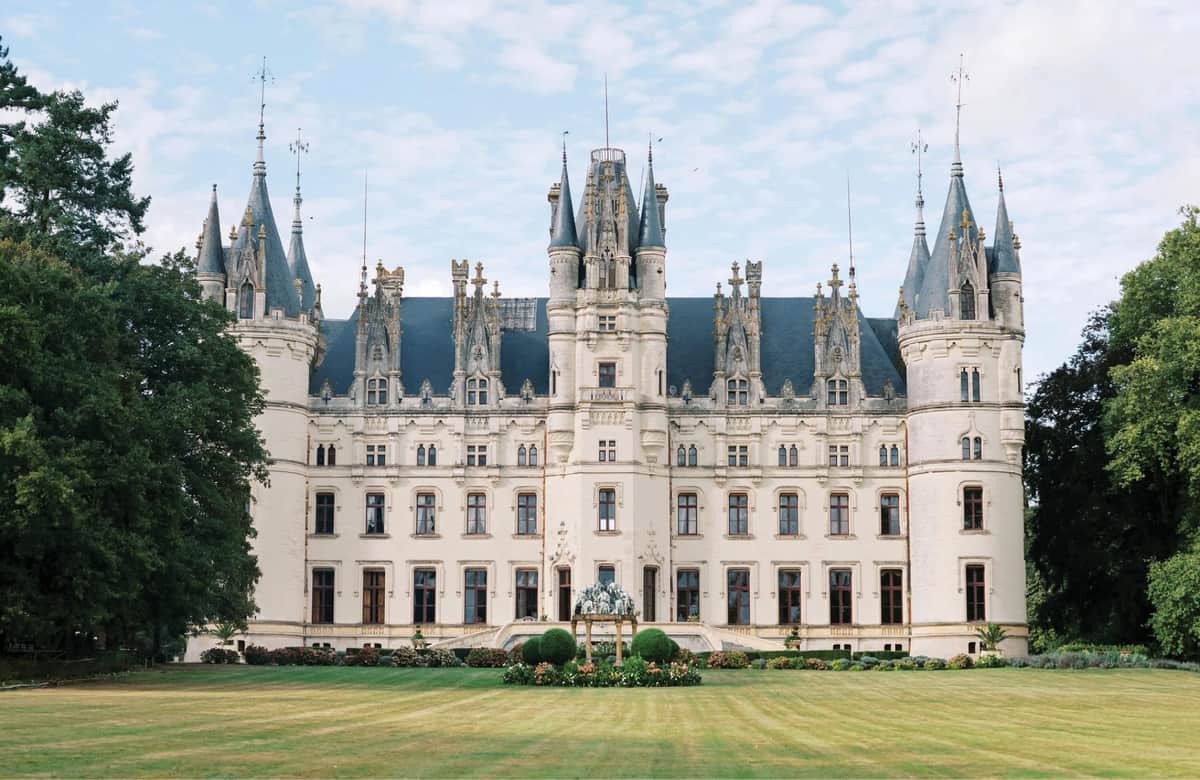
Chateau de Vallery is a Renaissance estate on the border of Burgundy and Île-de-France one hour south of Paris via the A6. The property's listed chapel, moat, and formal grounds retain the architectural ambition of its 16th-century builders, while 65 hectares of manicured parkland and surrounding forest create a sense of scale few Burgundy venues match. The Rose Garden, Palm Grove, Parc aux Ifs, and medieval ramparts provide distinct settings; the dovecote bridal suite is a triplex inside France's largest dovecote with 2,844 pigeon holes, a monolithic stone bathtub, and a glass roof. 28 bedrooms sleeping 56; capacity 300 seated / 500 cocktails. No curfew; fireworks permitted. Estate hire from €18,000.

Why We Love It

Renaissance grandeur one hour from Paris with a listed chapel, torch-lit gardens, and France's largest dovecote as the bridal suite.

Max Guests
300
Sleeps
56
Chapel
No
From €18,000 / venue hire

08
ABBEY · SAÔNE-ET-LOIRE · BOURGOGNE-FRANCHE-COMTÉ
4.5 (379 reviews)
Lyon (1 hour 15 minutes by car via A6 exit 27), Saône-et-Loire

Abbaye de la Ferté holds a singular place in Burgundy's history as the first daughter house of the Cistercian abbey of Cîteaux, the birthplace of the entire Cistercian order. Located in Saint-Ambreuil in the Saône-et-Loire department, the 18th-century abbey sits within an English-style park of centenarian trees, shaded meadows, and flowering groves. The former monks' refectory, now a 200 sqm orangery, provides a reception space where carved wooden panelling and monastic proportions set a tone no modern venue replicates. 180 seated; 3 on-site rooms sleep 6 with breakfast included. No curfew. Couples choose their own caterers and vendors freely. From €3,650.

Why We Love It

Burgundy's first Cistercian daughter house offers a monks' refectory turned orangery, surrounded by centenarian trees and deep regional history.

Max Guests
180
Sleeps
6
Chapel
No
From €3,650 / venue hire

09
CHATEAU · NIÈVRE · BOURGOGNE-FRANCHE-COMTÉ
4.6 (183 reviews)
Nevers (10 km), Nièvre

Château de Planchevienne centres on a 17th-century stone barn called Les Écuries, seating up to 300 guests and opening directly onto 11 hectares of landscaped parkland in the Nivernais 10 km from Nevers. The interplay between rugged stone architecture and manicured Burgundian grounds captures the region's character: agricultural heritage meets curated comfort. Candlelit library-bar evenings, wrought-iron gazebos, and starlit terraces around the chateau create a sequence of moments distinctly rooted in this corner of France. The estate accommodates 34 guests on-site; heating in the reception barn extends the season into autumn. No sound curfew. Estate hire from €7,200.

Why We Love It

A 17th-century stone barn seats 300 and opens onto 11 hectares of Burgundian parkland, with no sound curfew for late celebrations.

Max Guests
300
Sleeps
34
Chapel
No
From €7,200 / venue hire

What Burgundy delivers as a wedding region

Burgundy is one of the most historically dense wine regions in France, with a thousand years of monastic, ducal, and viticultural heritage layered into the landscape. That depth shows in the wedding estates: working wine châteaux that pair ceremonies with vineyard tastings, Cistercian abbeys with intact medieval cloisters, Renaissance châteaux with private chapels, and 17th-century stone barns repurposed as reception halls. Most are hired whole-property, sleep at least the wedding party on site, and sit close to the appellations, markets, and gastronomy that make a multi-day weekend worthwhile.

The region splits into four functional sub-regions, and the cluster you choose shapes the day as much as the estate does. They differ in setting, travel, and the wine country around them; the sub-regional spread below sets out how each one differs.

Two borders add further choice. To the north-west, the Île-de-France edge places a handful of estates within an hour of Paris, and to the north-east, the Champagne border lets couples drawn to both wine regions hold the wedding where Burgundy and Champagne meet. Wherever you land, weight the sub-region against where your guests fly in and which wine country you want around you.

Sub-regional spread: Yonne, Côte d'Or, Nivernais, Saône-et-Loire

The Yonne Valley anchors northern Burgundy, the cluster closest to Paris. Estates here range from hilltop châteaux set in private forest to 17th-century houses paired with purpose-built orangeries and on-site gîtes. Joigny and the valley's stations carry direct TER trains from Paris in about 70 minutes, which makes the Yonne the natural choice when guests route through CDG.

The Côte d'Or around Beaune is the wine-tourism heart of the region. Here the estates lean toward Cistercian foundations with medieval cloisters and modern orangeries, and working wine estates within 10 to 15 minutes of the grands crus of Meursault, Pommard, and Puligny-Montrachet. The Dijon area, a little further north, adds aristocratic estates with grand vaulted reception halls.

The Saône-et-Loire south carries the abbey style most strongly and reaches Lyon in around 75 minutes by car. The Nivernais west, around Nevers, centres on stone-barn estates opening onto parkland. On the margins, the Île-de-France border sits within an hour of Paris and the Champagne border offers a cross-region setting for couples drawn to both wine countries.

Capacity range: intimate dinners to several hundred guests

Burgundy's estates span a wide capacity range, from intimate abbey refectories suited to a tight family-and-friends dinner to large orangeries and barns built for several hundred seated guests. The monastic settings tend to seat the smaller numbers, where the Cistercian proportions set the tone as much as the headcount.

Most estates cluster in the mid-range, seating a few hundred across modern orangeries, converted stone barns, and Trianon-style vaulted halls. Several extend well beyond their seated number for a standing cocktail format, since reception zones across an estate can carry one-and-a-half to two times the seated capacity.

At the upper end, a handful of estates pair a large reception space with extensive grounds and glamping to host very large multi-day weddings. When matching guest count to format, always separate seated-dinner capacity from cocktail-standing capacity, and confirm both at first enquiry. Burgundy goes that big because it has the large monastic refectories and barn-and-orangery combinations to seat them.

Accommodation patterns across the on-site estates

On-site accommodation is the norm in Burgundy, but the footprint varies widely. The smallest estates sleep the wedding party only, with the broader guest list at nearby hotels, while the largest carry dozens of bedrooms across the main house, gîtes, and cottages.

Mid-range estates typically sleep a good share of the guest list on site, spread across château suites, converted outbuildings, and garden cottages. A few combine fixed bedrooms with glamping tents to push their overnight capacity higher, an option that suits a large party who all want to stay on the estate.

Match the bedroom footprint to your priorities. Couples with a large guest list who want everyone on site should weight the multi-bedroom estates and the abbey-and-orangery properties; couples with a smaller core group can look to the intimate abbeys and stone-barn estates. Either way, plan the bed count and any shuttle transport early, not as an afterthought.

Package pricing: what shapes the cost

Package starting prices in Burgundy span a broad range, from accessible weekend hires at abbeys and stone-barn estates to premium rates at the wine-region heart and the grand Renaissance properties. The starting figure is an entry amount, not a total: final spend depends on guest count, the number of days, catering, florals, music, and add-ons.

The most accessible estates hire the property for a weekend with a modest on-site bedroom count. The mid range covers full-estate privatisation with larger orangeries and grounds. The premium end covers the Beaune-area wine estates and the Renaissance châteaux near Paris, where the heritage, the grounds, and the accommodation all scale up together.

Because most Burgundy estates allow you to bring your own caterer and your own wine, the catering line is often more flexible here than at in-house-only venues elsewhere in France. That flexibility can shift the per-guest cost meaningfully, so price the catering model alongside the hire fee rather than after it.

Wine, terroir, and regional gastronomy

Burgundy's wedding estates are defined by their proximity to the region's celebrated appellations. Some are themselves working wine producers, able to serve estate-grown wines throughout the weekend and ground the celebration in the region's celebrated appellations in a way few venues can authentically deliver. Others sit minutes from the grands crus of Meursault, Pommard, and Puligny-Montrachet for day-before tastings.

The wine country shifts with the sub-region. The Yonne Valley sits near Chablis appellation country, on the historic route between Paris and the Côte d'Or estates. The Champagne border places guests within the Champagne wine route, with a Burgundy crossover for couples drawn to both. Cellar visits and vineyard tours slot naturally into a welcome-day programme almost anywhere in the region.

Gastronomy runs alongside the wine. Cooking workshops, market visits, and food-pairing experiences are widely available as wedding-weekend activities, and most estates let couples bring their own caterer and their own wine selection from local domaines. That freedom turns the dining from generic catering into an immersive regional menu, and it accommodates guest dietary needs more straightforwardly than a fixed in-house list.

International airport access and travel

Paris Charles de Gaulle serves the northern Burgundy clusters most directly. The Yonne Valley is reachable by direct TER train from Paris in about 70 minutes, and the Île-de-France-border estates sit within an hour's drive of the capital. CDG carries direct daily flights from every major UK city, the US east-coast hubs, and the full European network, with Australian capitals one connection away.

The Côte d'Or around Beaune is served by Lyon-Saint-Exupéry (around 90 minutes) and Geneva (around two hours), and connects to Paris in roughly 90 minutes by TGV from Le Creusot or Beaune. The Dijon area links to Paris in about 1h35 by TGV, and several estates run shuttles from their nearest station.

The southern Saône-et-Loire cluster leans on Lyon-Saint-Exupéry as its primary international airport, with the A6 motorway as the spine and TGV connections to Paris from Chalon-sur-Saône and Le Creusot. The Nivernais around Nevers carries TGV links to both Paris and Lyon, and the Champagne-border estates sit within reach of Châlons-en-Champagne. Whichever cluster you choose, confirm station transfers and group shuttles early.

Wet-weather backup and outdoor ceremony contingency

Burgundy's continental climate runs warm summers that cool quickly in the evening, especially in forested or valley settings, so every garden ceremony needs an indoor backup. The region's estates deliver that backup in three structural patterns, and it is worth knowing which one a venue relies on before you book.

The most common is a dedicated orangery, a glazed reception room built or restored as the primary seated-dining space. Others use property-internal architecture, such as a vaulted hall, a grande galerie, or a set of period salons. A third group uses converted 17th-century stone barns, often heated to extend the season into autumn. Each handles rain differently, so ask which space hosts the seated dinner if the weather turns.

Outdoor ceremony alternatives are widely available, from walled gardens and forest clearings to cloistered walkways, rose gardens, and medieval ramparts. Request the wet-weather walk-through at every site visit. Venues that resist that conversation usually have a weaker indoor alternative than the outdoor space they showcase.

How to evaluate a Burgundy wedding venue at first enquiry

The most consequential question in Burgundy is what the wine and gastronomy programme looks like. Ask whether estate-produced wines are available for the weekend, whether guests can visit neighbouring domaines as a day-before activity, and whether the catering is flexible enough to let you bring your own caterer and your own wine selection from local producers, as most Burgundy estates allow.

Then work through the logistics. What is the curfew for music and reception, and does the estate publish no curfew? Are fireworks or sky-lantern releases permitted? What is the wet-weather backup capacity, and what ceremony furniture is included versus rented separately? Is the catering in-house, an exclusive list, or open to external caterers?

Finally, pin down what the multi-day format actually delivers: rehearsal dinner, ceremony, reception, and brunch sequencing, plus whether walled-garden access, forest walks, or pool use are included or quoted separately. Burgundy's monastic, viticultural, and Renaissance heritage rewards a multi-day weekend more than a single-day event, so plan for the whole arc.

Local knowledge

Planning Tips for This Region

Time your wedding around Burgundy's harvest

Burgundy's grape harvest (vendange) typically falls in September, bringing heightened activity across the region. Book June through early September for warm weather and golden vineyards, or consider late May when the lavender at the southern wine estates begins to bloom.

Use Burgundy's rail links for international guests

Several estates sit within 10 to 15 minutes of TGV-connected stations. Paris is reachable in about 70 minutes by direct TER into the Yonne Valley, or around 90 minutes by TGV from Le Creusot for the Côte d'Or. Arrange group shuttles to simplify logistics for guests arriving from London, Brussels, or Geneva.

Build wine into the wedding weekend

Burgundy's proximity to appellations like Romanée-Conti, Chablis, and the Côte de Nuits makes vineyard visits and cellar tastings a natural addition. Several estates offer wine tasting on site or arrange excursions to neighbouring domaines for a welcome-day activity.

Plan for Burgundy's continental climate

Summers in Burgundy are warm but evenings cool quickly, especially in forested or valley settings. Choose a venue with both outdoor ceremony space and a covered backup such as an orangery or converted barn. Most properties provide both.

Bring your own wine from local domaines

Most Burgundy properties let couples bring their own caterer and, crucially, their own wine selection from local producers. Ask each venue about corkage policy. Sourcing your wedding wines from neighbouring Romanée-Conti, Meursault, or Pommard domaines grounds the celebration in regional viticulture.

Frequently asked questions

Common Questions

What does a Burgundy wedding venue typically deliver?
A Burgundy wedding venue places the celebration within one of France's most historically dense wine regions, drawing on working wine estates, Cistercian abbeys, Renaissance châteaux, and converted 17th-century stone barns. The estates are typically hired whole-property, sleep at least the wedding party on site, sit close to the region's wine, food, and architectural heritage, and offer the kind of multi-day weekend the area's monastic and viticultural history rewards.
How much do wedding venues in Burgundy cost?
Package starting prices span a broad range, from accessible weekend hires at abbeys and stone-barn estates to premium rates at the Beaune-area wine estates and the grand Renaissance châteaux near Paris. The starting figure is an entry amount, not a total: final spend depends on guest count, days included, catering, florals, music, and add-ons. Because most estates allow an external caterer and your own wine, the catering line is more flexible here than at in-house-only venues.
How large can a Burgundy wedding venue go?
Burgundy's largest estates pair a sizeable reception space, such as a converted barn or a purpose-built orangery, with extensive grounds, and some add glamping to host very large multi-day weddings of several hundred guests. Capacity for a standing cocktail format usually runs higher than the seated-dinner figure, so confirm both numbers for any estate you shortlist.
How intimate can a Burgundy wedding venue be?
The region's Cistercian abbeys and smaller stone-barn estates suit intimate weddings, where a former monks' refectory or a compact reception room keeps the seated dinner to a tight family-and-friends scale and the historic setting carries the atmosphere. These estates often sleep the wedding party only, with the wider guest list at nearby hotels.
Is on-site accommodation available at Burgundy wedding venues?
On-site accommodation is the norm. The footprint ranges from a handful of bedrooms for the wedding party at the smaller abbeys to dozens of rooms across the main house, gîtes, and cottages at the larger estates, and a few combine fixed bedrooms with glamping tents to push their overnight capacity higher. Plan the bed count and any shuttle transport for overflow guests early.
Which Burgundy sub-region best suits an international destination wedding?
Northern Burgundy in the Yonne Valley is closest to Paris (around 70 minutes by direct TER train, 90 minutes by car), suiting weddings where guests fly into Paris CDG. The Côte d'Or around Beaune suits guests routing via Lyon or Geneva. The Saône-et-Loire south favours Lyon arrivals via the A6. Weight the cluster against where the bulk of your guests will land.
Why might a Burgundy shortlist include a venue from Champagne (Grand Est)?
Burgundy meets the Champagne wine country on its north-eastern edge, around the Marne, and estates on that border make a natural cross-region choice for couples drawn to both wine regions. A Champagne-border setting places guests within reach of the Champagne houses and vineyards while keeping the Burgundy crossover, with the sub-region disclosed so you know exactly where the estate sits.
Can we have a religious or civil ceremony at a Burgundy venue?
Civil marriage in France must take place at a town hall (mairie), and it requires at least one partner to have lived in the commune for 30 continuous days first, which is impractical for couples travelling from abroad. No private estate, abbey, or hotel is licensed to perform the legal French civil ceremony. The usual route is to complete the legal marriage in your home country and hold a symbolic or religious ceremony at the venue; several Burgundy estates include a private chapel or use Cistercian cloisters as a blessing-suited setting.
Are external caterers allowed at Burgundy wedding venues?
Most Burgundy properties allow couples to bring their own caterer and, crucially, their own wine selection from local producers, which sets the region apart from many in-house-only southern French venues. Confirm the catering model at first enquiry, since a specific cuisine or chef preference may rule out any in-house-only estate on your shortlist.
What's the wet-weather backup at a Burgundy wedding venue?
Three structural patterns. Many estates use a dedicated orangery as the primary seated-dining backup; others rely on property-internal architecture such as a vaulted hall, a grande galerie, or a set of period salons; and a third group uses converted 17th-century stone barns, often heated to extend the season. Always request the wet-weather walk-through at the site visit and confirm which space hosts the seated dinner if it rains.
How far in advance should we book a Burgundy wedding venue?
Around 12 to 18 months ahead for the May-to-October peak season, and 6 to 9 months for the shoulder seasons. September is the grape-harvest peak, with heightened activity across the region, so book early if your dates overlap. Estates with limited bedroom counts tend to book first because the whole property is reserved per weekend, while estates with more bedrooms absorb later bookings.
How current is the information on this page?
The shortlist is curated and editorially reviewed by the French Wedding Style team, and where an estate works directly with us its pricing, capacity, and availability come first-hand from the property. The rest is drawn from public sources and verified against the estates' own material. Details such as pricing and availability change, so confirm the current terms with the venue at enquiry.

Ready to shortlist your Burgundy wedding venue?

Tell us your dates, guest count, and which Burgundy sub-region you're considering, and we'll send a tailored response within two working days. We'll match the venue character (working wine estate, Cistercian abbey, Renaissance château, or stone-barn-and-orangery combination) and the regional setting to your priorities.

Start your enquiry

If you'd rather browse first, the estates sit below, filterable by sub-region, capacity, and venue character.

More venue guides and inspiration, every fortnight.

Join 18,000+ couples planning their French wedding. No spam. Unsubscribe any time.

By subscribing, you agree to receive marketing emails from French Wedding Style. You can unsubscribe at any time. See our privacy policy.

This guide covers only French Wedding Style member venues with verified real-wedding photography, judged on setting, capacity, on-site accommodation, and couple feedback — reviewed quarterly.

Last reviewed May 2026.

More Venue Guides

Explore our other curated guides across France's most sought-after wedding venue categories and regions.

Browse More Venues

Explore our full collection of French wedding venues by region and style