
Plan a Micro-Wedding or Elopement in France: Complete Guide
A French elopement or micro-wedding runs 2 to 30 guests and typically costs €4,000 to €35,000 all-in depending on guest count, region, and stay length. The format trades scale for venue access, vendor concentration, and stay length most full-size weddings cannot earn. Below we map the three small-format options, name the venue types that work at this scale, and walk through what changes when the headcount drops below 30. This is part of our complete guide to planning a wedding in France.
Why couples are choosing smaller weddings in France
The shift toward intimate weddings is not about wanting less. It is about wanting the day to feel different. Couples we feature consistently cite eight reasons for going small, and the same patterns hold whether the count is 12 or 50.
- The intimate guest count. With 30 to 70 guests, you see the room. You finish conversations. You spend time with the people you invited and love rather than ushering between them.
- The budget maths. Fewer mouths to feed means the savings go into a photographer who matters, the dress of your dreams, or a venue you would otherwise not stretch to. At 150-plus, the budget spreads thin and catering eats most of it.
- Everyone under one roof. A smaller list opens up venues that sleep everyone in one place: a bastide, a domaine, a private villa. Breakfast together. The wedding turns into a long weekend with the people closest to you.
- You remember the day. A 150-guest wedding goes by fast. With fewer people, the day slows down. You actually talk to your grandmother. You eat your own dinner. You remember what your husband said in his vows.
- No filler. No plus-ones you have never met. No work colleagues invited because it would feel awkward not to. No second cousins your mother insisted on. Just the people you would call first.
- The day is easier. Less walking from group to group. Less noise to talk over. Less overstimulation. A smaller wedding does not drain you, and you arrive at the last dance still wanting one more song.
- Guests feel more included. At smaller weddings, guests are not simply invited to witness the day, they become part of it. Conversations last longer. The atmosphere feels closer to a beautifully hosted dinner than a large event with a packed schedule.
- It is a shift, not a compromise. Couples are rethinking what they want their wedding to feel like. For destination weddings in particular, smaller and more intentional often makes more sense than scaling up.
The logistics below assume you have made this call already. If you are still weighing the trade-offs, our convincing-family planning article covers the guest-list conversations that follow.
What counts as an elopement, micro-wedding, or intimate wedding?
Three small-format wedding labels overlap in everyday use. The working definition we apply across our editorial planning content is below.
Scroll →
| Format | Guest count | Typical all-in cost (France) | Length | Best fit |
|---|---|---|---|---|
| Elopement | 2 to 10 | €4,000 to €15,000 | 1 to 2 nights | Just-the-couple, or 2 to 8 immediate family |
| Micro-wedding | 10 to 30 | €8,000 to €25,000 | 2 to 5 nights | Close family and a small inner circle |
| Intimate wedding | 30 to 60 | €25,000 to €65,000 | 2 to 3 nights | Family and meaningful friendship circle |
Source: FWS venue and partner pricing database, n=190 properties, May 2026. Costs assume mid-priced regions (Loire, Dordogne, Burgundy); Provence and the French Riviera run 20 to 35% higher.
The three formats are not industry-standard categories. A property listed as micro-wedding-friendly in our editorial cuts often welcomes both ends of the band. This article focuses on the 2-to-30-guest range where the planning logic genuinely diverges from a standard destination wedding. The 30-to-60-guest scale is covered in our intimate wedding venue guide and follows closer to standard chateau planning patterns.
How much does a micro-wedding or elopement in France cost?
Costs for a French elopement land between €4,000 and €15,000 all-in for 2 to 10 guests; a micro-wedding for 10 to 30 guests typically runs €8,000 to €25,000 all-in. The wide range reflects region, season, length of stay, and how much of the catering, flowers, and photography you contract individually versus take as a small-format package.
Scroll →
| Cost line | Elopement (2-10) | Micro-wedding (10-30) | Notes |
|---|---|---|---|
| Venue hire (1-2 nights) | €1,500 to €5,000 | €3,000 to €8,000 | Weekday and shoulder-season rates; peak Saturday in Provence runs 50 to 80% higher |
| Symbolic ceremony celebrant | €600 to €1,500 | €800 to €2,500 | English-speaking celebrants charge a premium |
| Catering and wine | €300 to €3,000 | €2,000 to €8,400 | Per-head €150 to €280 covers dinner and table wine; champagne and aperitifs add €40 to €80 per head |
| Photography | €1,200 to €3,000 | €1,800 to €4,500 | Half-day or single-day coverage is standard at this scale |
| Florals and styling | €400 to €1,500 | €800 to €3,500 | A single ceremony arrangement plus bouquet, no large reception scheme |
| Hair, make-up, dress prep | €600 to €2,000 | €600 to €2,500 | Same for the bride regardless of guest count |
| All-in (excluding rings, travel, attire) | €4,600 to €16,000 | €8,000 to €29,000 | Excludes overnight accommodation for the couple beyond venue stay |
Source: FWS partner pricing data, May 2026, n=47 small-format venues and 30+ vendors actively booking 10-to-30-guest events.
Expert tip from Pétillante Weddings: "Keep your guest count between 20 and 30 people so you can make a €20K budget look like €50K. Invest heavily in food, drink, atmosphere, and photography while being selective elsewhere." Nicole at Pétillante, a planner based in Bordeaux, ran 20-guest weddings successfully in 2024 using exactly this split.
Three drivers move a French micro-wedding inside this range:
- Region. Provence and the Côte d'Azur run roughly 20 to 35% higher than the Loire, Dordogne, or Burgundy on every line.
- Season. Off-peak (November to March) and weekday weddings cut venue hire 30 to 50% against peak summer Saturdays.
- Stay length. A 5-night stay at the same property is rarely 5× a single-night rate; properties price weekend packages with the implicit assumption you take the full stay.
For full national cost benchmarks across every wedding scale, see our complete wedding cost guide and the under-€20K planning article.
Where to hold a small wedding in France
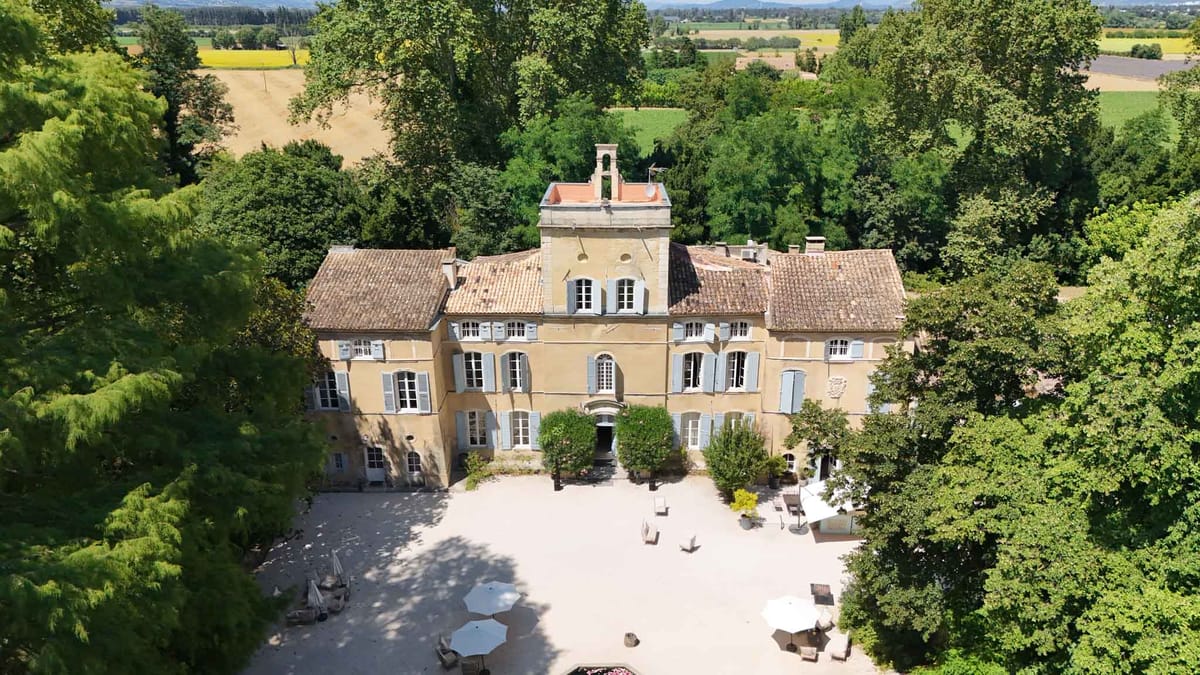
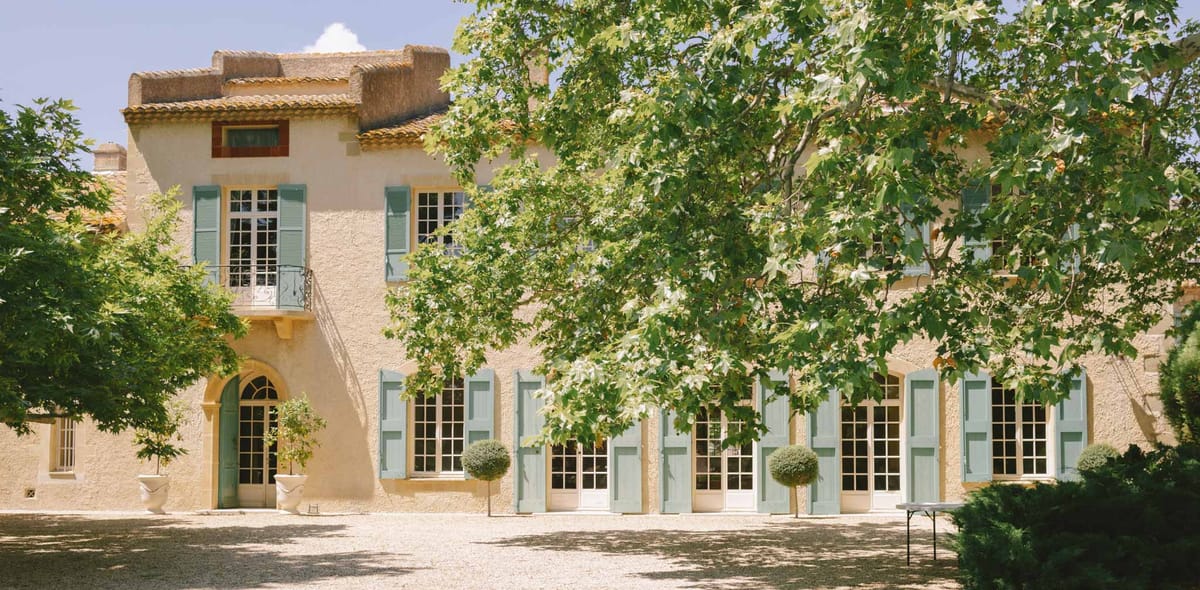
Small French weddings work best at properties built for the scale: château with 2 to 8 bedrooms, restored mas, small domaines, vineyard guest houses, and historic Parisian apartments. Anything sleeping more than 60 starts to feel under-occupied with a 12-guest count.
The venue types that suit 2-to-30-guest weddings:
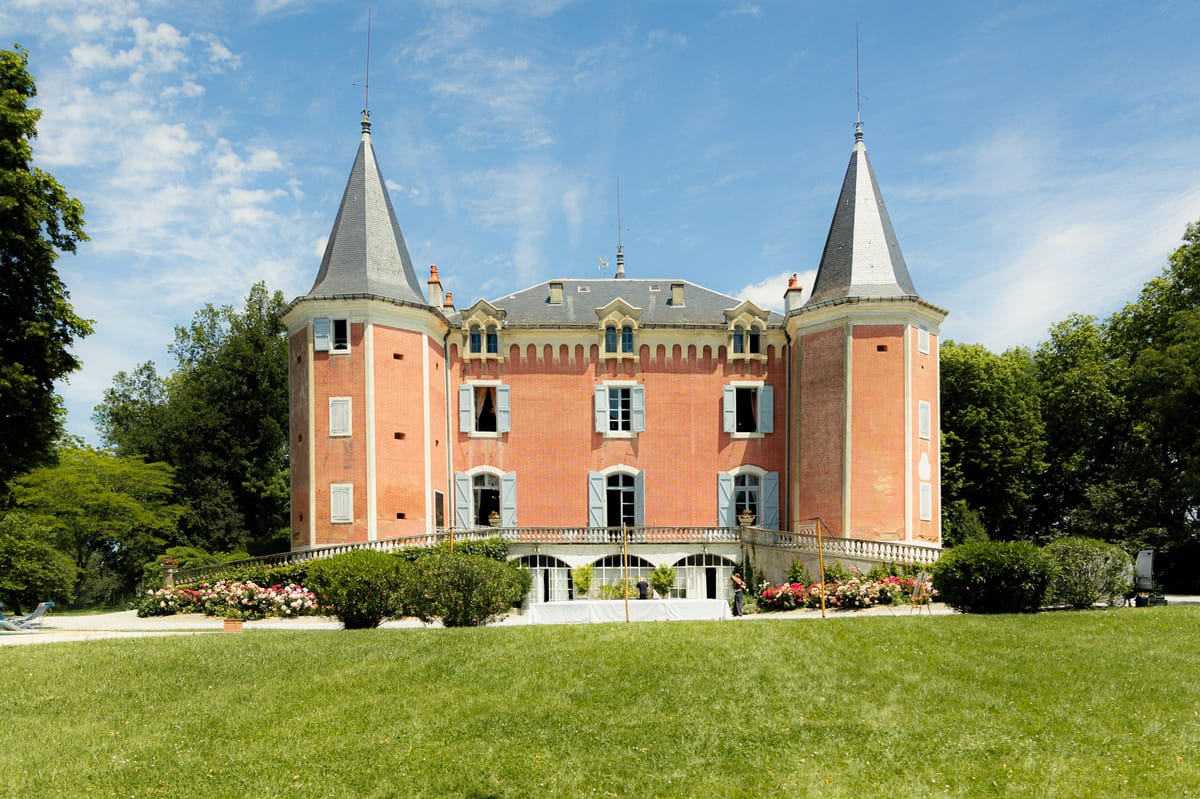
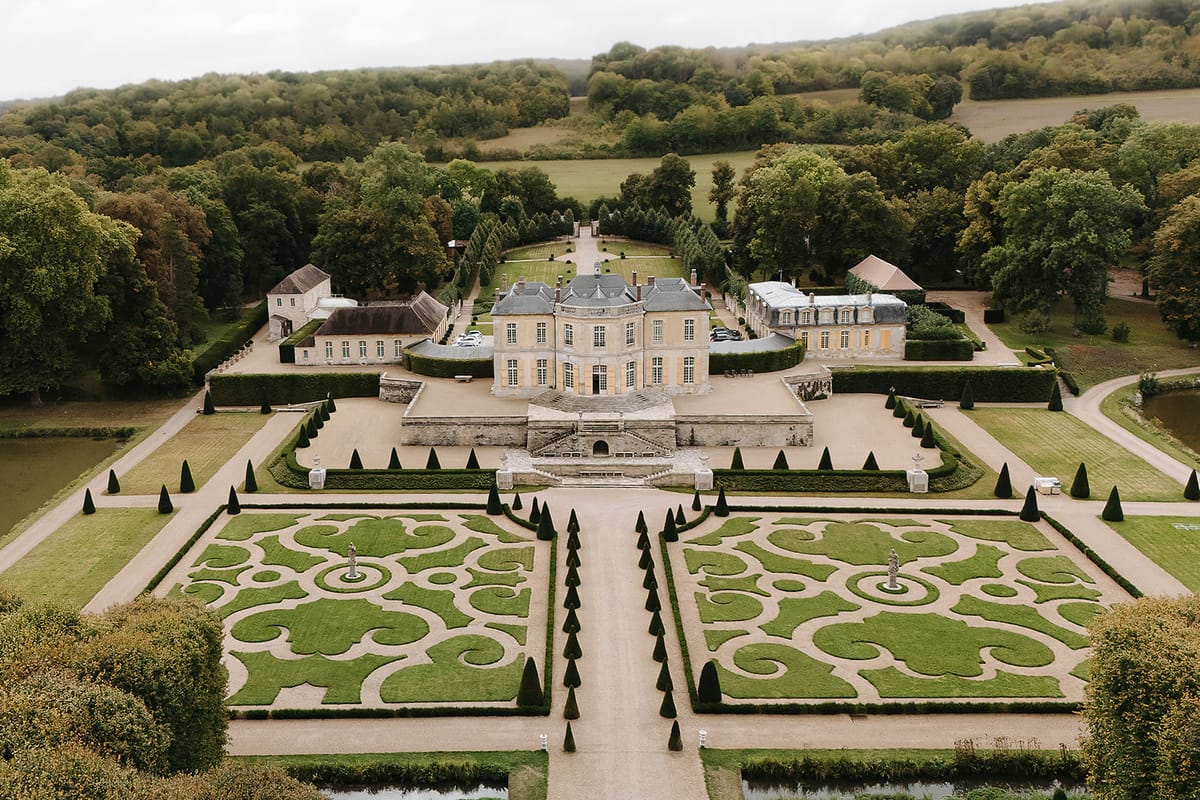
- Small châteaux (2 to 8 bedrooms). Single-property exclusive use for 1 to 5 nights, garden ceremony plus a single dining room or vaulted hall for the meal. Typical site fees €3,000 to €8,000 for a 3-night stay. Chateau Lacanaud in the Dordogne is one of the small-format properties we list in this band.
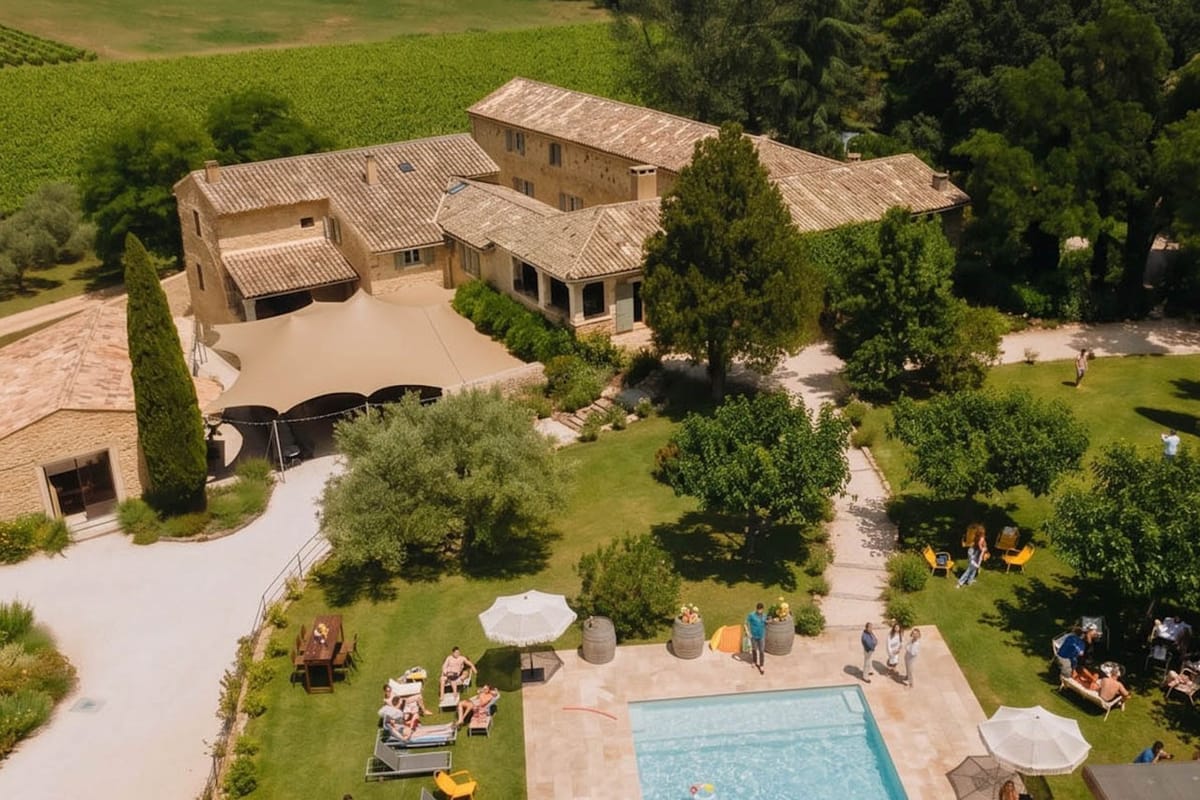
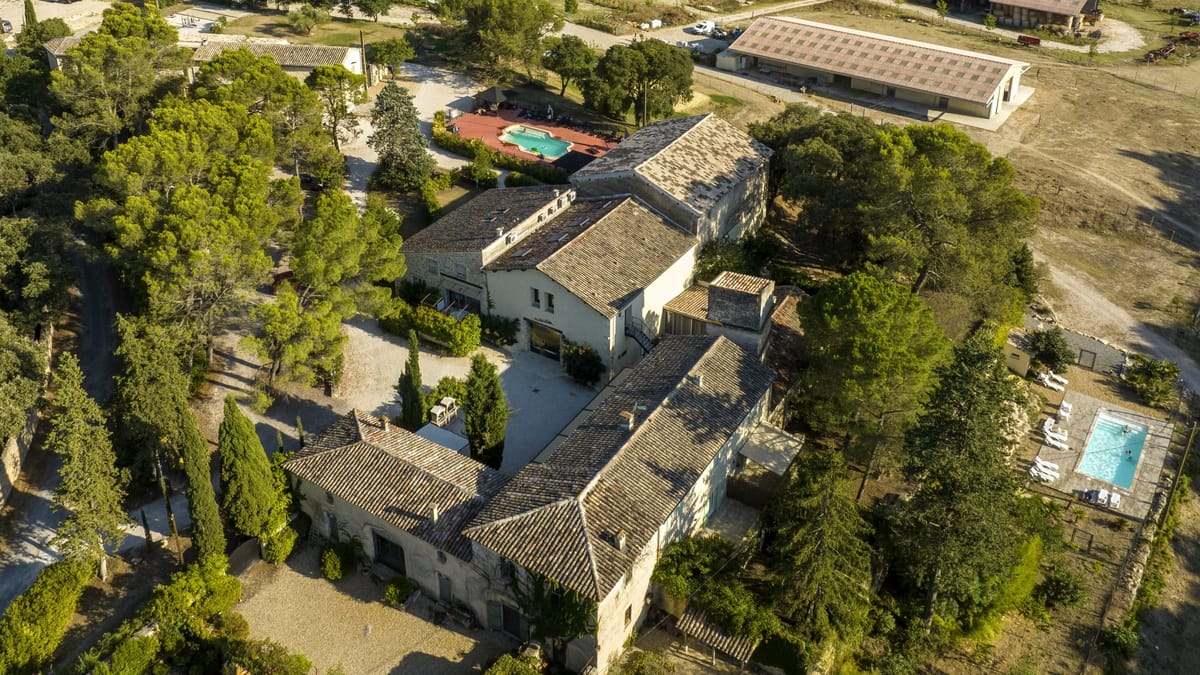
- Provençal mas and bastides. Restored stone farmhouses across Provence and the Luberon. Stone courtyards for ceremonies, indoor dining for 12 to 40, full kitchen for couples bringing their own caterer. Mas de Chabran in the Alpilles is a small-format mas we feature in this category.
- Vineyard guest houses. Working-domaine properties in Bordeaux, Burgundy, Champagne, and the Loire that host wine tastings as part of the package. The wine itself becomes the wedding favour. Domaine de la Rose Blanche and Domaine de Bize Mirepoix are two we list in this category.
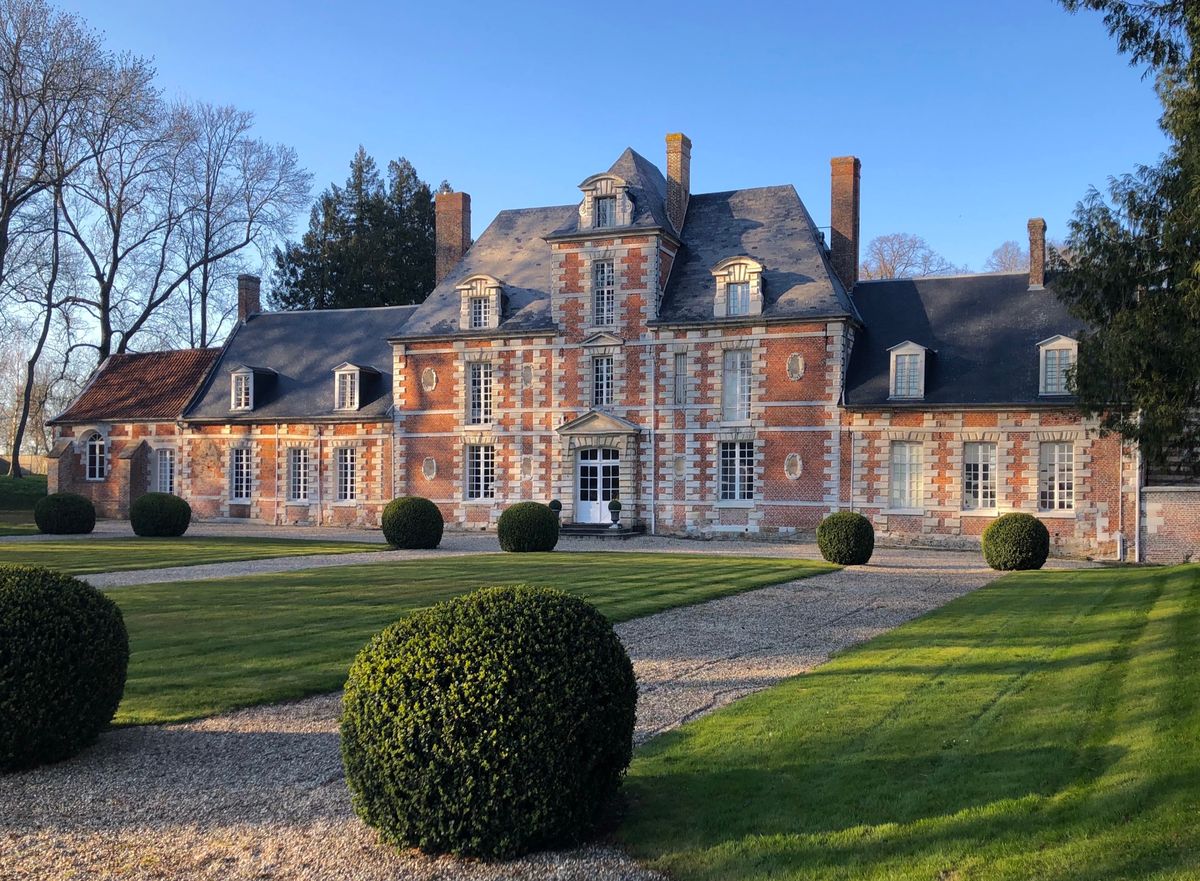
- Manoir with cottages. A main house plus 2 to 4 outbuildings, sleeping 8 to 20 guests across the property. Found in Normandy, the Dordogne, and Brittany. Manoir de la Massonniere in the Loire is a representative example.
- Historic apartments in Paris and Lyon. Private-dining-room hotels and 18th-century apartments hired for a half-day ceremony plus dinner. Suits the under-15-guest band.
Browse our editorial cuts by intent:
- Elopement venues in France: 2-to-50-guest properties, ceremony-and-dinner focus
- Intimate wedding venues in France: 10-to-100-guest small-format properties
- Intimate wedding venues in Provence: Provence-specific cut, mas and bastide weighted
- Intimate venues in South of France: Dordogne, Provence, Occitanie, and coastal
Each editorial cut is researched against our small-format criteria: full exclusive use, on-site coordination, no minimum-guest-count contracts, and proven track record of weekends below 30 guests.
Expert tip from Pétillante Weddings: For couples chasing architectural grandeur at a smaller spend, Nicole points to the South-West. "Gironde offers the ultimate value-smart region because it delivers the architectural grandeur and world-class renommé of Provence or Paris without the steep prestige tax." Within the South-West, Charente château hire often lands at €15,000 or less for a 2-night stay against €25,000 in Bordeaux proper. Lot-et-Garonne and Deux-Sèvres are similarly cheaper.
How small-wedding planning is different
The headline difference: fewer guests does not mean proportionally less work. The planning hours-per-guest curve gets steeper as the count drops, not shallower, because per-guest logistics rise as everything becomes more bespoke.
Six things change at the 30-and-below scale:
- Vendor selection narrows. Caterers who specialise in 80-to-150-guest receptions often have a 40-guest minimum or charge a small-event premium. Brief contact volume rises early to find the 3 to 4 vendors who genuinely work at your scale.
- The venue contract is smaller, the relationship is larger. At 12 guests the property owner is your day-of contact, your floral approver, and your menu sounding-board. Weekly contact through the planning year is normal.
- Catering format flips. Plated multi-course menus replace buffets. The kitchen brigade is smaller, often the chef plus one. Wine pairings become a feature.
- Photography stays whole-day, video is rarely retained. The ceremony-to-first-dance arc remains 8 to 10 hours; cutting photography below half-day usually disappoints. Videography drops out for two-thirds of small-format couples we work with.
- The reception fits in one room. No cocktail-hour-then-dinner-room migration. The day flows in one space, often the same room as the ceremony with a 30-minute reset.
- The guest list politics intensify. Cutting from 80 to 25 means saying no to 55 people. Most couples find the cuts harder than the venue decision. Our convincing-family planning article covers the conversation.
For broader vendor selection guidance see our building-your-vendor-team article; for the ceremony itself see the symbolic ceremonies guide.
Expert tip from Pétillante Weddings on mid-week and off-season timing: "Venue discounts run 15 to 20% for mid-week dates, but your creative partners (photographers, florists, caterers, planners) rarely offer lower weekday rates because their labour, expertise, and event-day energy remain the same. The real weekday value is naturally lower RSVP rates and securing the A-team vendors otherwise booked for peak Saturdays." Couples can save up to 30% overall by booking off-season; October is the sweet spot in the South-West, where afternoons still hold sun and warm temperatures.
Can you legally elope or have a micro-wedding in France?
Yes, with the same caveat that applies to every foreign couple marrying in France: one partner must reside in the commune for 30 consecutive days before the civil ceremony, plus a 10-day banns publication. That is a 40-day minimum residency commitment, which most eloping couples find impractical against a 2-to-5-night French stay.
The route most small-format couples take:
- Marry legally at home, hold a symbolic ceremony in France. The symbolic ceremony has no legal weight; the celebrant runs whatever script you write. This is the path roughly 80 to 90% of our international couples take.
- Marry at the mairie if a parent is French or you can structure 40 days in-region. The civil ceremony is free, runs 10 to 30 minutes, and is conducted in French.
- Marry through a religious officiant. A Catholic or other religious ceremony in France has no civil legal weight unless paired with the mairie ceremony first.
For the full legal route, document checklists, and nationality-specific guidance, see our pillar guide to getting married legally in France and the country-specific guides for UK couples, American couples, and Australian couples.
Should we hold a separate party at home?
Roughly half the small-format couples we work with plan a second event back home: a casual dinner, a garden party, or a venue hire 4 to 12 weeks after the French wedding. The pattern works because it separates two audiences that otherwise compete for one budget and one weekend.
When the home-side party makes sense:
- One side of the family cannot travel to France (cost, health, dependants, work visas)
- The friendship circle you want to celebrate with is larger than the venue holds
- A religious ceremony at home matters to one set of parents
When it does not:
- Both families are travel-comfortable and small
- You would rather concentrate spend on one event than split it across two
- The 4-to-12-week run-up to a second event will exhaust you
Budget-wise: a home-side party typically lands at 20 to 40% of the French wedding budget, scaled to whatever venue you book. A casual restaurant hire for 60 in London or New York runs roughly the same as a 12-guest dinner at a French château.
When a small wedding is the wrong choice
Small-format weddings work when the scale is the point. They do not work when scale is a budget shortcut or an avoided conversation. Three patterns we see fail:
- Cutting from 100 to 30 to save money, while keeping the same venue ambition. The savings rarely land because per-guest costs rise at small scale. Better to keep 100 guests and drop a tier on venue, catering, or photography.
- Eloping then re-staging the wedding for absent family. The second event is often resented by attendees who feel they got the lesser ceremony. Either commit to the small-format finality or plan one event everyone is at.
- Choosing micro-format because the family politics feel unmanageable. The politics travel. Cutting the guest list to 12 means 12 sharper conversations, not fewer.
If a 60-to-150-guest celebration is closer to what you actually want, see our complete planning guide and the choosing-your-region article for the larger-format planning path.
Real small weddings on French Wedding Style
Six real weddings from the FWS archive that show the small-format pattern across regions, budgets, and venue types:
- Three Gowns and Two Vineyards: a Bordeaux Elopement Editorial :intimate two-person ceremony across two wine estates
- An Intimate Countryside Wedding at Manoir Beaulieu, Dordogne :full-property hire for a small guest list
- A Lavender Field Elopement Along the Route de la Lavande, Provence :outdoor ceremony in the Drôme
- Romantic Cliffside Elopement in Etretat, Normandy :coastal elopement with the chalk cliffs as backdrop
- An Elegant Elopement at Hotel Ritz Paris and the Rodin Museum :Paris hotel-and-garden setting
- A Romantic Elopement at Parc Monceau, Paris :public-garden setting with photographer-led coverage
For more, browse our elopement venues edit or the broader real weddings archive.
Next steps and related guides
Most couples we work with move through this sequence:
- Define the format and guest count (this article)
- Cost-frame against budget: How much does a wedding in France cost?
- Choose a region: Choosing your region
- Sort the legal route: Getting married legally in France
- Shortlist venues: Browse our elopement venues, intimate wedding venues in France, or the Provence and South-France regional cuts
- Brief vendors and contract: Vendor contracts, deposits and TVA
- Plan the day flow: French wedding day structure
Our complete French wedding planning guide chains all of these in the order most couples find easiest.
Frequently Asked Questions
Is it legal to elope in France? ›
Can you have an elopement at a French château? ›
How much does a micro-wedding in France cost? ›
What is the smallest wedding venue in France? ›
Do small weddings save money proportionally? ›
Can we still have a French wedding feel with only 10 guests? ›
Explore Every Guide in This Chapter
Deep-dive into each topic covered above.
Premium Wedding Venues in France