Hotel Blocks for Destination-Wedding Guests in France: Complete Guide
French hotel blocks work differently to the US standard. Most wedding-region hotels are independent 2 to 4 star properties, not chain hotels, and a "block" is negotiated by bilingual email with the owner or reservations manager rather than through a group-sales department. Below we walk through how to map the accommodation stack around your venue, how to size and negotiate a hotel block in France, what the deposit and cancellation norms look like, and how to communicate the booking flow to international guests. This is part of our complete guide to planning a wedding in France.
Why French hotel blocks work differently
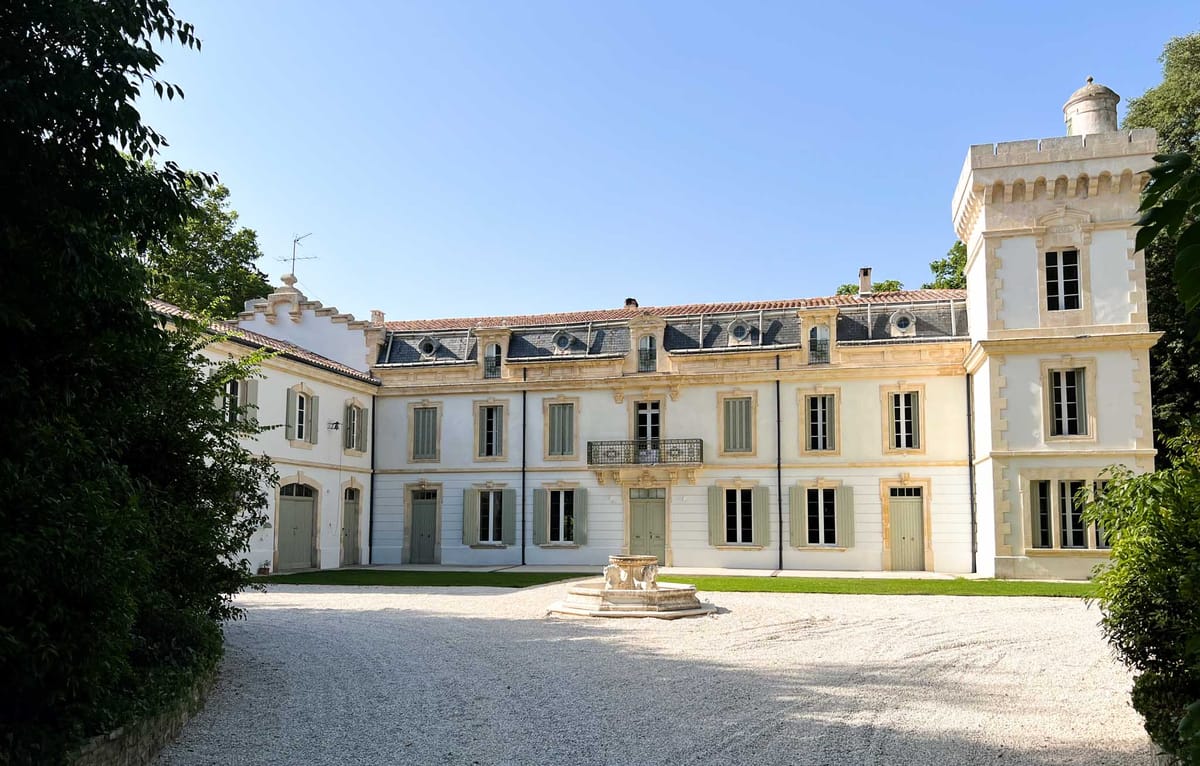
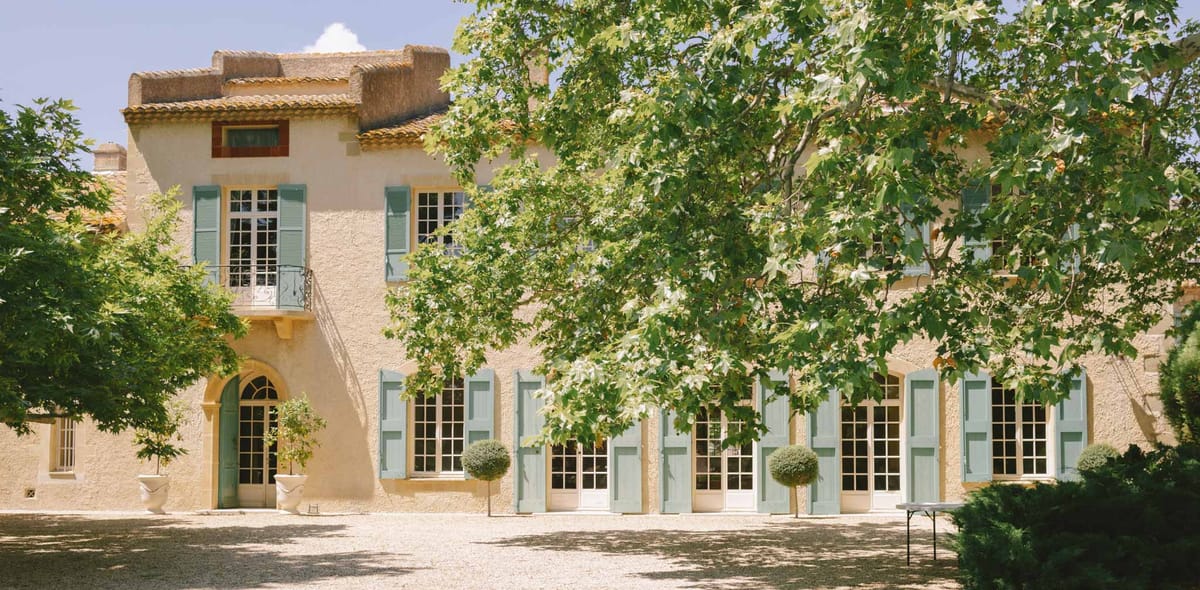
The US-domestic hotel-block playbook assumes a chain hotel (Marriott, Hilton, Hyatt) with a group-sales coordinator, a formal block contract, an attrition clause, and a 30-day cutoff. In wedding-region France, that infrastructure rarely exists. Your venue is more likely a chateau or domaine in a small town (Sarlat, Beaune, Amboise, Aix-en-Provence, Saint-Emilion) where the accommodation stack is built around independent family-run hotels, gites, and chambres d'hotes.
Three structural differences shape how you should plan:
- No group-sales desk. Your inquiry goes to
reservations@or directly to the owner. Replies arrive in French and often by hand, not through a CRM. Bilingual outreach matters. - No formal attrition clause. French independents typically ask for a 30% deposit at booking and balance on arrival, with weak penalty terms compared to the US standard. The downside risk for the couple is lower.
- The block is rarely the only accommodation. Most French wedding weekends layer 3 to 4 accommodation types (on-site venue beds, independent hotel block, gites for families, chambres d'hotes for overflow). A pure single-hotel block is the exception, not the norm.
The result: you spend less time negotiating contractual terms and more time coordinating across multiple smaller properties. The skills you need are bilingual email, regional accommodation mapping, and shuttle logistics, not group-sales-coordinator negotiation tactics.
How French wedding-region accommodation actually stacks
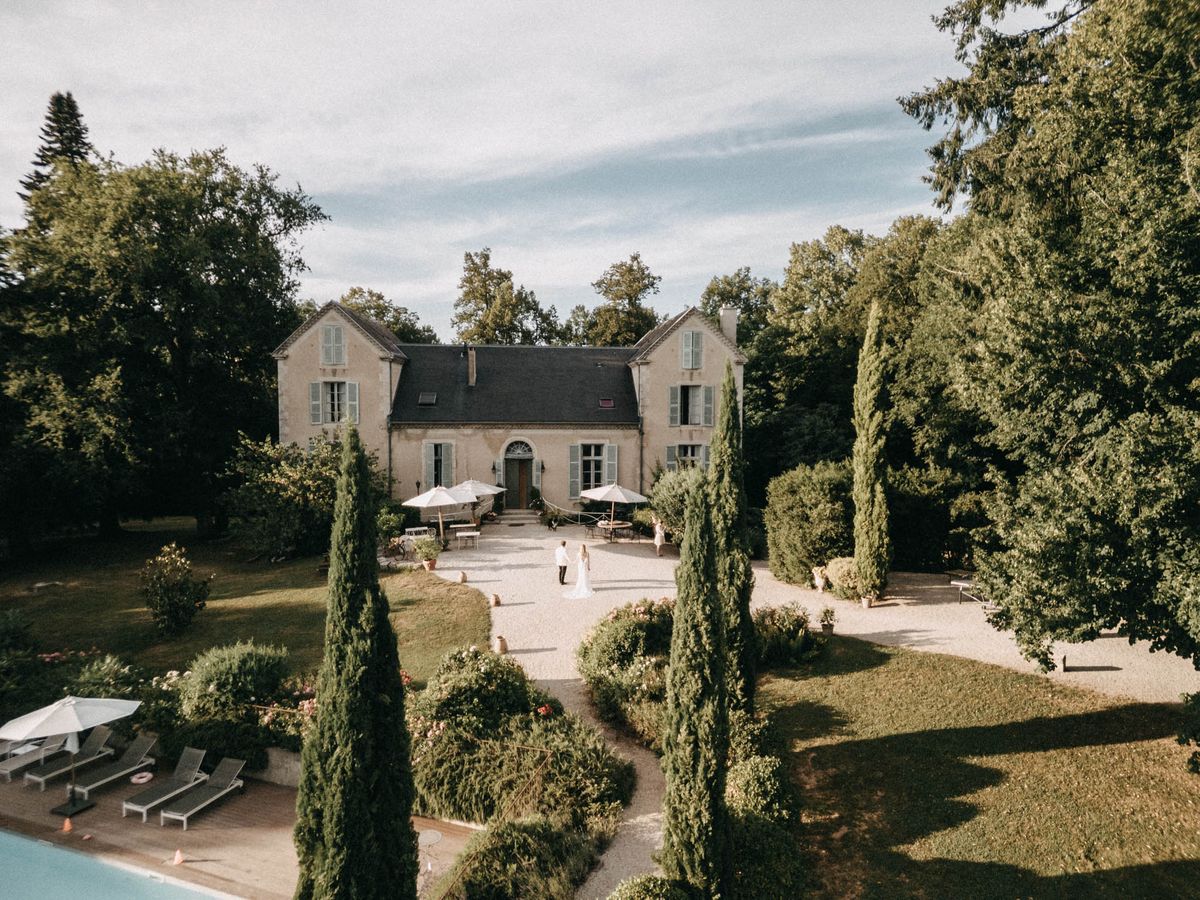
A typical 80-guest French chateau wedding fills accommodation across 4 layers. The order matters: on-site beds fill first, independent hotels next, gites pick up family groups, chambres d'hotes catch the overflow. Airbnb is residual. A property like Chateau Lacanaud in the Dordogne, for example, sleeps 12 on-site and pushes the remaining 60-plus guests into the next two layers.
Scroll →
| Layer | Typical capacity | Cost per night | Books direct? | Best for |
|---|---|---|---|---|
| On-site venue beds | 10 to 40 (median 33) | Included in venue hire or €80 to €200 | Via venue | Wedding party, immediate family |
| Independent hotel block (Logis, 3 to 4 star) | 10 to 30 rooms (200 to 600 m radius) | €90 to €220 | Couple negotiates, guests book direct | Out-of-town couples, friends |
| Gites (self-catering) | 4 to 20 per gite, 2 to 5 gites in radius | €600 to €2,500 per gite per week | Family books direct via Gites de France / Sawday's | Multi-generational families |
| Chambres d'hotes | 2 to 5 rooms per property | €100 to €200 with breakfast | Guests book direct | Couples wanting a B&B feel |
Source: FWS partner pricing data, May 2026, n=120 wedding-region accommodation properties across Provence, Loire, Dordogne, Burgundy, and Charente.
For wedding venues that lean heavily on this layered system, vineyard-domaine properties like Domaine de la Rose Blanche in Bordeaux build their accommodation strategy around the independent-hotel stack from day one.
When a hotel block is the right move in France
A negotiated hotel block makes sense for French destination weddings under three conditions. If none apply, a simple "recommended hotels" list on your wedding website usually does the job.
- You expect 15 or more guests at a single off-site property. Below 15, the negotiation effort outweighs the savings; you are better off pointing guests at the same property and letting them book direct.
- The property is in a small town with limited room inventory. Beaune in September (wine harvest), Sarlat in July (peak Dordogne season), Aix in May (Cannes adjacency) all sell out 9 to 12 months out. A block protects rooms even if you cannot price-discount them.
- Your guest demographic expects it. American and Australian guests assume a hotel block by default; British and European guests typically do not. If your guest list is half American, a block is reassurance even if the savings are modest. Hotel-as-venue properties like Hôtel Crillon le Brave in Provence and Hotel Plaza Athenee in Paris fold the block into the venue contract directly.
Discounts on French independent hotel blocks typically run 10 to 18% against rack rate. That is less than US chain hotel norms (20 to 25%) but reflects smaller margins on independent properties. The protection benefit (rooms held until your release date) is usually the larger gain.
How many rooms to block
The working rule for French weddings: block 60 to 70% of the rooms you expect off-site guests to need. The remainder of guests will either book outside the block, choose alternative accommodation (gite, chambres d'hotes, Airbnb), or no-show. Over-blocking burns goodwill with the property; under-blocking forces overflow guests to scramble in peak season.
Scroll →
| Total guest count | Estimated off-site rooms needed | Rooms to block (60-70%) | Notes |
|---|---|---|---|
| 40 guests | 15 to 18 rooms | 10 to 12 rooms | Often a single independent hotel suffices |
| 80 guests | 30 to 35 rooms | 20 to 25 rooms | Usually 2 properties (primary + overflow) |
| 120 guests | 45 to 55 rooms | 30 to 38 rooms | 2 to 3 properties; consider 2 price tiers |
| 150-plus guests | 60-plus rooms | 40-plus rooms | 3-plus properties; shuttle planning is binding |
The "off-site rooms needed" estimate assumes 50 to 60% of guests are couples (1 room per 2 guests) and 5 to 10% are solo travellers (1 room each). Adjust upward if your guest list skews older or has more solo invitees.
How to negotiate with French independent hotels
French independent hotel negotiation is a 5-step bilingual email exchange, not a phone call or a contract redline. Owners and reservations managers respond to clear written requests with specific dates, room counts, and contact information for guests. Phone calls in English to a small property rarely move the needle.
- Identify 3 candidate properties within a 30-minute drive of your venue. Use Logis de France (logishotels.com), Sawday's (sawdays.com), or our regional location guides to shortlist. Prioritise properties with restaurants on site, English-speaking staff, and at least 10 rooms. Couples marrying at small-format venues like Manoir de Beaulieu in the Dordogne typically map 2 to 3 independent hotels in nearby Sarlat or Bergerac into this shortlist.
- Send a bilingual inquiry by email. French version first, English summary below. Include wedding date, guest count, total nights needed, preferred check-in and check-out, and a request for group rate plus availability hold.
- Compare responses on rate, hold-until date, and deposit terms. French independent hotels typically respond within 5 to 10 business days. Slow response is a signal the property is under-staffed for events; consider it disqualifying.
- Confirm the block in writing. Reply with chosen room count, naming convention for the block (couple's surnames), and the release date (the date after which unbooked rooms revert to general availability). Ask for a written confirmation by return.
- Provide the guest-facing booking link or booking code. Some independent hotels allow a booking code; many ask guests to mention the wedding by name when reserving. Test both flows yourself before sending to guests.
For broader vendor negotiation guidance see our vendor contracts and deposits article; for venue exclusivity and the partial-privatisation pattern see Exclusive-use vs Shared Venues.
Sample bilingual email to a French hotel
Copy and adapt the template below. French first because the owner reads French; English summary so your wedding planner or co-author can verify before sending.
Subject: Demande de blocage de chambres pour mariage / Room block request for wedding
Bonjour,
Nous nous marions le [DATE] au [VENUE NAME] et nous cherchons a reserver un bloc de [N] chambres pour nos invites du [ARRIVAL DATE] au [DEPARTURE DATE]. Pourriez-vous nous indiquer :
- Le tarif groupe applicable pour cette periode
- La date limite de confirmation des reservations individuelles
- Les conditions de depot et d'annulation
- Le processus de reservation pour nos invites (lien direct, code, ou nom du mariage a mentionner)
Nos invites sont principalement anglophones; un accueil bilingue serait apprecie.
Merci d'avance pour votre reponse.
Cordialement,
[YOUR NAMES]
[EMAIL / PHONE]English summary: We are marrying on [DATE] at [VENUE NAME] and would like to reserve a block of [N] rooms for our guests from [ARRIVAL DATE] to [DEPARTURE DATE]. Please share your group rate for this period, the release date for individual bookings, deposit and cancellation terms, and the booking process for our guests (direct link, code, or wedding name to reference). Our guests are mostly English-speaking; bilingual service would be appreciated. Thank you.
The bilingual approach signals professionalism and saves an email round-trip. Most owners will respond in French; use Google Translate or DeepL for fast translation, and confirm critical details (rates, dates, deposit amounts) in writing before signing.
Booking timeline and deposit norms
French independent hotels run a different booking-window calendar to chain hotels. The window shrinks fast in peak season and varies by region. Below are the rough timings we see across the regions our partners work in most often.
Scroll →
| Region + season | Inquire by | Confirm block by | Release date | Notes |
|---|---|---|---|---|
| Provence, peak (May to September) | 12 months out | 9 months out | 45 to 60 days out | Cannes mid-May, Avignon Festival in July tighten further |
| Dordogne, peak (June to September) | 10 months out | 8 months out | 30 to 45 days out | Sarlat market town hotels book first |
| Loire, peak (May to September) | 9 months out | 6 to 7 months out | 30 to 45 days out | Amboise, Saumur, Tours independent hotels are the core stock |
| Burgundy, peak (June to September + harvest) | 10 months out | 8 months out | 45 days out | Beaune sells out September for the wine harvest |
| Any region, shoulder (April, October, November) | 6 months out | 4 months out | 21 to 30 days out | Negotiating room is wider; some properties cut 15 to 20% |
Deposit norms: most French independent hotels ask for a 30% deposit at block confirmation with the balance due on arrival. Some smaller properties ask for nothing until the release date passes. Compared to US chain hotels (50% deposit standard, attrition clause), the French independent hotel risk profile is more favourable to the couple.
What to tell your guests
The wedding website is where the hotel block lives, not the invitation. Guests look up accommodation when they RSVP, not when they receive the save-the-date. Three communication patterns we see work:
- A dedicated "Stay" page on the wedding website. List the blocked property with rate, booking link or instructions, release date, and travel time from venue. Add 2 alternative properties at different price tiers, and a residual line on gites and Airbnb. Cap at 5 options to avoid decision paralysis.
- One reminder email at release-date minus 30 days. Send it 4 to 6 weeks before the release date so on-the-fence guests have time to book without losing the rate. Include a one-line ask for any guests not yet booked to do so.
- A WhatsApp or group-message thread for late questions. Once invitations are out, accommodation questions arrive in bursts. A group channel cuts your reply count by 60 to 80%; one answer reaches everyone.
Avoid sending the booking code or link in the initial save-the-date. Most guests will lose it. The wedding website is the durable reference point.
When a hotel block is the wrong move
Three patterns where blocking rooms creates more friction than it removes:
- Your venue already includes 60-plus on-site beds. If the chateau, mas, or domaine sleeps the majority of your guests as part of the partial-privatisation contract, a separate hotel block adds confusion. A simple "additional accommodation options" page covering the residual 20 to 30 guests is enough.
- Your guest list is mostly European. UK, Irish, and Continental guests typically book independently and prefer choice. A block is undervalued by them and may go unfilled.
- The nearest independent hotel charges a premium that outprices your guests. If the nearest blocked rate is €280 and the next-nearest is €130, guests will route around the block. A two-tier recommendation list works better than a single-property block.
If on-site capacity is the binding constraint, our guest accommodation article covers the full layered system; for venue selection that maximises on-site sleep capacity see Why guest accommodation changes everything.
Real urban-French weddings on FWS
Six FWS-featured weddings where the hotel-block pattern was a binding planning decision:
- Fuchsia Anthurium and Parisian Grandeur at Alfred Sommier Hotel: at-hotel Paris wedding, guests stayed in the same property
- A Lavender-Hued Wedding at Chateau de Bagnols, Lyon: hybrid on-site plus Lyon hotel block
- A Chic White Wedding at Chateau Gassies, Bordeaux: Saint-Emilion and central Bordeaux independent hotels for off-site guests
- Golden Hour Romance at Chateau Tour Saint Christophe, Bordeaux: vineyard wedding with Saint-Emilion town hotels
- An Elegant Elopement at Hotel Ritz Paris and the Rodin Museum: small-format Paris elopement with Ritz overnight
- A Rustic Vineyard Wedding at Chateau de Malliac, Nouvelle-Aquitaine: south-west independent hotel stack across multiple small-town properties
For more urban and chateau weddings featuring hotel-block logistics, browse our real weddings archive.
Next steps and related guides
Most couples we work with sequence accommodation planning like this:
- Lock the venue: count on-site beds first
- Map the 30-minute radius: Guest accommodation: on-site, hotels, Airbnb covers the full stack
- Decide if a hotel block is worth it (this article)
- Negotiate the block in bilingual email (template above)
- Plan transport between block and venue: Wedding transportation in France
- Brief guests via the wedding website: Your wedding website: what to include
- Plan the welcome dinner: The welcome dinner
Our complete French wedding planning guide chains all of these in the order most couples find easiest.
Frequently Asked Questions
Do French hotels do wedding blocks? ›
How far in advance should I book a hotel block in France? ›
How many rooms should I block? ›
What is partial privatisation in France? ›
Are gites and chambres d'hotes a substitute for a hotel block? ›
Do French hotels require a deposit on a block? ›
Explore Every Guide in This Chapter
Deep-dive into each topic covered above.
Premium Wedding Venues in France