

Cypress Trees and Emerald Linen: A Château de Sannes Editorial
A styled editorial at Château de Sannes in the Luberon: a ceremony standing between two cypresses, emerald linen on the tables and white lily cascades.
The formal gardens of Château de Sannes provided the starting point for this Provence editorial, created by photographer Gaelle Boissavi and planner Agence Fairytale. Rather than filling the setting with elaborate installations, the team explored how the existing landscape, architecture and movement of the day could shape the design.
Camilla and Enrico stepped into the roles of bride and groom, moving through the château's gardens, terraces and tree-lined paths. The result brings together two different approaches to wedding design: adding a statement structure where it creates impact, and allowing an already established setting to become the backdrop itself.
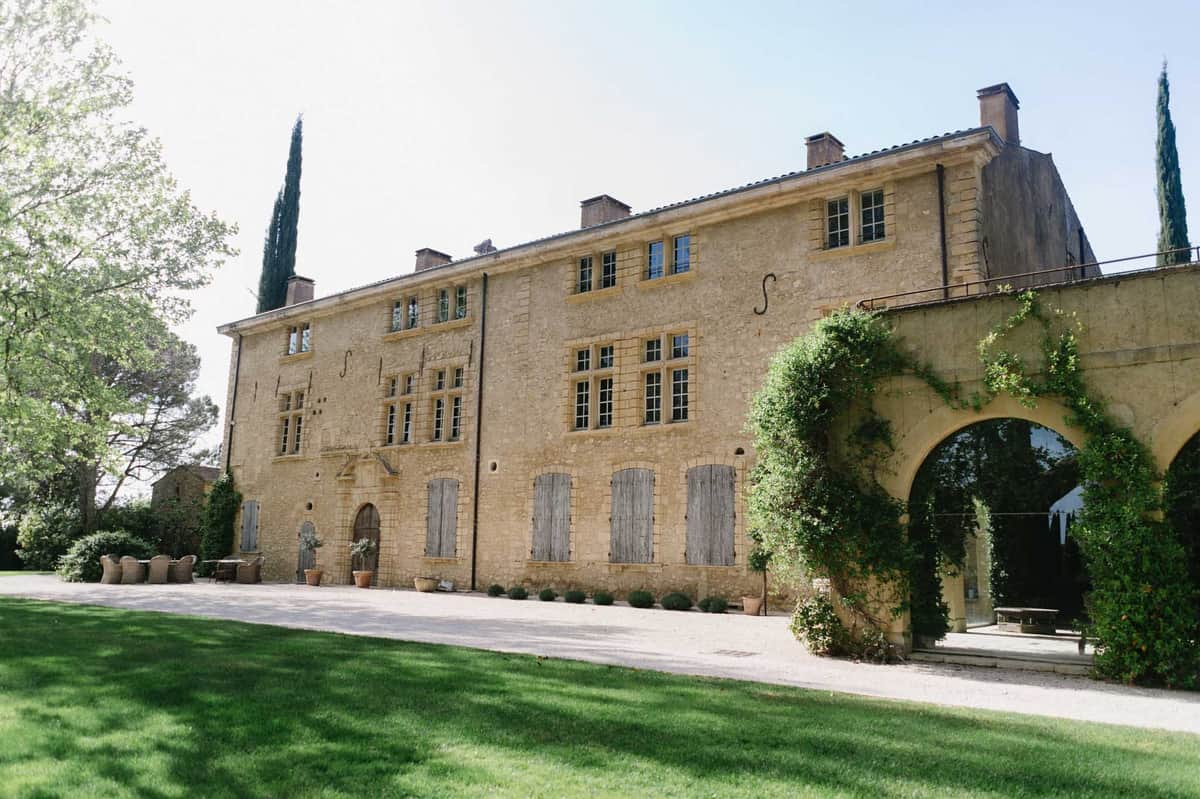
Set in the Luberon, around 25 minutes from Aix-en-Provence, Château de Sannes extends across 70 hectares of vineyards, olive groves, woodland and formal French gardens. Its symmetrical parterres, tall cypresses and gravel pathways give couples several naturally defined settings for a celebration, with much of the visual impact already provided by the estate. It sits among the château wedding venues in Provence that arrive with much of their structure already in place.
Ceremony
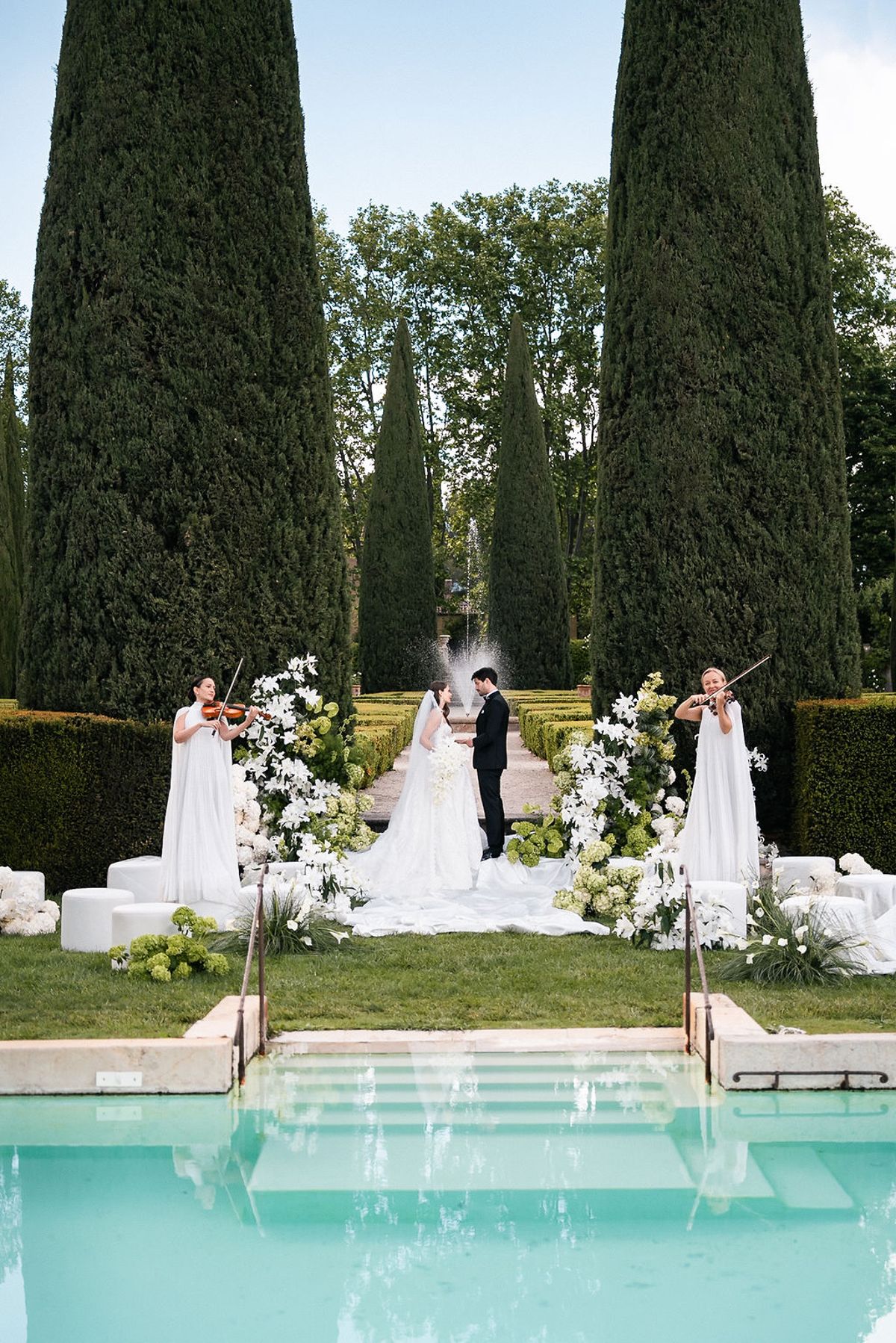
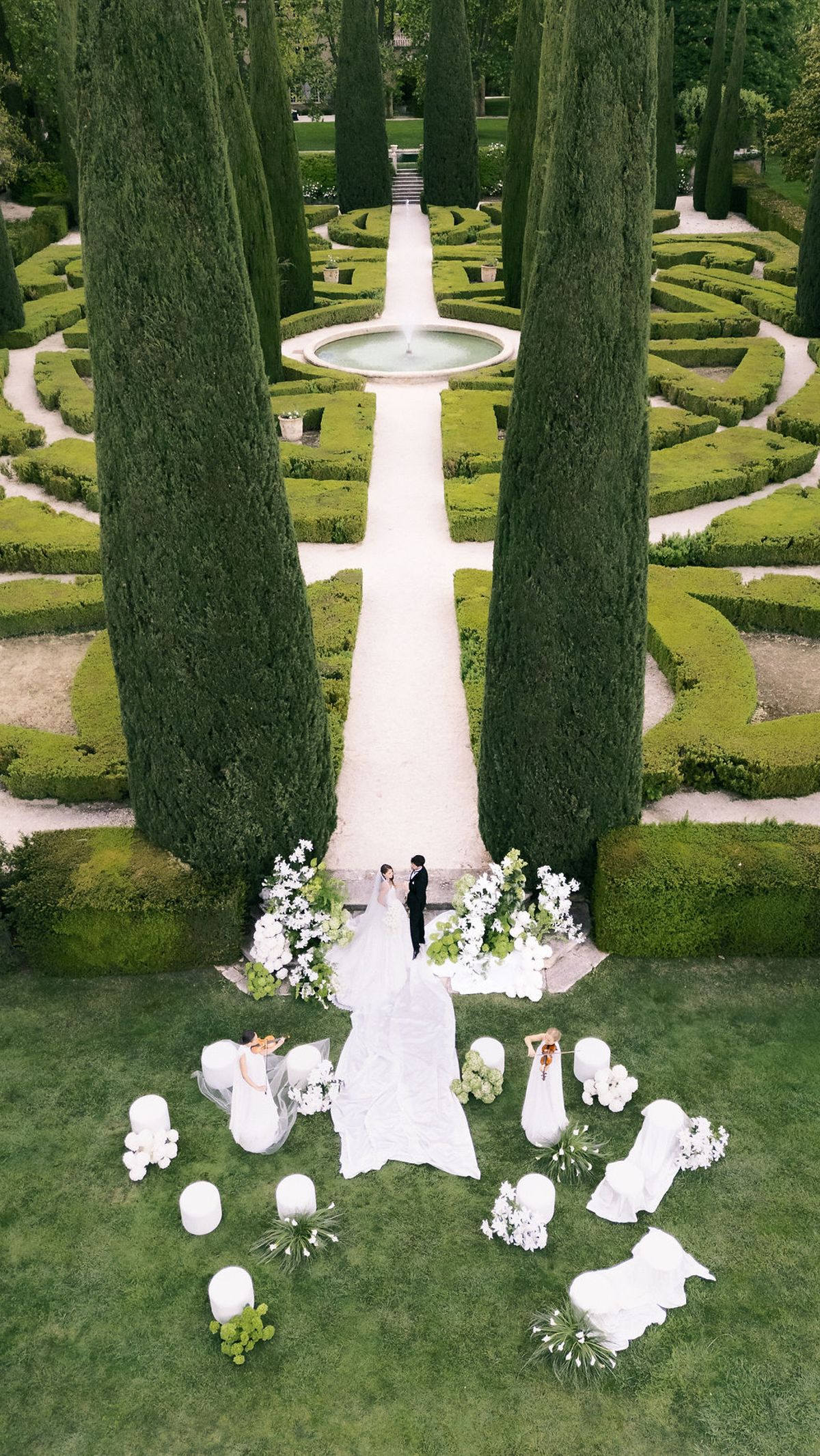
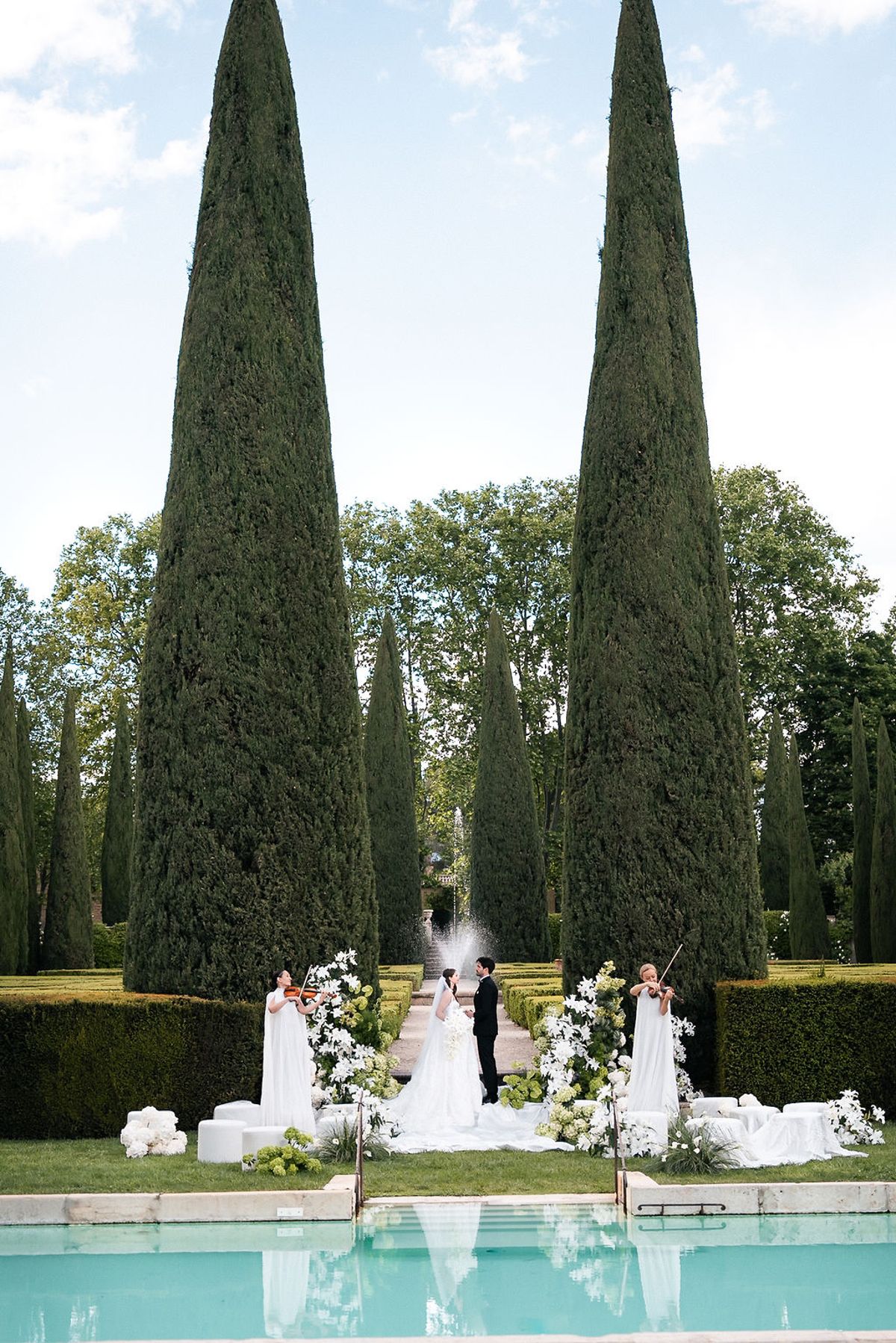
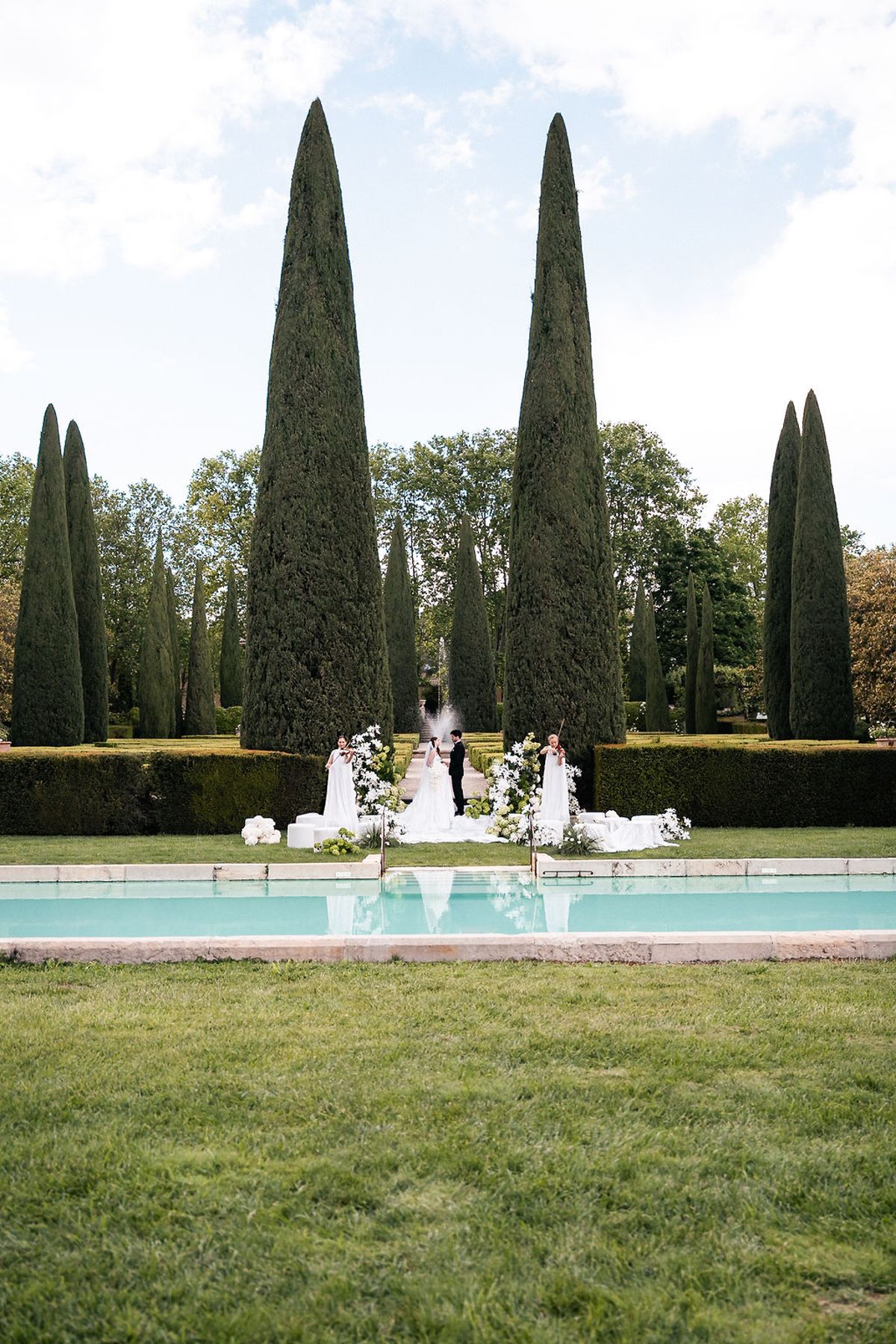
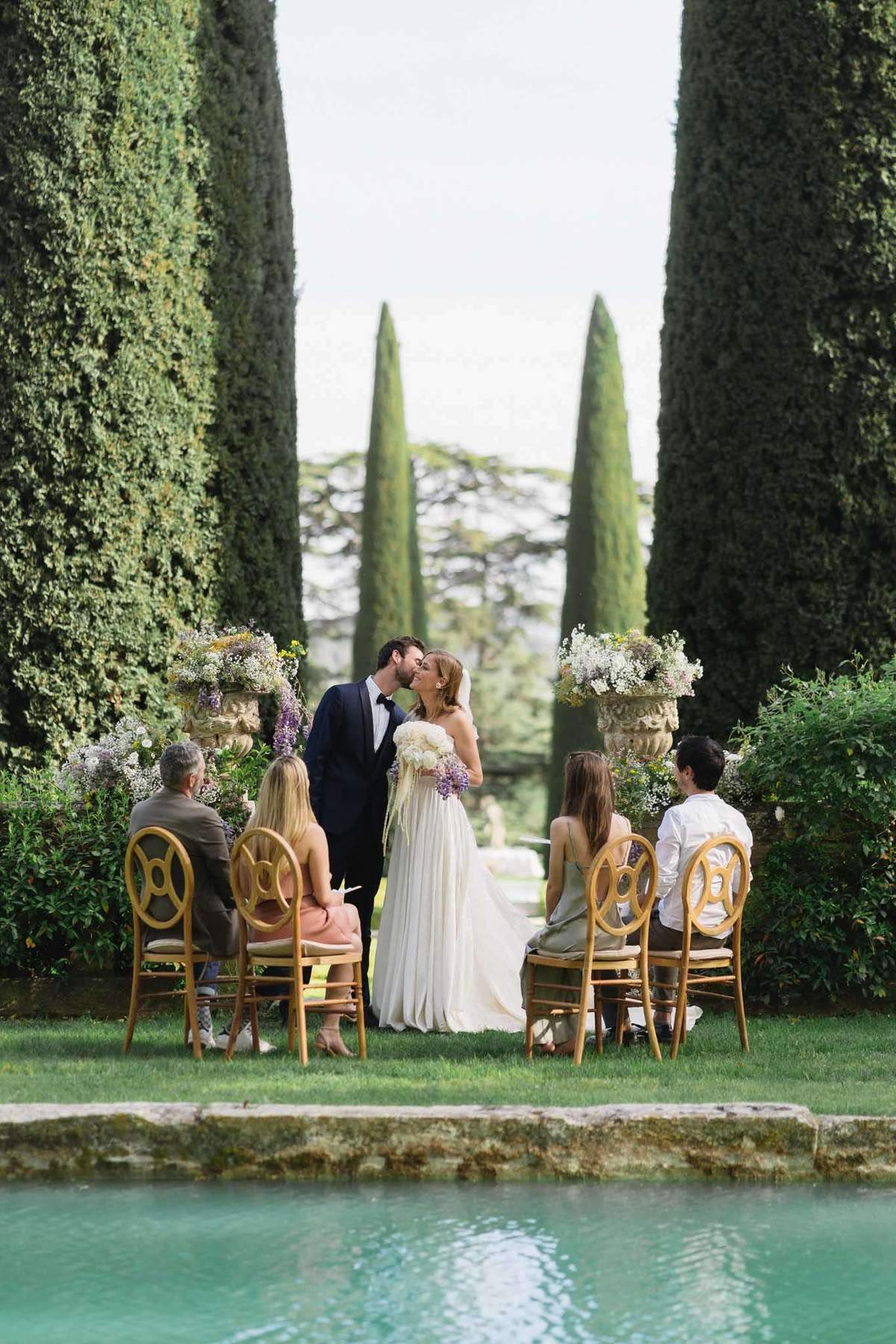
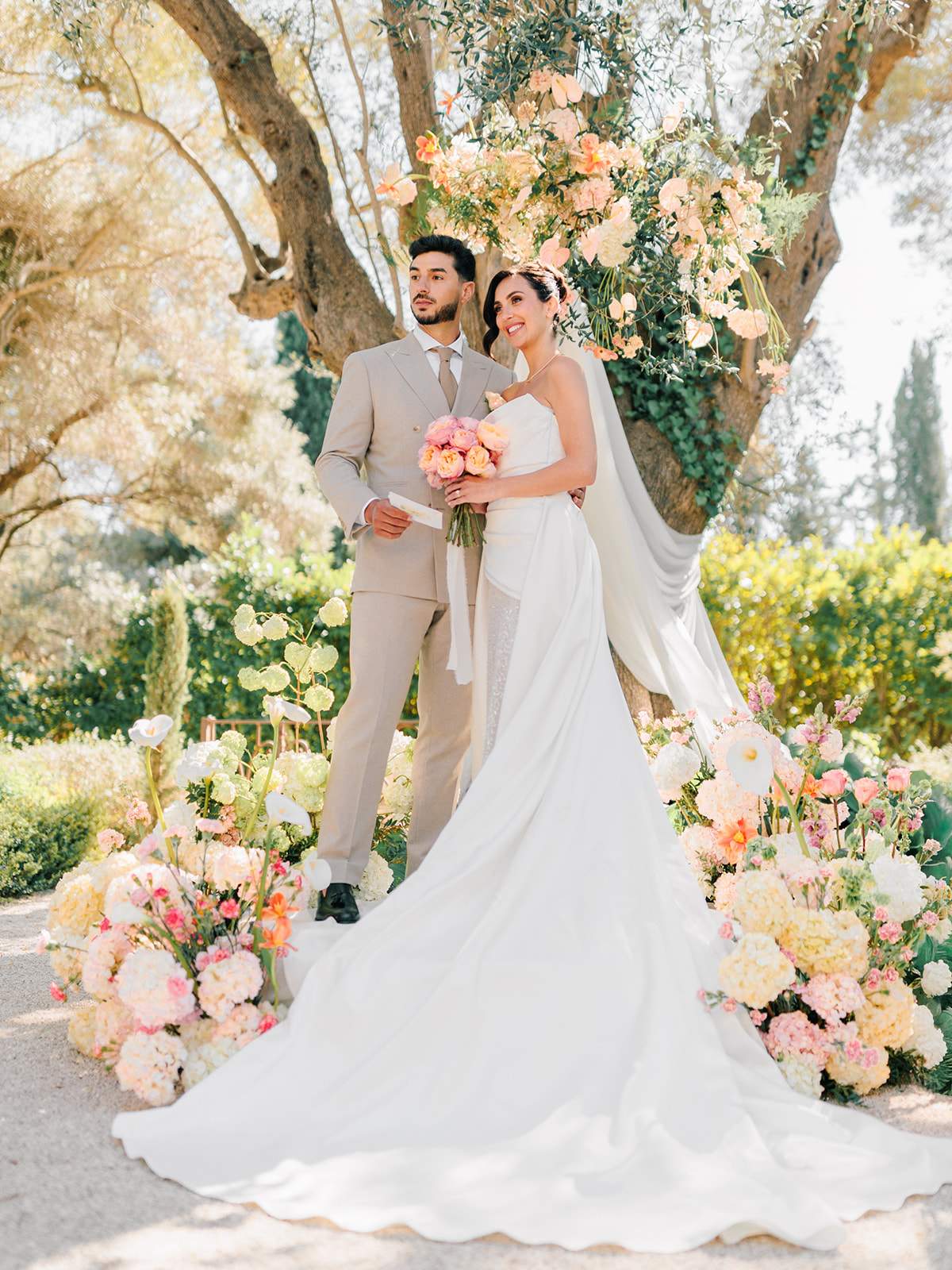
The ceremony setting made full use of the château's formal garden. Camilla and Enrico stood at the head of the parterre, framed by two tall cypresses, with the long gravel walk, clipped box hedges and central fountain stretching out behind them.
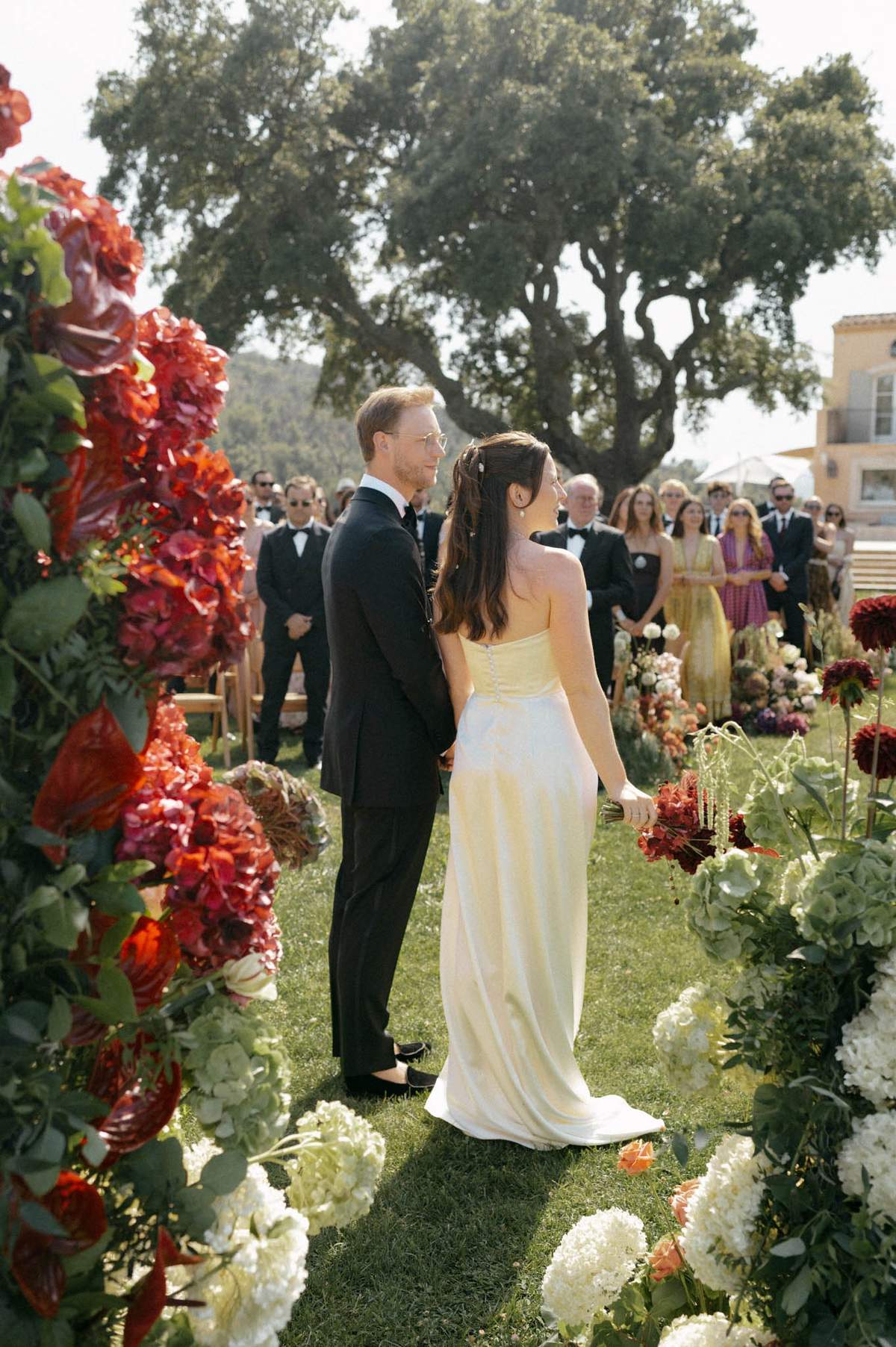
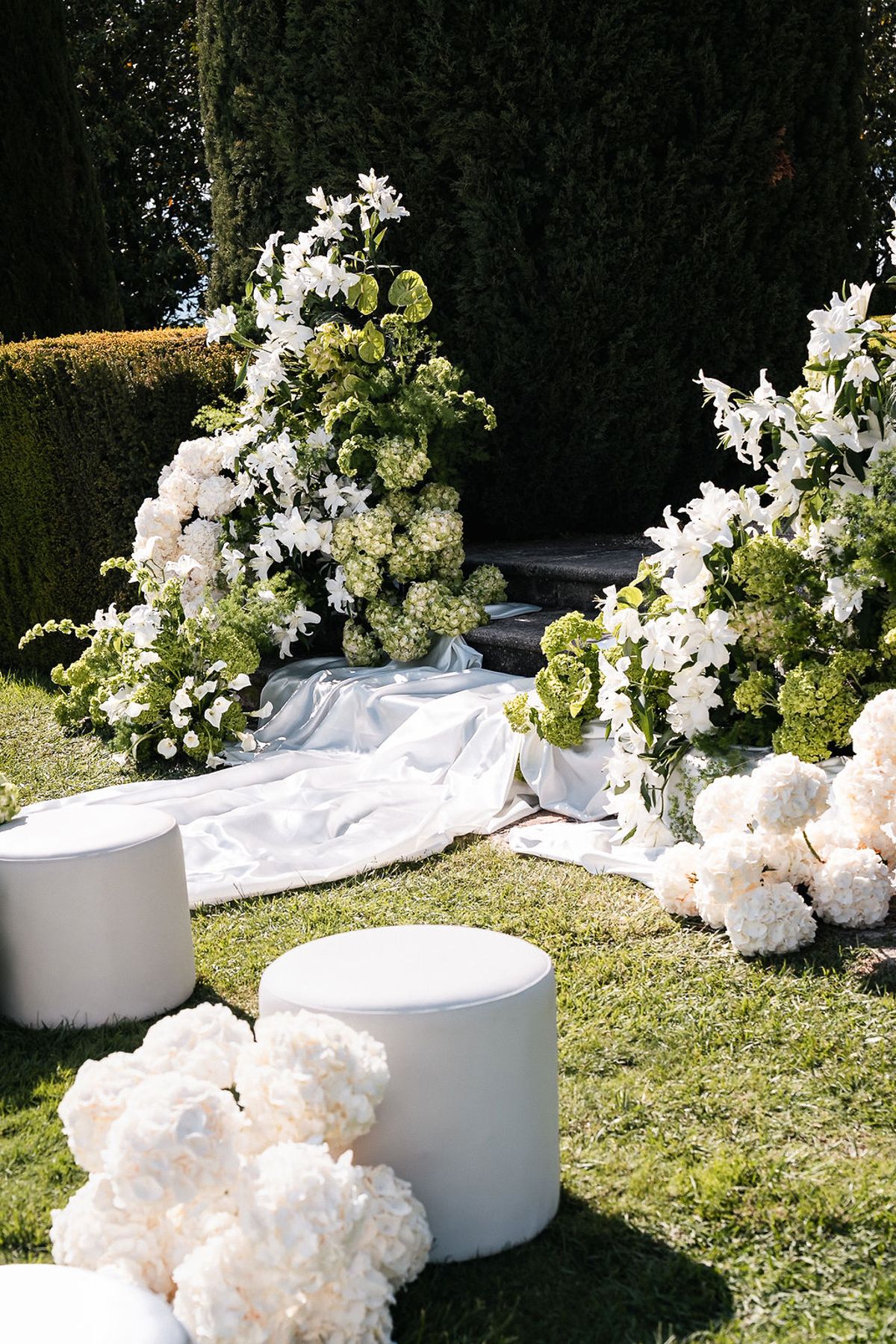
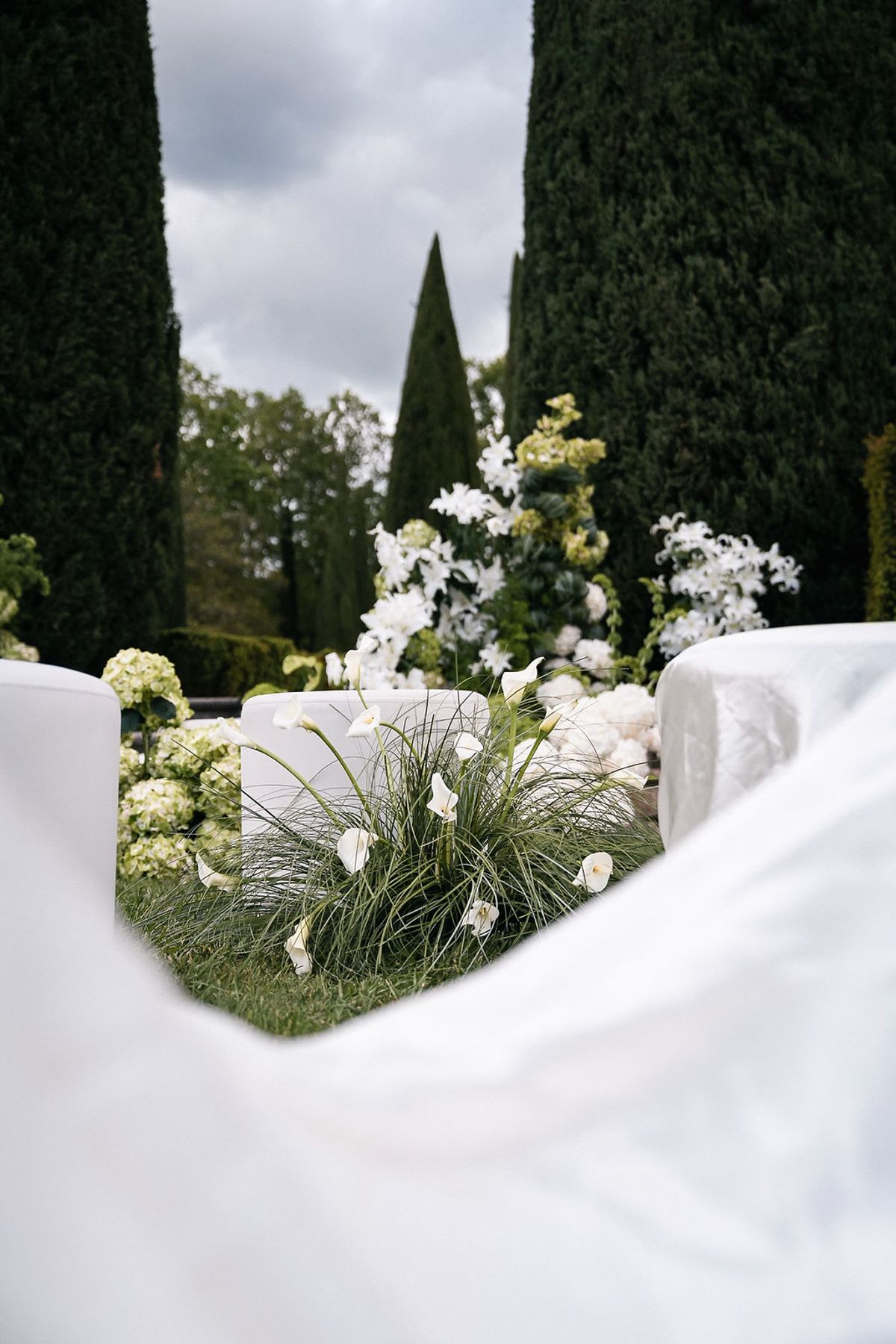
Loose arrangements of roses, hydrangeas and white stock were placed on either side, with additional flowers gathered low against the grass. The florals added softness without covering the architecture of the garden, while two violinists positioned on either side completed the setting.
Although the editorial was photographed without guest seating, the wide, level lawn in front of the ceremony space shows how easily the same arrangement could work for a wedding. Chairs could be placed facing the couple while preserving the long view through the gardens.
Bridal Portraits
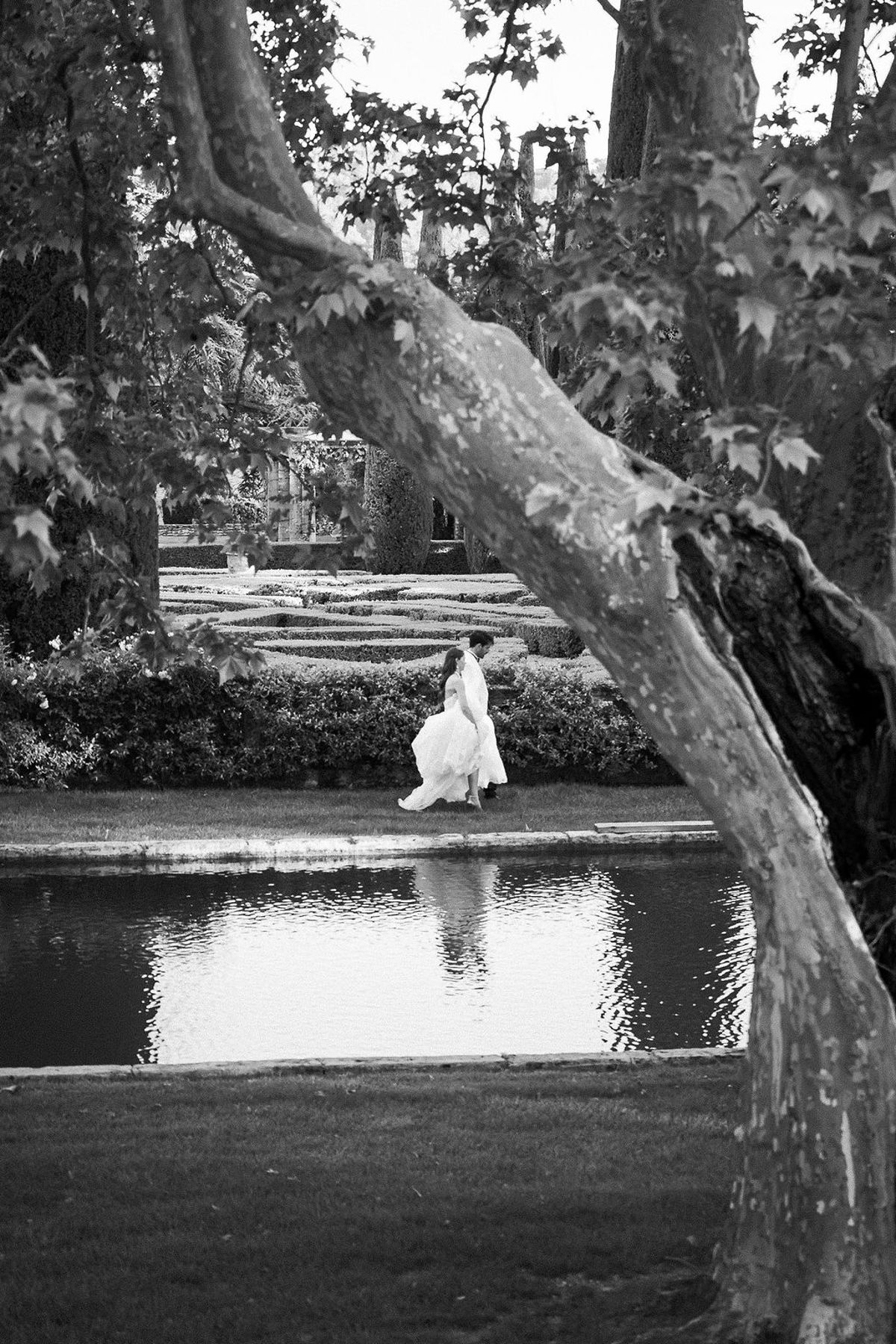
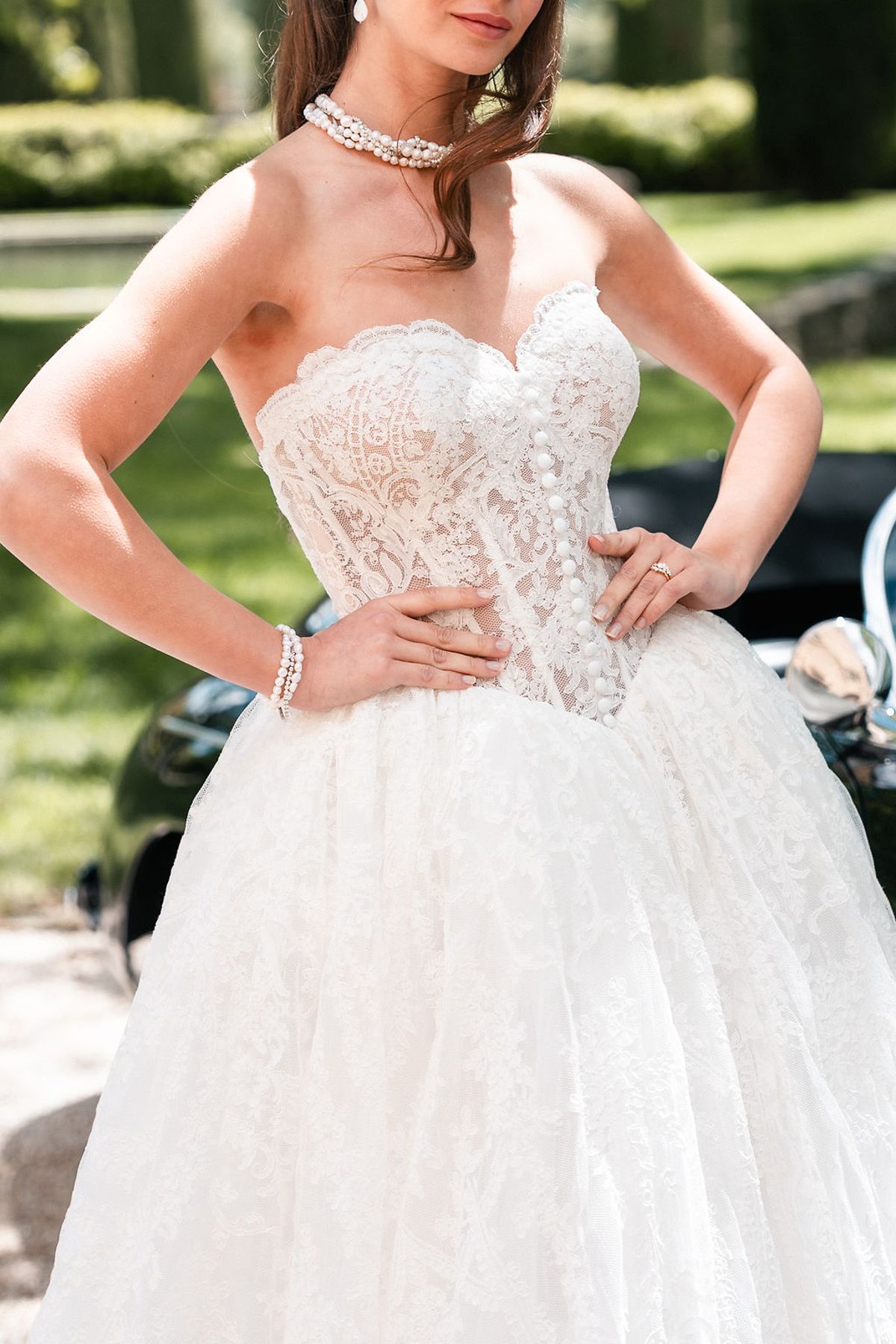
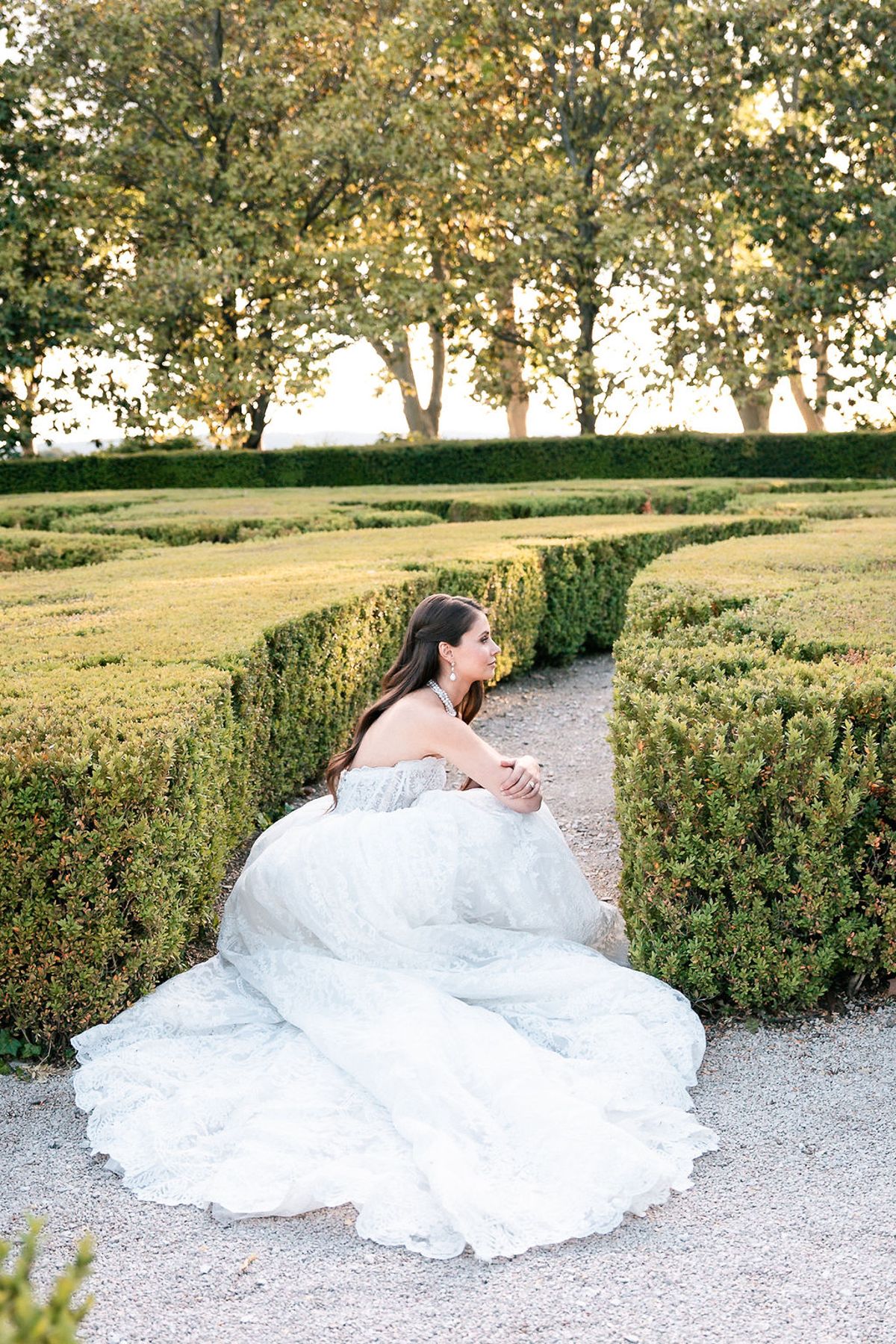
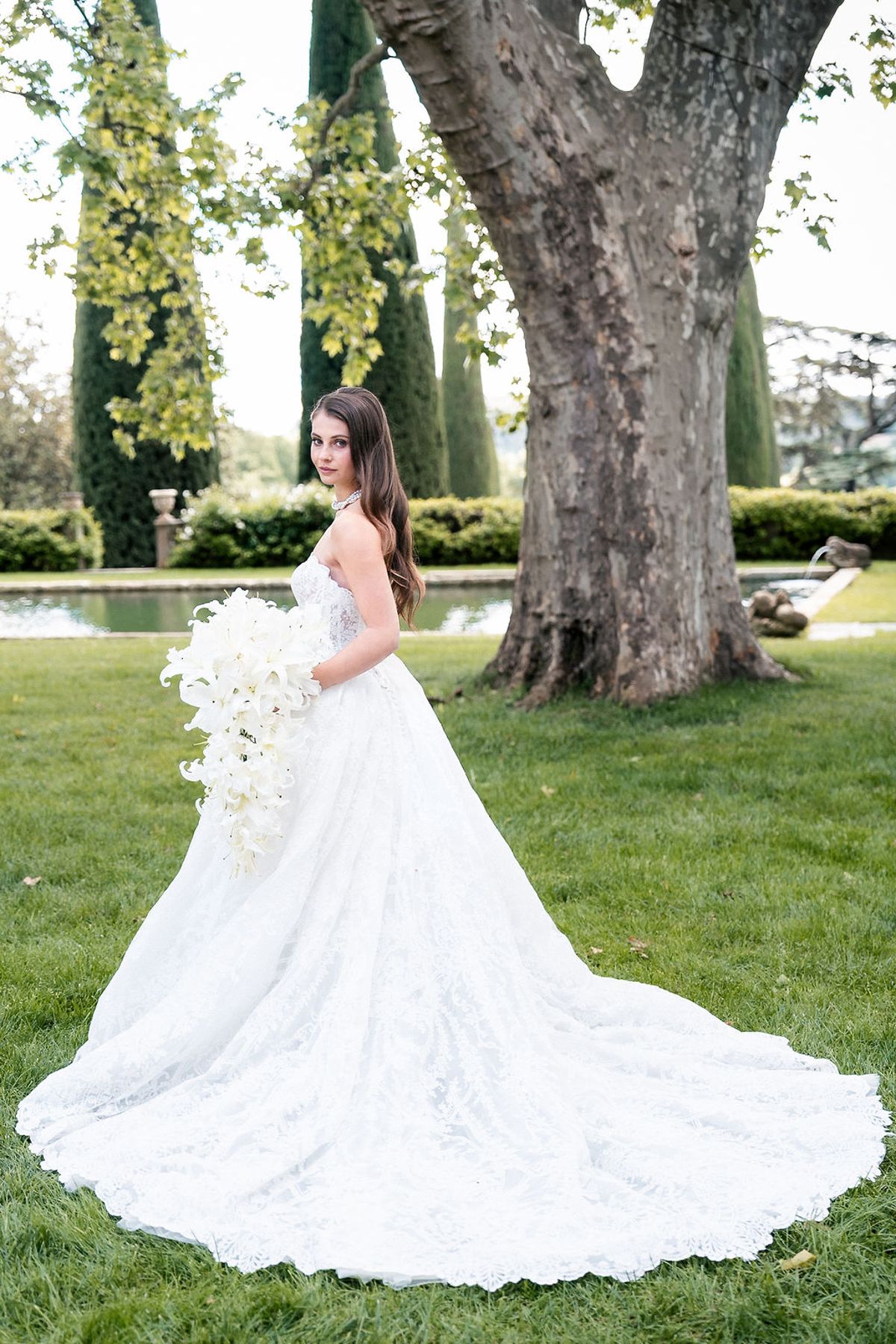
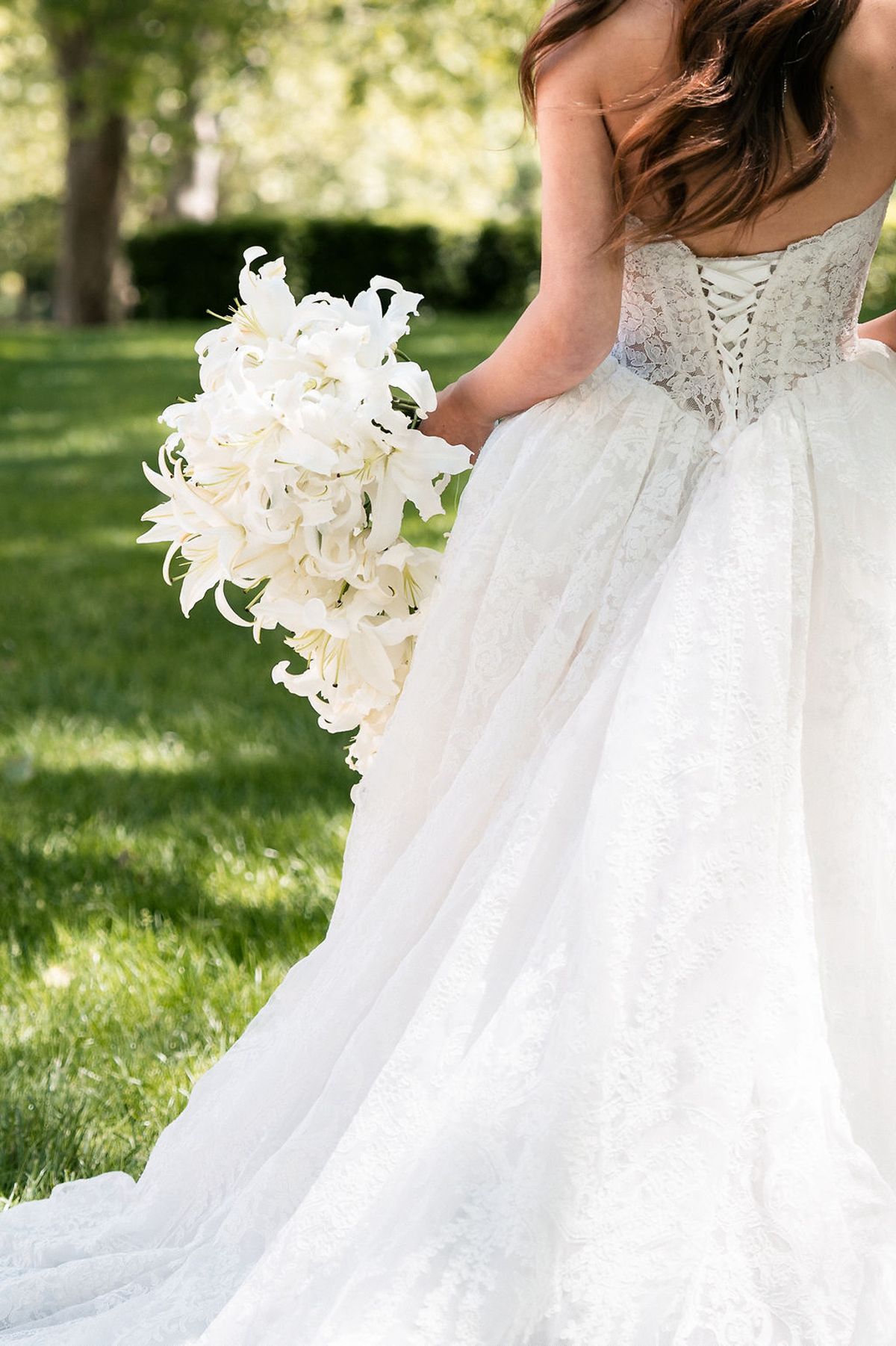
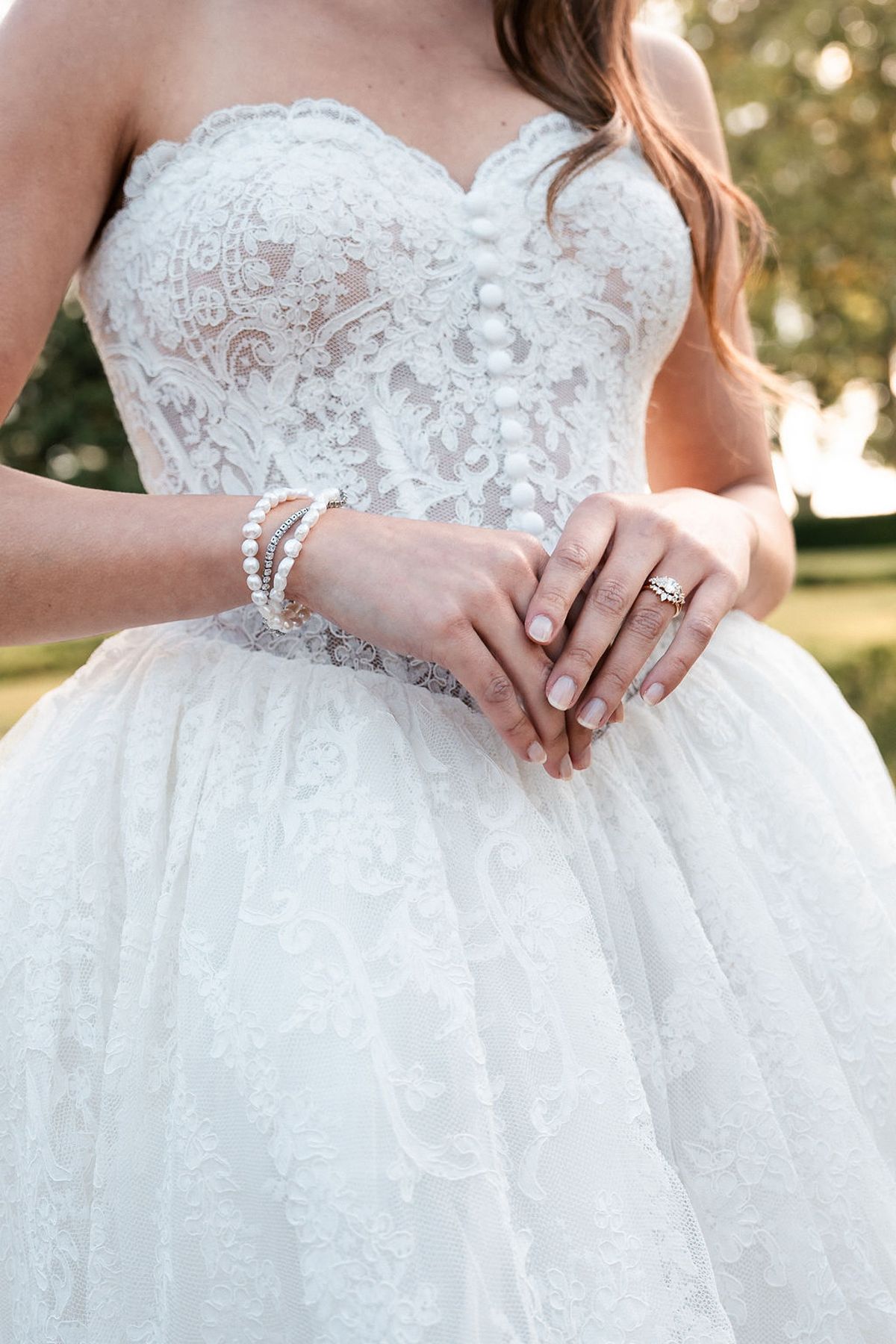
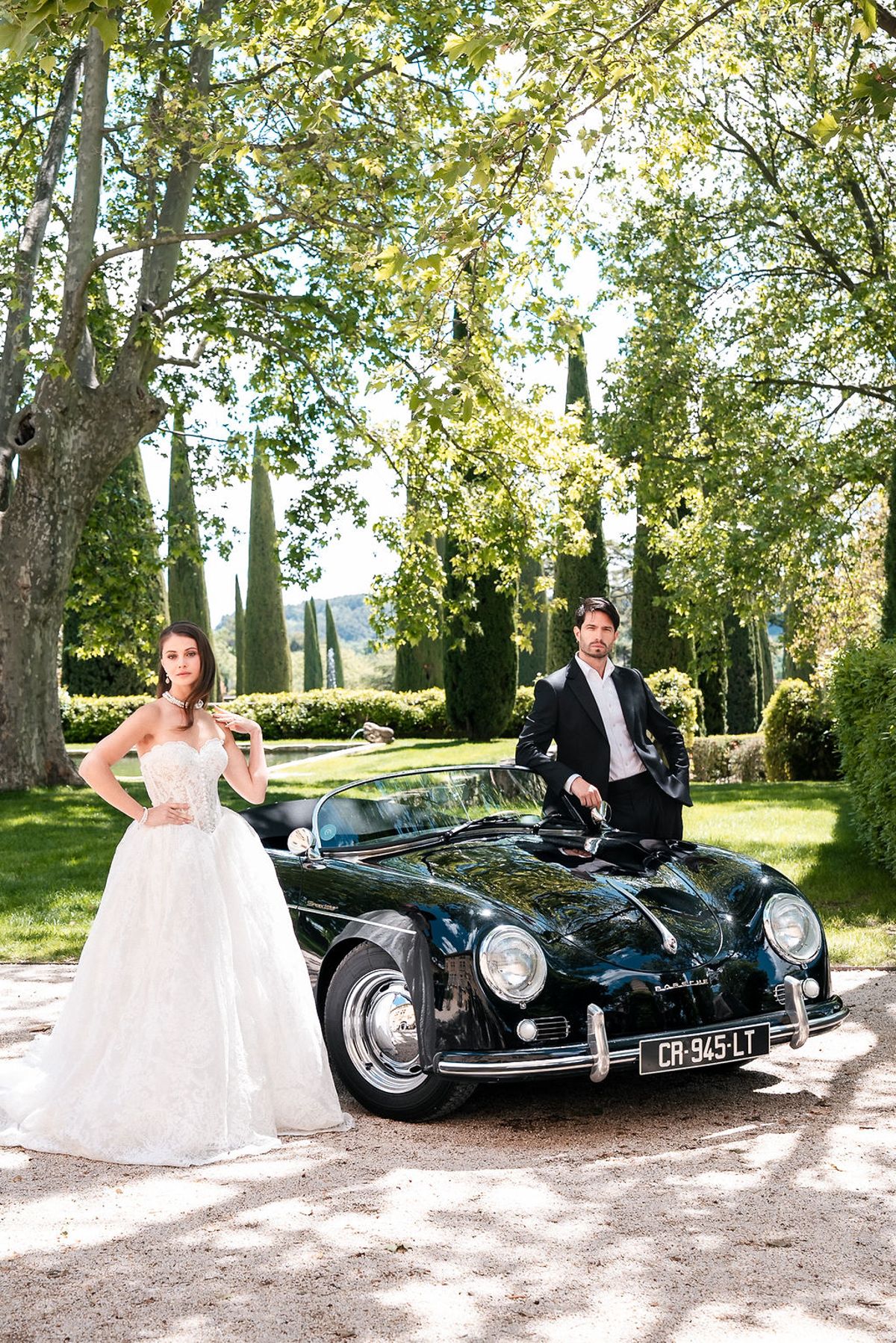
Camilla wore a strapless lace corset gown by Igilles, with visible boning, a lace-up back and a full, voluminous skirt.
Her cascading bouquet of white lilies balanced the scale of the gown, falling loosely below the hand and creating a softer, more relaxed shape against the structured silhouette.
Layered pearl jewellery continued the classic styling, with a pearl choker, bracelet and crystal details. Portraits were taken throughout the older parts of the estate, including beside the plane tree at the water's edge, along the clipped hedges and between the formal box parterres.
Couple Portraits
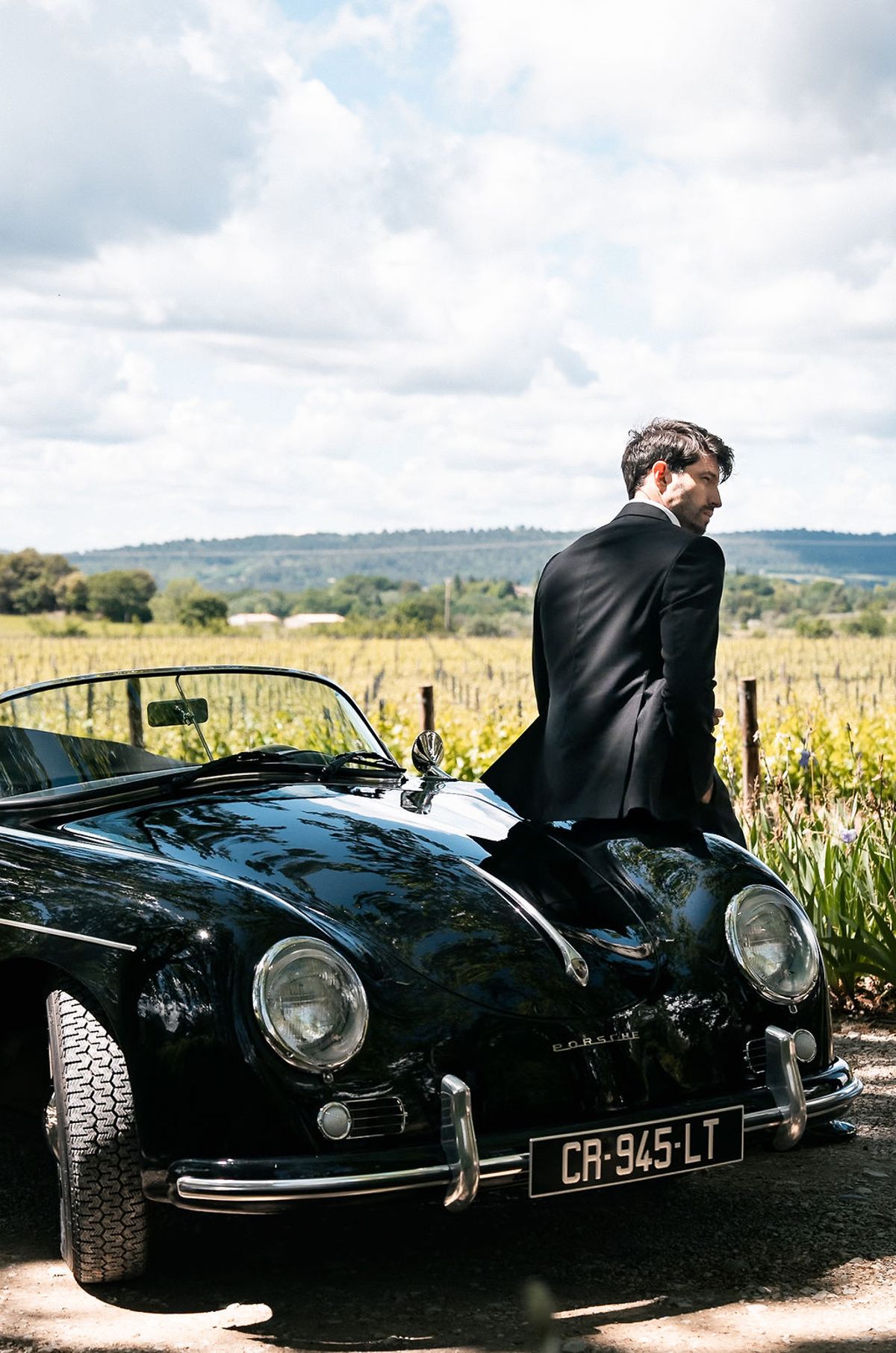
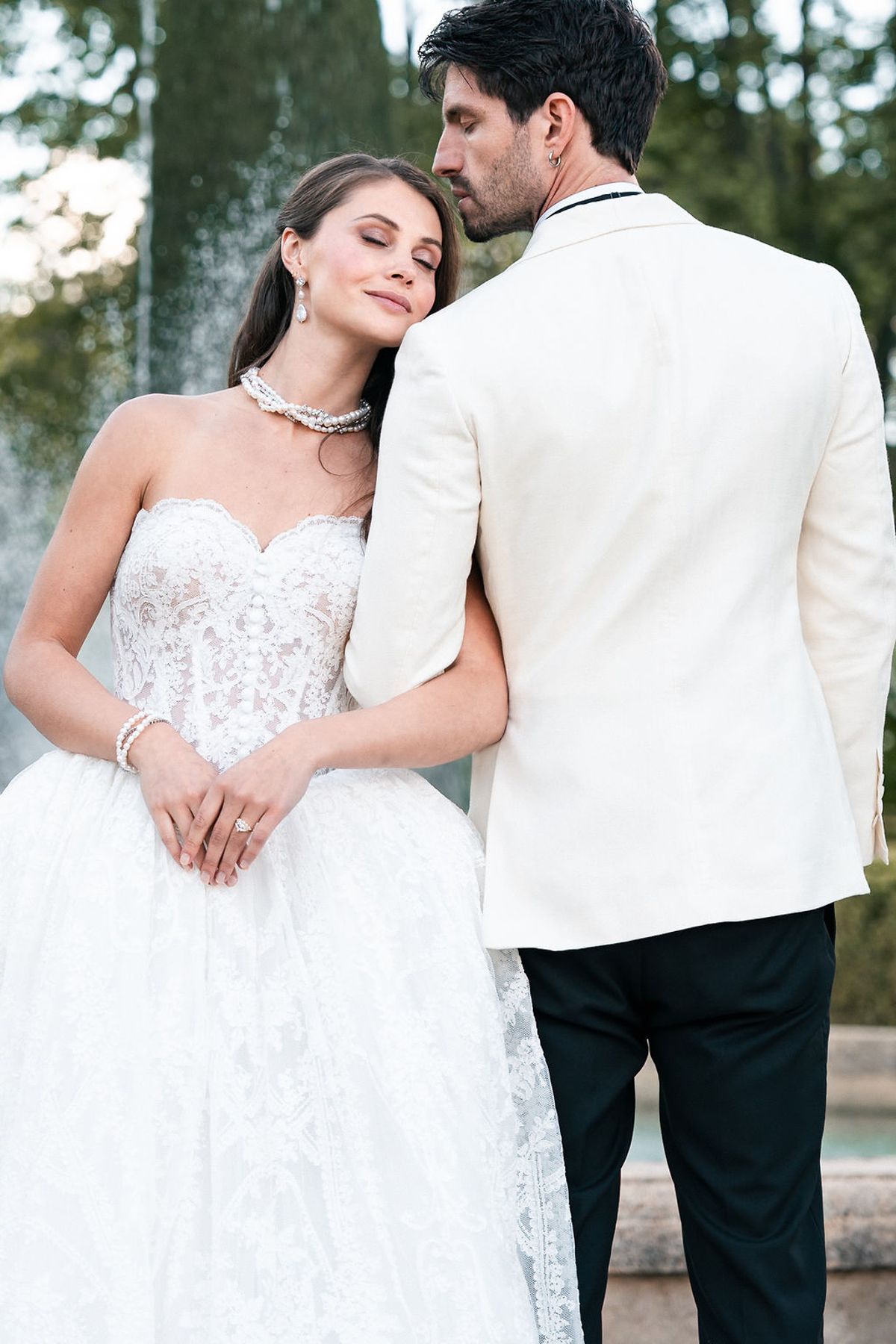
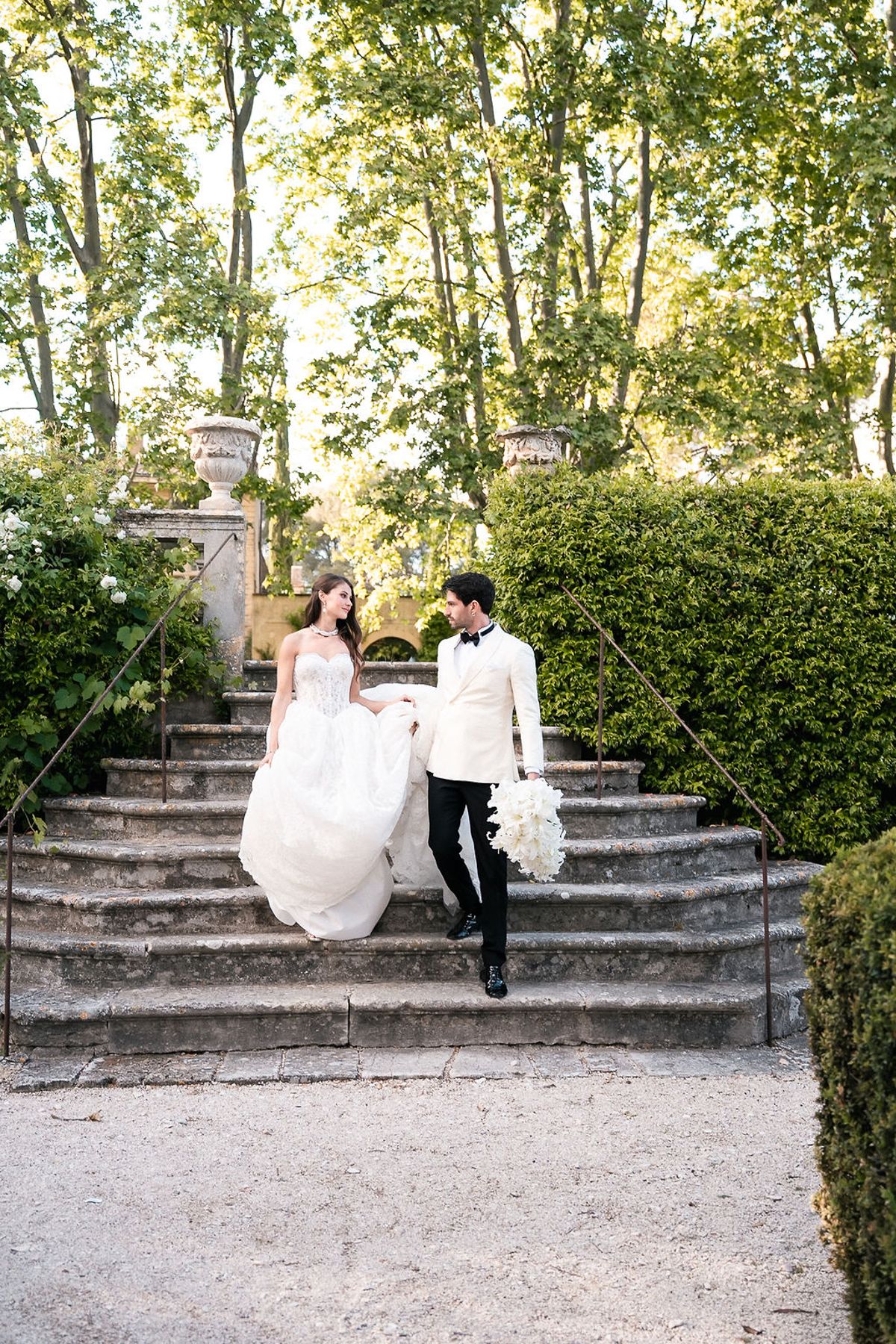
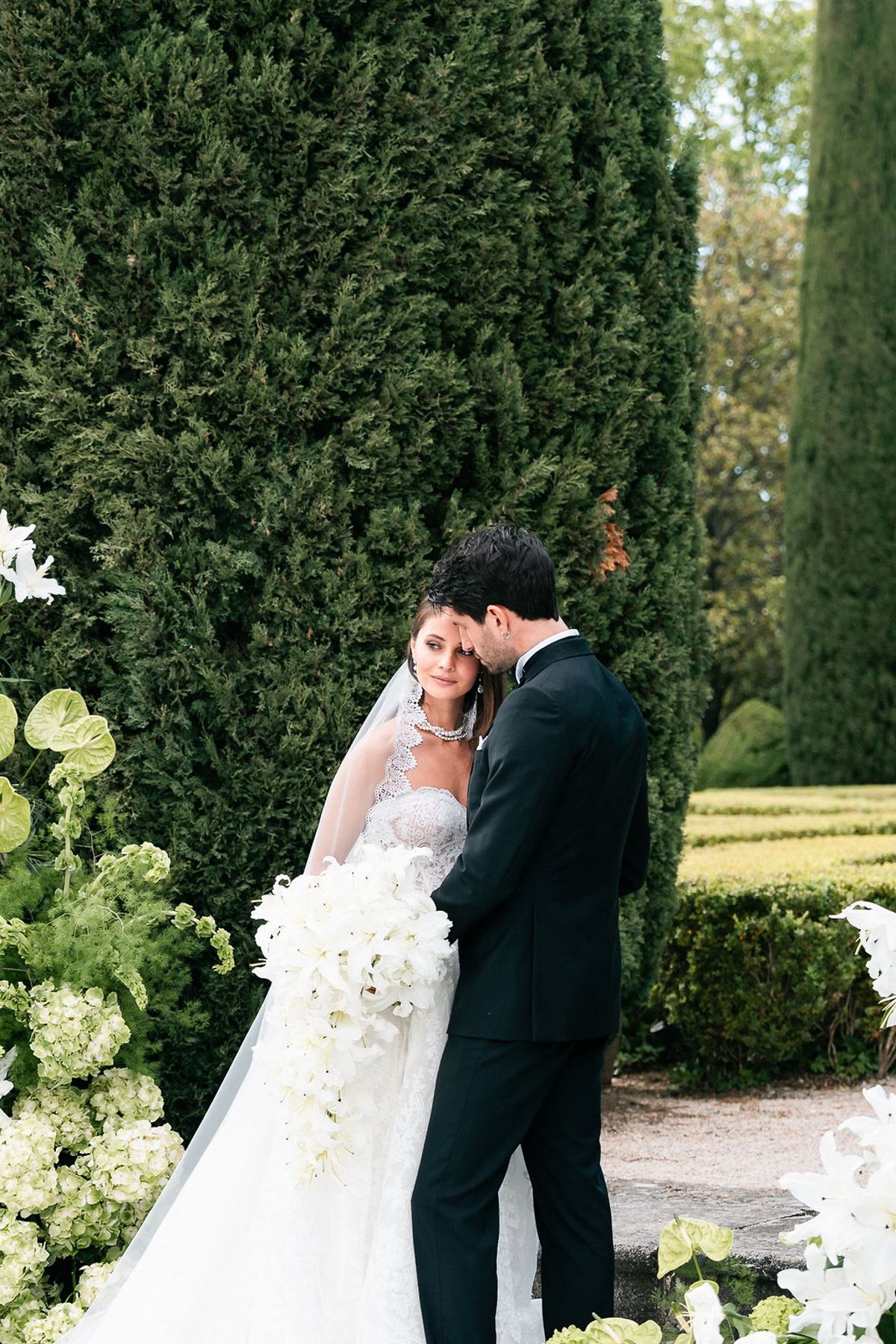
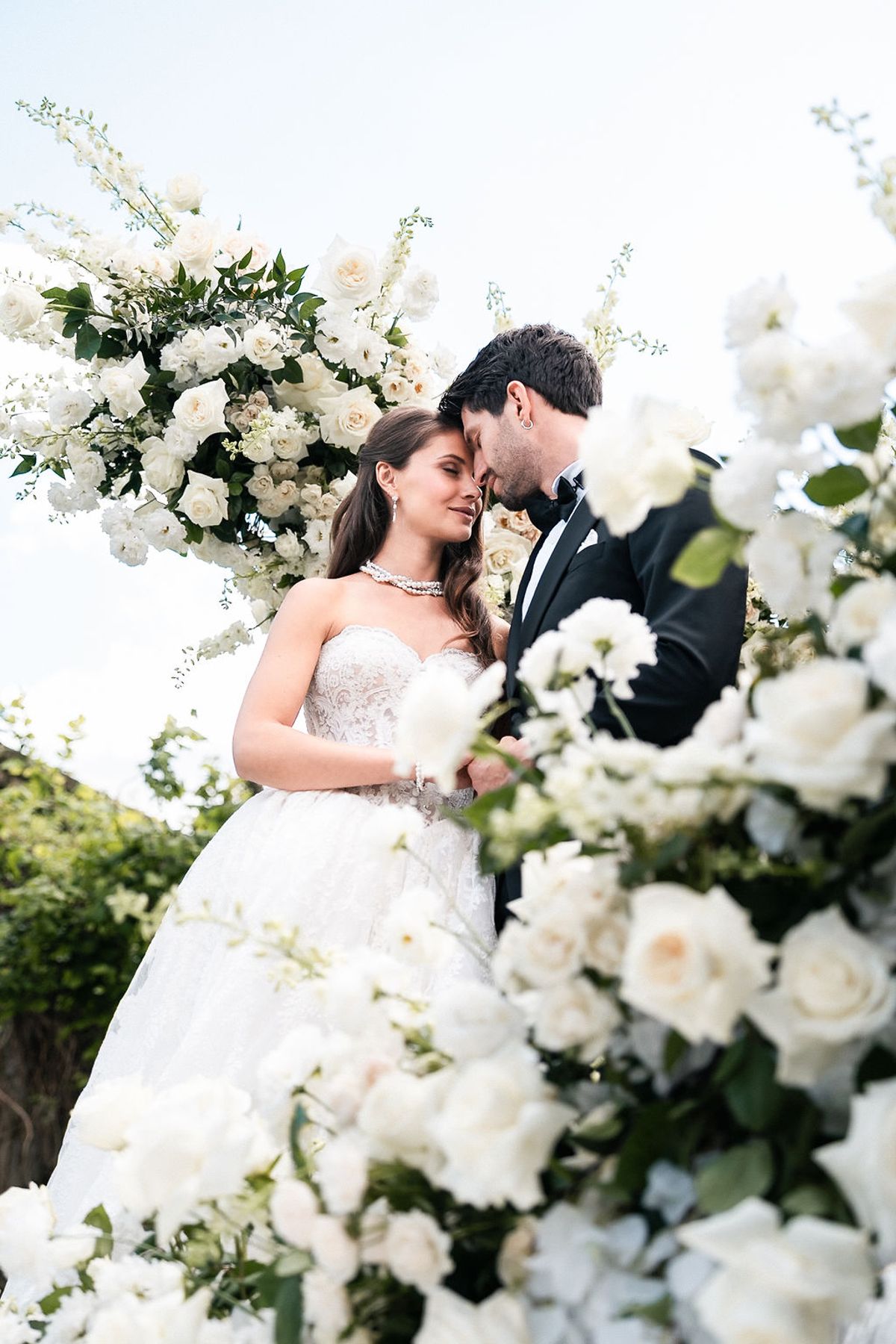
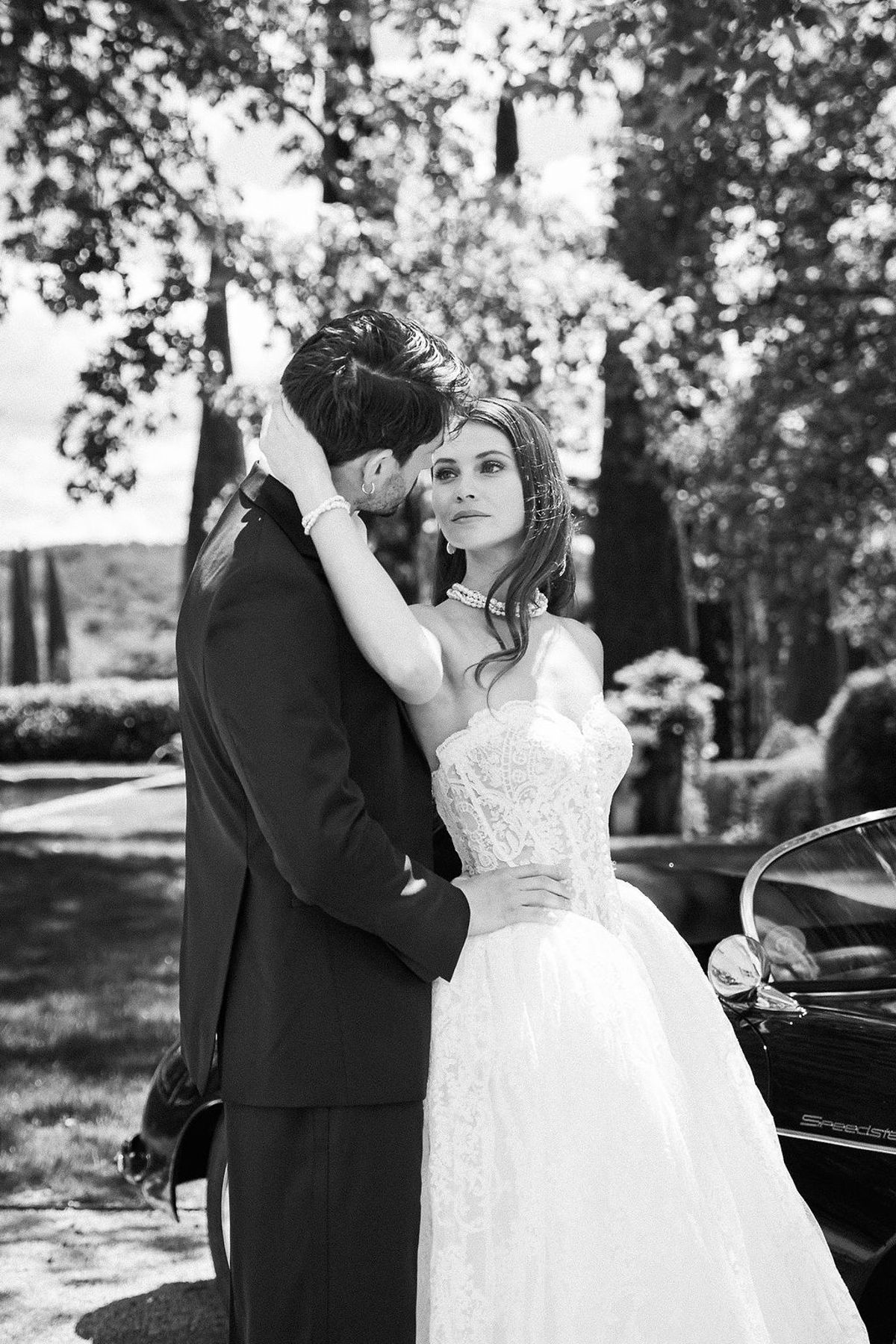
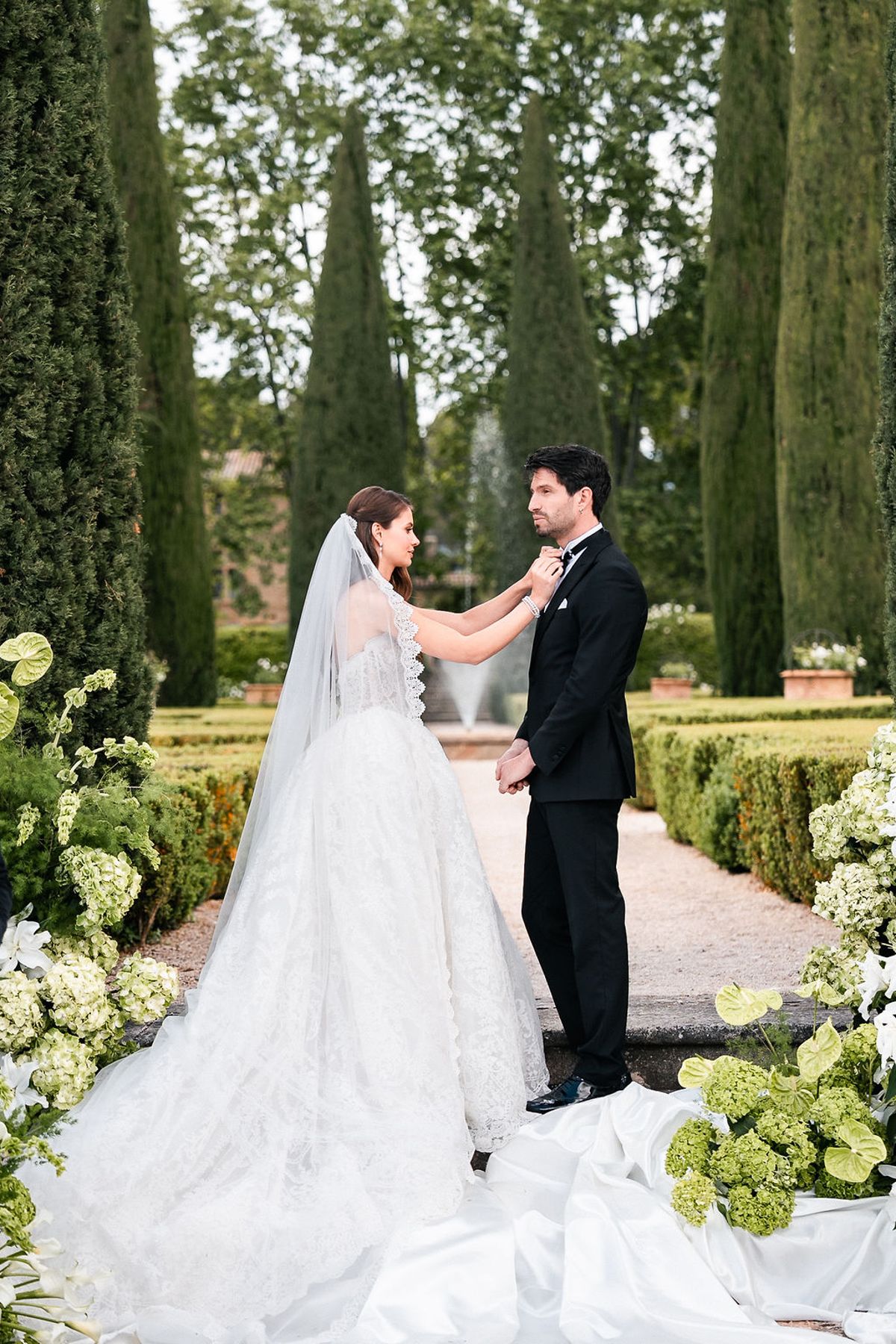
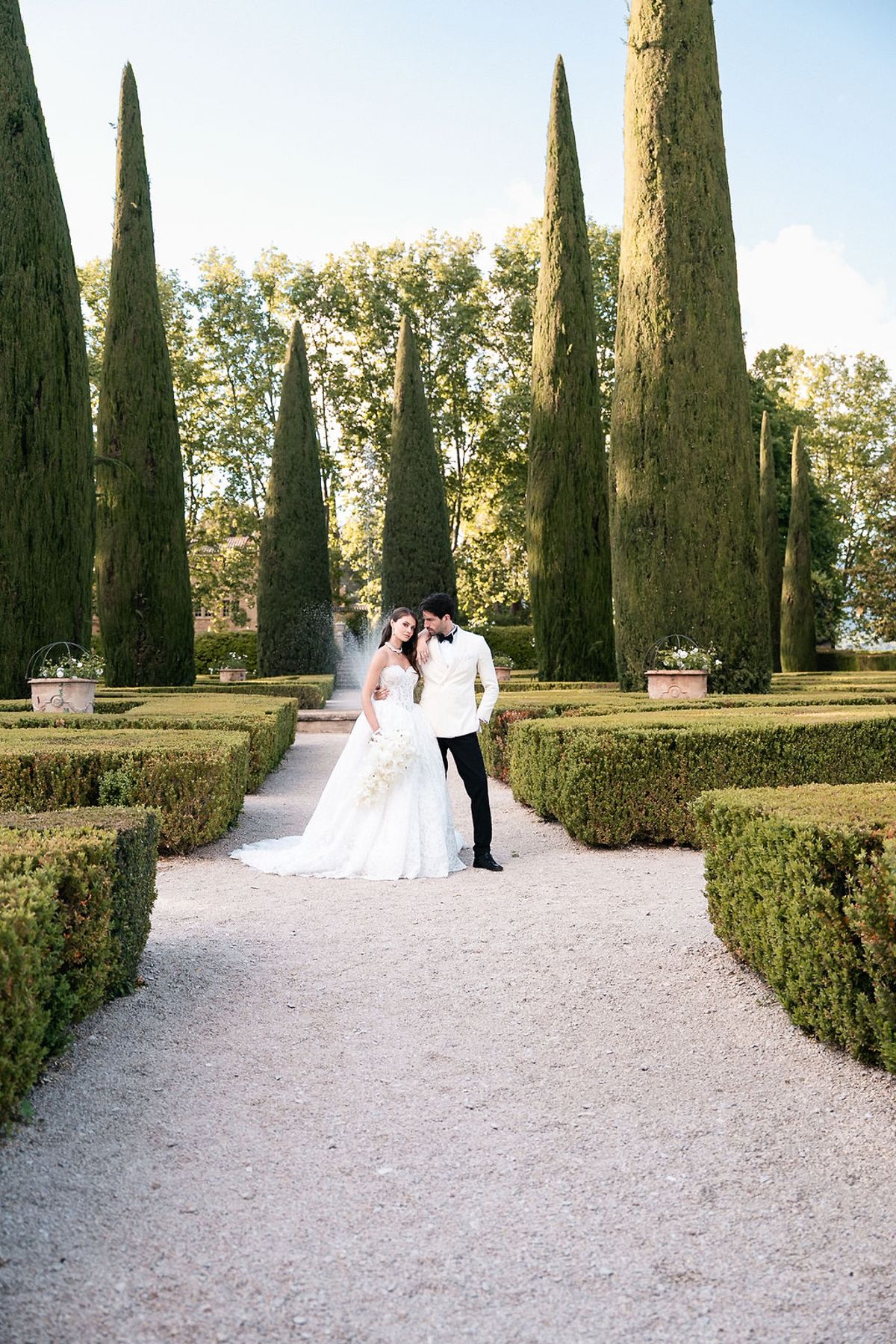
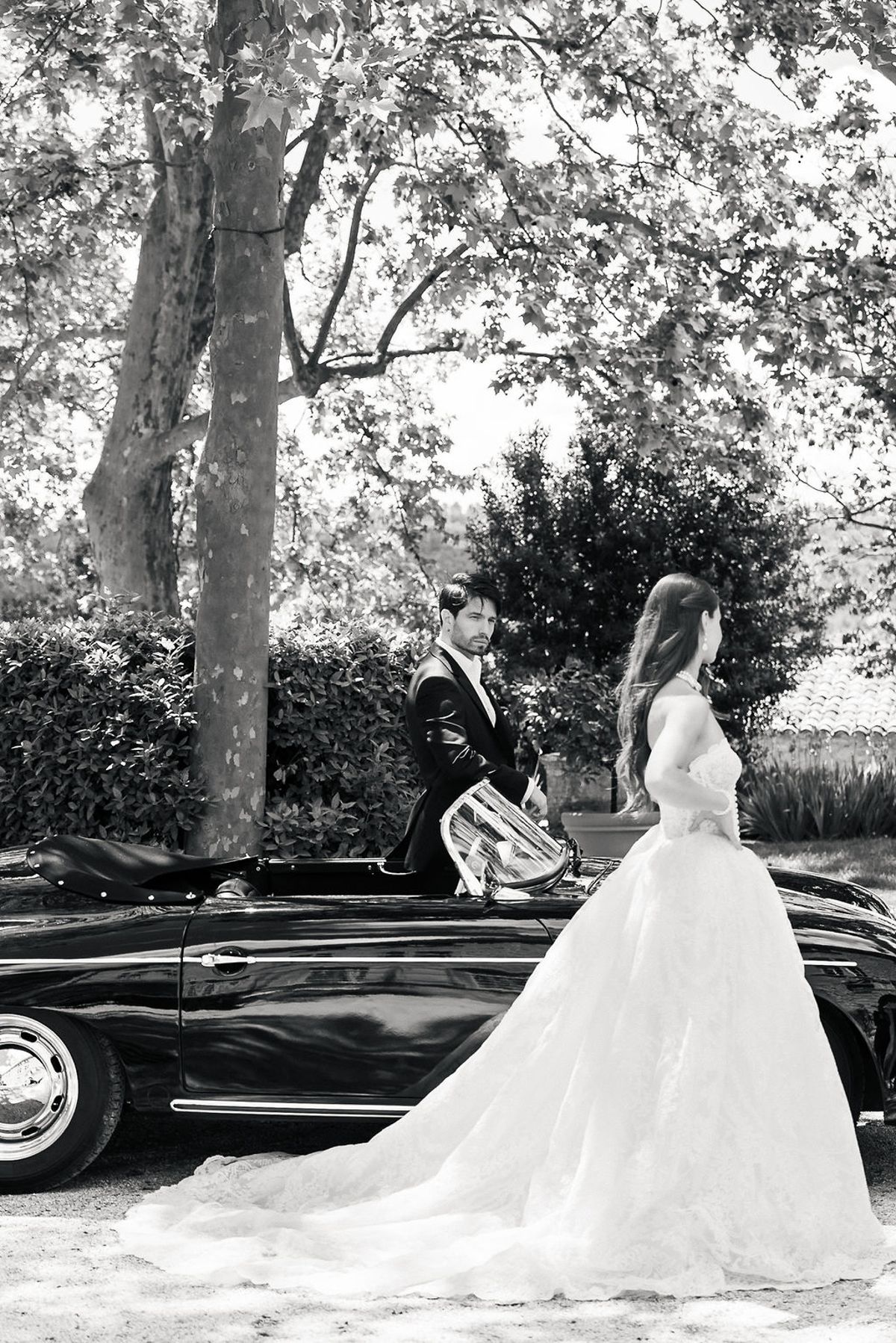
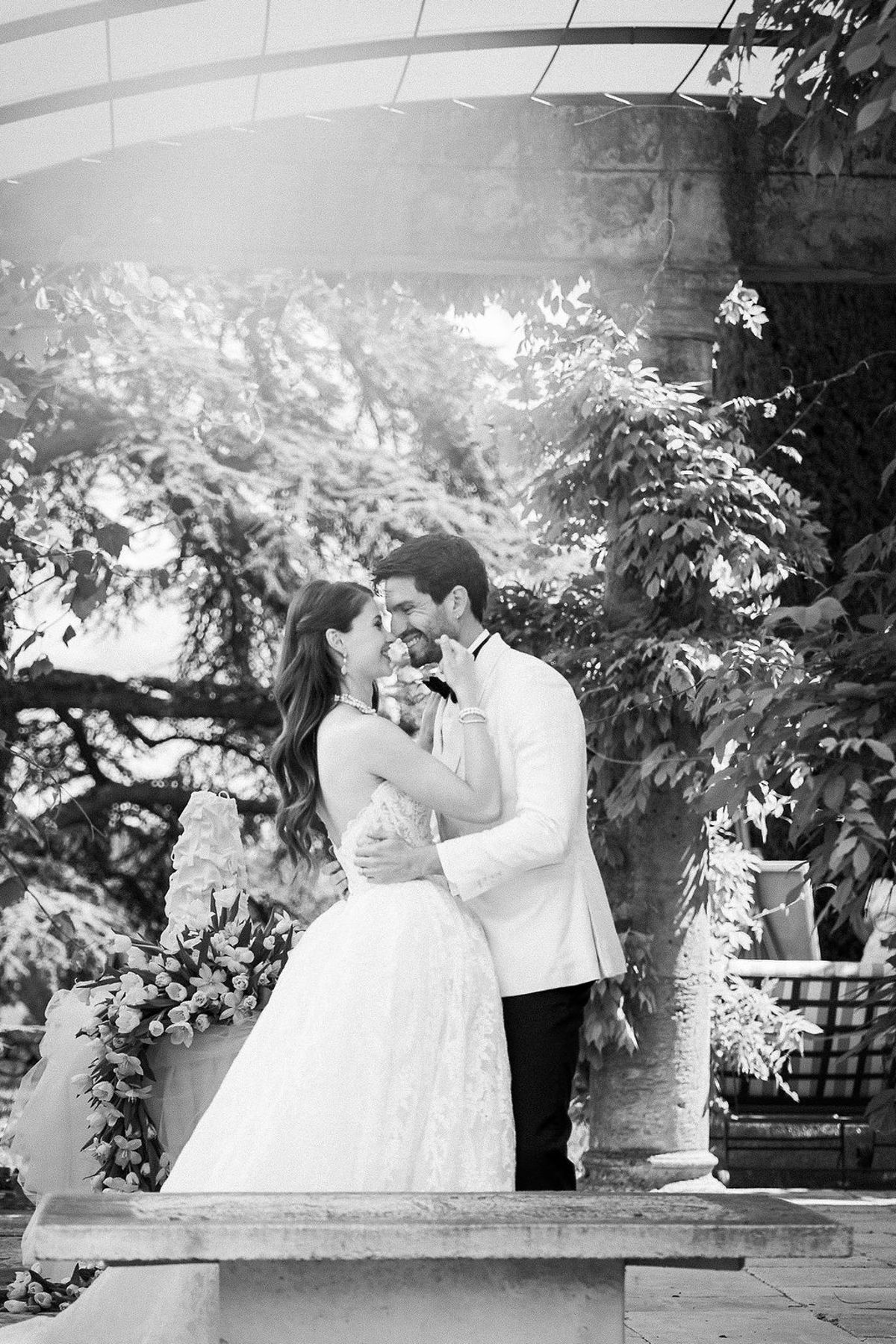
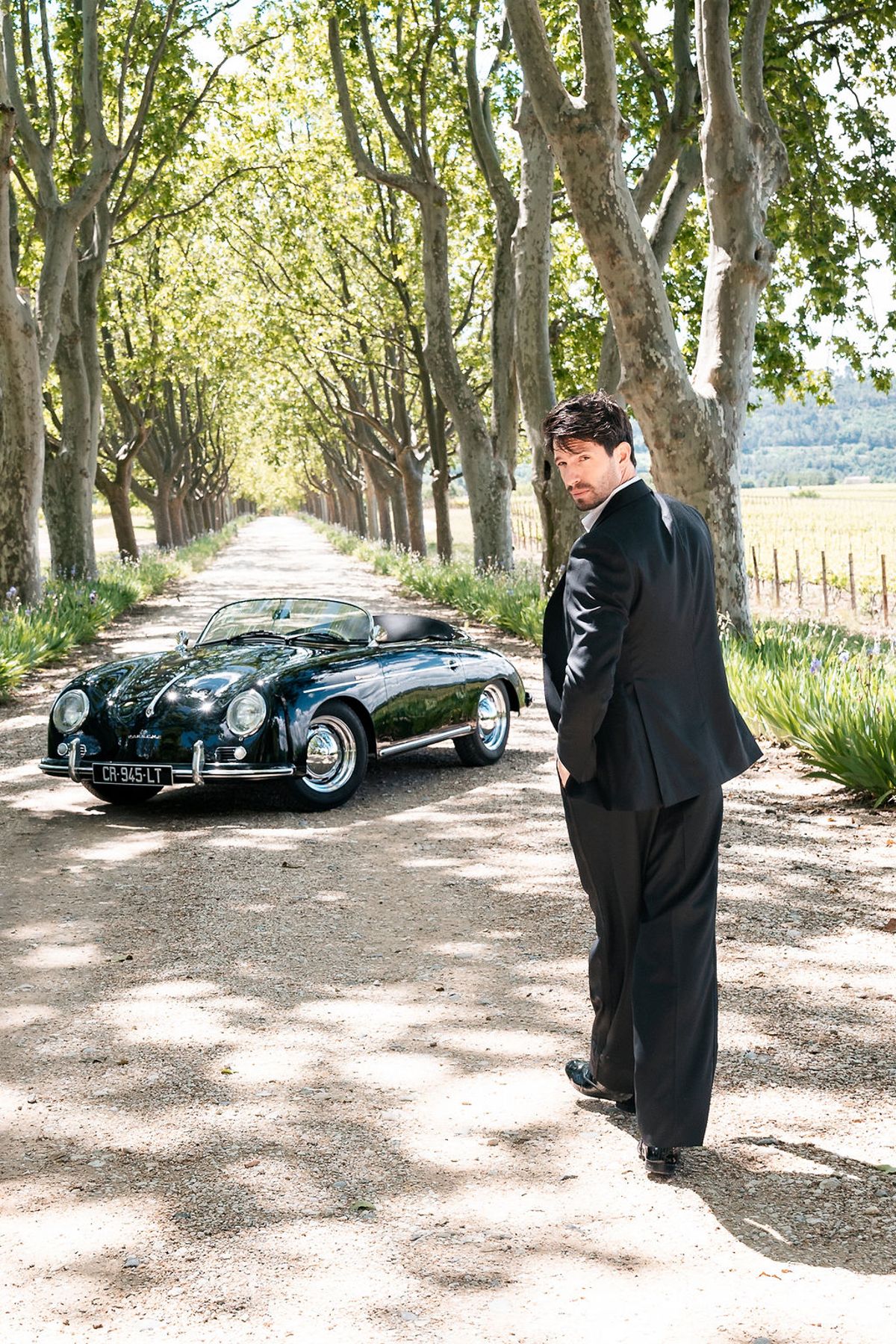
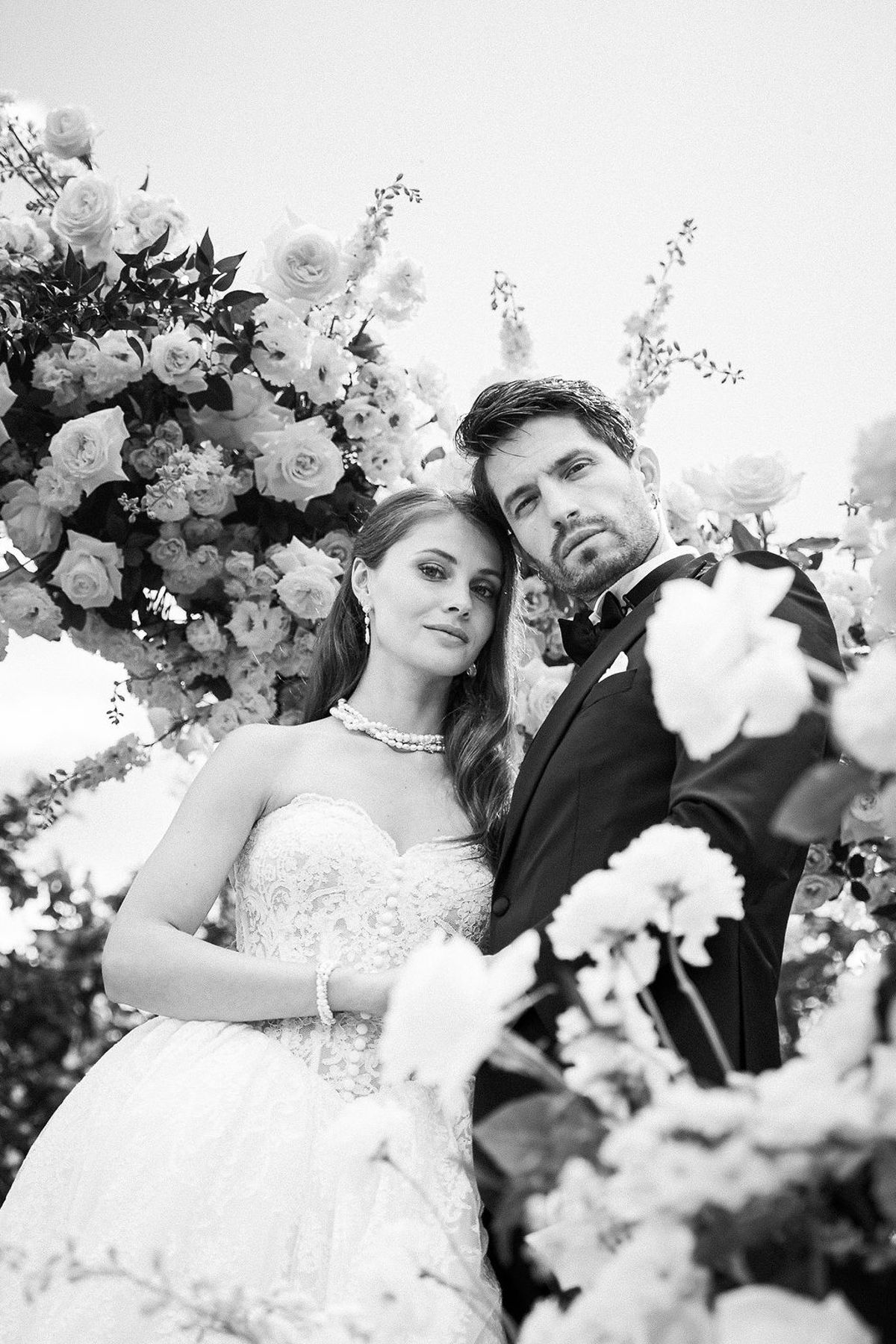
The gardens offered several very different settings for Camilla and Enrico's portraits.
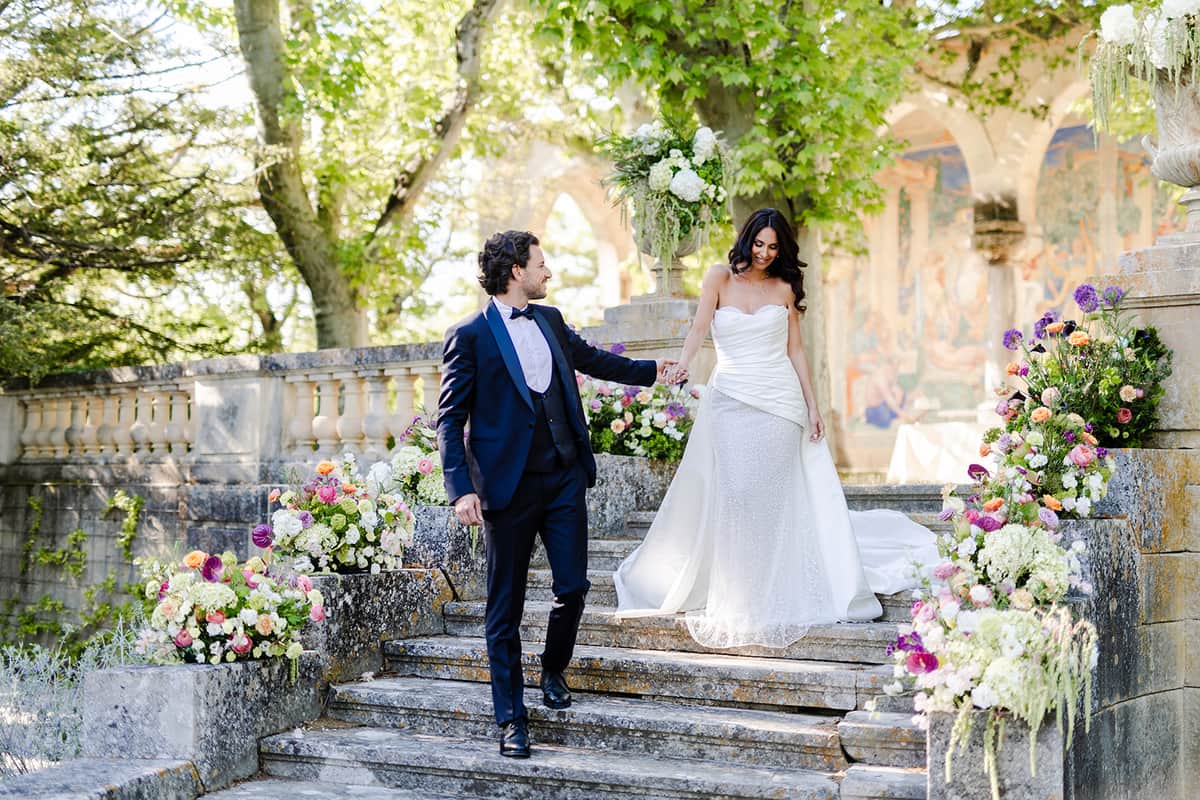
Beneath the plane trees lining the drive, a vintage open-top Porsche introduced a darker, more contemporary contrast to the soft greens and pale stone of the estate. Elsewhere, the couple walked through the formal gardens and along the stone steps beneath the château, allowing the architecture and landscape to remain central to the photographs.
The variety of settings is one of the strengths of Château de Sannes: portraits can move from formal gardens to tree-lined avenues and château architecture without leaving the estate.
Cocktail Hour
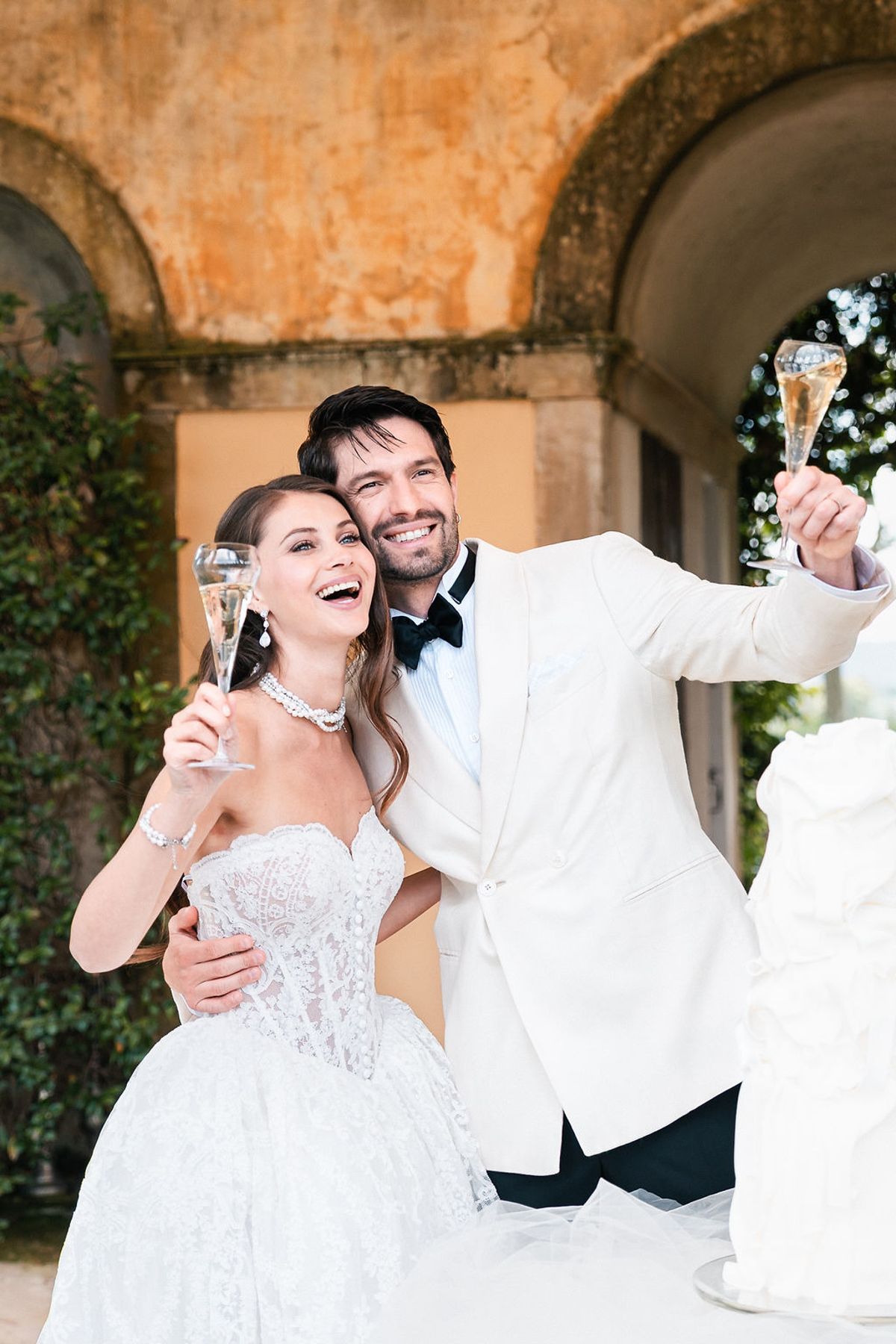
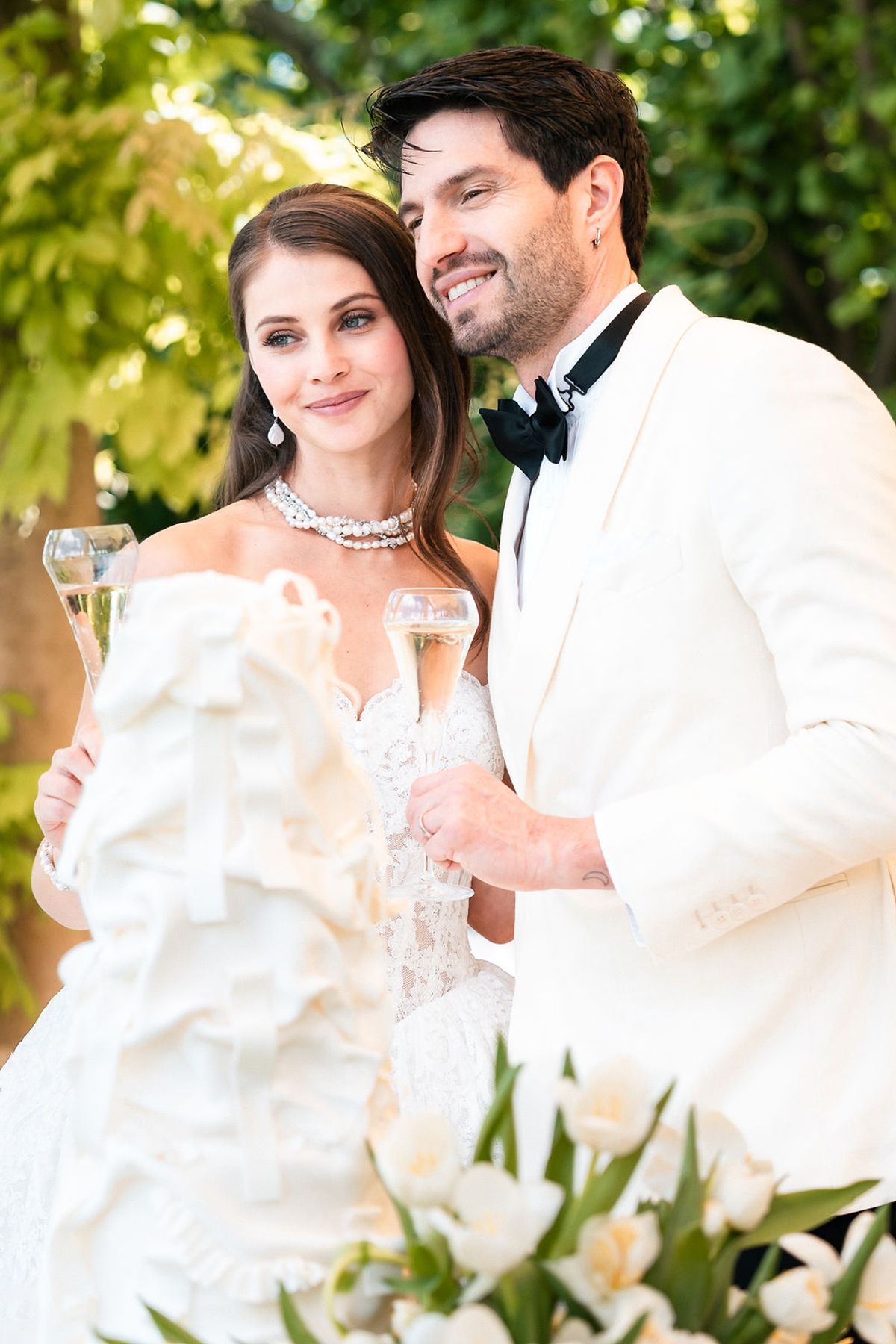
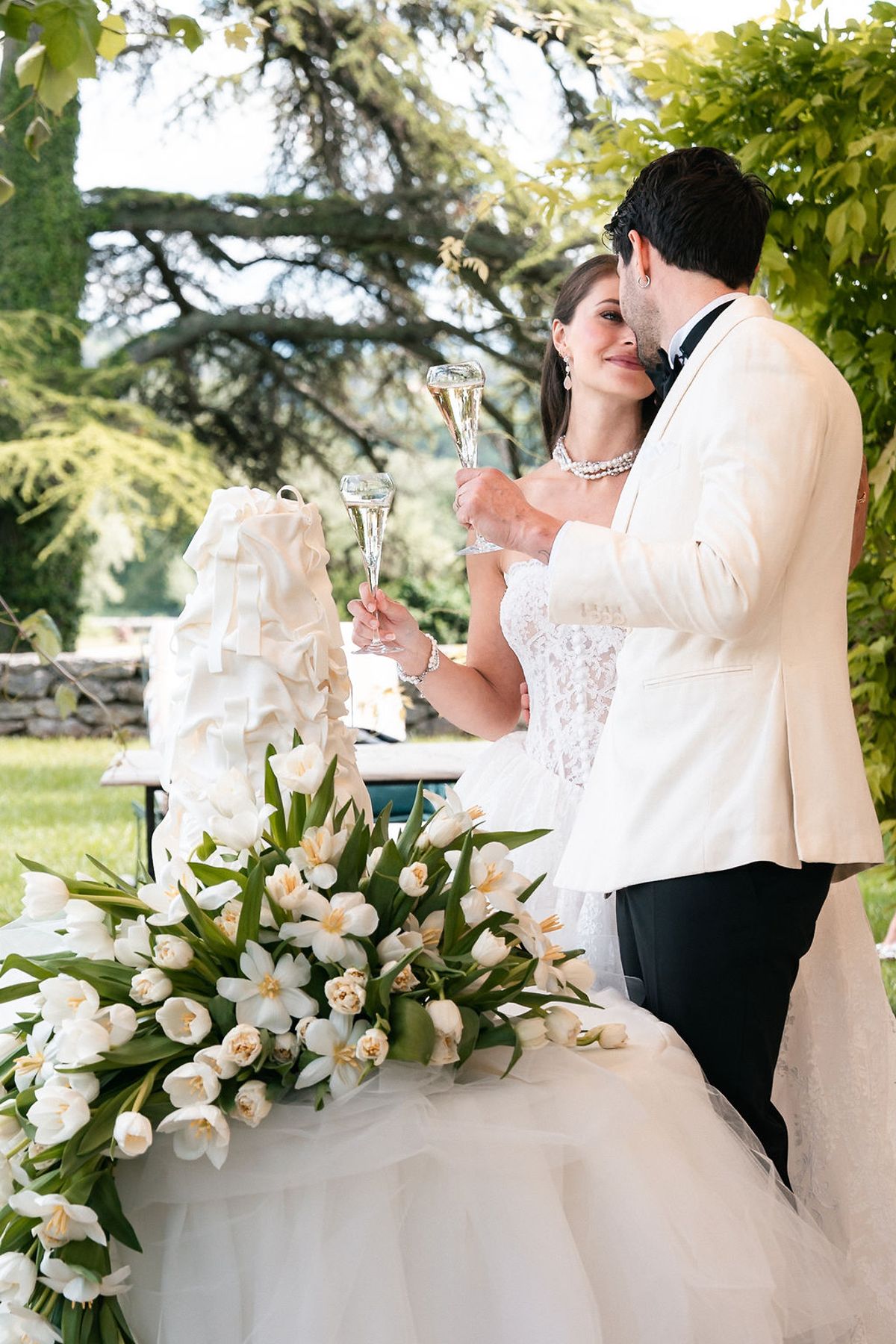
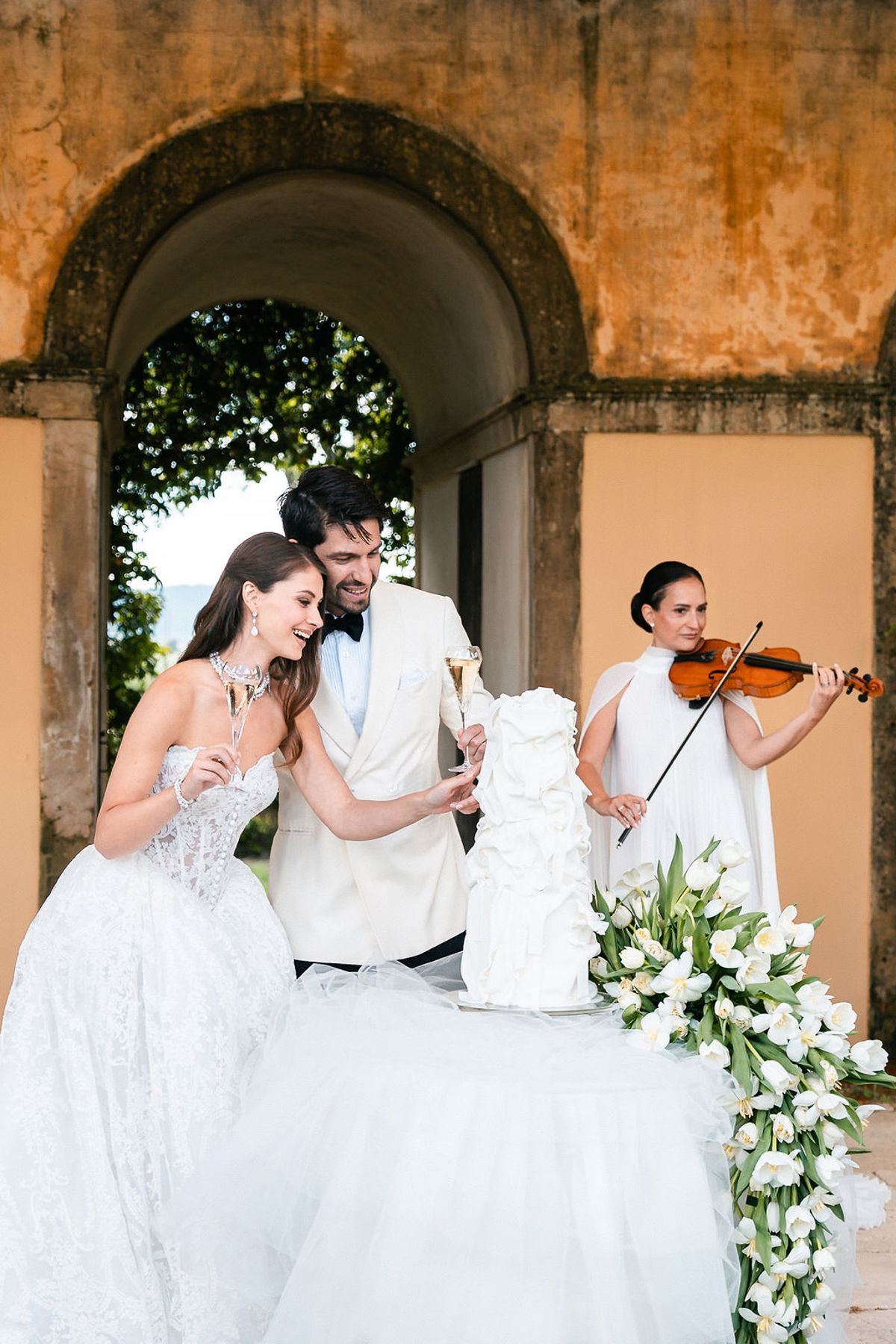
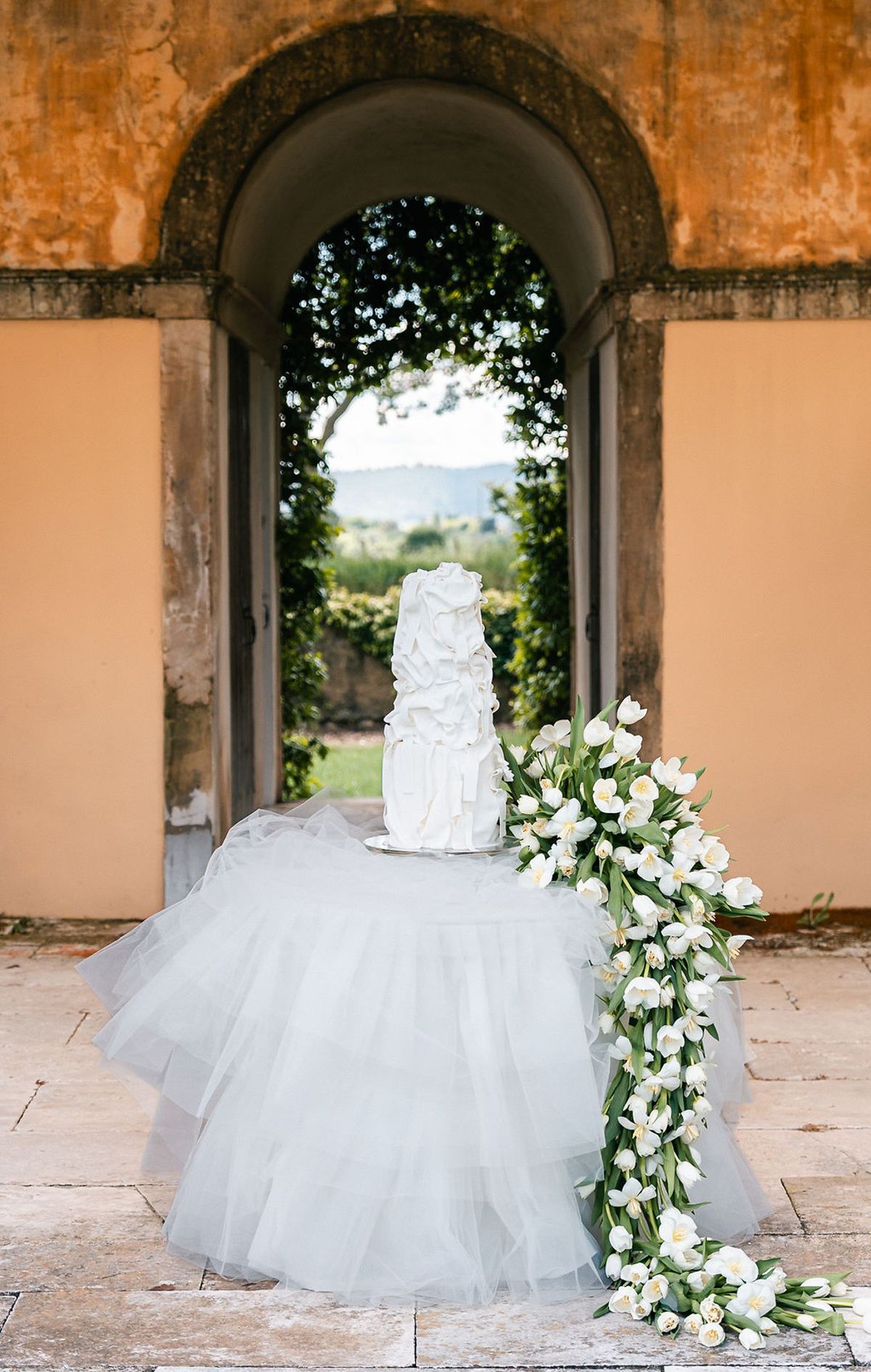
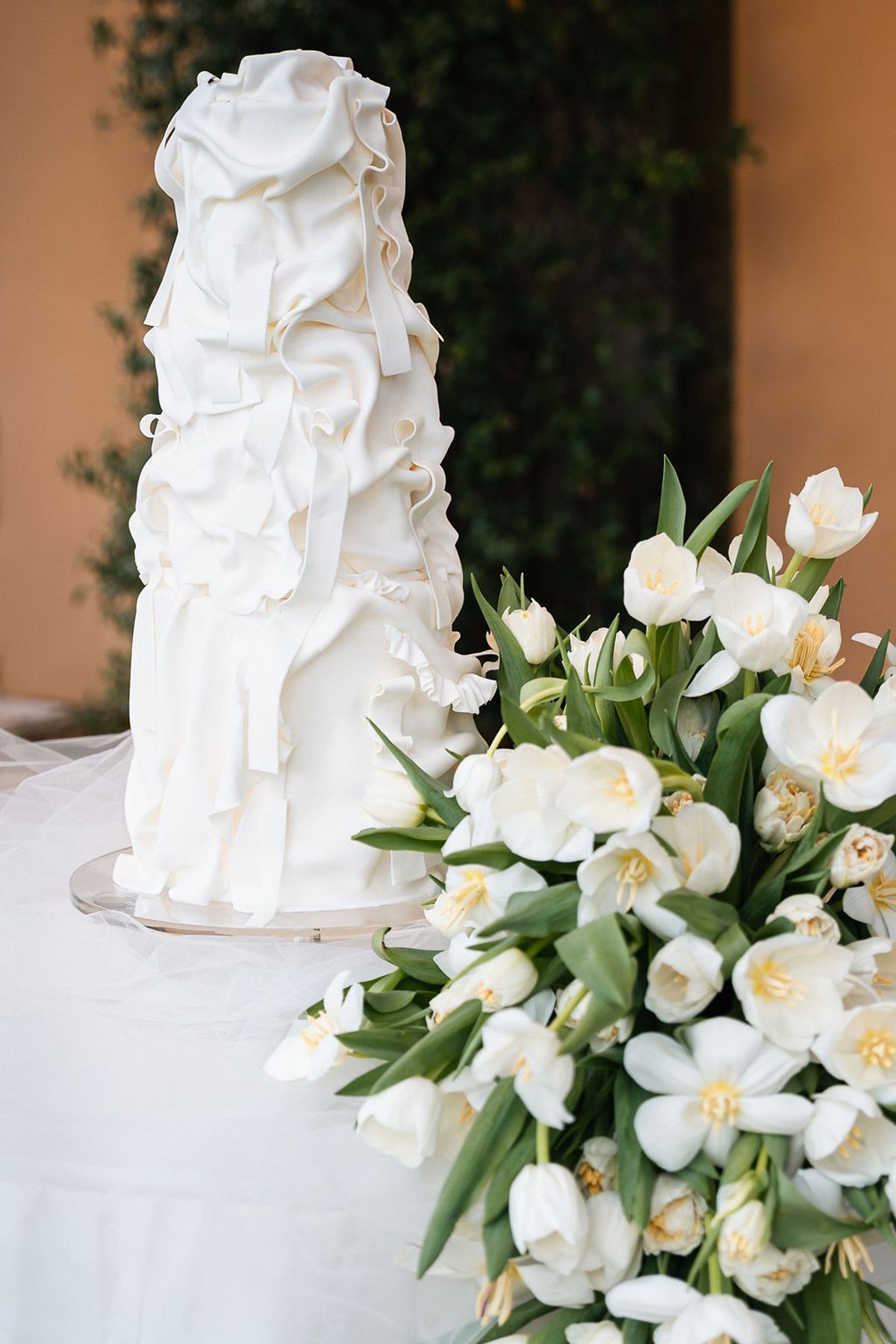
For the cocktail-hour setting, the wedding cake was displayed beneath an ivy-covered arcade on the side of the château.
The table was dressed in gathered tulle and surrounded by white tulips and narcissi. The cake followed the same soft, textural approach, with each tier finished in wide ruffles. Champagne served in delicate tulip flutes completed the scene.
Against the warm ochre render and trailing ivy of the arcade, the predominantly white styling felt fresh while still belonging naturally within the Provençal setting.
Reception
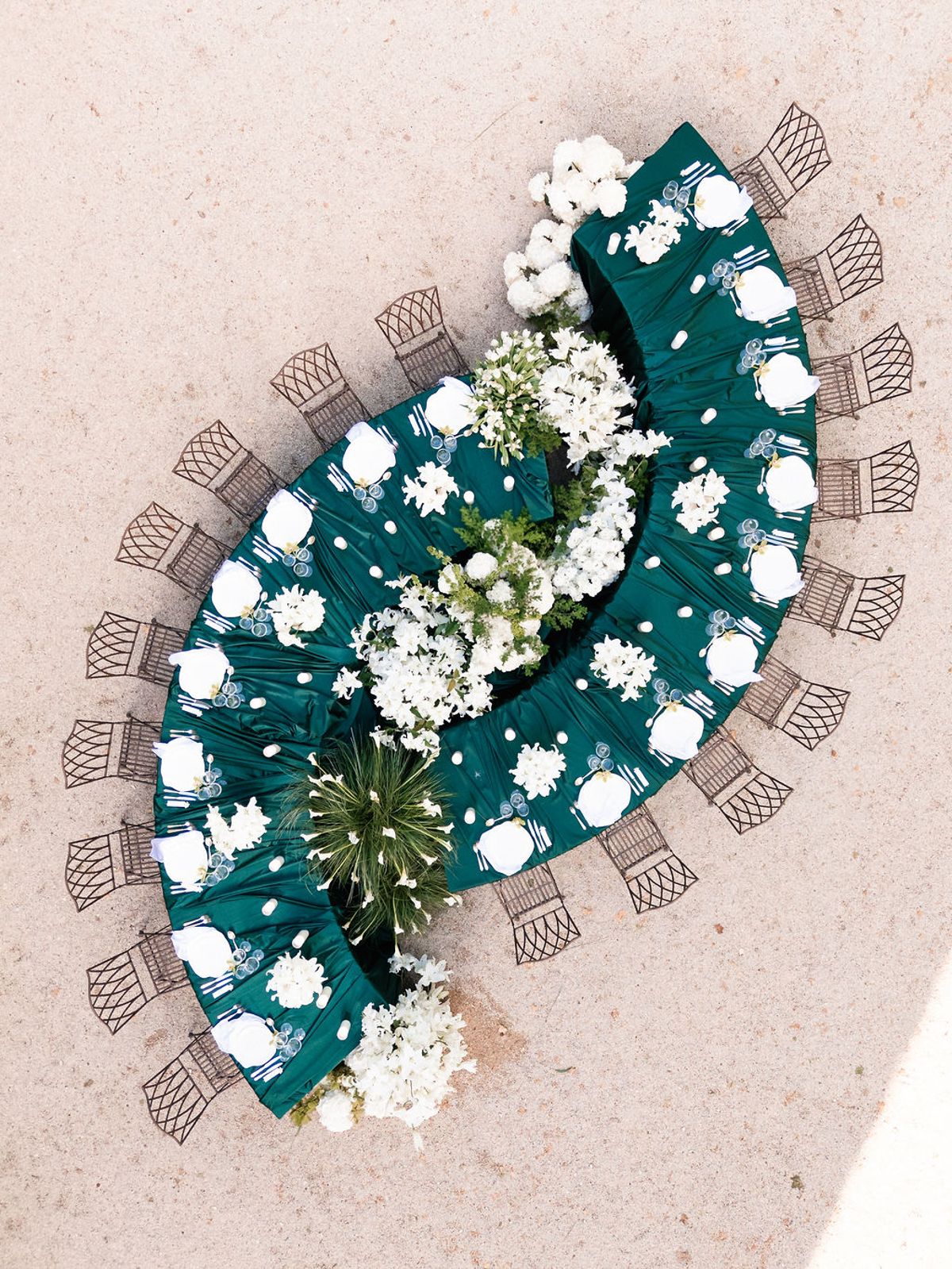
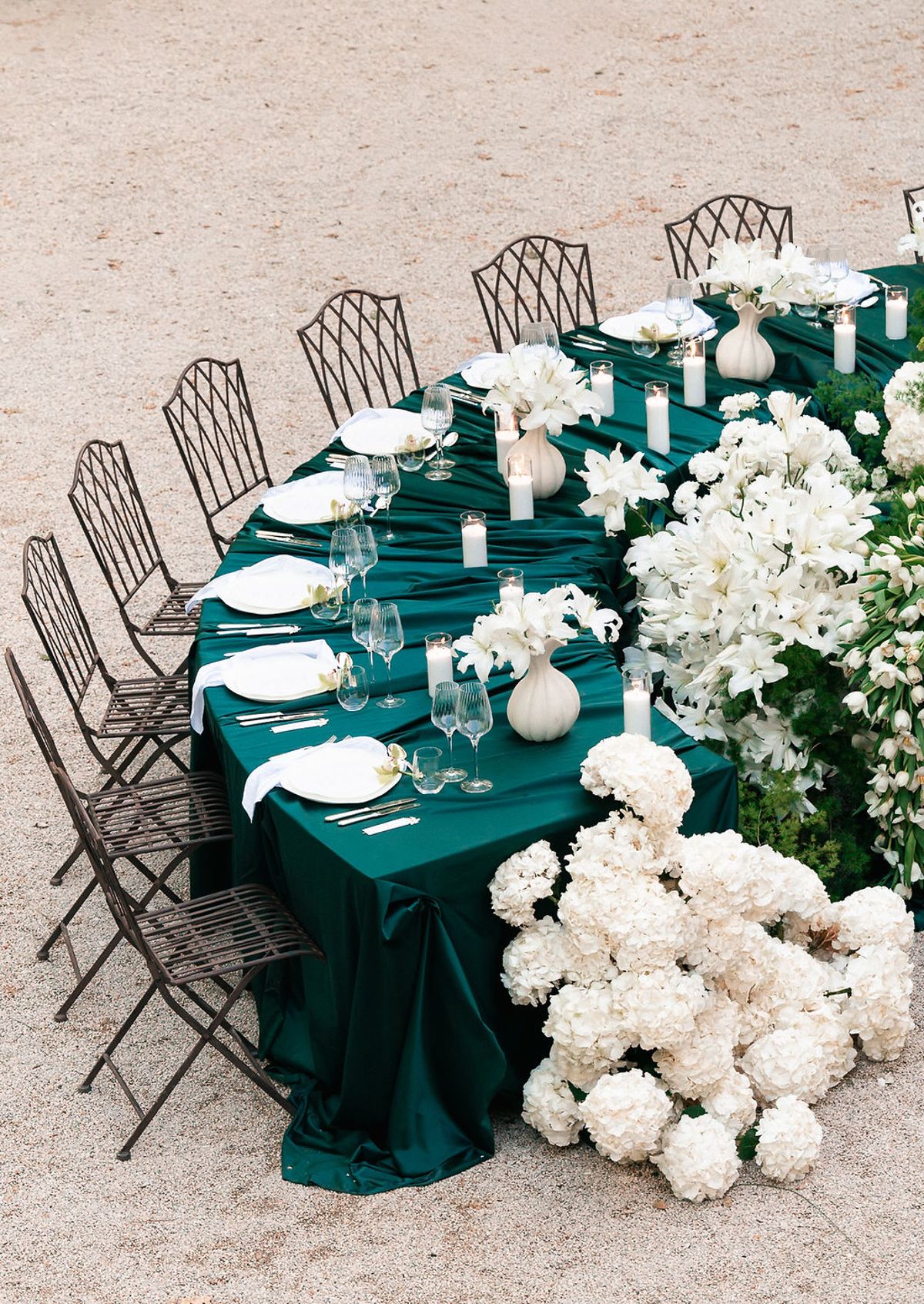
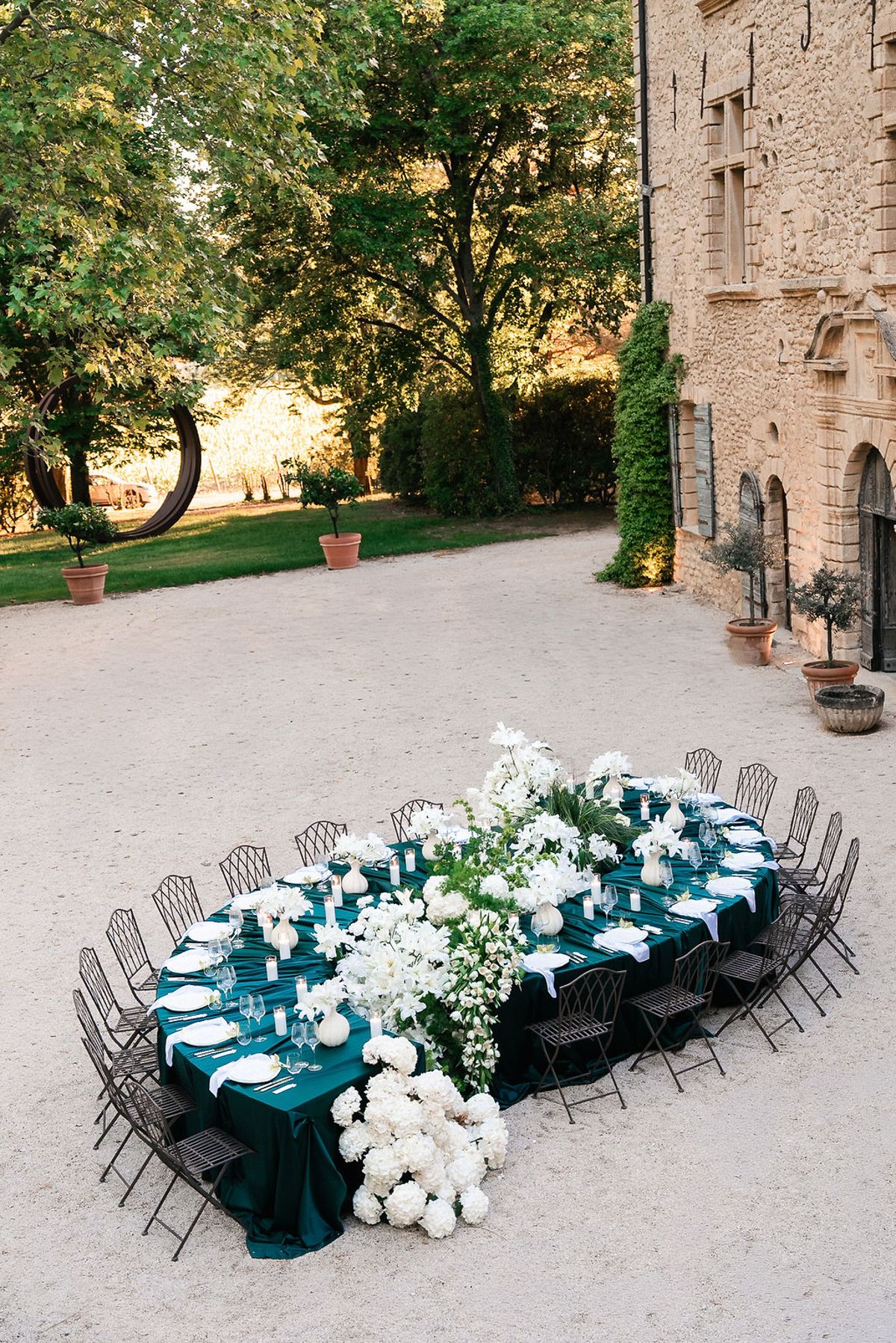
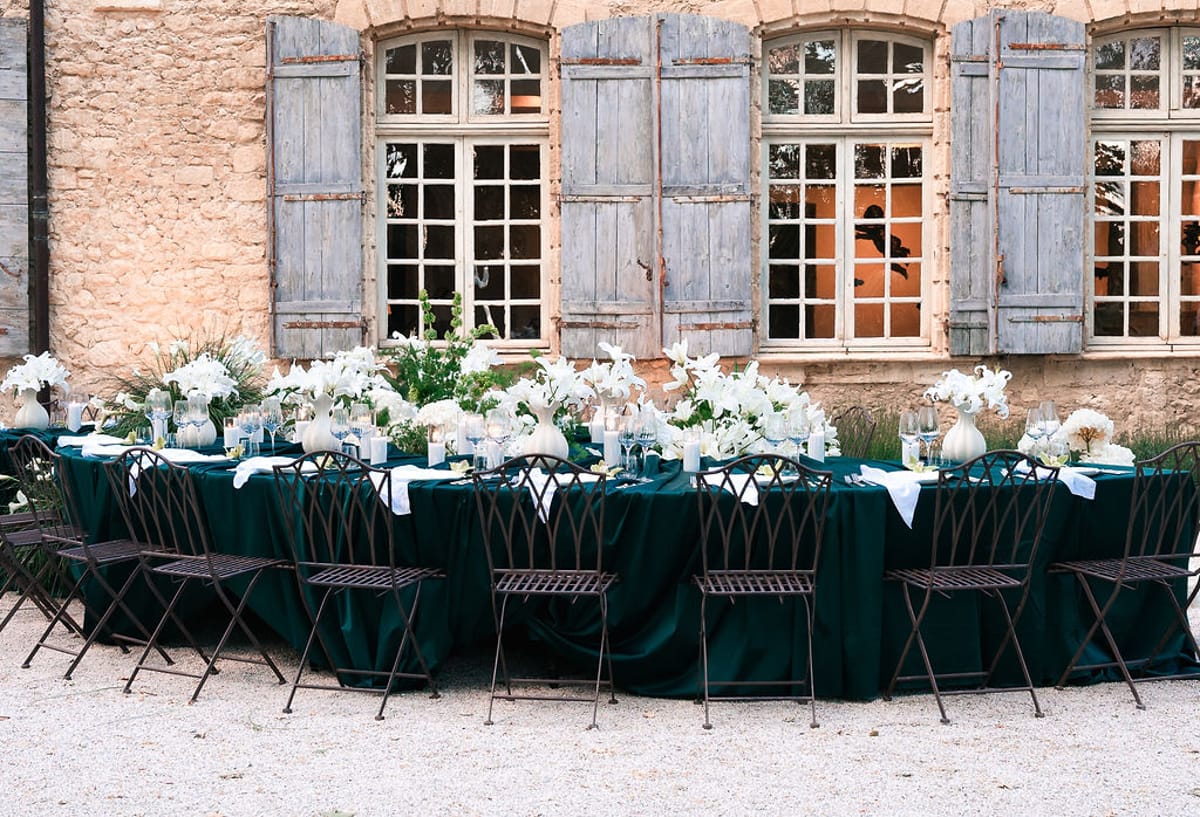
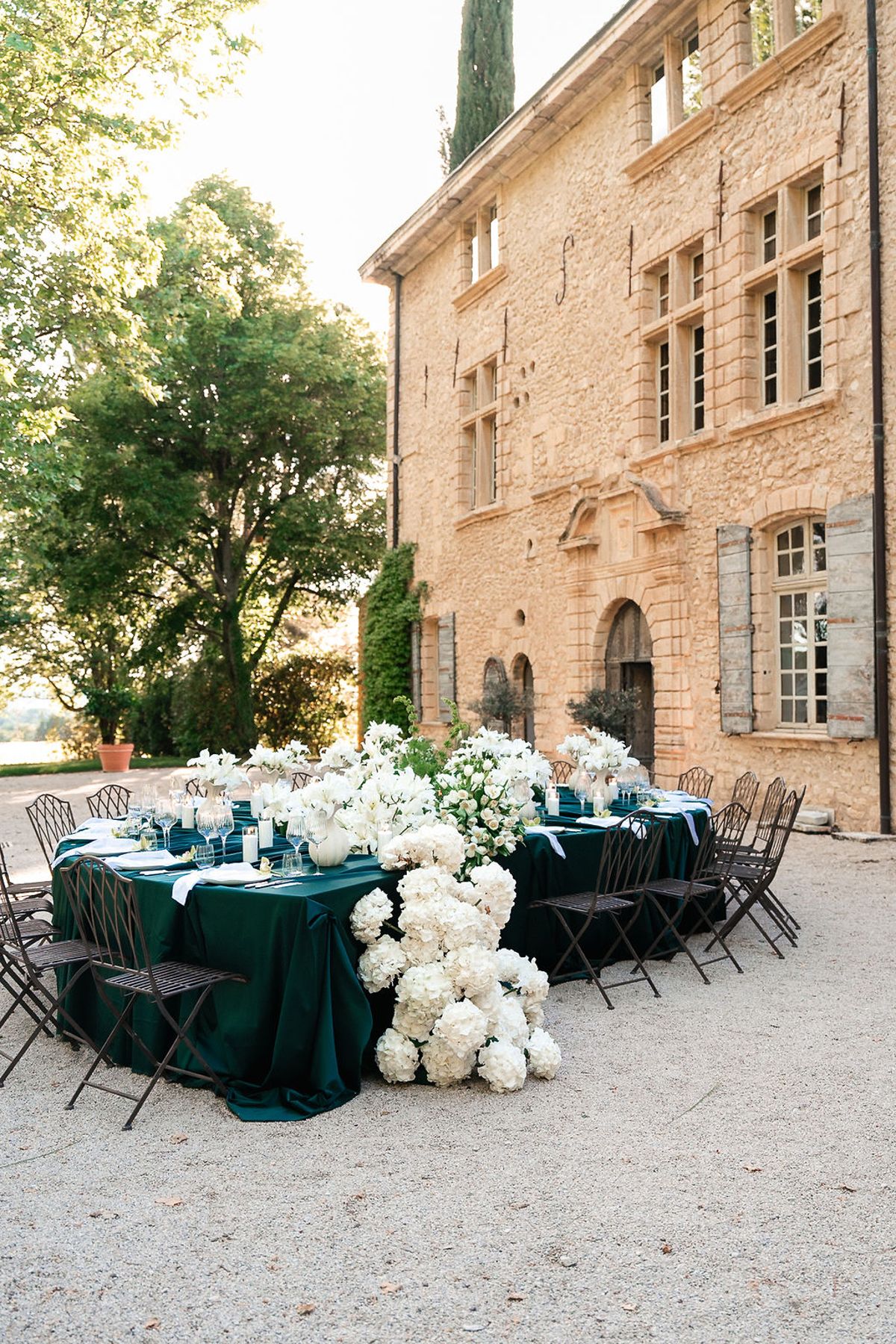
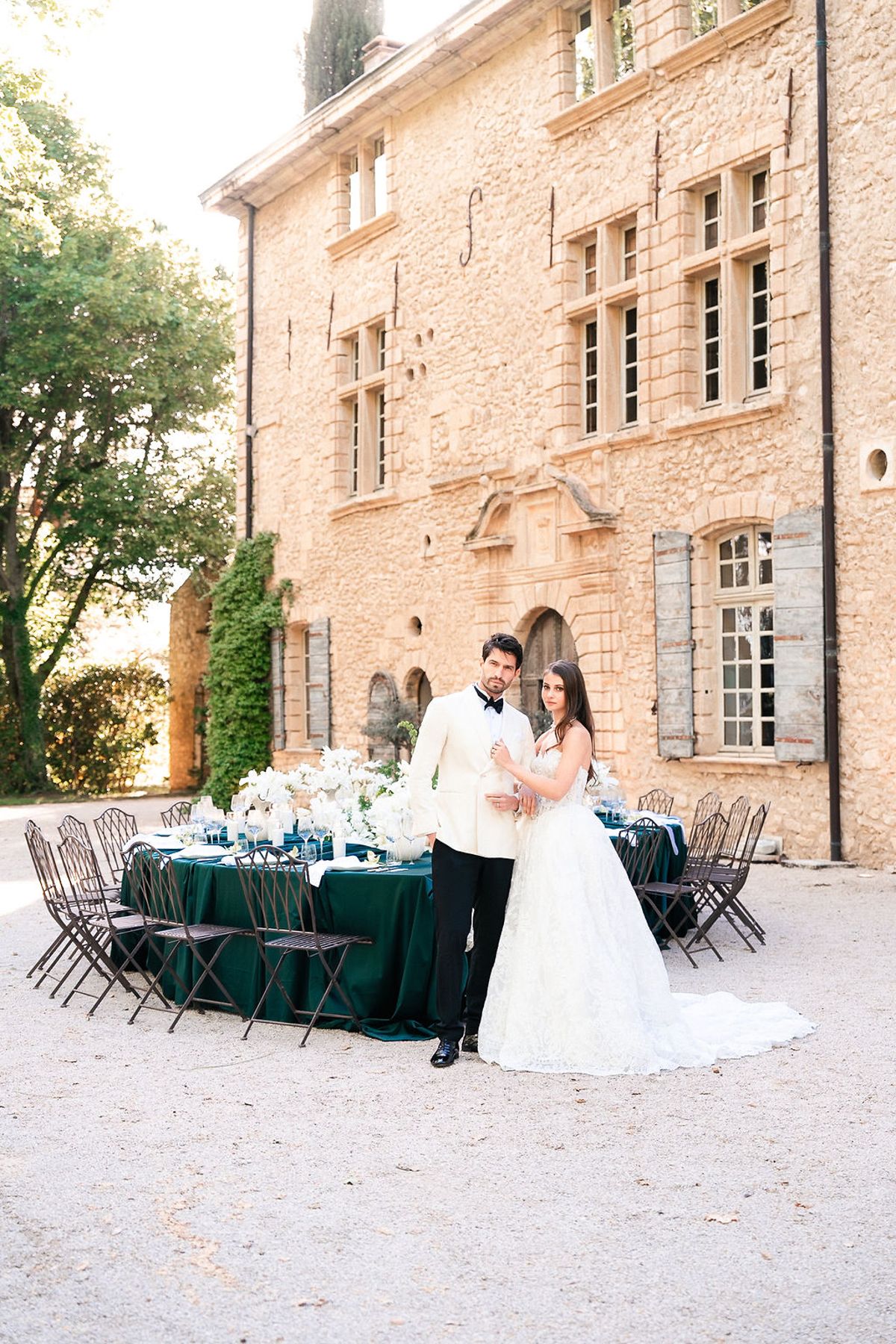
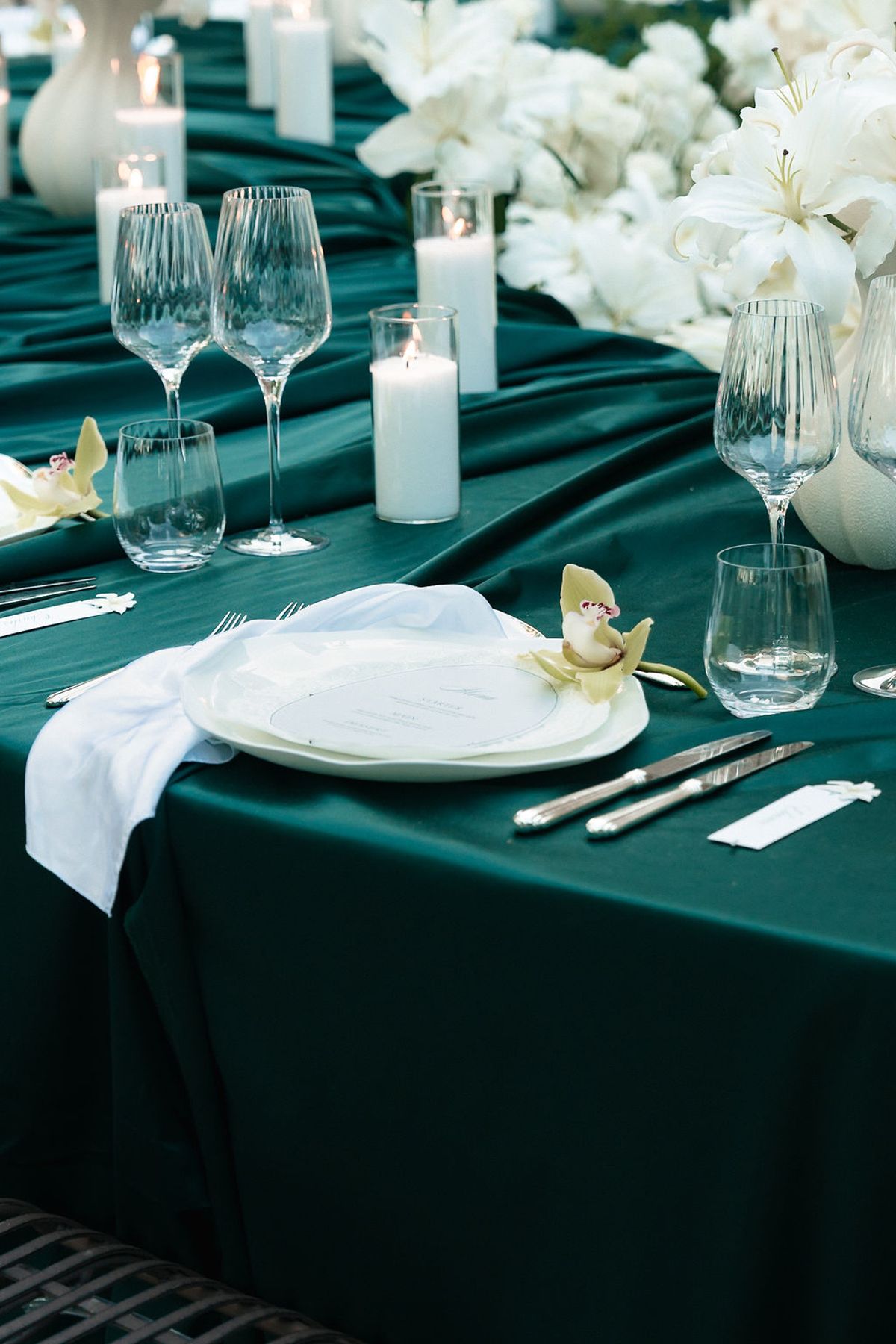
Deep emerald satin linen gave the reception its strongest colour statement. Long tables were placed directly on the gravel terrace and along the pathway beneath the château, surrounded by the greens of the garden and the pale stone of the estate.
White and green florals kept the palette restrained. Hydrangeas were arranged generously around the base of the tables and continued through the centre alongside candles and pale ceramics, while a single cymbidium orchid was placed on each setting.
Metal bistro chairs kept the overall look light and informal, allowing the emerald tables to remain the focus.
The setting also shows why outdoor dining is such an appealing part of a wedding in Provence. Long tables can become part of the landscape itself, with the château and gardens providing much of the atmosphere around them.
The estate is part of the Roland Paix Collection, with catering for the editorial provided by Roland Paix.
Design and Details
One of the most interesting ideas within the editorial was the contrast between two approaches to ceremony design.
In the formal garden, the team used the existing landscape as the structure. The two cypresses naturally framed the couple, while the symmetry of the parterre created a clear ceremony axis. Florals were then added around those existing elements rather than creating an entirely new backdrop.
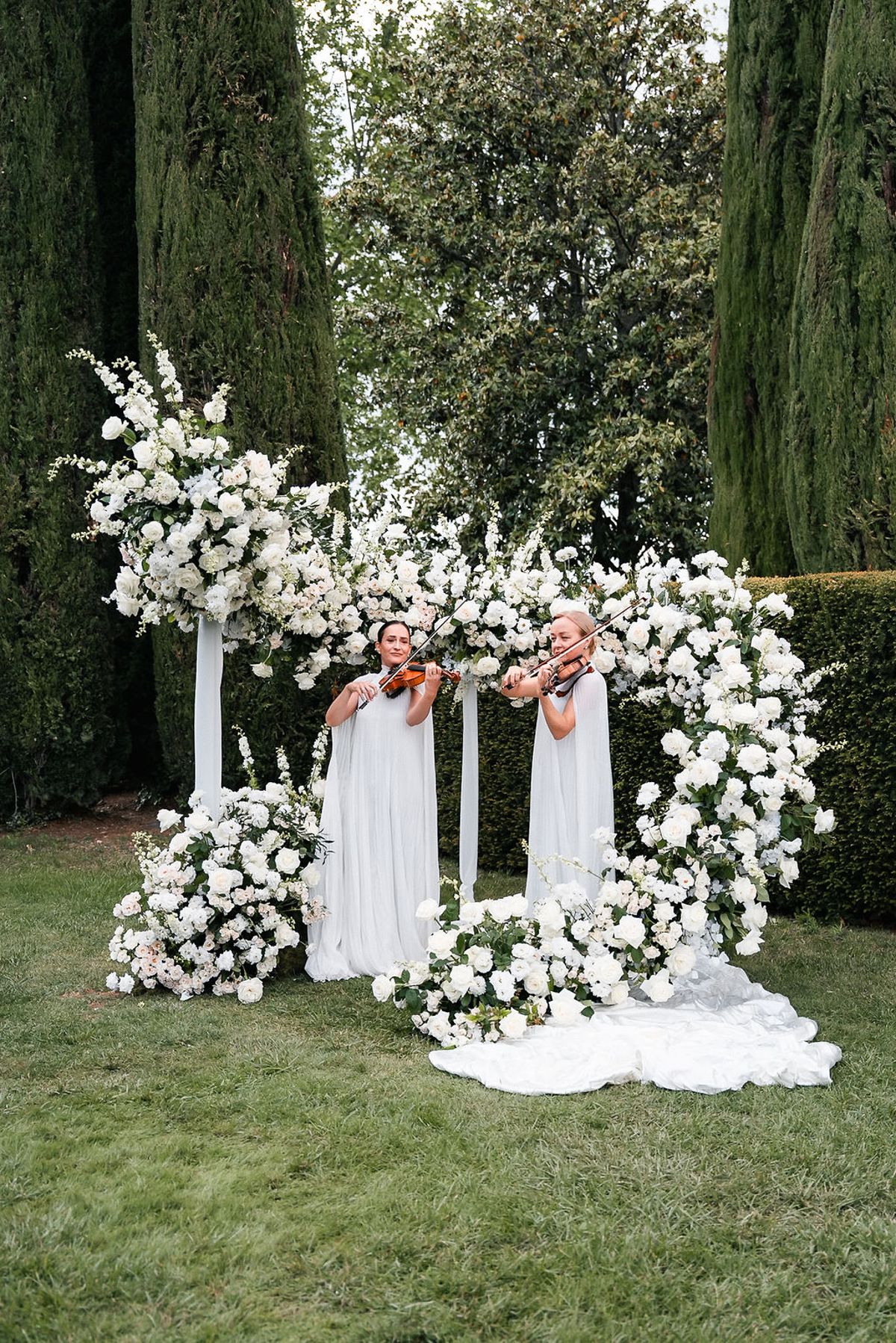
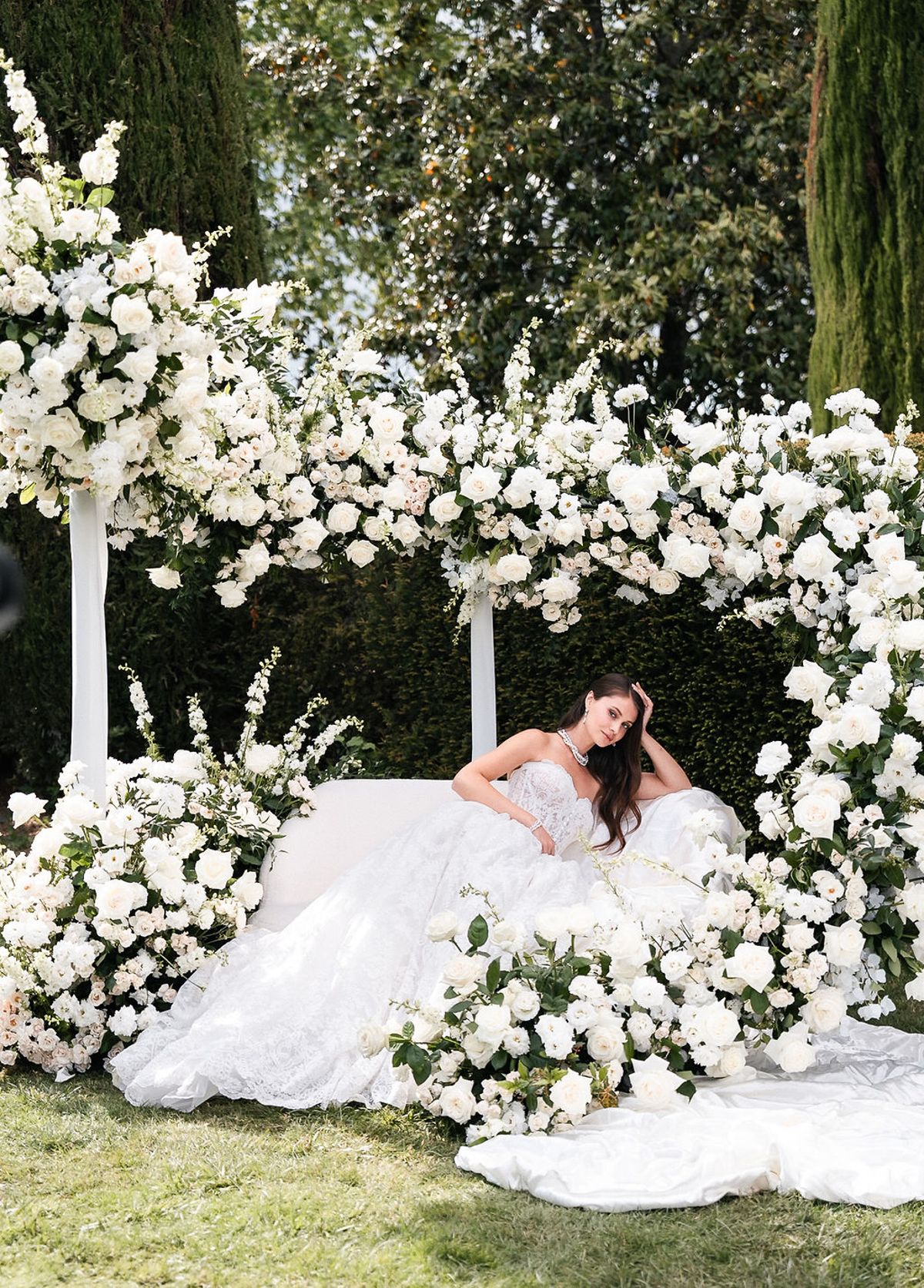
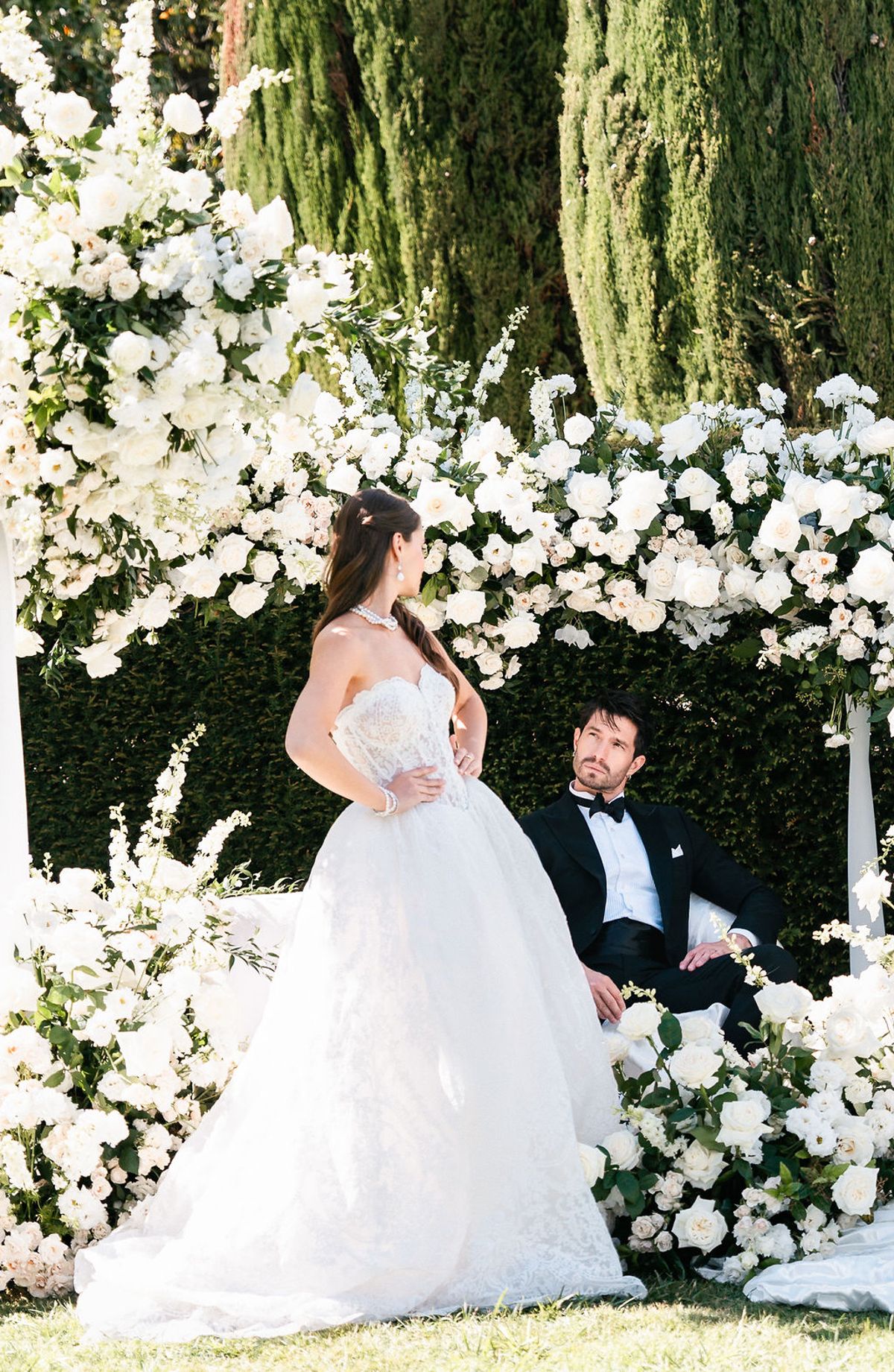
Elsewhere on the lawn, the team took the opposite approach. A freestanding white structure was created and covered with roses and delphiniums, with additional flowers gathered generously at its base. Wanderlust Wedding and La Blonde et Le Barbu are credited with the settings.
Both approaches work, but they create very different results. One makes the floral installation the focal point; the other allows the garden and its architecture to take the lead.
For couples planning a wedding in a setting as established as Château de Sannes, it is a useful design consideration. Not every space needs to be transformed. Sometimes identifying the strongest existing feature of a venue and designing around it can create just as much impact.
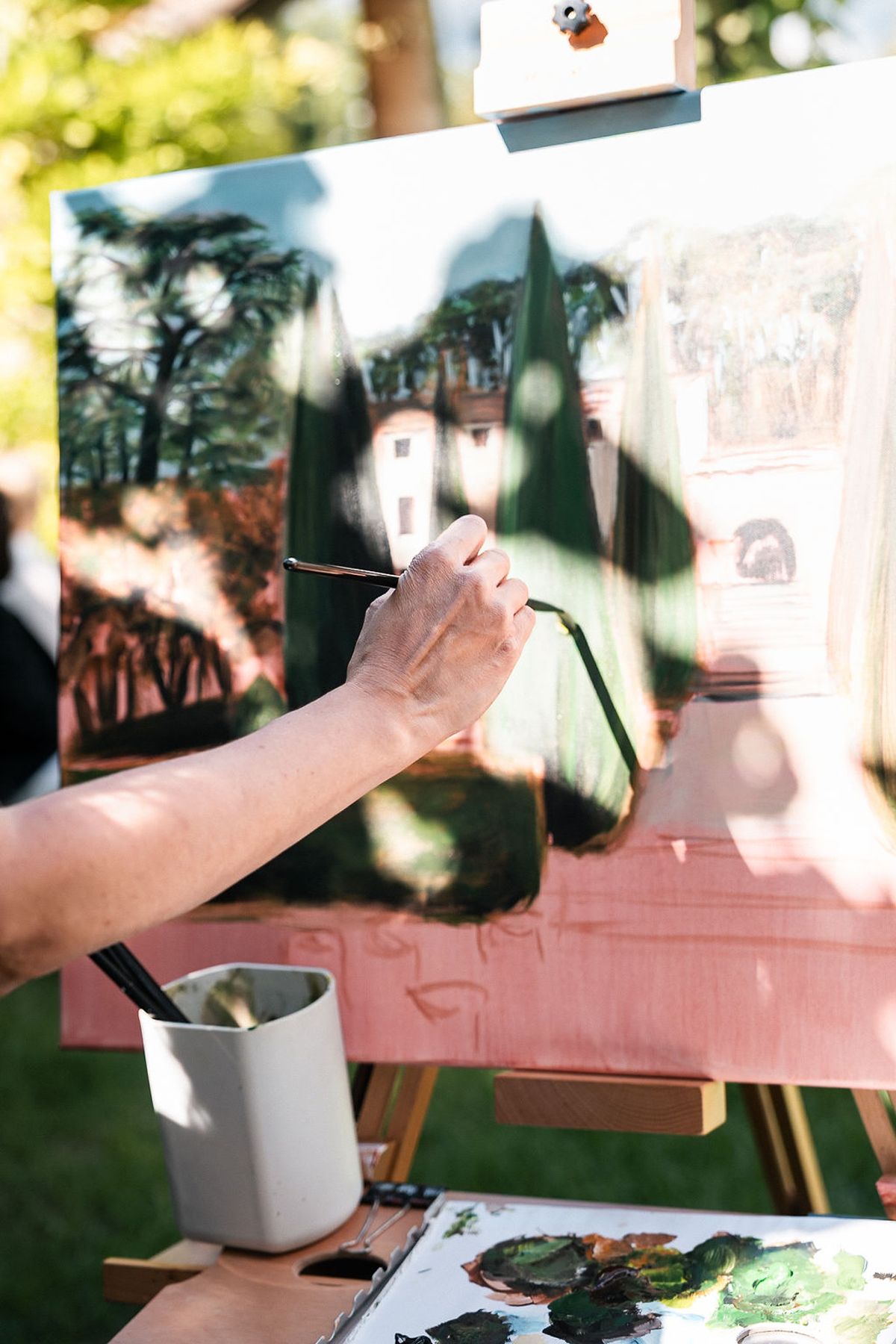
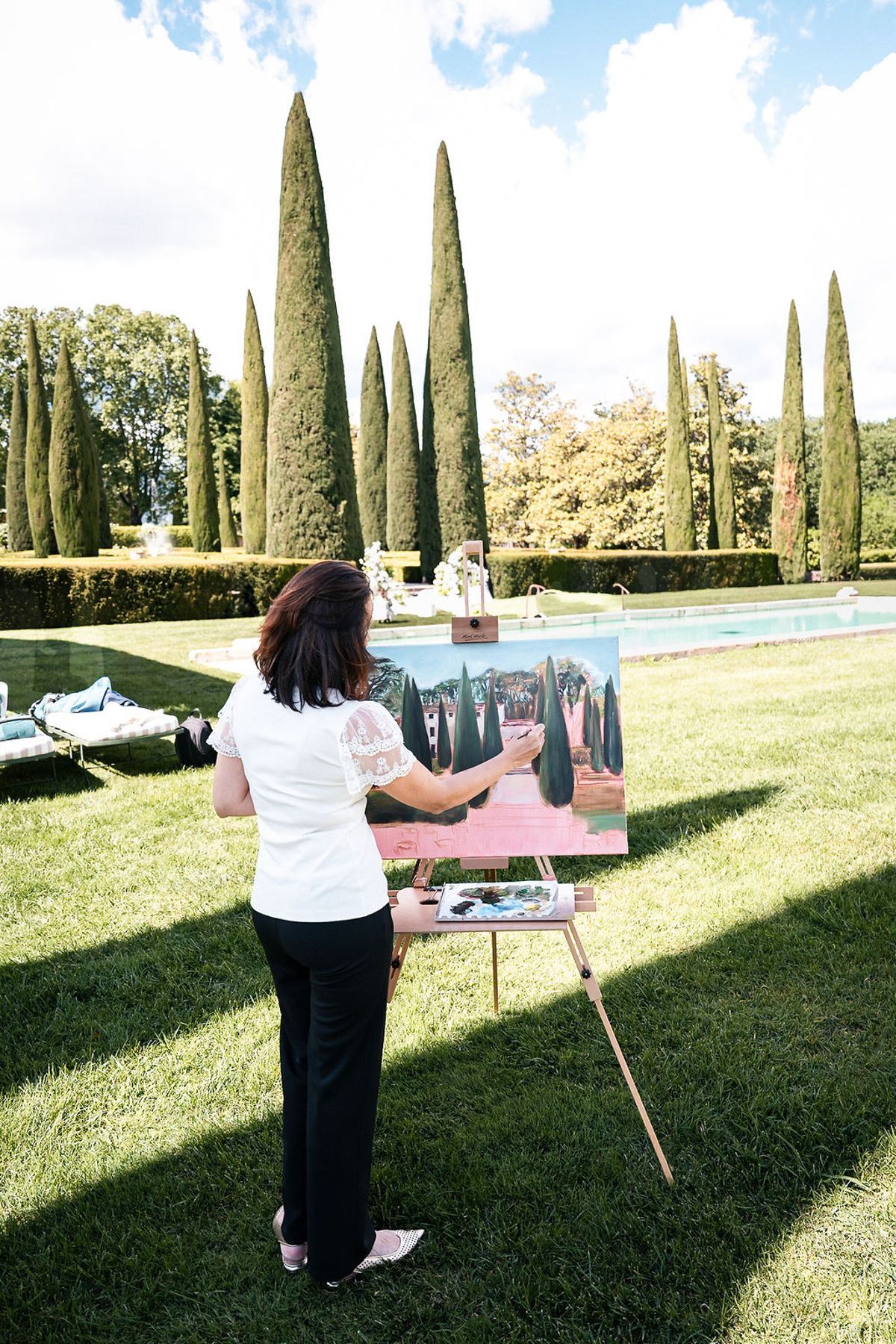
Another thoughtful detail was the live painter positioned beside the water, capturing the cypresses and château in oils during the day. Beyond the experience itself, a live wedding painting gives the couple a physical piece of the celebration to keep afterwards.
Flat Lays
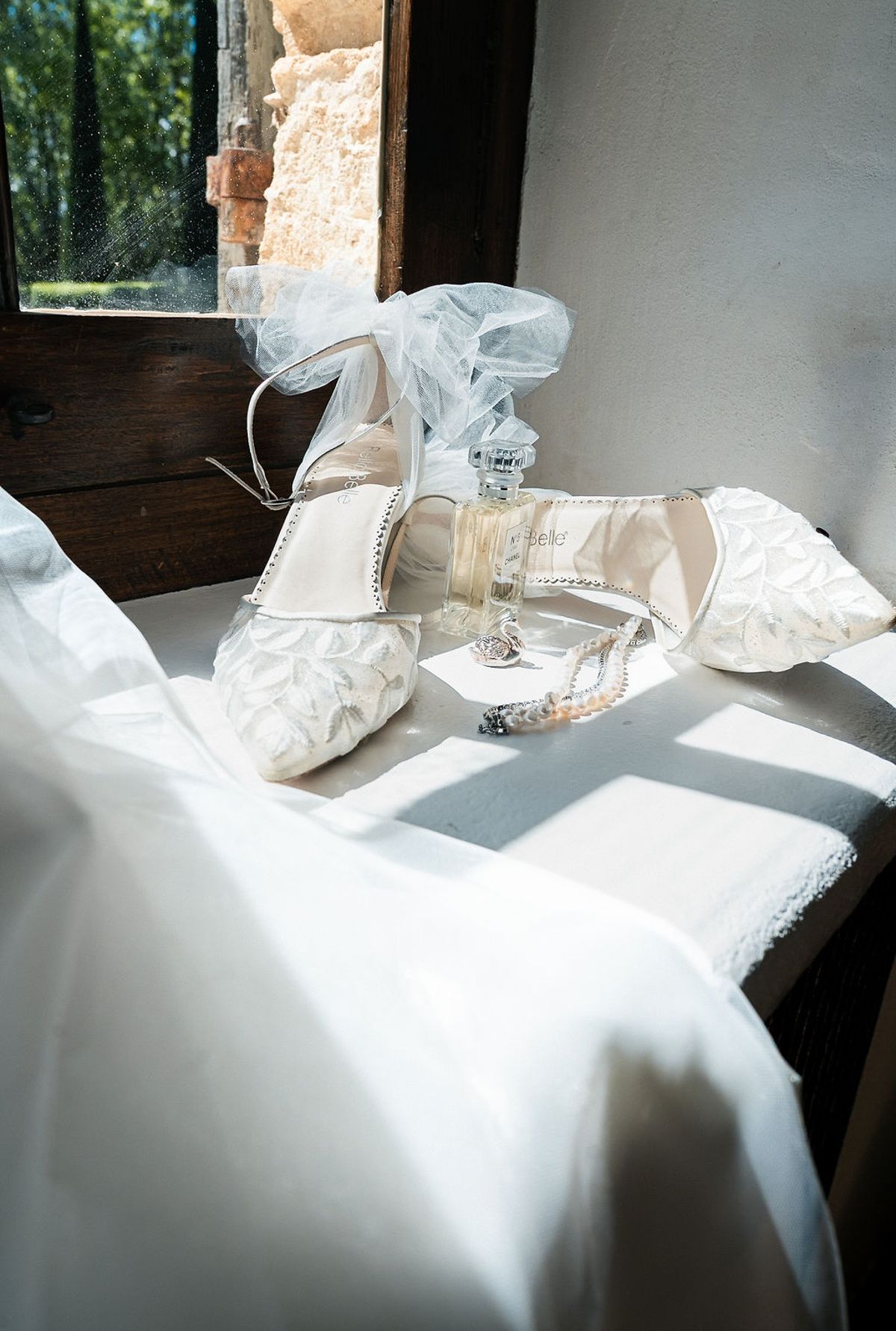
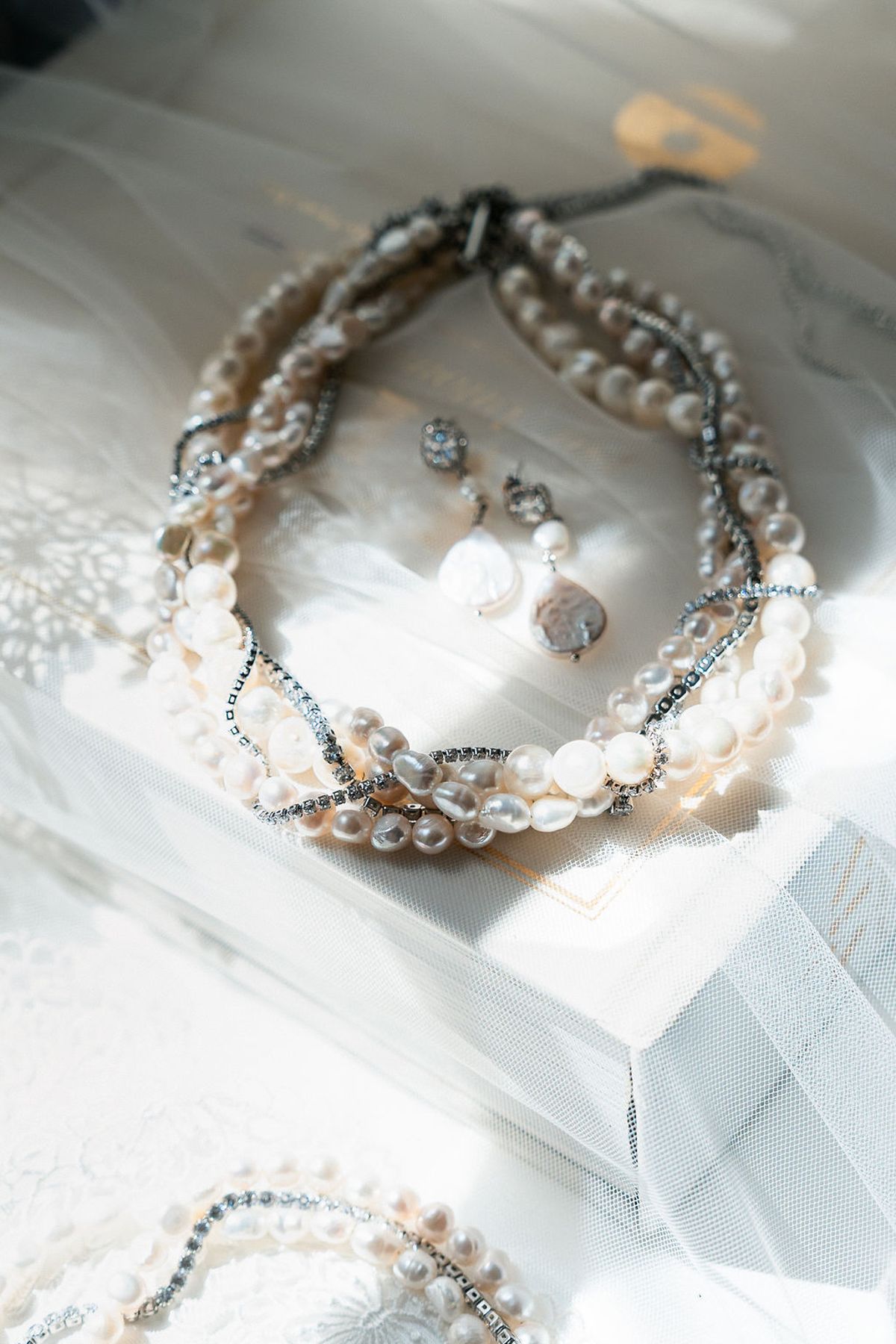
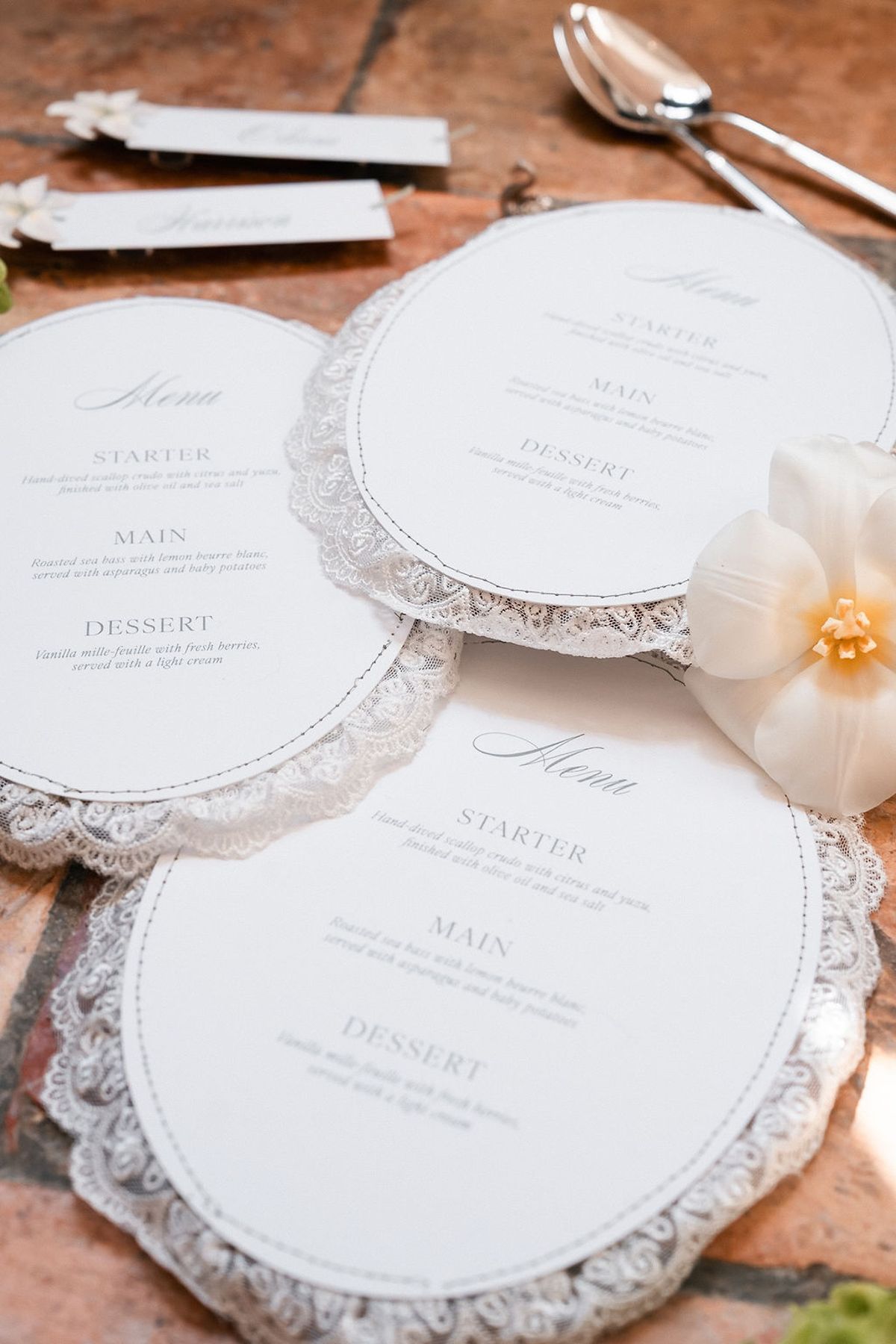
The stationery introduced warmer Provençal tones into the otherwise white and green palette.
Round menus with fine dark borders were layered over circular lace mats and photographed against terracotta. Pearls and drop earrings were arranged simply on white silk, while Bella Belle bridal shoes were photographed alongside the bride's garter.
The restrained styling allowed the shapes and textures of each detail to stand out without adding unnecessary decoration.
Venue
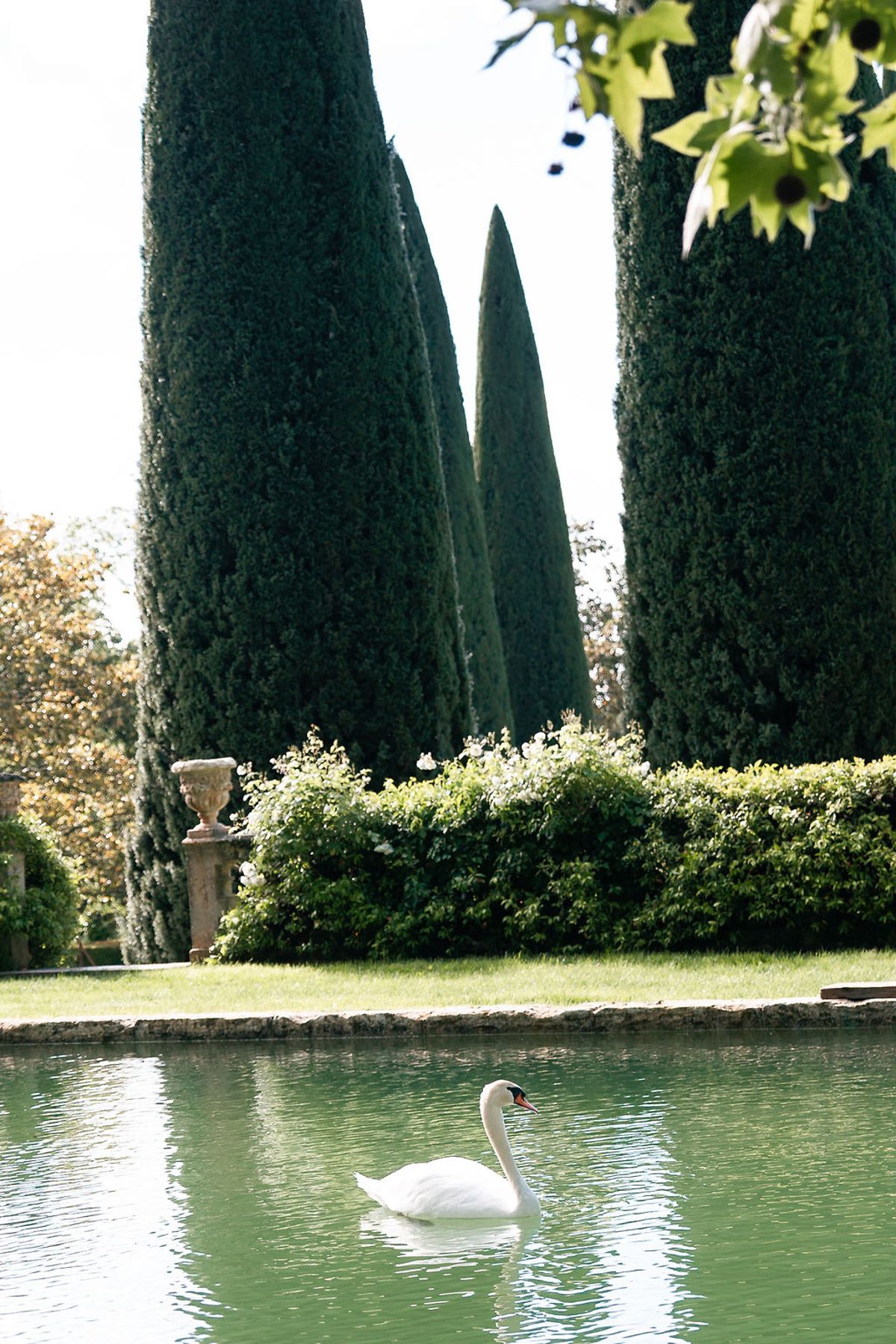
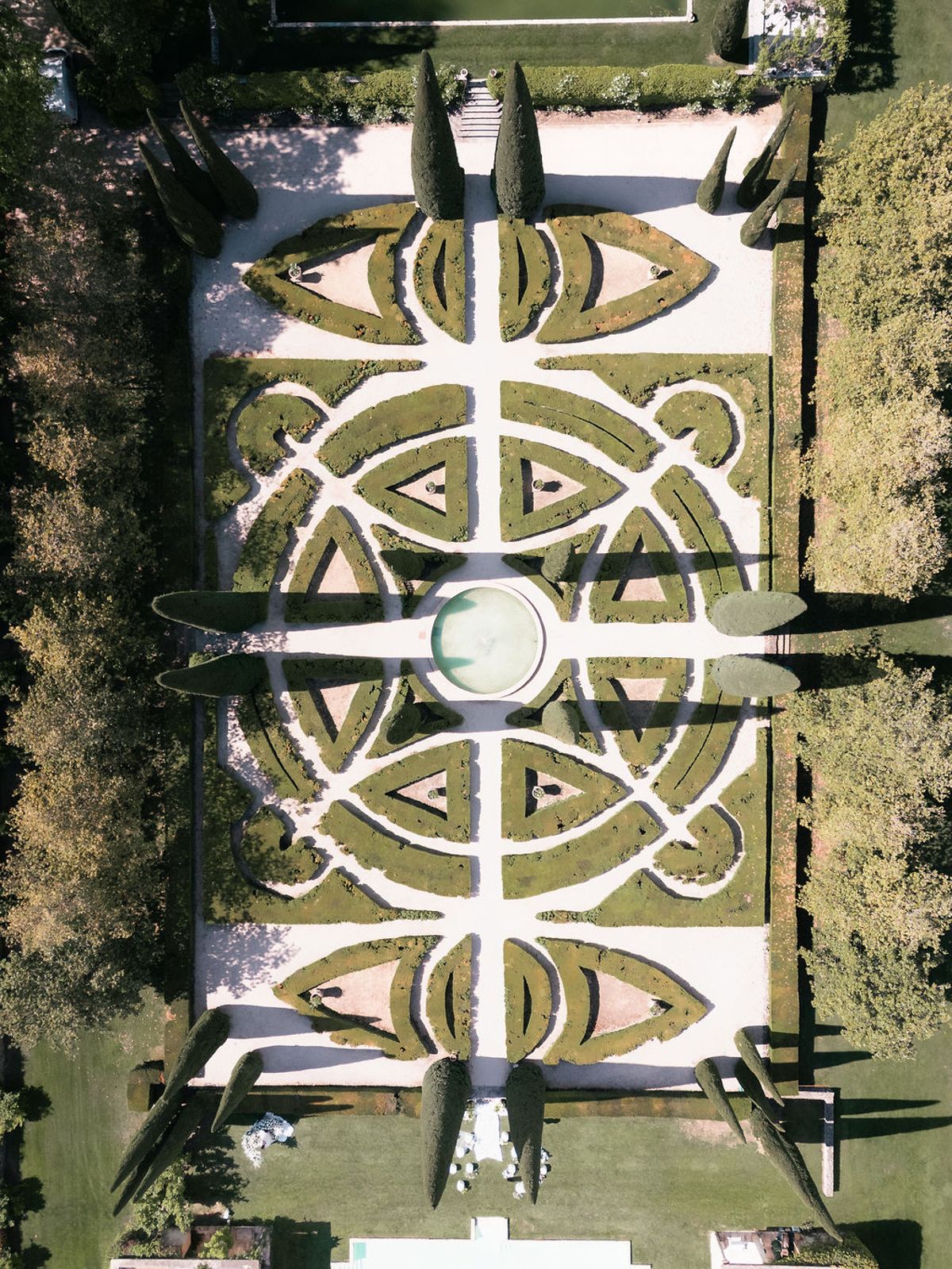
The formal garden is one of Château de Sannes' defining features. Designed in the French tradition, its symmetry becomes especially clear when viewed from the château, where the clipped box parterres, central basin, gravel paths and cypresses form one complete composition.
At ground level, those same elements create a series of individual spaces that can be used throughout a wedding day: a ceremony framed by cypresses, portraits along the pathways, cocktails beside the château and dinner outdoors on the gravel terrace.
The estate can be fully privatised and accommodates 31 guests across 15 bedrooms in three separate houses. Its 300-square-metre orangery seats up to 220 guests and overlooks the pond, vineyards and Luberon landscape, while an outdoor marquee can accommodate the same number. Capacity, pricing and availability sit on the château wedding venue listing for the Luberon.
Photographer Gaelle Boissavi's advice from the editorial reflects the approach taken throughout the day: "Prioritise atmosphere over perfection" and choose a location for the way it makes you feel, not simply for how it looks.
At Château de Sannes, much of that atmosphere already exists. The most successful details in this editorial are often the ones that work with the estate rather than competing with it.
The Wedding Team
Love this wedding? There are hundreds more.
Real weddings, venue guides, and planning inspiration, in your inbox every month.
The Venue
The couple chose Château de Sannes, a chateau in Provence-Alpes-Côte d'Azur.
More Weddings at Château de Sannes
See all weddings at this venue →
More Real Weddings in Provence
Discover More
Browse our curated venue collections.
Planning a Destination Wedding in France?
Our complete guide covers everything from choosing a region to the morning-after breakfast.
Read the Complete Guide