Skip to content
La Deveze | Farmhouse Wedding Venues in France
Curated Guide · 11 Venues

Farmhouse Wedding Venues in France

A curated shortlist of farmhouse wedding venues in france, each reviewed by our team. Updated for 2026.

Discover La Deveze
French Wedding Style
French Wedding Style Editorial
Updated May 2026 11 venues

All venues on this page are editorially reviewed.

Key facts
  • Editorial gate: the principal celebration surface must be the farmhouse residence itself or a historic farm courtyard, on a working or former agricultural estate that retains its rural character, not a former farm rebuilt as a styled hotel.
  • Eleven venues currently meet the farmhouse-residence criterion across six French regions: <span translate="no">Provence-Alpes-Côte d'Azur</span>, <span translate="no">Occitanie</span>, <span translate="no">Nouvelle-Aquitaine</span>, <span translate="no">Bourgogne-Franche-Comté</span>, <span translate="no">Grand Est</span>, and <span translate="no">Île-de-France</span>, spanning seven departments including <span translate="no">Vaucluse</span>, <span translate="no">Gard</span>, <span translate="no">Tarn</span>, and the <span translate="no">Aube</span>.
  • Weekend-hire starting prices run €3,000 to €27,513; ceremony capacity covers 30 to 360 seated; on-site sleeping ranges from 13 to 190 guests, with bedroom counts published for 7 of 11 venues spanning 5 to 23.
  • The cohort mixes a Provençal <span translate="no">mas</span>, a Burgundian farm-<span translate="no">château</span>, a <span translate="no">Champagne</span>-hinterland <span translate="no">corps de ferme</span>, and a southwestern <span translate="no">manoir</span> on working land, so the booking model is full-estate hire with the farmhouse residence as principal celebration surface rather than a hotel rate at a property labelled rural.

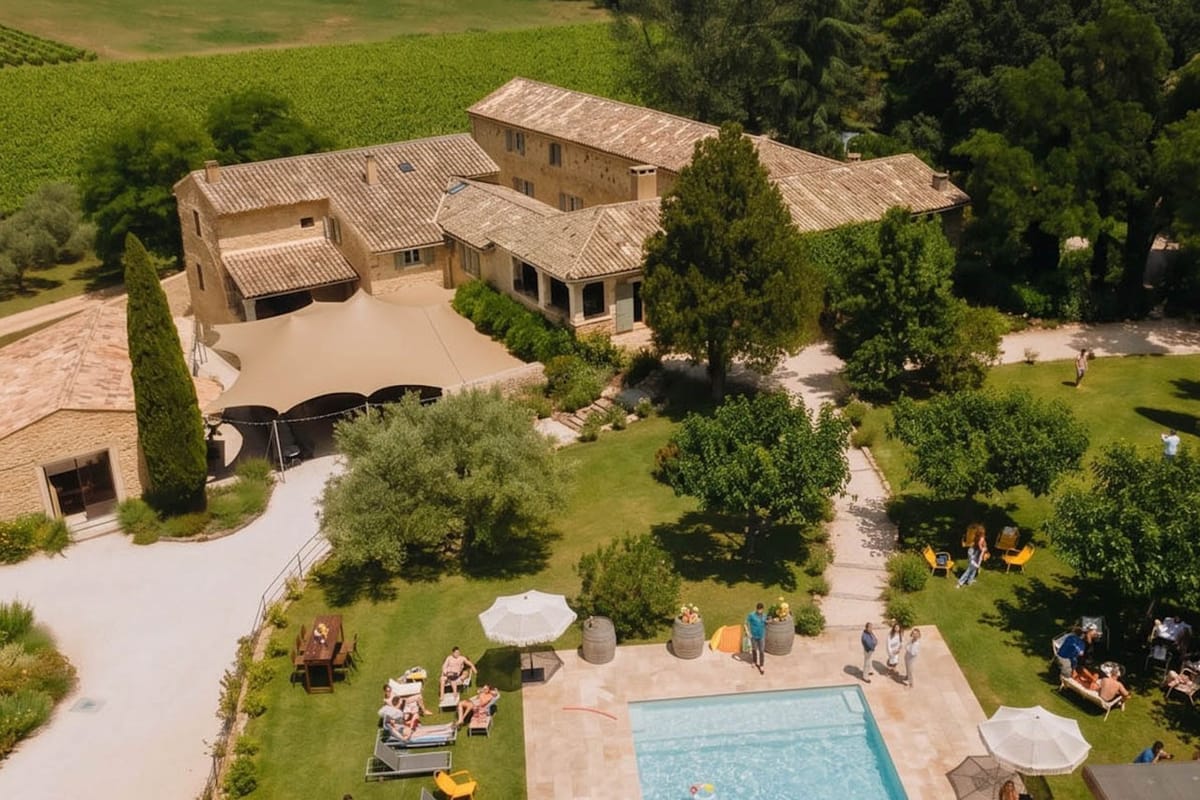
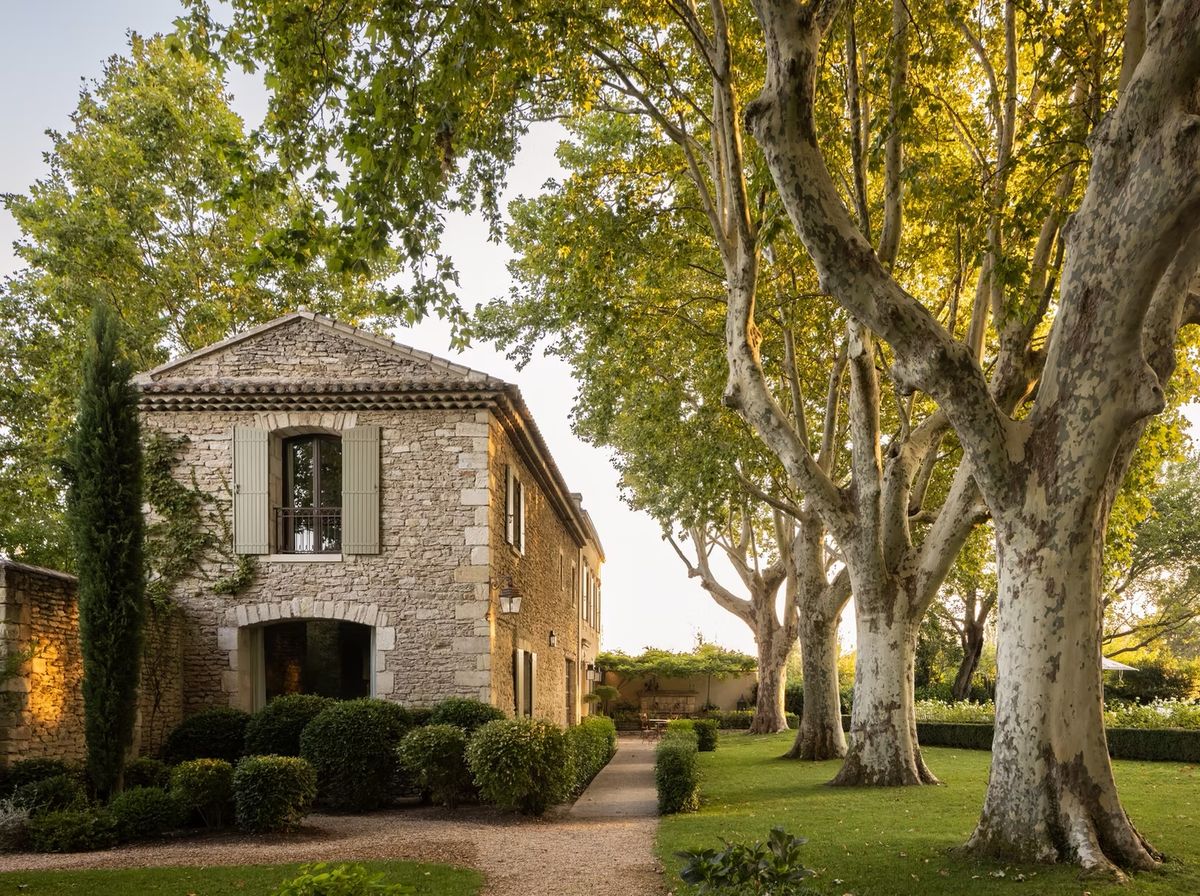
The first dominance dimension is the residence-as-celebration-surface criterion. Aggregator directories that index French wedding venues commonly tag any rural property with stone walls as a farmhouse venue, including barn-only conversions where the farmhouse residence is closed to guests, and styled hotels that were once working farms before refurbishment stripped out the agricultural fabric. This page filters those out. Every property on the list opens the farmhouse residence itself, plus the surrounding courtyard and outbuildings, as the principal celebration surface, with the agricultural-estate context retained in the working land, the original masonry, and the layout of the <span translate="no">corps de ferme</span>. <a href="/wedding-venues/mas-guillaumand/"><span translate="no">Mas Guillaumand</span></a> in the <span translate="no">Gard</span> anchors the type literally at €3,000 for the weekend: a working Provençal <span translate="no">mas</span> that sleeps 18 and seats 30.

The second dimension is the regional flavour variance across the eleven properties. A Provençal <span translate="no">mas</span> in <span translate="no">Vaucluse</span> reads differently from a Burgundian farm in <span translate="no">Nièvre</span> or a <span translate="no">Champagne</span>-hinterland farm in the <span translate="no">Aube</span>: stone palette, courtyard scale, the relationship between residence and outbuildings, and the surrounding agriculture (vines, lavender, cereal land, oak woodland) all shift with the region. The cohort spans six regions deliberately, with three properties in <span translate="no">Occitanie</span>, two in <span translate="no">Provence-Alpes-Côte d'Azur</span>, and one each across the remaining four, so couples can choose by regional flavour as well as by property fit. <a href="/wedding-venues/le-petit-roulet/"><span translate="no">Le Petit Roulet</span></a> near <span translate="no">Avignon</span> reads as the Provençal-<span translate="no">mas</span> reference; <a href="/wedding-venues/clos-beaurepaire/"><span translate="no">Clos Beaurepaire</span></a> in the <span translate="no">Aube</span> reads as the <span translate="no">corps de ferme</span> reference at 18 bedrooms across the residence and converted outbuildings.

The third dimension is the operational range. Starting prices open at €3,000 and reach €27,513 across the cohort, with the floor notably higher than the barn-only cohort because a farmhouse residence supports a longer celebration window, more sleeping inventory, and wider event configurations than a single converted agricultural building. Ceremony capacity covers 30 to 360 seated; on-site sleeping reaches 190 guests at the largest property. Bedroom counts are published for 7 of 11 venues, ranging 5 to 23, and the remaining four publish a sleeping-guest figure without a bedroom breakdown. Each listing carries the operational data the reader needs to shortlist on event fit before requesting brochures, and the cohort updates as new properties earn the residence-as-celebration-surface evidence and others lose it.

A French farmhouse wedding is what couples choose when they want the weekend to feel like staying at a private estate rather than hiring a venue for the day. You sleep on the property, settle in for two or three nights, and the wedding day sits inside that longer arc. The appeal is a slower pace, a working agricultural setting, and old stone buildings that have been lived in rather than restored. Of the 190+ properties in our French wedding venues directory, the 11 on this page span six regions, from Provence lavender country and the Cévennes hills to Île-de-France, the Aube on the edge of Champagne, and the Charente hameaux.

Editor's Tip

Ask each estate at first enquiry whether the rental is single-day, two-night, or full-weekend, and whether you can bring an outside caterer or have to use the in-house option. The answers can shift the budget by €5,000-€15,000 and change how the whole weekend feels before you even visit.

Most couples narrow their list with three questions at first enquiry. First, what does the rental actually include: a single day, two nights, or a full weekend with sole use of the property? Second, is there a working vineyard or farm on-site, and would harvest crews share the weekend? At La Deveze in the Cévennes, the September grape harvest (vendanges) is part of the charm, not a problem. Third, can the property sleep your full guest list? Sleeping capacity across the 11 properties ranges from 13 at Le Petit Roulet to 190 at Manoir de Longeveau, and the answer reshapes how the weekend can run.

Couples planning from Britain, Ireland, the United States, or Australia can use the six-region spread to match guest travel. Le Moulin de Launoy is a 90-minute TGV from Paris; Le Petit Roulet is close to Avignon airport; Mas Guillaumand is the lowest entry point at €3,000.

In brief

A French farmhouse wedding is a Friday-to-Sunday weekend at a working or former agricultural estate, with sole use of the property and on-site sleeping. We list 11 estates across 6 regions, sleeping 13 to 190 guests, starting from €3,000 to €27,500.

Why this curation

  • 11 French farmhouse estates curated across 6 regions: 5 in Occitanie, 2 in Provence-Alpes-Côte d'Azur, and 1 each in Île-de-France, Grand Est, Nouvelle-Aquitaine, and Bourgogne-Franche-Comté.
  • A working agricultural setting, not styled rustic décor. Each property earns its place through active or former farm use: chestnut, silk, viticulture, livestock, mixed cultivation. Converted barns and new-build chalets in rural settings are not on this page.
  • Capacity 30 to 360 seated, starting prices €3,000 to €27,513, on-site sleeping 13 to 190 guests. Most properties sleep 13 to 56; Manoir de Longeveau at 190 sleeping is the upper outlier.

From a directory of 190+ French wedding venues, 11 meet our four criteria for a farmhouse wedding venue. The buildings have to include an agricultural element at the heart of the property: Farmhouse/Grange, Mas, Bastide, or a converted Manoir. The estate has to be available for full sole-use across the wedding weekend, with on-site bedrooms (5 to 23, where published). Catering has to allow either an outside caterer or an in-house chef working with regional produce. The 11 properties span 6 regions and were chosen for the working setting rather than for any uniform style or scale. Editor-in-Chief Anne-Sophie Boubals reviews this list quarterly.

The first thing that makes this list useful is the working setting itself. English-language directories that aggregate "rustic" wedding venues commonly include barn-conversions, new-build chalets, or country-house hotels with farm-themed décor. We exclude all three. A farmhouse here means the agricultural origin is structural: the Cistercian-abbey vineyard at Domaine de Valbonne; the 500-year-old mas at Mas Guillaumand; the 17th-century farmhouse courtyard at Château de Planchevienne; the converted Île-de-France mill at Le Moulin de Launoy. These are working properties first, wedding venues second.

The second is the comparable data across all 11. A couple narrowing 40 candidates to 4 site visits needs the same fields available for every venue: building style and dialect, starting price, bedroom count, region, on-site sleeping capacity, and what is or is not included. Aggregator listings, optimised for inventory volume rather than reader decisions, do not give you that.

The third is editorial honesty about the edges of the list. The Clos de Beaurepaire at 360 seated is the upper edge; Mas Guillaumand at 30 seated is the intimate end. Manoir de Longeveau at €27,513 starting price is the upper end of the budget; Mas Guillaumand at €3,000 is the entry point. Couples whose guest count or budget sits at either edge get clear signal here rather than buried in fine print.

Key facts at a glance

  1. Scale. 11 farmhouse-classified wedding venues spanning 6 French regions. Capacity 30 to 360 seated; on-site sleeping 13 to 190 guests, with most properties sleeping 13 to 56.
  2. Operational data. 3 of 11 estates publish operational data with FWS, including verified date availability and verified responsiveness: La Deveze in Occitanie, Domaine Le Castelet in the Tarn, and Domaine de Valbonne in Occitanie. The remaining 8 carry the same editorial vetting with lighter operational data.
  3. Price range. Starting prices €3,000 at the intimate end (Mas Guillaumand) to €27,513 at the upper end (Manoir de Longeveau). Most properties €4,000-€18,000 with all 11 publishing a starting price.
  4. Regional spread. Occitanie (5 venues), Provence-Alpes-Côte d'Azur (2), Île-de-France (1), Grand Est (1), Nouvelle-Aquitaine (1), and Bourgogne-Franche-Comté (1).
  5. Building styles. 5 styles across the 11 estates: Mas (Provençal stone farmhouse), Bastide (Provençal country estate), Manoir with farmhouse footprint, working domaine with farmhouse buildings, and primary Farmhouse/Grange in regional materials.
  6. Editorial inclusion. These 11 estates come from our directory of 190+ French wedding venues. Each one passes four checks: agricultural origin buildings; sole-use weekend booking; on-site sleeping; and caterer flexibility.

3 reasons this list matters

  1. Working agricultural setting, not styled rustic décor: from a directory of 190+ French wedding venues, 11 meet our four criteria (working farm or converted farm building; full sole-use of the property; on-site bedrooms; flexibility on caterers). The list is intentionally short.
  2. 6-region spread across France: Occitanie (5 venues including La Deveze in the Cévennes and Domaine Le Castelet in the Tarn), Provence-Alpes-Côte d'Azur (2), Île-de-France (1), Grand Est (1), Nouvelle-Aquitaine (1), and Bourgogne-Franche-Comté (1). One comparable shortlist across all of them.
  3. Capacity 30 to 360 seated, with Mas Guillaumand at the intimate 30-guest end (€3,000 starting) and The Clos de Beaurepaire at the large 360-guest end (in Grand Est, with 18 bedrooms sleeping 55). The €4,000-€18,000 mid-range covers 8 of 11 estates including La Deveze, Domaine Le Castelet, and Domaine de Valbonne.

Archetype guide

5 farmhouse styles across the 11 estates

StyleRegionEstateWhat makes it distinctCapacity
Mas (Provençal farmhouse) Occitanie + ProvenceMas Guillaumand + Le Petit Roulet500-year family history; stone walls; lavender + olive cultivation; intimate-to-mid scale30 to 120 seated
Bastide (Provençal country-estate) Provence-Alpes-Côte d'AzurLa Bastide de Laurence350-year-old bastide; Vaucluse antique-market access; 8-suite intimate80 seated
Manoir with farmhouse footprint Nouvelle-AquitaineManoir de Longeveau17th-C manor with 35 converted-village outbuildings; Charente walnut-grove setting190 seated
Working domaine with farmhouse anchor OccitanieLa Deveze + Domaine Le Castelet + Domaine de Valbonne + Domaine du ReyWorking agricultural estate; in-house chef + estate-grown produce; 16th-19th-C architecture120 to 160 seated
Farmhouse/Grange primary (regional vernacular) Île-de-France + Grand Est + Bourgogne-Franche-ComtéLe Moulin de Launoy + The Clos de Beaurepaire + Château de PlanchevienneMill-conversion (Île-de-France), elm-wood barn (Aube), 17th-century farmhouse-courtyard (Burgundy)150 to 360 seated

Compare all 11 Venues

Venue Side-by-Side Comparison

Pricing is indicative and may vary by season, guest count, and package. Please confirm directly with the venue.

Scroll →

VenuePrice FromRatingMax GuestsSleeps up to
Domaine Le Castelet €8,073 120 48
Domaine de Valbonne €18,000 5.0 (176) 160 56
La Deveze €11,500 4.9 (99) 120 30
Le Moulin de Launoy €4,000 4.8 (114) 150 28
La Bastide de Laurence €13,240 5.0 (7) 80 16
The Clos de Beaurepaire €7,900 4.8 (105) 360 55
Manoir de Longeveau €27,513 4.6 (186) 190 190
Chateau de Planchevienne €7,200 4.6 (183) 300 34
Le Petit Roulet €8,000 4.8 (119) 120 13
Mas Guillaumand €3,000 5.0 (8) 30 18
Domaine du Rey €13,100 4.9 (62) 160 34
01
DOMAINE · TARN · OCCITANIE
Castres (12 minutes by car), Tarn
Domaine Le Castelet sits in Tarn as a farmhouse retreat with 17 bedrooms sleeping 34. The catering style is unusual in this list: the property publishes specific guidance for self-catering DIY arrangements alongside external traiteur-friendly equipment and an in-house option. Couples drawn to a hands-on weekend with Tarn market produce get explicit operational support that most list venues do not publish. Coordination plus €7,484 entry pricing plus 12-minute Castres access makes it this list's practical mid-band anchor.
Why We Love It

Self-catering DIY route paired with Tarn market produce. 17 bedrooms / 34 sleeping / 120 seated weekend retreat scale.

Max Guests
120
Sleeps
48
Chapel
No
From €8,073 / venue hire

02
DOMAINE · GARD · OCCITANIE
5.0 (176 reviews)
Gard
Domaine de Valbonne in Gard anchors this list upper-capacity range as a 23-bedroom hameau sleeping 56, the largest on-site sleeping footprint of this list's mid-scale properties. The 35-hectare protected-forest setting gives the working-domaine a wider land-use range than the typical farmhouse property, and the depth of detail surfaces in coordinated multi-day weekend formats and verified responsiveness patterns. €18,000 starting price reflects the scale + operational-data publication depth. The property's 16th-century architecture and protected-forest setting suit couples planning a wedding-photography sequence across multiple landscape styles (forest, vineyard, courtyard, hameau) within a single property footprint.
Why We Love It

56-sleep capacity + 35-hectare protected-forest setting + 23-bedroom hameau weekend format.

Max Guests
160
Sleeps
56
Chapel
No
From €18,000 / venue hire

03
DOMAINE · GARD · OCCITANIE
4.9 (99 reviews)
Quissac (nearby), Gard
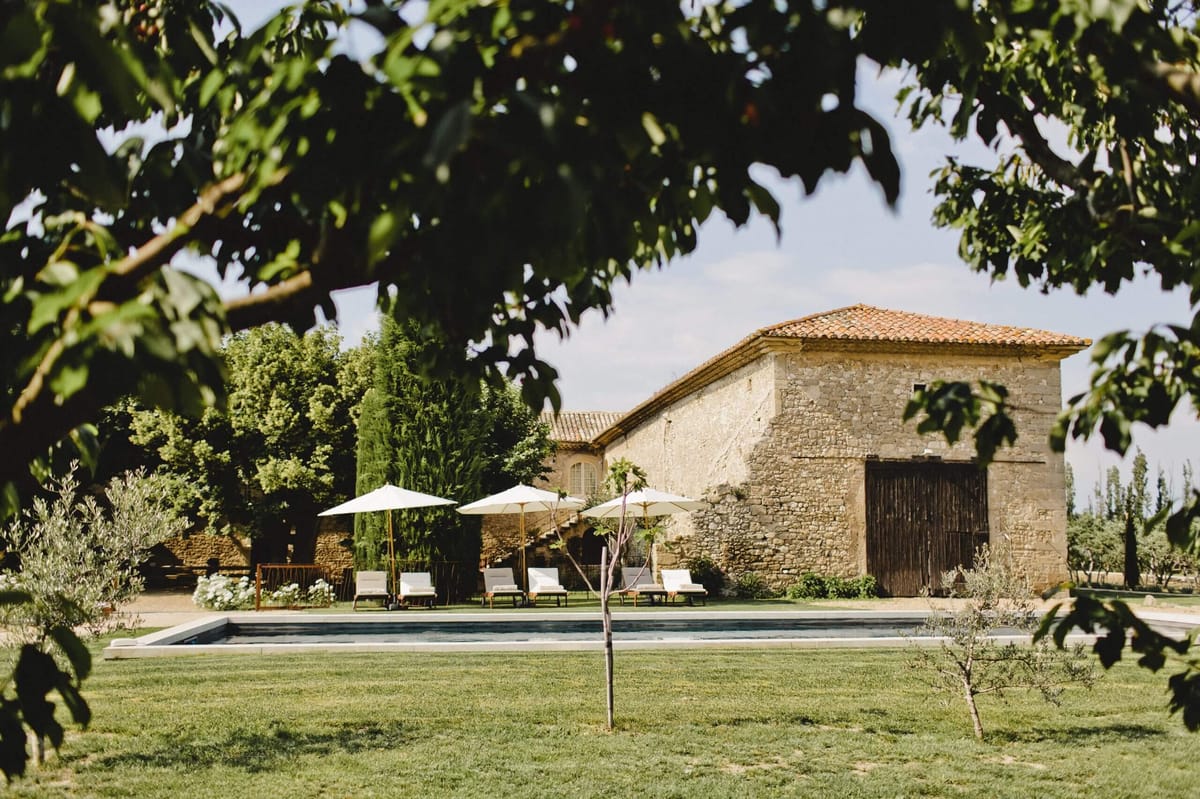
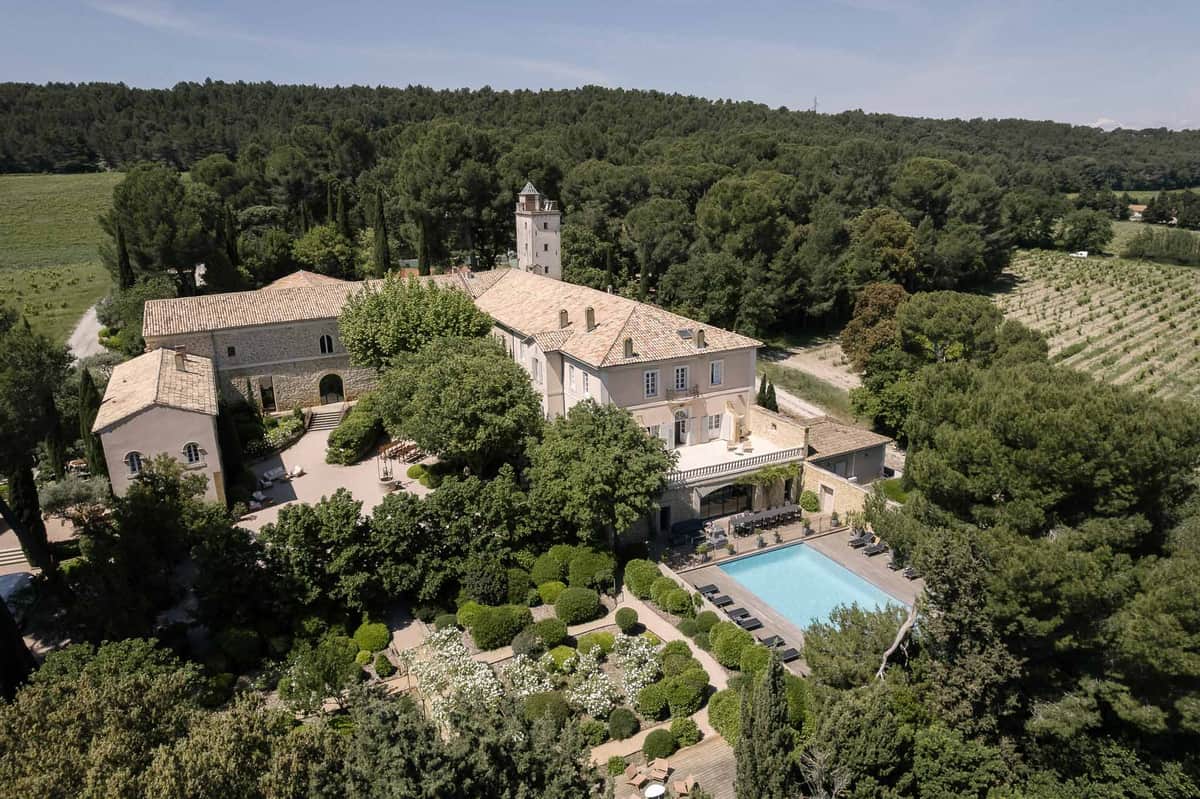
La Deveze anchors this list lead as a working chestnut-and-silk heritage farm in the Cévennes. The on-site chef draws from seasonal Cévennes produce, chestnut purée in October, silk-region herbs through summer, turning catering into a regional-cuisine collaboration. The 30 on-site sleepers cluster around a heated pool and stone-walled courtyard at Quissac, anchoring a Friday-to-Sunday retreat rhythm with partner-recommended hotels for the broader 120 guest count. Couples route via Montpellier or Nîmes airports with 90-minute drives.
Why We Love It

The chestnut-and-silk farm heritage is the unmistakable style. Cévennes-grown produce + heated-pool courtyard rhythm + depth of detail.

Max Guests
120
Sleeps
30
Chapel
No
From €11,500 / venue hire

04
MILL_HOUSE · SEINE-ET-MARNE · ÎLE-DE-FRANCE
4.8 (114 reviews)
Paris (1 hour), Seine-et-Marne
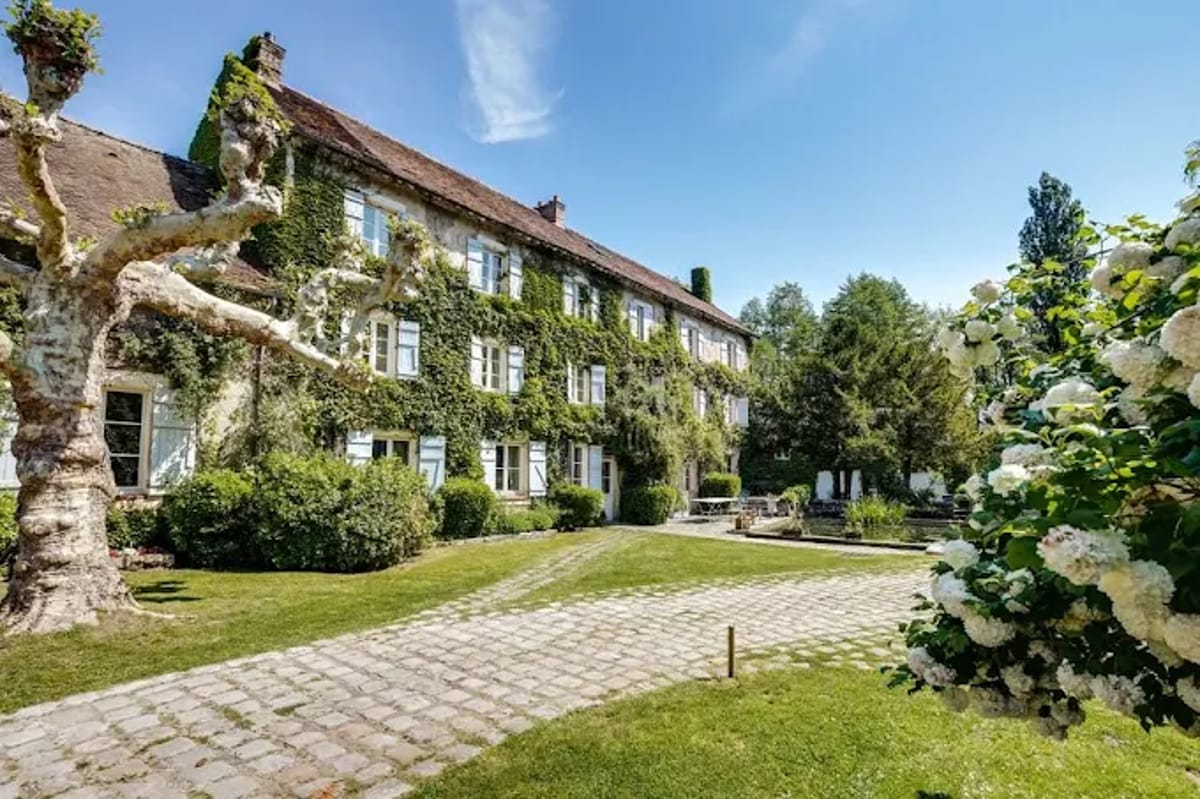
Le Moulin de Launoy is this list's only sub-90-minute-from-Paris property, in the Gâtinais 1 hour from Charles-de-Gaulle. The mill-conversion style is distinct, original mill architecture re-used as an artist-studio reception space, 7 bedrooms sleeping 28, 150-seated capacity. Couples whose guest list arrives via Paris airports get a single TGV or rental-car arrival without the longer regional logistics of Occitanie or Provence flights. €4,000 starting price brings the Île-de-France area within mid-range farmhouse budget. The artist-studio reception space sets a style distinct from chateau or domaine venues; couples prioritising urban-aesthetic ceremony framing in a rural agricultural setting find this list's clearest creative-industry crossover here.
Why We Love It

Île-de-France 1-hour-from-Paris area + Gâtinais mill-conversion + artist-studio reception.

Max Guests
150
Sleeps
28
Chapel
No
From €4,000 / venue hire

05
BASTIDE · VAUCLUSE · PROVENCE-ALPES-CÔTE D'AZUR
5.0 (7 reviews)
L'Isle-Sur-La-Sorgue (2-minute drive, 10-minute bike ride, or 20-minute walk), Vaucluse
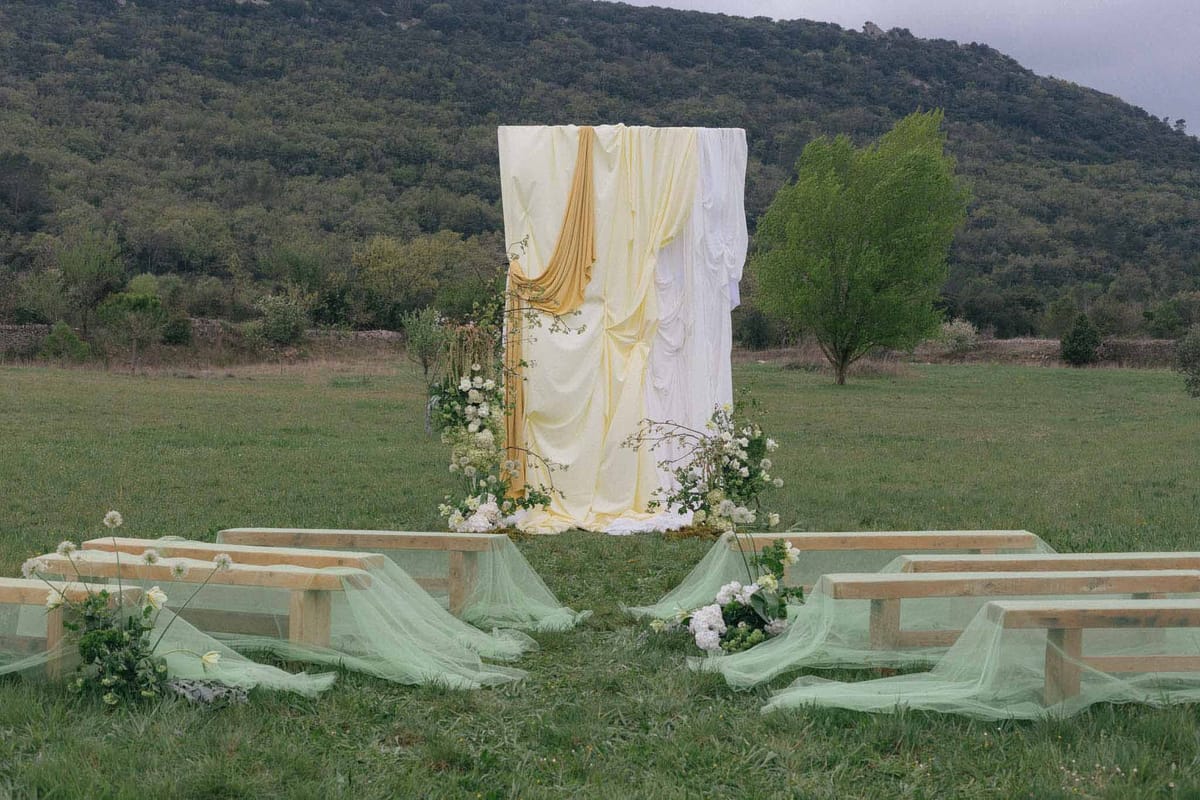
La Bastide de Laurence in the Vaucluse is this list's 8-suite intimate bastide style, 350-year-old country-estate architecture with stone garden access and outdoor ceremony spaces with covered Plan B. Capacity 80 seated suits couples planning 50-80 guest weddings where the immediate family and wedding party occupy the on-site rooms. L'Isle-sur-la-Sorgue antique-market access (15 minutes) gives weekend-extension activity without complicated logistics. €13,240 starting price reflects the 350-year architectural depth and intimate-scale Provençal positioning. For couples planning a 50-80 guest wedding with strong creative-industry guest profile, the Vaucluse antique-market access provides Friday welcome activities and Monday-morning departure rituals beyond the standard wedding-weekend rhythm.
Why We Love It

8-suite intimate bastide + L'Isle-sur-la-Sorgue antique-market access + 350-year stone architecture.

Max Guests
80
Sleeps
16
Chapel
No
From €13,240 / venue hire

06
FARMHOUSE · AUBE · GRAND EST
4.8 (105 reviews)
Troyes (35 minutes), Aube
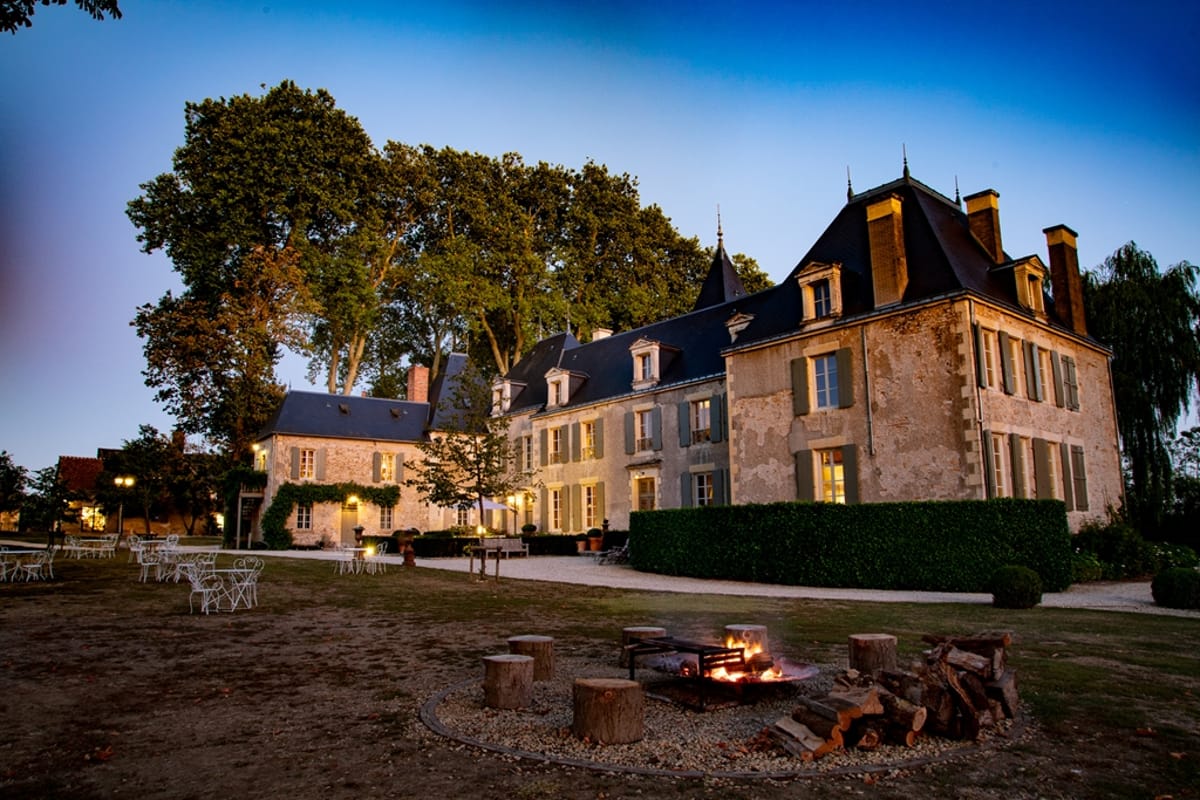
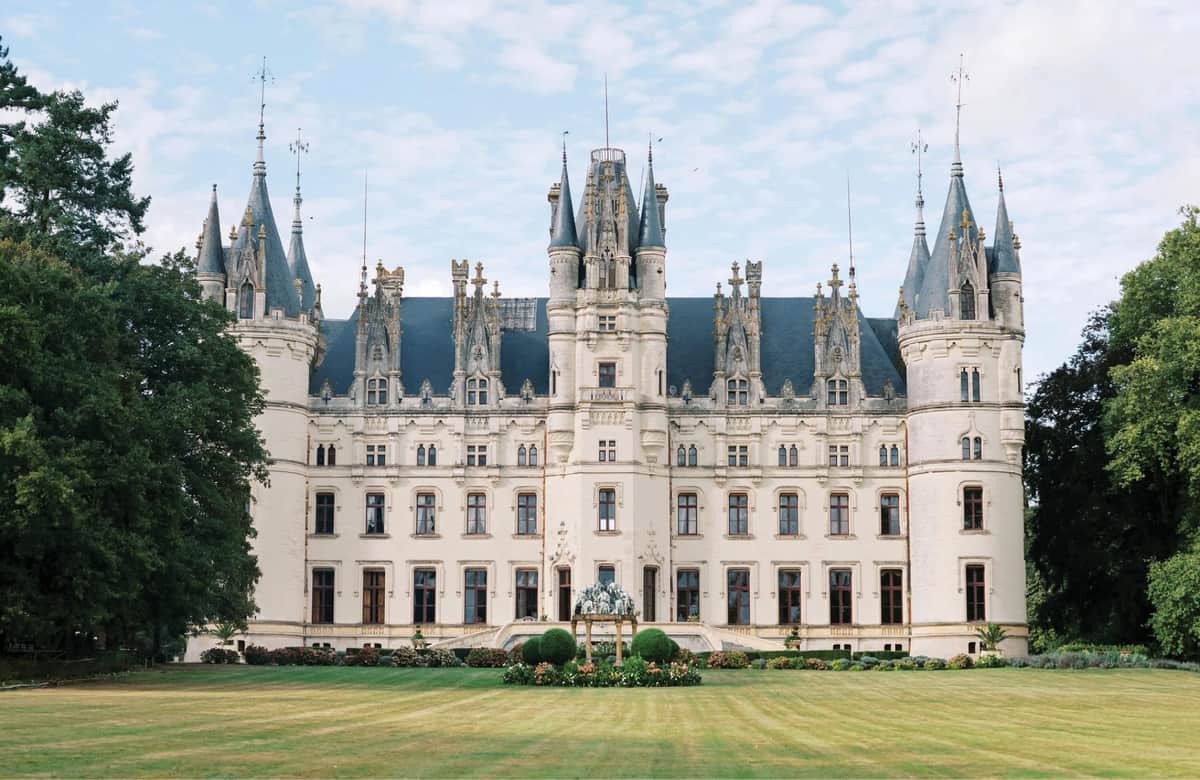
The Clos de Beaurepaire in Grand Est (Aube) is this list's capacity outlier at 360 seated, with a 19th-century dovecote, a 700-square-metre elm-and-chalk barn, and a 3-hectare parkland. The agricultural restoration is substantial, the dovecote and elm-wood barn were repurposed from working agricultural use rather than built as wedding-event spaces. 18 bedrooms sleep 55. Couples planning extended-family weddings or 200-300 guest weekends find this list's only large-scale option here at €7,900 starting price. Couples planning extended-family weddings or 200-300 guest weekends with non-wedding events Friday and Sunday find this list's only large-scale option here at accessible mid-range starting price.
Why We Love It

Aube 19th-century dovecote + 700m² elm-and-chalk barn + list-largest 360-guest scale.

Max Guests
360
Sleeps
55
Chapel
No
From €7,900 / venue hire

07
MANOIR · CHARENTE · NOUVELLE-AQUITAINE
4.6 (186 reviews)
Angouleme (40 minutes by car), Charente
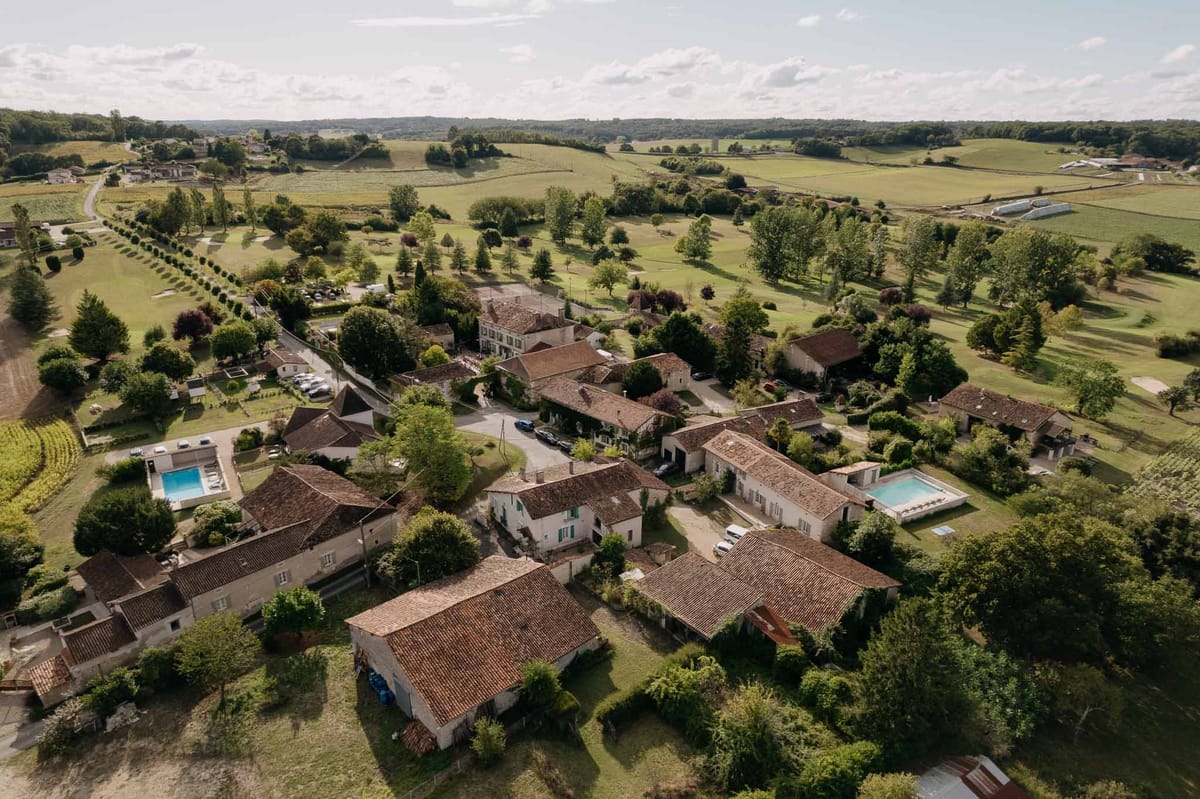
Manoir de Longeveau in Charente (Nouvelle-Aquitaine) is this list's 35-property converted-village pattern, 17th-century manor at the centre with 35 outbuildings forming a private hamlet that sleeps up to 190 guests. This is this list's only property where on-site sleeping can absorb a full wedding guest list. The walnut-grove setting + 40-minute access from Angoulême + Bordeaux Mérignac airport reach distinguishes it among Nouvelle-Aquitaine farmhouse properties. €27,513 reflects the multi-day full-on-site capacity. For couples planning a 100-150 guest wedding where the entire guest list sleeps on-property, this is this list's only viable option without sub-letting nearby hotels or holiday rentals to complete accommodation logistics.
Why We Love It

35-property converted-village pattern + 190-sleep full-on-site capacity + Charente walnut-grove.

Max Guests
190
Sleeps
190
Chapel
No
From €27,513 / venue hire

08
CHATEAU · NIÈVRE · BOURGOGNE-FRANCHE-COMTÉ
4.6 (183 reviews)
Nevers (10 km), Nièvre
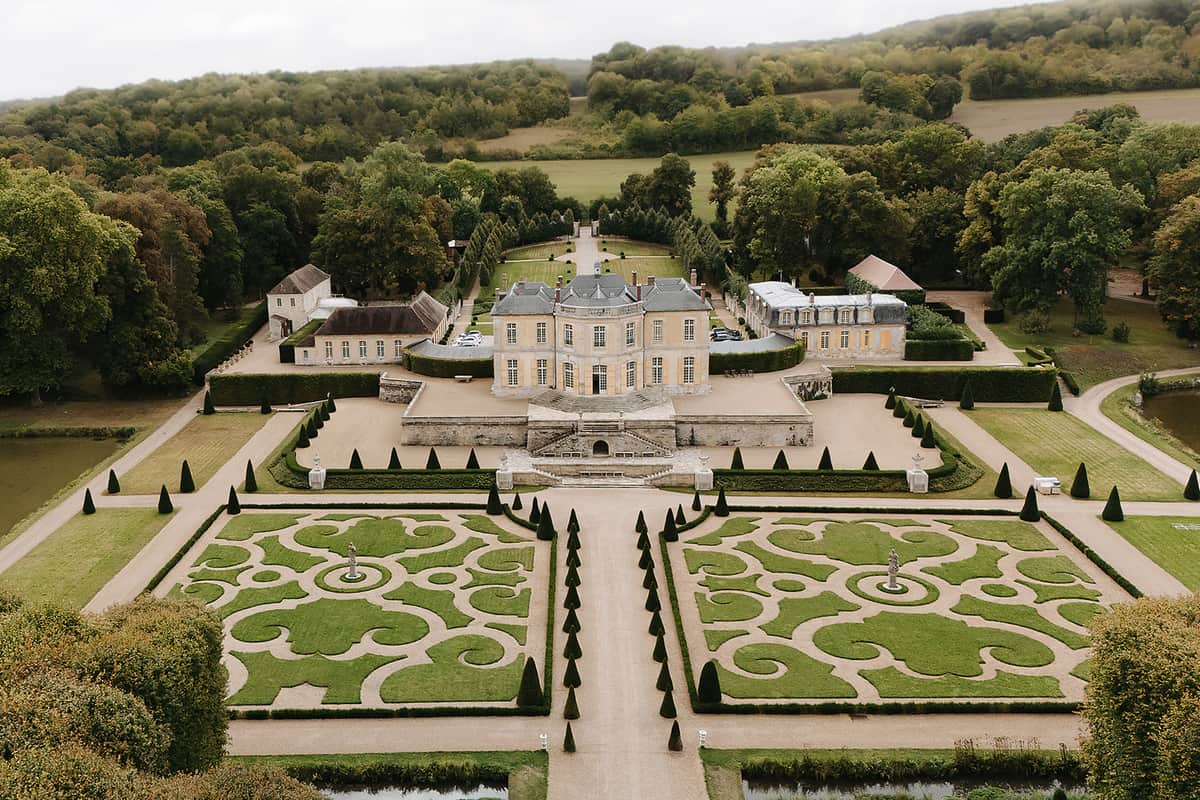
Château de Planchevienne in Bourgogne-Franche-Comté qualifies as a chateau-with-farmhouse-secondary style, the 17th-century farmhouse-courtyard outbuildings sit alongside the formal chateau on an 11-hectare park-and-forest estate. Les Ecuries 300-guest ballroom in the converted stables gives the property this list's second-largest seated capacity. 12 bedrooms sleep 34 across main building + outbuildings. €7,200 starting price brings style-crossing positioning at accessible budget for couples seeking architectural breadth across one estate. Couples drawn to formal-architecture ceremony with rustic-courtyard reception flow find the property's style-crossing positioning a structural advantage over single-style list properties.
Why We Love It

17th-C farmhouse-courtyard outbuildings paired with chateau formality + 11-hectare park + Les Ecuries 300-guest stable ballroom.

Max Guests
300
Sleeps
34
Chapel
No
From €7,200 / venue hire

09
MAS · VAUCLUSE · PROVENCE-ALPES-CÔTE D'AZUR
4.8 (119 reviews)
Avignon (25 minutes), Vaucluse
Le Petit Roulet is a 16th-century fortified mas in the Vaucluse, 25 minutes from Avignon, with multi-space ceremony flow across the courtyard, garden, and outbuildings. 5 bedrooms sleep 13 in the main building with additional outbuilding capacity. Couples planning 80-120 guest weddings with strong Avignon-area logistics (TGV from Paris at 2 hours 40 minutes) get this list's most accessible Provençal entry at €8,000 starting price + 16th-C architectural depth. The 16th-century fortified architecture sets a style distinct from the typical 17th-19th-century list properties; couples drawn to medieval-stone wedding-photography aesthetics find this list's clearest pre-Renaissance positioning here.
Why We Love It

16th-C fortified mas + 25-min from Avignon + multi-space ceremony flow.

Max Guests
120
Sleeps
13
Chapel
No
From €8,000 / venue hire

10
MAS · GARD · OCCITANIE
5.0 (8 reviews)
Nîmes (1 hour), Gard
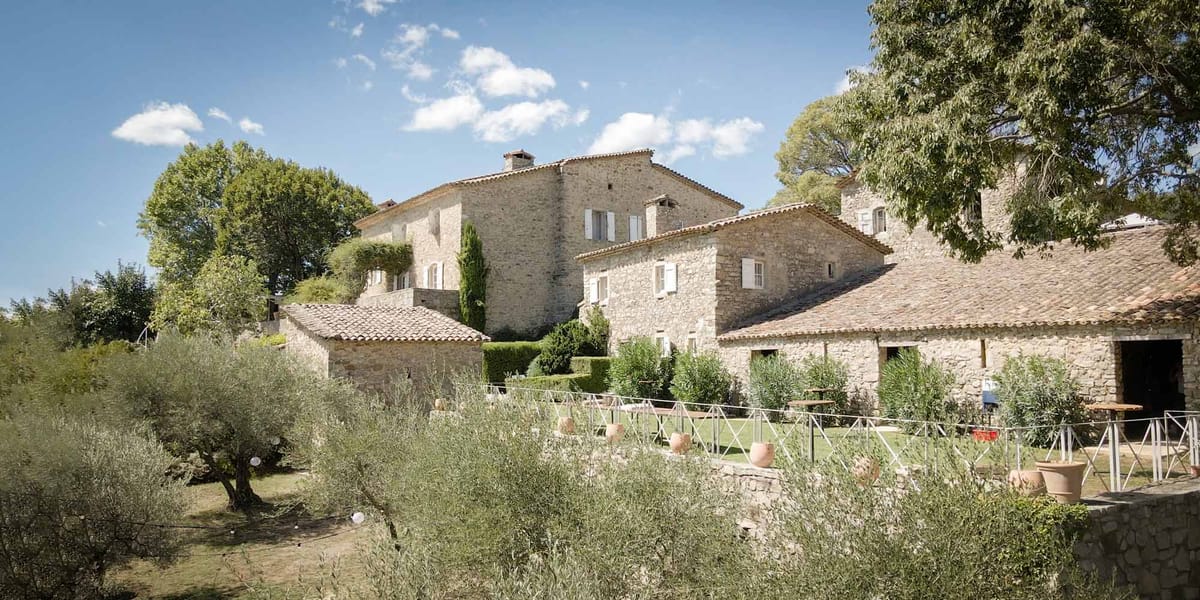
Mas Guillaumand is this list's budget-tier entry at €3,000 starting price + intimate 30 seated capacity, the smallest in this list. 500 years of family ownership in the Cévennes region is the unmistakable style; the in-house cooking working family-tradition recipes is structural rather than catered-in. 2-hectare grounds with traditional Languedoc-stone mas architecture suits couples planning 25-30 guest weddings on accessible budgets without sacrificing agricultural authenticity. For couples on tight budgets without compromising agricultural authenticity, the family-tradition cooking and 500-year ownership style provides depth of detail that surface-level rural-rental properties cannot match at the entry price point.
Why We Love It

500-year family ownership + 2-hectare Cévennes grounds + €3,000 budget entry + traditional stone mas.

Max Guests
30
Sleeps
18
Chapel
No
From €3,000 / venue hire

11
DOMAINE · GARD · OCCITANIE
4.9 (62 reviews)
Nimes (50 min drive), Gard
Domaine du Rey in Gard (Cevenol) is this list's private-village pattern, 5 mas buildings on 69-hectare countryside, with no-curfew operating policy and eco-sustainable estate management. 160 seated capacity + 34 sleeping makes it a mid-range option for couples seeking a farmhouse-cluster style where the 5 buildings host different wedding-weekend activities (welcome dinner in one, ceremony in another, reception in a third). €13,100 starting price reflects the cluster-village scale. Couples planning multi-day weekends with non-wedding events distributed across the 5 buildings find the village-cluster style a structural feature for accommodating diverse activity formats within a single property footprint.
Why We Love It

5 mas buildings on 69-hectare Cevenol countryside + no-curfew policy + eco-sustainable style.

Max Guests
160
Sleeps
34
Chapel
No
From €13,100 / venue hire

How a farmhouse wedding differs from a chateau or domaine

A farmhouse wedding is held at a property where the agricultural setting comes first. The buildings are working ones: stone walls, gravel courtyards, outbuildings clustered around a main house, roofs in regional materials. The land has been worked rather than landscaped: vineyards, olive groves, walnut orchards, lavender fields, livestock pasture. The whole estate is run as a working farm or estate, not as a venue-only space rented out for the day.

A domaine describes a much wider category that may or may not include working agriculture. A farmhouse is more specific: at least one architectural element on the property has to be a working farm building (Farmhouse/Grange, Mas, Bastide, or a converted Manoir), and the agricultural origin has to be visible in the buildings rather than added as theme.

The visible difference at chateau weddings, by comparison, is that they tend to run at properties built for grandeur rather than for working the land. Both can host beautiful weddings; the experience is different. See chateau wedding venues for the formal-architecture style; a farmhouse weekend is closer to staying at a friend-of-a-friend's estate that happens to host a few weddings a year. A chateau weekend tends to feel more polished and formal.

The 6 regions of French farmhouse architecture

French farmhouse architecture is regional, not national. Each of the 6 regions on this page brings a distinct building style. Occitanie is the centre of gravity (5 estates) and contributes the mas tradition: Provençal stone with pink-tile roofs and lavender or olive cultivation, exemplified by Mas Guillaumand in the Gard. The Cévennes sub-region adds chestnut and silk farming history at La Deveze, with the same regional stone but a different working tradition.

Provence-Alpes-Côte d'Azur contributes the bastide style: 350-year-old stone country houses, often near Vaucluse antique markets and Provençal villages. La Bastide de Laurence is the example here. Le Petit Roulet in the same region runs a 16th-century fortified mas style.

Nouvelle-Aquitaine adds the manoir-with-farmhouse pattern at Manoir de Longeveau in the Charente: a 17th-century manor house with 35 converted-village outbuildings forming a private hameau, set in walnut groves. Île-de-France contributes the converted-mill pattern at Le Moulin de Launoy. Grand Est brings The Clos de Beaurepaire in the Aube, on the southern edge of Champagne. Bourgogne-Franche-Comté contributes the 17th-century farmhouse-courtyard at Château de Planchevienne.

When choosing between regions, weigh the building style alongside practical travel. A mas in Provence feels different from a manoir in the Charente. Pick the region whose landscape and architecture matches the kind of weekend you want, then filter on capacity and budget.

Capacity: when 30 guests is the right number, and when 360 works

Capacity across the 11 estates ranges from 30 seated at Mas Guillaumand to 360 seated at The Clos de Beaurepaire, with most properties sitting in the 80 to 200 seated range. The 30-guest end is genuinely intimate: a mas wedding here is more like a long lunch with extended family than a large reception. The 360-guest end runs the other way, with The Clos de Beaurepaire's 18-bedroom estate handling large family weddings in Grand Est.

The mid-range (120 to 200 seated) covers La Deveze at 120, Domaine Le Castelet at 120, Le Petit Roulet at 120, Domaine de Valbonne at 160, Domaine du Rey at 160, and Le Moulin de Launoy at 150. This is the typical destination-wedding band: wedding party, immediate family, and a curated guest list.

The larger tier (300 seated) covers Château de Planchevienne at 300 and The Clos de Beaurepaire at 360. These properties handle larger receptions while keeping the farmhouse setting intact through the buildings and courtyards.

A note on the edges: at the 30-guest end, Mas Guillaumand delivers an intimate setting that larger properties cannot replicate without partial use. At the 360-guest end, The Clos de Beaurepaire delivers scale that smaller estates cannot reach without compromising the working-estate feel.

Catering: in-house chef, outside traiteur, or self-catering

How catering works varies more between farmhouse estates than at most other types of French wedding venue, and it is worth asking about at first enquiry. Three patterns turn up across the 11 properties.

In-house chef: La Deveze in the Cévennes works with their own chef serving seasonal Cévennes produce. The advantage is gastronomic depth tied to the property and the season. The trade-off is less flexibility on menu style, and the catering cost is bundled into the venue arrangement.

External traiteur-friendly: Domaine Le Castelet, Domaine de Valbonne, The Clos de Beaurepaire, Manoir de Longeveau, Le Petit Roulet, and others run with fully-equipped kitchens designed for outside caterers. You bring the traiteur of your choice. Many properties keep a short list of caterers who already know the kitchen layout and timing constraints.

Self-catering or DIY: a few estates allow couples to bring their own family-cooking arrangements or a chef they hire independently. This works best at smaller weddings; the kitchen and timing logistics get hard to manage at 100+ guests without a professional team running the back of house.

When you enquire, ask three things directly: which model the venue defaults to; whether more than one model is allowed; and if they have a recommended traiteur list, who is on it and what the per-guest cost range looks like.

Sleeping on site: how the weekend works when 13 to 190 guests stay over

Sleeping on the property is part of what makes a farmhouse wedding different from a single-day hire. All 11 estates here offer on-site beds; the inventory ranges from 13 sleeping at the smallest to 190 at the largest. Most properties sleep 13 to 56, which fits the wedding party, immediate family, and close friends, with the rest of the guests staying nearby.

The intimate sleeping range (13 to 30 guests on-site) covers Le Petit Roulet at 13, La Bastide de Laurence at 16, Mas Guillaumand at 18, Le Moulin de Launoy at 28, and La Deveze at 30. These properties suit weddings where most guests stay in nearby villages or a hotel block.

The mid-range (30 to 56 sleeping) covers Château de Planchevienne at 34, Domaine Le Castelet at 34, Domaine du Rey at 34, The Clos de Beaurepaire at 55, and Domaine de Valbonne at 56. This is enough room for the wedding party plus extended family.

Manoir de Longeveau in the Charente sleeps 190 across 35 converted-village outbuildings: a private hameau where most guests can stay on the property. This is the upper end of the list and unusual for the category.

A practical note: ask whether the bedroom count includes outbuildings, gîtes, or only the main building. Numbers can shift a lot depending on what is being counted.

The agricultural calendar: harvest, lavender, and seasonal weddings

Each estate has its own working rhythm. Vineyard properties pick grapes in September. Olive estates run their main harvest from October. Lavender peaks in late June and early July in Provence. Walnut harvests happen in late September. When you marry at a working farm, those rhythms become part of your weekend, and that is most of the appeal.

Couples drawn to a particular agricultural moment should ask the estate directly when their working windows fall this year. Grape harvest at La Deveze typically runs the first two weeks of September, but the exact dates shift by 1-2 weeks year to year. Lavender bloom in the Cévennes peaks late June; in Vaucluse, peak shifts a week or two earlier or later.

Most properties run their wedding seasons May through October, with peak demand in May, June, and September. La Deveze publishes Spring, Summer, and Autumn as preferred seasons, which is typical of the working-estate properties on this list. Off-season weddings (October through April) are negotiable at most properties and usually run 20-40% under peak prices.

Civil ceremony at the mairie: the legal step before the wedding

Couples not resident in France must complete the legal civil ceremony at a French mairie (town hall) before any symbolic ceremony at the wedding venue. This is a non-negotiable point of French civil law. The wedding venue hosts the symbolic ceremony, which is the religious or civil-style ceremony you and your guests experience as the wedding.

See Getting married legally in France for the full residency, documentation, and timeline pathway. The estate cannot host the legal ceremony, but most properties have a working relationship with the local mairie and can advise on logistics.

Ask the estate at first enquiry whether they have a working relationship with their local mairie, and whether they can recommend an officiant for the symbolic ceremony. Properties that frequently host destination weddings will have these connections in place.

Travel: TGV, airports, and Paris weekends

Le Moulin de Launoy in Île-de-France is the easiest travel point: 90 minutes by TGV from Paris, and reachable by car from Charles-de-Gaulle airport in around 1 hour. For couples with international guests routing through Paris, this is the lowest-friction option on the list.

Occitanie properties vary on travel. Domaine Le Castelet is 12 minutes from Castres; La Deveze is reachable from Montpellier or Nîmes; Mas Guillaumand and Domaine du Rey sit in the rural Gard with the closest airports at Montpellier or Nîmes.

Provence-Alpes-Côte d'Azur properties are served by Marseille Provence or Nice Côte d'Azur airports. Le Petit Roulet sits close to Avignon; La Bastide de Laurence is in the Vaucluse, around an hour from Marseille.

Manoir de Longeveau in Charente is served by Bordeaux Mérignac airport (around 40 minutes from Angoulême). The Clos de Beaurepaire in the Aube is reachable from Paris or Reims. Château de Planchevienne in Bourgogne-Franche-Comté sits a few hours south of Paris.

Pricing: from €3,000 entry to €27,500 at the upper end

Starting prices on the 11 estates range from €3,000 at Mas Guillaumand (the intimate 30-seat mas in Occitanie) to €27,513 at Manoir de Longeveau (the 35-property hameau in the Charente). Most properties fall in the €4,000 to €18,000 band.

The mid-range (€7,500 to €15,000) covers The Clos de Beaurepaire at €7,900, Le Petit Roulet at €8,000, Château de Planchevienne at €7,200, La Bastide de Laurence at €13,240, and Domaine du Rey at €13,100.

All 11 estates publish a starting price, which is unusually transparent for the category. Read the starting price as a 60-80 guest, Saturday-only baseline. Adding Friday and Sunday, expanding the guest count, or adding catering and accommodation packages typically lifts the all-in cost by a multiple of the starting price.

For a typical destination wedding (around 90 guests, full Friday-to-Sunday weekend, in-house or external traiteur at €100-€150 per guest, professional florist and photographer), the all-in cost across this list tends to land in the €40,000-€85,000 range, before guest travel and any nights spent off-property.

Related lists: rustic, domaine, barn, countryside, and chateau

Couples whose research extends beyond strict farmhouse properties will find related lists useful. Rustic wedding venues in France covers a wider category that includes barn-conversions and country-house estates (some properties listed here also appear there); the rustic list is broader and is not limited to working agricultural buildings.

Domaine wedding venues in France covers working-estate properties with vineyards, agricultural production, or family-stewardship history; overlap with this list is 2 venues (La Deveze and Domaine de Valbonne). Barn wedding venues in France covers barn-conversion properties specifically. Countryside wedding venues in France covers a broader rural-setting category without the agricultural-character requirement. Intimate wedding venues in France covers smaller-capacity properties for couples planning 30-60 guest weddings.

Expert advice

Expert Tips for This Style

Booking timeline

Book your venue at least 12-18 months ahead for peak summer dates (June-September). Saturday bookings in July and August fill first. Friday or Sunday bookings often unlock the same venue for 15-25% less.

Legal note

Civil marriages in France require 40 days of residency before the ceremony. Most international couples hold the legal ceremony at their local registry office and have a symbolic ceremony in France. This is completely valid and removes the residency requirement. Read the symbolic ceremony guide.

Verify the kitchen before signing your traiteur

Verify the kitchen setup before you sign a traiteur. Some estates have an in-house chef you would commit to; others have fully-equipped kitchens designed for outside caterers. La Deveze works with their in-house chef on seasonal Cévennes produce. Domaine Le Castelet publishes guidance for self-catering arrangements alongside outside-traiteur-friendly equipment. Catering is the largest budget line on most farmhouse weekends, and the answer shapes everything else.

Walk the access paths with your photographer 12 months out

Walk the access paths with your photographer 12 months out. French farmhouse architecture concentrates the variables that affect your photographs: gravel surfaces (acoustic and footfall on the wedding day), stone walls (light reflection patterns shifting hour by hour), outbuildings clustered around courtyards (where to position the ceremony for the morning sun), and seasonal landscape (lavender bloom, walnut canopy, vineyard rows). One walking visit at the same season as your wedding is worth a thousand photographs sent in advance.

Use the agricultural calendar for menu and atmosphere

Use the agricultural calendar for your menu and weekend atmosphere, but verify dates with the specific estate, not the guidebook. Grape harvest, olive harvest, walnut harvest, and lavender bloom shift by 2-3 weeks year to year and by 7-10 days property to property within the same region. The estate knows their own rhythm. Asking "when does your lavender peak in the third week of June this year?" surfaces information regional averages cannot match.

Confirm whether bedroom counts include outbuildings

Ask whether the bedroom count includes outbuildings, gîtes, or only the main building. The sleeping range across this list spans 13 to 190 with most properties at 13 to 56, and the headline numbers can hide material variation. La Deveze sleeps 30 across the main building plus outbuildings. Manoir de Longeveau sleeps 190 across 35 converted-village outbuildings forming a private hameau. How the bedrooms are distributed across the property changes how the weekend feels.

Negotiate Sunday-evening stay for full weekend value

Negotiate Sunday-evening stay and Monday-morning checkout. The Friday-to-Sunday weekend is the default; some estates will quietly extend the immediate family and wedding party into Sunday night at no extra fee, particularly off-peak. A Monday-morning checkout opens up a slow family brunch and farewell rhythm that a Sunday-noon checkout compresses awkwardly. Ask at first enquiry whether the venue accommodates this; the answer signals operational flexibility more broadly.

Frequently asked questions

Common Questions

What is a farmhouse wedding venue in France?
A French farmhouse wedding venue is a working or former agricultural estate where the agricultural setting is part of the buildings, not styled in. Properties qualify when at least one architectural element on the wedding-day footprint is a working farm building (Farmhouse/Grange, Mas, Bastide, or converted Manoir), and the estate is offered for full sole-use across the wedding weekend.
How much does a farmhouse wedding venue cost in France?
Starting prices on the 11 estates listed here range from €3,000 at Mas Guillaumand (intimate 30-seat mas in Occitanie) to €27,513 at Manoir de Longeveau (35-property hameau in the Charente). Most fall in the €4,000-€18,000 mid-band. Read these as the Saturday-only, 60-80 guest starting price; an all-in destination weekend usually lands in the €40,000-€85,000 range.
What is the difference between a mas, a bastide, and a farmhouse?
A mas is the Provençal name for a stone-walled farmhouse with original agricultural outbuildings. A bastide is the Provençal country-estate style: usually a 350-year-old stone country house on agricultural land, often grander than a mas. Farmhouse or grange is the wider French term for working agricultural buildings nationwide. All three sit under "farmhouse" on this page; we use the regional term where it applies.
Can I host an outdoor ceremony at a French farmhouse venue?
All 11 estates here support outdoor ceremonies in courtyards, gardens, vineyards, olive groves, or walnut groves. Most also publish a Plan B indoor or covered-marquee alternative for poor weather; ask each estate what theirs is, whether it accommodates your full guest count seated, and whether marquee or covering is included or quoted as an add-on.
What is the maximum guest capacity at a farmhouse wedding venue?
The maximum on this list is 360 seated at The Clos de Beaurepaire in Grand Est. The full range is 30 to 360 seated. Mid-range properties (120-200 seated) cover the typical destination-wedding band.
Do French farmhouse venues offer accommodation on site?
All 11 estates listed here offer on-site sleeping. The bedroom count ranges from 5 to 23 (where published), and on-site sleeping ranges from 13 to 56 at 10 of 11 properties. Manoir de Longeveau at 190 sleeping is the upper outlier.
Can I bring my own caterer to a French farmhouse venue?
Outside-caterer flexibility is the most common pattern. Several estates keep a list of traiteurs familiar with their kitchen layout and timing constraints. A few estates work with an in-house chef instead of outside caterers. Ask at first enquiry which model the property defaults to and whether more than one is allowed.
Which French regions have the best farmhouse wedding venues?
The 11 properties span 6 French regions: Occitanie is the largest cluster with 5 venues including La Deveze and Mas Guillaumand in the Gard. Provence-Alpes-Côte d'Azur contributes 2; Île-de-France, Grand Est, Nouvelle-Aquitaine, and Bourgogne-Franche-Comté contribute 1 each.
Are children and pets welcome at French farmhouse weddings?
Children are welcome at most farmhouse estates; the working-estate setting with gardens and outbuildings tends to suit family-weekend formats well. Pet-friendly varies by venue and is less common; ask at first enquiry if you plan to bring a pet or have guests bringing service animals.
Can I get legally married at a French farmhouse venue?
No. The legal civil ceremony for non-resident couples must take place at a French mairie (town hall), not at the wedding venue. The estate hosts the symbolic ceremony, which is the religious or civil-style ceremony you and your guests experience as the wedding. See Getting married legally in France for the full pathway.
What is the best season for a farmhouse wedding in France?
May, June, and September are the peak months across most properties. Off-season (October to April) is negotiable at most estates and typically runs 20-40% under peak pricing, which is one of the few real cost-saving levers available on the list.
How far in advance should I book a French farmhouse wedding venue?
12 to 18 months for May, June, and September Saturdays (peak season); 6 to 9 months for shoulder-season Saturdays (April, October) and weekday weddings; 3 to 6 months for off-season Saturdays (November to March). The 3 estates that publish verified date availability turn around enquiries fastest.
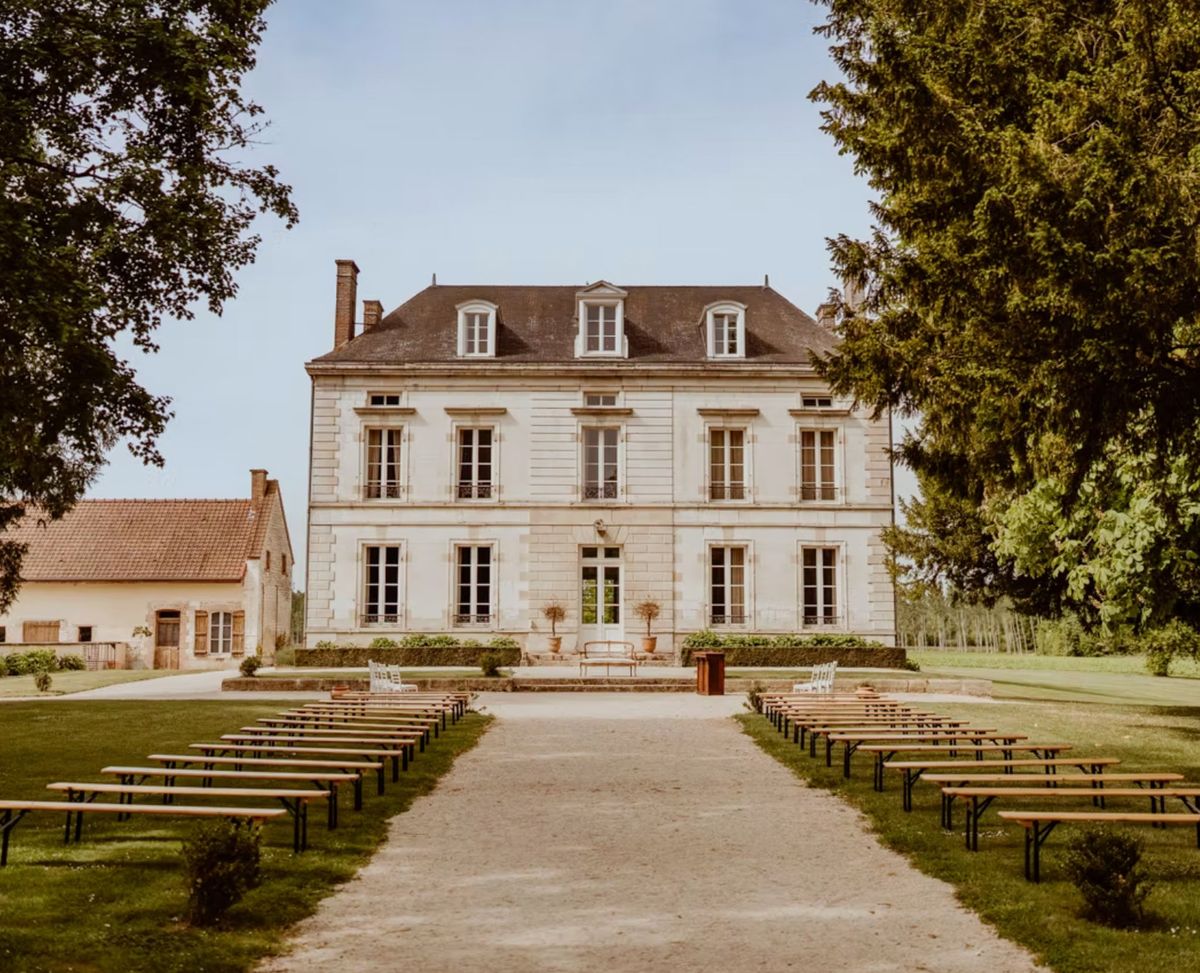
On working agricultural setting

A farmhouse wedding here is not a chateau wedding with rustic décor; it is a wedding at a property whose agricultural setting is part of the buildings. What sets a French farmhouse wedding apart from a chateau or villa wedding is the working setting: active or recently-active farm use, regional architecture in regional materials, and an estate run for the land first. When narrowing a French farmhouse list, weight the working setting ahead of architectural-style preference; it is what gives the weekend its character.

Filter the 11 estates by region, capacity, or budget

Use the FWS venue finder to filter the 11 farmhouse properties by what matters most to you. The same fields are published for every estate so you can compare directly.

View venue finder

Or browse <a href="/best/rustic-wedding-venues-in-france/">rustic wedding venues</a>, <a href="/best/domaine-wedding-venues-france/">domaine wedding venues</a>, or <a href="/best/intimate-wedding-venues-in-france/">intimate wedding venues</a> for related lists.

More venue guides and inspiration, every fortnight.

Join 18,000+ couples planning their French wedding. No spam. Unsubscribe any time.

How we chose these 11 estates

From a directory of 190+ French wedding venues, 11 meet our four criteria for a farmhouse wedding venue. First, the property has to have a working farm building at the heart of it, in one of the recognised types: Farmhouse/Grange, Mas, Bastide, or a Manoir with farmhouse outbuildings. Second, the estate has to be offered for full sole-use across the wedding weekend, with no shared occupancy by other parties or hotel guests. Third, the property has to offer on-site bedrooms, structured for a multi-day estate stay rather than a single-day venue hire. Fourth, catering has to allow either an outside traiteur or an in-house chef working with regional produce, so that couples can run a gastronomy-led weekend or a more informal family-driven one. The 11 properties span 6 French regions and were chosen for the working setting, not by uniform regional or capacity criteria. The list covers 5 building styles: primary Farmhouse/Grange, working domaine with farmhouse buildings, Mas, Bastide, and Manoir with farmhouse footprint. Editor-in-Chief Anne-Sophie Boubals reviews this list quarterly to confirm continued operation, capacity and pricing accuracy, and that each estate still meets the four criteria.

Last reviewed May 2026.

More Venue Guides

Explore our other curated guides across France's most sought-after wedding venue categories and regions.

Browse More Venues

Explore our full collection of French wedding venues by region and style