

Plan Your Catholic Wedding Ceremony in France

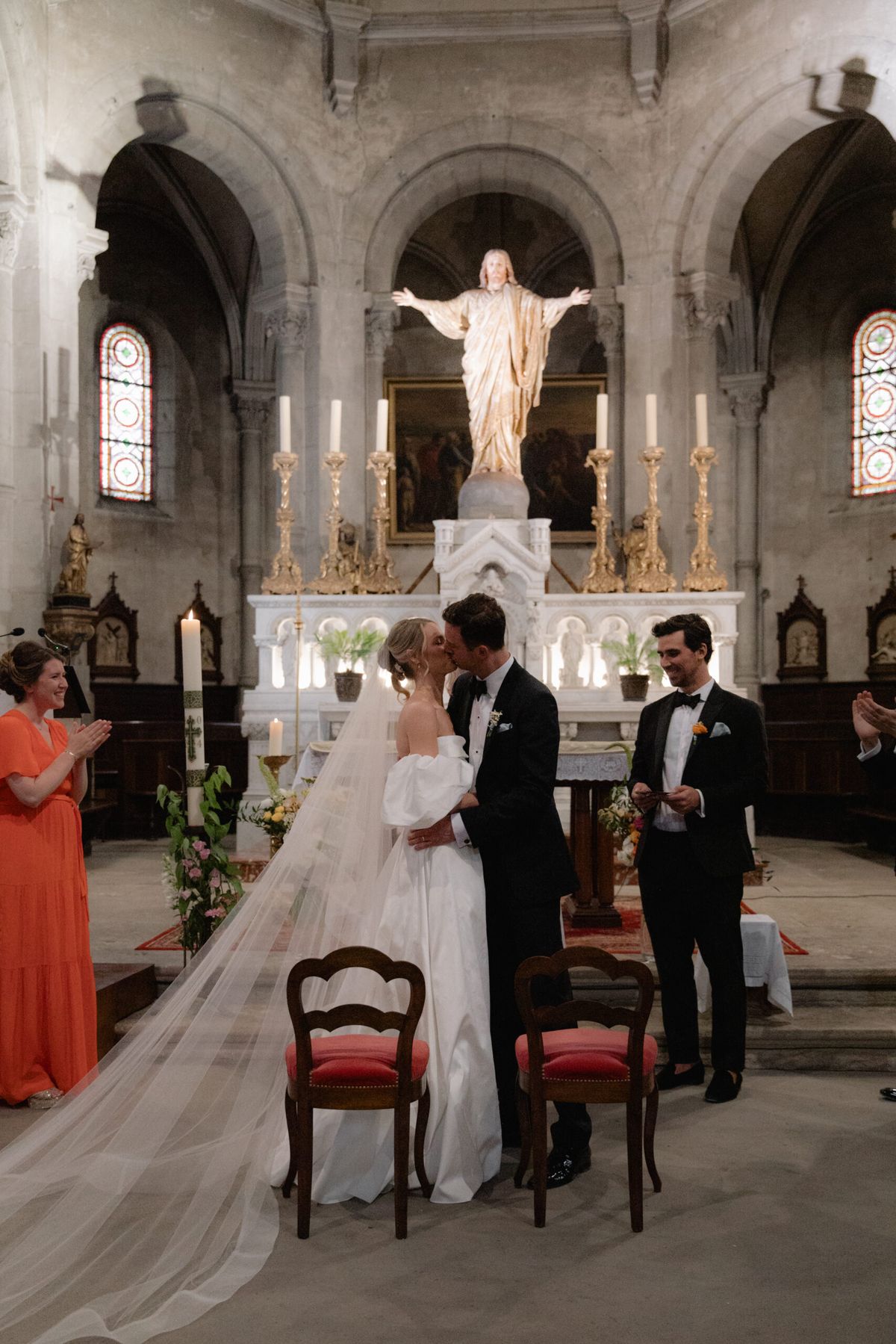
Planning a Catholic wedding ceremony and not sure what to expect? You’re not alone! A Catholic wedding is full of meaning, tradition, and beauty - and while it may feel a little formal at first, it’s truly a heartfelt celebration of love and faith. Rooted in centuries of tradition, the ceremony includes scripture readings, vows, blessings, and often a full Mass. It’s a sacred moment where you not only say “I do” to each other, but also make a promise before God, your families, and the Church. Whether you’re getting married in a charming French chapel or a grand cathedral, understanding the flow of the ceremony can help you feel more at ease - and truly enjoy every part of it.
Related article: Your Wedding Ceremony Guide
Key Elements
- The ceremony may include a full Nuptial Mass or a simpler Liturgy of the Word, depending on the couple’s preferences and religious backgrounds.
It typically takes place in a Catholic church, symbolizing the marriage as a sacred covenant witnessed by the faith community.
- Key elements include the exchange of vows, the giving of rings, and the Nuptial Blessing, all set within a structured liturgical order.
- The ceremony follows a standardized format, including the Processional, Readings, Rite of Marriage, and Eucharist (if applicable).
- Couples are encouraged to attend Pre-Cana, a marriage preparation course that explores commitment, communication, and Catholic teachings.
- Cultural or regional rituals like the arras or lasso may also be incorporated, allowing couples to reflect their heritage while honoring the sacrament.
- The Church considers marriage a lifelong, grace-filled vocation, offering spiritual support to help couples grow together in love and faith.
Catholic Wedding Ceremony Order: Step-by-Step
The structure of a Catholic wedding ceremony in France follows universal liturgical tradition, offering international couples a spiritually rich and deeply symbolic way to celebrate their vows. Whether you choose a full Nuptial Mass or a shorter Liturgy of the Word, each step carries sacred meaning.
1. Processional
The ceremony begins as the wedding party enters the church. The bride’s entrance is typically accompanied by music, setting a reverent and celebratory tone.
2. Liturgy of the Word
Selected scripture readings - often chosen with your priest - are read aloud, followed by a homily. These passages reflect God’s vision for love, unity, and lifelong commitment.
3. Rite of Marriage (Exchange of Vows)
The couple publicly exchanges vows, declaring their intention to enter into a lifelong Catholic marriage freely and with full consent.
4. Blessing and Exchange of Rings
The priest blesses the wedding rings, and the couple places them on each other’s fingers while reciting a short vow of love and fidelity.
5. Nuptial Blessing
After the vows, the priest offers a blessing over the couple, asking God to strengthen and protect their marriage.
6. Eucharistic Prayer (if Nuptial Mass)
If the wedding is celebrated within a full Mass, it continues with the Eucharist. Eligible Catholic guests may receive Communion.
7. Sign of Peace
Before Communion, the couple and guests are invited to share a sign of peace, such as a handshake or gentle embrace.
8. Concluding Rite and Recessional
The ceremony ends with final prayers and blessings. The newlyweds then exit the church together, marking the beginning of their new life as husband and wife.
Nuptial Mass vs. Liturgy of the Word: What’s the Difference?
Catholic weddings can be celebrated with or without a full Mass. Both are valid forms of the sacrament, and the choice often depends on the couple’s religious background and guest makeup.
- A Nuptial Mass includes Holy Communion and is typically chosen when both partners are Catholic.
- The Liturgy of the Word is shorter, without Communion, and often used for interfaith weddings.
- Both include the core Rite of Marriage, with vows, ring exchange, and blessings.
- The Nuptial Mass adds readings, Eucharistic prayers, and hymns, making the ceremony about 15 - 20 minutes longer.
- Couples should consult their priest to choose the format that best reflects their faith and family context.
Ways to Incorporate Your Catholic Faith into Your Wedding Day
A destination wedding in France doesn’t mean compromising on faith - there are many ways to bring Catholic meaning into your ceremony and celebration.
- Choose a Catholic church or chapel in France and work with the local parish to plan a sacramental ceremony.
- Include a special Marian tribute, such as offering flowers to the Virgin Mary during the ceremony.
- Select scripture readings that reflect your love story, with guidance from your priest.
- Incorporate Catholic symbols into your décor, like crucifixes, rosaries, or liturgical colors.
- Ask your priest to offer a blessing over your rings or reception meal, extending the sacramental spirit into the day.
- Create a bilingual wedding program to help international guests follow the religious parts of the ceremony.
What to Include in a Catholic Wedding Program
A well-designed wedding program helps guests - especially those unfamiliar with Catholic traditions - feel included and engaged during your ceremony in France.
- Outline the order of the ceremony, including the Processional, Readings, Rite of Marriage, and Nuptial Blessing.
- Include brief explanations of each section, such as the significance of the Eucharist or the exchange of vows.
- List scripture readings with names of readers, so guests can follow along.
- Add translations or summaries in both English and French, especially for key prayers or responses.
- Note any cultural or family traditions, like the arras or veil and cord, with a short description.
- Thank your guests and acknowledge loved ones, adding a personal touch to your destination celebration.
What to Expect at a Catholic Wedding Ceremony
A guide for couples and guests: from etiquette to timing
Attending or planning a Catholic wedding in France? Here’s what couples and guests can typically expect during the ceremony.
- The ceremony may include a full Mass (with Communion) or a shorter service without it, depending on the couple’s choice.
- Expect a structured format with scripture readings, vows, ring exchange, and prayers.
- Guests should arrive early and dress modestly, as Catholic weddings are formal and sacred occasions.
- Non-Catholic guests are welcome, but may be asked to refrain from receiving Communion.
- Ceremonies often last 45 to 75 minutes, depending on whether a Nuptial Mass is included.
- There may be cultural additions, such as a Marian offering or bilingual readings, especially for international couples.
How long is a full Catholic wedding ceremony?
A full Catholic wedding with Mass typically lasts around 60 - 75 minutes; without Mass, it’s about 30 - 45 minutes.
What is the process of a Catholic marriage?
Couples must meet with a priest, complete marriage preparation (often Pre-Cana), gather required documents, and plan the ceremony in line with Church guidelines.
What do you wear to a Catholic wedding?
Guests should dress modestly and respectfully - formal attire is expected, and shoulders or low necklines may be covered inside the church.
Do the bride and groom kiss at a Catholic wedding?
Yes, the couple may kiss at the end of the ceremony, but it’s not part of the official Catholic liturgy.
What are the rules for Catholic marriage?
At least one person must be Catholic, both must be free to marry, and the couple must agree to lifelong commitment, fidelity, and openness to children.
Getting Married in a French Catholic Church as a Foreign Couple
If you’re dreaming of saying your vows in a beautiful French Catholic church but you’re coming from abroad, it’s definitely possible - you’ll just need a bit of planning. First, at least one of you must be Catholic, and you’ll need to connect with your local parish priest at home to begin the process. He’ll help you prepare all the required documents, like your baptismal certificates, proof of confirmation, and a letter of permission to marry outside your home parish. These documents will then be sent to the diocese in France where your chosen church is located. It’s also important to reach out to the French parish early, as many churches have limited availability and may require meetings with the priest or pre-marriage counseling. Keep in mind that a Catholic wedding in France must be preceded by a civil ceremony, either in your home country or in France. With a bit of coordination (and possibly the help of a planner), you can absolutely make your dream of a Catholic wedding in France come true.
Related article : How to Get Married in France as a Foreigner
Conclusion: A Sacred Start to Your Life Together
Planning a Catholic wedding ceremony in France offers more than stunning scenery - it’s a chance to begin your marriage rooted in faith, tradition, and purpose. Whether you choose a full Mass or a simpler liturgy, the ceremony marks a lifelong covenant before God. With thoughtful preparation and guidance from your priest, your destination wedding can honor both your heritage and your spiritual journey - creating a day that’s as meaningful as it is memorable.
Related Posts
More about Wedding Traditions

![19 French Wedding Songs [Updated 2025]](https://frenchweddingstyle.com/cdn-cgi/image/quality=65,format=auto,fit=cover,width=1200/https://cdn.frenchweddingstyle.com/2024/07/Kathy_Baerg_Beauty_Beast_FirstDanceTwirl.jpg)
Planning a Destination Wedding in France?
Our complete guide covers everything from choosing a region to the morning-after breakfast.
Read the Complete Guide