

What Is a Croquembouche and how do you serve it at a French Wedding

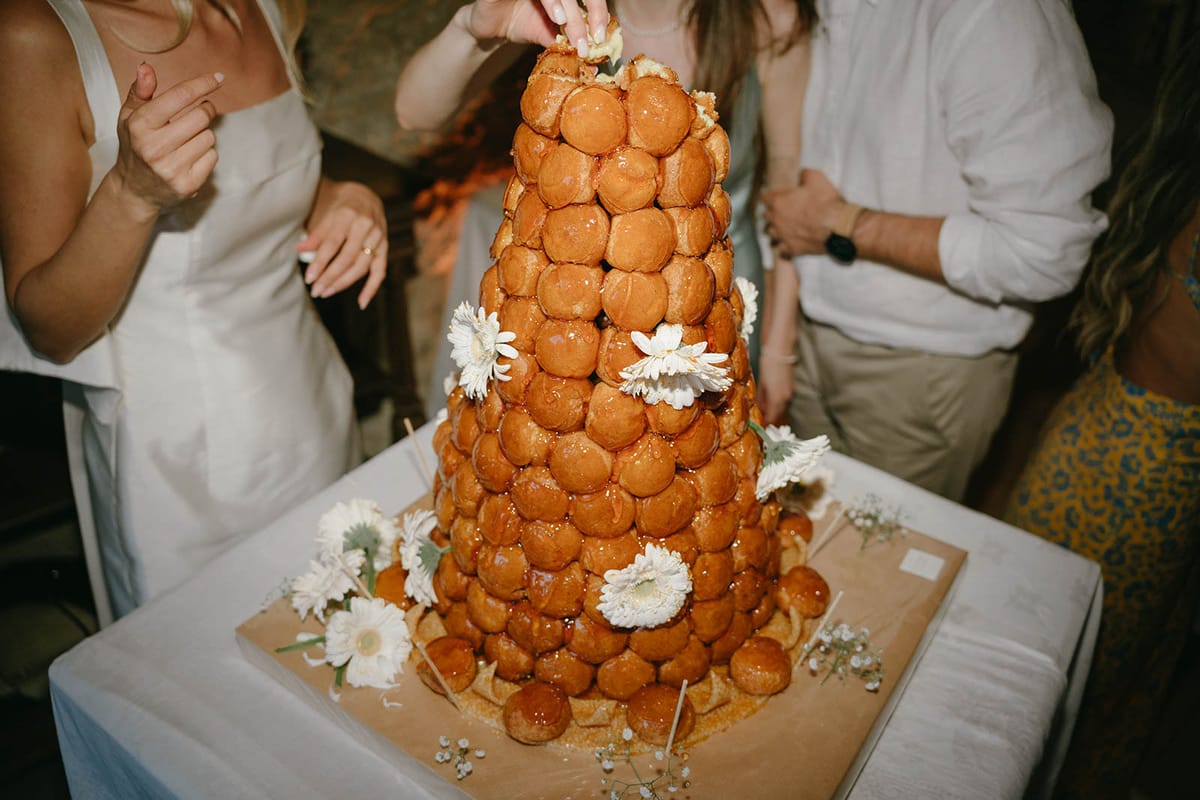
Is Croquembouche a Wedding Cake?
Though it may look unconventional to some, the croquembouche is considered a traditional wedding cake in France. It’s not made of sponge or frosting, but it holds just as much ceremonial weight - and often delivers an even more memorable visual and sensory experience for guests.
Its Role in French Weddings
In France, croquembouche has long been a customary wedding dessert, especially for Catholic ceremonies and large family gatherings. Rather than a layered sponge cake, couples opt for this sculptural tower of cream puffs, which serves both as dessert and centerpiece. While some weddings may feature both a croquembouche and a tiered cake, many modern French couples choose it as their sole wedding cake.
Symbolism and Cultural Significance
The croquembouche symbolizes abundance, celebration, and unity - with each individual puff representing the many guests who come together to witness and support the marriage. Its presentation is often dramatic, arriving with sparklers, applause, and upbeat music. This fanfare reflects the dessert’s historical association with royalty and festivity, making it a culturally rich and joyful part of French wedding tradition.
Serving Croquembouche at a Wedding
Serving a croquembouche is a little different from slicing into a classic tiered cake - but that’s part of its charm. With the right approach, it can be both elegant and interactive. Here’s how to present, portion, and preserve this dramatic dessert for your wedding day.
How to Present and Serve It
Traditionally, croquembouche is wheeled out during the reception with great fanfare - often accompanied by sparklers and applause. When it comes time to serve, the couple can remove a few cream puffs from the top as a symbolic “first bite,” while servers use tongs to distribute portions to guests. It’s best to plan for three to four puffs per person.
Cutting and Portioning Tips
Croquembouche isn’t sliced like a sponge cake. Instead, the tower is carefully dismantled from the top down. The caramel helps hold the structure in place, but it also makes the puffs slightly sticky, so gentle handling is key. Using tongs or gloved hands ensures a clean and organized serving process.
Freshness and Storage
Croquembouche is delicate and highly time-sensitive, especially because of the caramel coating and pastry cream filling. To keep it looking and tasting its best, timing and storage matter.
- Can you make it ahead of time? Yes, but ideally no more than 24 hours in advance.
- How long can it sit out? Up to 4-6 hours at room temperature before the caramel softens.
- How to keep it fresh? Store in a cool, dry room. Avoid refrigeration, as humidity softens the caramel and can make the pastry soggy.
- What about leftovers? Keep in an airtight container for one day - though texture and crispness may decline.
Planning and Ordering a Wedding Croquembouche
If you’re thinking of including a croquembouche in your wedding, planning ahead is key. From choosing the right pastry chef to budgeting for size and design, this showstopping dessert requires a bit more coordination than a traditional cake - but the payoff is well worth it.
Cost and Customization
Croquembouche prices vary depending on size, ingredients, and the level of decorative detail. Some pastry chefs charge per cream puff, while others offer fixed pricing based on tiers or custom presentation. Expect higher costs for added flavors, sugar work, or floral elements.
- General price range: €150 to €600+
- Per-puff pricing: Typically €2 to €5 per choux
- Custom elements: Flavored fillings, flowers, gold leaf, sparklers, or nougatine
- Size matters: The more guests you serve, the taller and pricier the tower
Where to Order One
Croquembouche is best made by professionals familiar with French pastry techniques. In France, many pâtisseries and wedding caterers offer it, while international couples can turn to boutique bakeries or high-end patisseries with experience in specialty desserts.
- In France: Ladurée, Lenôtre, and local pâtisseries
- Abroad: Seek French-trained pastry chefs or boutique wedding bakers
- Tip: Ask to see photos of past croquembouches and confirm delivery/assembly options
- Order early: Reserve your spot 2-3 months ahead, especially for summer weddings
Inspiring Croquembouche Wedding Cake Ideas
Croquembouche isn’t just a dessert - it’s a design statement. Whether you love timeless elegance or want something playful and modern, this pastry tower can be styled to match your wedding aesthetic. Here are some beautiful ways couples are customizing their croquembouche to make it uniquely theirs.
Classic Caramel Thread
The traditional croquembouche is wrapped in delicate threads of spun caramel, creating a golden, web-like finish. This version is a nod to French pastry heritage and suits weddings with vintage or formal styling.
- Simple cone shape with minimal adornment
- Golden caramel spun across the tower
- Timeless and elegant for traditional weddings
Floral-Decorated Towers
Fresh or sugar flowers add a romantic, whimsical touch to your croquembouche. These are ideal for garden weddings, châteaux, or springtime celebrations.
- Roses, peonies, or edible flowers woven through the structure
- Custom color palettes to match your floral scheme
- Great for adding softness and visual volume
Lemon-Filled or Color-Themed
Looking for a flavor twist or color pop? Many couples opt for lemon curd or other fillings, and match the decor to a theme - from citrus tones to pastels.
- Lemon curd, chocolate, or raspberry cream fillings
- Candied fruits or glaze accents
- Ideal for summer weddings or themed receptions
Tiered or Modern Styles
Not all croquembouches need to be cone-shaped. Tiered variations add structure and can mimic a classic wedding cake silhouette, while still offering that French flair.
- Three-tiered bases with clean separation
- Modern twists like honey glaze instead of caramel
- Custom structural designs for minimalist or editorial aesthetics
Sparkler and Display Ideas
In French tradition, croquembouche is often brought out with sparklers and applause - a true spectacle moment. How you present it can turn dessert into one of the night’s most memorable events.
- Sparklers or candles added to the top or sides
- Dimmed lights and music for dramatic entrance
- Use of ornate stands, floral bases, or mirrored trays for display impact
Should You Choose a Croquembouche?
Whether you’re planning a destination wedding in France or simply want to infuse your celebration with timeless French tradition, the croquembouche is an unforgettable way to do it. From its symbolic roots to its dramatic reveal and interactive serving style, this dessert is more than just delicious - it’s part of the experience. With thoughtful planning, the right pâtissier, and a bit of creative styling, a croquembouche can become the sweetest highlight of your wedding day.
Related Posts
More about Wedding Cakes & Desserts


Planning a Destination Wedding in France?
Our complete guide covers everything from choosing a region to the morning-after breakfast.
Read the Complete Guide