
A mother-of-the-bride dress isn’t just an outfit—it’s a reflection of elegance, confidence, and maternal pride. In the past, mothers were often confined to matronly beige gowns, but today they can embrace sophisticated style that feels both modern and timeless.
With so many choices, it’s normal to feel overwhelmed. The key is finding a gown that celebrates your individuality while harmonizing with your daughter’s vision—especially if she’s saying “I do” in France. Whether the setting is a romantic vineyard in Provence, a grand château in the Loire Valley, or a chic Parisian hotel, your dress should feel perfectly at home.
Your gown is more than fashion—it’s a statement of love, support, and a seamless link between tradition and the future. By choosing a silhouette and color that complement the venue, wedding palette, and your personal style, you’ll feel comfortable, confident, and beautifully in step with the magic of a French wedding.
Key Insights
- Start Early & Coordinate with the Bride: Open communication about theme, color palette, and formality ensures your look feels harmonious with the wedding’s overall vision.
- Match the Dress to the Venue & Season: From airy chiffon for Provençal vineyards to rich velvet for Parisian châteaux, the fabric, cut, and color should reflect the setting and time of year.
- Choose a Flattering Silhouette: A-line, empire waist, sheath, or ball gown—select a cut that complements your figure while fitting the wedding’s level of formality.
- Focus on Comfort Without Sacrificing Style: Opt for stretch fabrics, breathable materials, and practical tailoring so you can celebrate all day with confidence.
- Color Harmony is Key: Avoid white or neon shades; instead, choose timeless hues like navy, blush, or soft metallics that enhance both your complexion and the venue’s aesthetic.
- Perfect the Look with Accessories & Tailoring: Elegant layers, jewelry, and professional alterations transform a good outfit into a flawless, polished ensemble fit for a French wedding.
How to Choose the Perfect Mother-of-the-Bride Dress
Talk to the Bride Early:
Schedule an early chat to confirm the theme, dress code, and color palette. For instance, if the bride imagines a soft, romantic palette for a countryside château wedding, you might lean towards dusty pastels or muted jewel tones. For a sleek Parisian soirée, richer colors and more structured silhouettes are often perfect.
Consider the Venue:
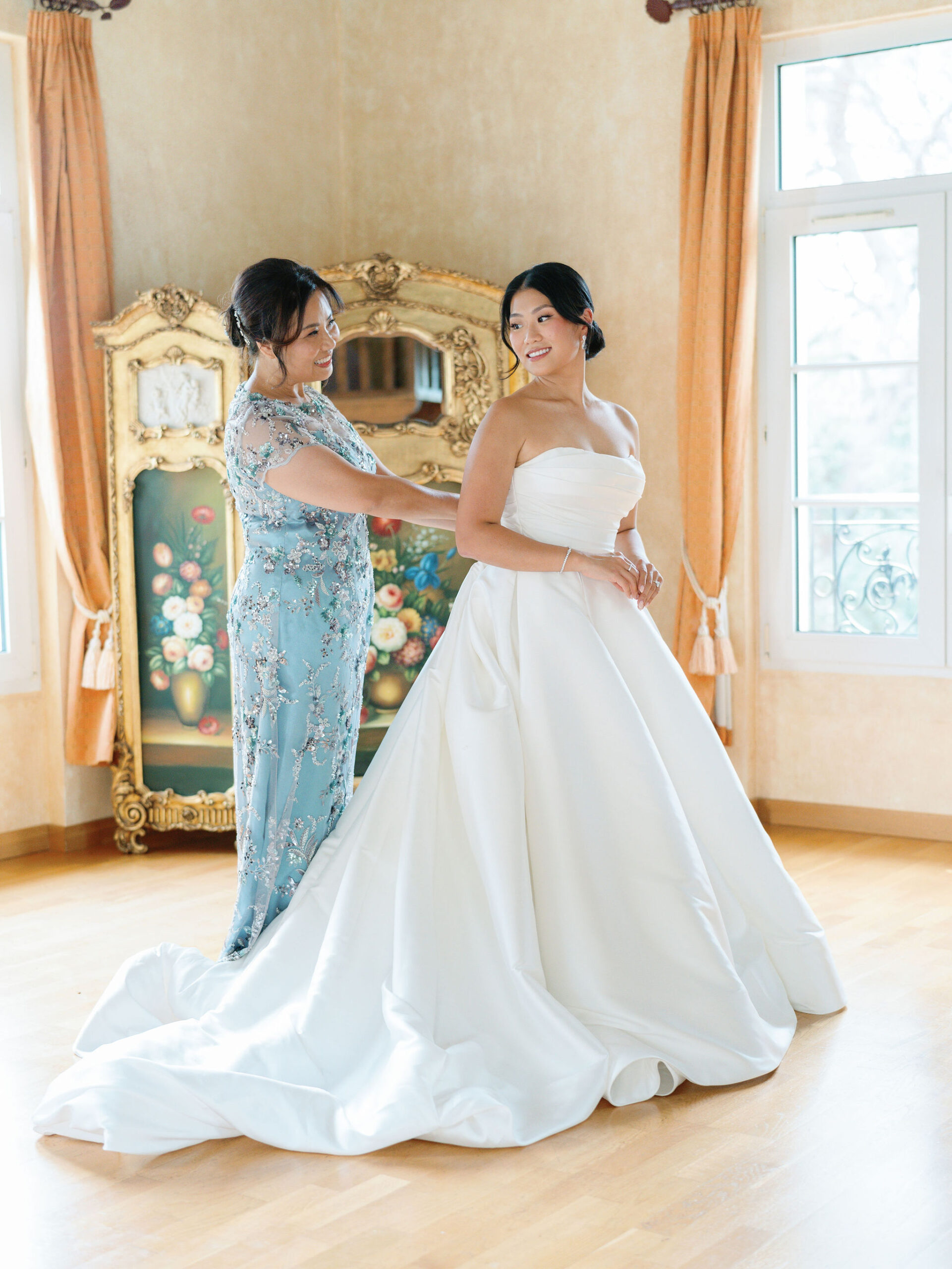
- Château or grand ballroom weddings: Full-length gowns in luxurious fabrics like mikado, satin, or embellished crepe. Think formal elegance with tasteful details such as statement sleeves or subtle beading.
- Garden or vineyard weddings: Flowing chiffon, georgette, or soft silk in light, romantic shades. Prints inspired by flowers or nature can feel perfectly at home here.
- Coastal weddings (French Riviera, Normandy): Breathable fabrics such as organza or jersey, shorter hemlines or high-low cuts to avoid dragging in the sand, and refined flat sandals or wedges for practicality.
- City or chic modern weddings (Paris, Lyon): Sleek column dresses, minimalist draping, or tailored pantsuits in crepe or satin. Jewel tones or monochromatic palettes complement a cosmopolitan setting.
Factor in Seasonality:
- Spring (April–June): Unpredictable weather means mid-weight fabrics like crepe or soft taffeta, layered with elegant wraps or boleros. Pastels or fresh floral shades are ideal for countryside or garden weddings.
- Summer (July–August): Hot weather calls for breathable fabrics like chiffon or organza, sleeveless or cap-sleeve designs, and lighter colors that won’t overheat you—perfect for Provence or Riviera weddings.
- Autumn (September–October): Richer tones (burgundy, forest green, navy) in slightly heavier fabrics like stretch crepe or velvet blends. Pair with a chic shawl or wrap for vineyard or château celebrations.
- Winter (November–March): Structured gowns in luxurious fabrics such as velvet or mikado. Deep jewel tones and elegant cover-ups (tailored jackets or faux-fur stoles) suit formal Paris or château weddings beautifully.
What should a mother of the bride dress look like?
When planning for a destination wedding in France, your outfit should combine elegance, comfort, and practicality. From the romantic gardens of Provence to the grandeur of a Parisian château, the right silhouette will flatter your figure, align with the wedding setting, and allow you to move and celebrate with ease.
Flattering Fits for Every Figure
Each silhouette works best for certain body shapes, but also for specific French wedding locations and atmospheres.
A-line (universally flattering)
- Cinches at the waist and skims the hips, perfect for highlighting curves while keeping a refined shape.
- Best for: Outdoor vineyard weddings in Bordeaux or Loire Valley—this shape looks graceful in natural light and is easy to move in on grassy or uneven terrain.
- Style tip: Choose soft fabrics like chiffon or tulle for summer weddings, or a structured satin A-line for formal château celebrations.
- Why it works: Balances proportions beautifully, especially for hourglass or pear-shaped mothers.
Empire waist (elongates and slims)
- Features a raised waistline just under the bust, drawing the eye upward and creating an elegant lengthening effect.
- Best for: Seaside ceremonies on the Côte d’Azur or relaxed countryside weddings in Provence.
- Style tip: Pair with lightweight silk or chiffon that drapes effortlessly in the breeze.
Why it works: Ideal for petite figures or mothers who want to disguise the midsection while still feeling feminine.
Structured sheath (sophisticated and sleek)
- Clean, tailored lines skim the body for a refined, modern look.
- Best for: Chic city weddings in Paris, where understated elegance pairs perfectly with an urban backdrop.
- Style tip: Opt for fabrics like mikado or crepe that hold their shape and give a couture finish.
Why it works: Perfect for petite mothers or those with a straight figure who prefer a minimalist, high-fashion look.
Ball gown (formal and dramatic)
- Fitted bodice with a full skirt that creates a stunning silhouette worthy of a grand entrance.
Best for: Château weddings in regions like Île-de-France or Champagne, where opulence is the order of the day. - Style tip: Keep embellishments elegant (think subtle lace or embroidery) to avoid competing with the scale of the dress.
- Why it works: Adds drama and balance, especially flattering for taller mothers or those who want a regal presence.
What is the trend for mother of the bride 2026?
French destination weddings often call for styles that blend timeless elegance with modern flair.
- One-shoulder gowns: Asymmetrical neckline that feels modern and chic, perfect for mothers who want a fashion-forward but timeless choice.
- Flutter sleeves: Light, airy sleeves that provide subtle coverage while adding romantic movement, ideal for summer weddings in the French countryside.
- Modern jumpsuits: A contemporary alternative to dresses, offering tailored elegance and practicality—especially suited for intimate Parisian weddings or rehearsal dinners.
- Subtle high-low hemlines: Combines formality with flair, showing off statement shoes while keeping a polished and sophisticated look.
Comfort Matters
When celebrating in France, comfort isn’t optional—it’s essential for enjoying every part of the day.
- Stretch fabrics (Lux Stretch is a game-changer): Four-way stretch accommodates every movement, from mingling during cocktail hour to dancing at the soirée.
- Wrinkle resistance for travel: Lux Stretch, crepe, and mikado hold their shape beautifully, making them perfect for long flights or car rides to the venue.
- Breathability for warm climates: Chiffon and stretch crepe are ideal for summer weddings in Provence or along the Riviera.
- Lining and tailoring: Dresses with soft linings and structured tailoring ensure no pinching, slipping, or constant adjusting, so you can focus on the celebration instead of your outfit.
- All-day practicality: Consider dresses with hidden pockets (ideal for tissues or lipstick), particularly helpful when you’re traveling abroad for a destination wedding.

What color dress does the mother of the bride wear?
For a wedding in France, color is more than a fashion choice—it’s part of the setting. From sun-soaked Provençal vineyards to elegant Parisian salons, the right hue can flatter your complexion, coordinate beautifully with the bridal party, and enhance the romantic atmosphere of the venue.
Colors to Avoid
Before exploring the perfect palette, it’s important to know which shades to skip.
White, ivory, and champagne: Traditionally reserved for the bride unless she specifically approves.
- Overly bright neons: Distract from the wedding’s aesthetic and look out of place in elegant French venues.
- Busy prints: Can clash with formal photography and detract from the timeless, refined French style.
- Too much black (unless formal evening): While chic in Paris, head-to-toe black may feel somber for a daytime garden or vineyard wedding.
Classic Mother-of-the-Bride Colors
These timeless shades are wedding-appropriate and look especially beautiful against French backdrops.
- Navy: Universally flattering, elegant, and sophisticated—perfect for château soirées or formal Parisian receptions.
- Blush: Soft and romantic, ideal for vineyard weddings or ceremonies in Provence where natural light enhances its glow.
- Nude or taupe: Chic neutrals that feel refined in any setting, from historic abbeys to modern city venues.
- Soft metallics (champagne gold, pewter): Add subtle glamour without competing with the bridal gown—ideal for evening receptions or candlelit dinners.
Skin Tone Pairing
The right color should enhance your natural features while harmonizing with the wedding palette.
Warm undertones (gold jewelry flatters you):
- Coral, amber, and copper: perfect for summer vineyard weddings.
- Olive and deep cappuccino: ideal for fall château celebrations with rich, golden décor.
- Warm gold metallics: sophisticated and radiant under soft French evening lighting.
Cool undertones (silver jewelry flatters you):
- Emerald or deep teal: stunning for Parisian soirées and formal interiors.
- Lavender or soft lilac: beautiful for spring weddings in Provence or Loire Valley gardens.
- Navy or silver-gray: refined and timeless, especially for winter weddings in Champagne or Alsace.
Does the mother of the bride wear the same color as the bridal party?
Your dress should complement the bridal palette without blending in completely.
- If bridesmaids wear blush or dusty rose: Consider raspberry, mauve, or antique gold for a deeper, elegant contrast.
- If bridesmaids wear sage or olive: Navy, pewter, or warm taupe create a sophisticated pairing.
- If bridesmaids wear navy: Opt for soft metallics like silver or pale champagne for subtle contrast.
- If bridesmaids wear lavender or periwinkle: Deep plum or charcoal gray provide richness without overpowering the palette.
- If bridesmaids wear mixed tones: Choose a neutral (nude, navy, metallic) to stay harmonized without clashing.
Pro tip: Bring a fabric swatch or photo of the bridesmaid dresses when shopping to ensure your shade harmonizes perfectly.


Accessories That Transform the Look
In France, accessories are not an afterthought—they’re the finishing touch that can elevate your entire look from simple to effortlessly chic. Whether you’re walking through the gardens of a Loire Valley château or attending a glamorous Parisian soirée, the right details add sophistication and function to your outfit.
Jewelry
Jewelry should complement the dress and the overall setting, adding a polished, luxurious feel.
- Pearls: Timeless and refined—ideal for elegant city weddings in Paris or Bordeaux.
Statement earrings: Perfect for modern gowns or one-shoulder silhouettes; choose crystal or gemstone drops for added sparkle in evening candlelight. - Delicate layered necklaces: Beautiful with V-neck or off-shoulder gowns; add subtle sophistication without overpowering.
- French tip: If your dress features intricate beadwork or embellishments, let the dress shine and opt for minimal jewelry.
Shoes
Shoes should balance comfort and style, especially for all-day destination weddings.
- Block heels: A lifesaver for garden ceremonies or cobblestone château courtyards; stable without sacrificing elegance.
- Kitten heels: Chic and comfortable for long dinners and dancing late into the night.
Stilettos: Best reserved for grand ballroom weddings in Paris or indoor venues with even flooring. - Dressy flats: For seaside Riviera weddings or outdoor settings where comfort is key—choose metallic or embellished designs for polish.
- French tip: Break in your shoes before the wedding and consider gel insoles for added comfort.
Hats & Fascinators
Headpieces can add sophistication but must be chosen carefully to suit the setting.
- Wide-brim hats: Perfect for outdoor vineyard or Provençal garden weddings—providing both style and sun protection.
- Fascinators: Ideal for formal city weddings or chic receptions; keep the scale proportional to your outfit.
- Seasonal rule: Hats are best for daytime ceremonies, while fascinators or jeweled hairpieces feel more appropriate for evening.
- Styling tip: Coordinate with your hairstyle—sleek updos work best with fascinators, while soft waves complement wide-brim hats.


How to coordinate mother of bride dress?
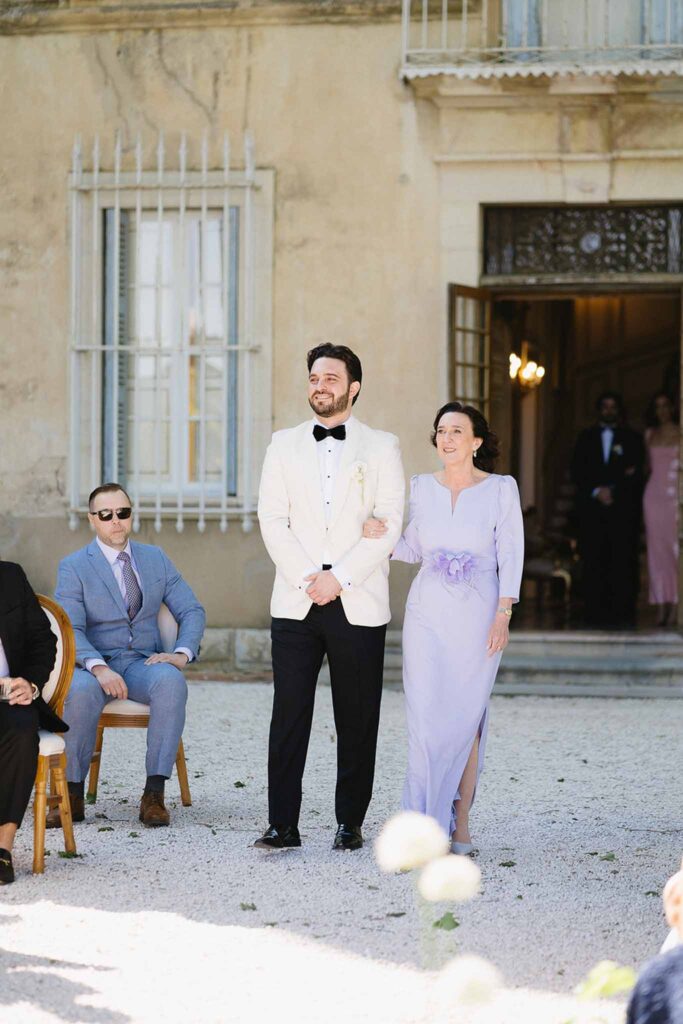
In a French wedding setting—whether in a Parisian ballroom or a Provençal vineyard—every detail counts. Mothers of the bride and groom should aim to look coordinated but never identical, blending seamlessly with the bridal party while respecting cultural elegance and the bride’s overall vision.
Can mother of bride and mother of groom wear the same color?
How to complement the mother of the bride without duplicating her look.
- Mirror the palette, shift the depth: If the mother of the bride wears navy satin, choose midnight or steel blue in crepe for contrast; if she’s in champagne chiffon, select soft taupe with subtle beading. The key is to stay in the same tonal family but vary fabric texture or shade to avoid looking “uniform.”
- Match the occasion’s formality precisely: For château weddings, both moms should be in full-length gowns with polished finishes (silk mikado, stretch crepe). For a vineyard or garden setting, softer A-line chiffon or tea-length dresses keep the look cohesive but setting-appropriate.
Communication with the Bride
Keep the bride’s vision at the heart of every choice.
- Get explicit color approval early: Present 2–3 swatches to the bride before purchasing. Example: If bridesmaids wear dusty rose, confirm whether she prefers you in deeper raspberry (harmonious) or muted champagne (neutral contrast).
- Submit a full outfit check: Send the bride clear photos of your dress, shoes, and accessories before alterations. This prevents last-minute “it’s too close to my gown color” panic and reassures her that you’re aligned.

How to look slim as mother of the bride?
French weddings are synonymous with refinement and effortless elegance. The right styling choices can lengthen your silhouette, enhance your natural features, and ensure you look polished and radiant in every photo—whether you’re walking through the gardens of a château or raising a toast in a Parisian ballroom.
Flattering Cuts
How to create a long, lean silhouette with smart tailoring.
- Vertical seams & clean lines: Dresses with princess seams or vertical paneling (especially in stretch crepe) elongate the body without clinging. Example: A floor-length sheath with side panels in a slightly darker tone visually narrows the waist and hips.
- Strategic ruching & draping: Soft ruching across the midsection or diagonal pleats from the bodice to the hip create instant definition while camouflaging the tummy. Pairing this with a slight V-neck elongates the neckline and slims the shoulders.
Color Tricks
The power of French-inspired tonal styling.
- Monochrome mastery: Deep navy from shoulder to hem paired with same-tone shoes creates one uninterrupted line—instantly slimming.
- Tonal layering: If monochrome feels too stark, combine adjacent hues like slate-blue with dove-gray shawls or dusty lavender with mauve accessories for a sophisticated, lengthening effect.
Shopping Timeline & Alterations
Timing is everything when it comes to finding a dress that not only complements the wedding but also fits like it was made for you. With French destination weddings often involving travel and additional logistics, careful planning is key.
When to Start
Why early planning saves stress and guarantees the best options.
- 6–8 months before the wedding: Begin shopping once the bride’s gown and bridesmaids’ dresses are confirmed. This ensures your color and style complement the overall wedding palette. Bonus: Shopping early allows enough time to order special fabrics or imported designers.
- 2–3 months before the wedding: Schedule your first fitting. This is when most MOBs discover how much difference professional tailoring makes. Pro tip: If the wedding is abroad, plan for one final fitting 3–4 weeks before departure to account for any last-minute adjustments.
Where to Shop
How to choose the right source based on your style and needs.
- Bridal salons: Ideal for curated designer collections, expert staff who understand wedding etiquette, and access to fabric swatches for precise color matching with the bridal party.
- Eveningwear boutiques or department stores: Perfect for luxe but less traditional options, such as jumpsuits or cocktail-length dresses suitable for a chic Parisian soirée.
- Online retailers: Convenient for browsing a wider range of designers. Order multiple sizes and budget for professional alterations to ensure a flawless fit.
Tailoring
Why a good seamstress is your secret weapon.
- Custom fit, couture feel: Even a mid-range gown can look high-end after expert alterations—think hem adjustments that skim the floor perfectly, lifted shoulders for better posture, or nipped-in waists for a slimming effect.
- Destination-proof preparation: Consider adding built-in cups or discreetly reinforcing delicate fabrics (like chiffon) to withstand travel and multiple events during a French wedding weekend.

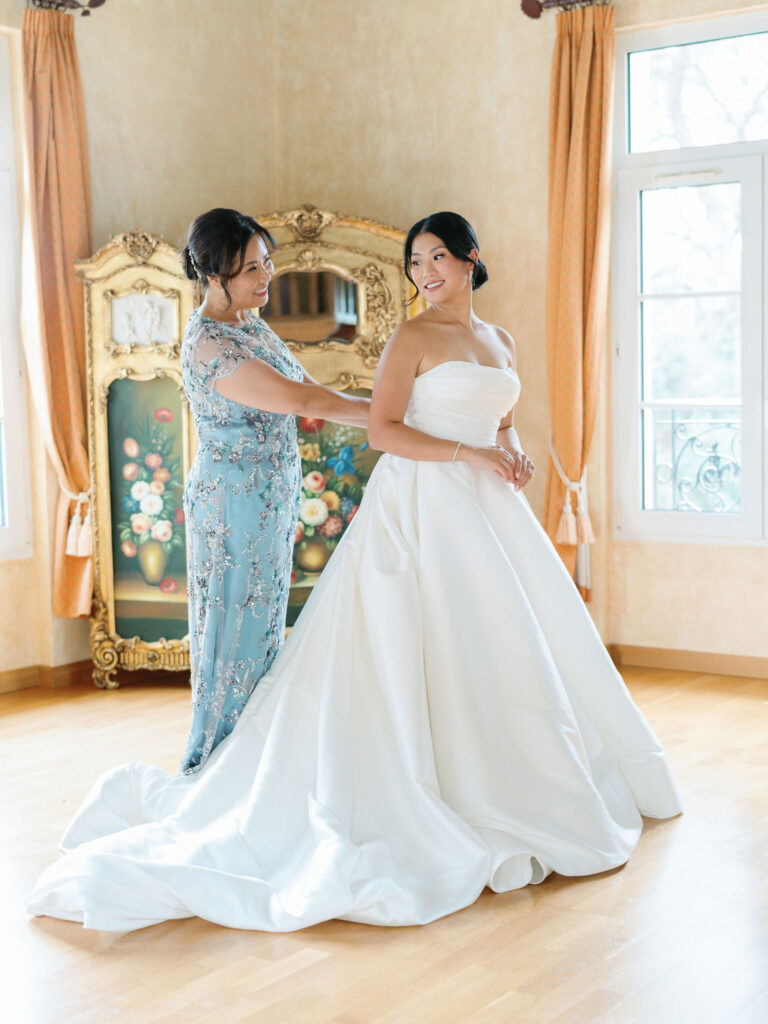
A Final Word on Mother-of-the-Bride Elegance
Your dress isn’t just an outfit—it’s a celebration of love, family, and the remarkable role you play on this unforgettable day. In France, where every wedding is steeped in romance and refinement, the right gown should reflect not only your personal style but also the beauty of the setting and the joy of the occasion.
By starting early, coordinating with the bride, and considering the venue, season, and color palette, you’ll find a look that is as effortless as it is elegant. Whether you choose flowing chiffon for a Provençal vineyard, structured mikado for a Parisian soirée, or jewel-toned velvet for a winter château wedding, the key is wearing it with confidence.
When you feel comfortable and radiant, you won’t just look the part—you’ll embody the grace and sophistication that make French weddings truly magical.